
Why this page exists
Data-jack installation in Sugar Land is scoped around the same physical realities EVOTECH weighs everywhere — but read through Sugar Land's specific conditions: commercial base weighted toward professional offices and medical suites rather than industrial space. This page pairs what the service actually involves with what the Sugar Land market changes about it.
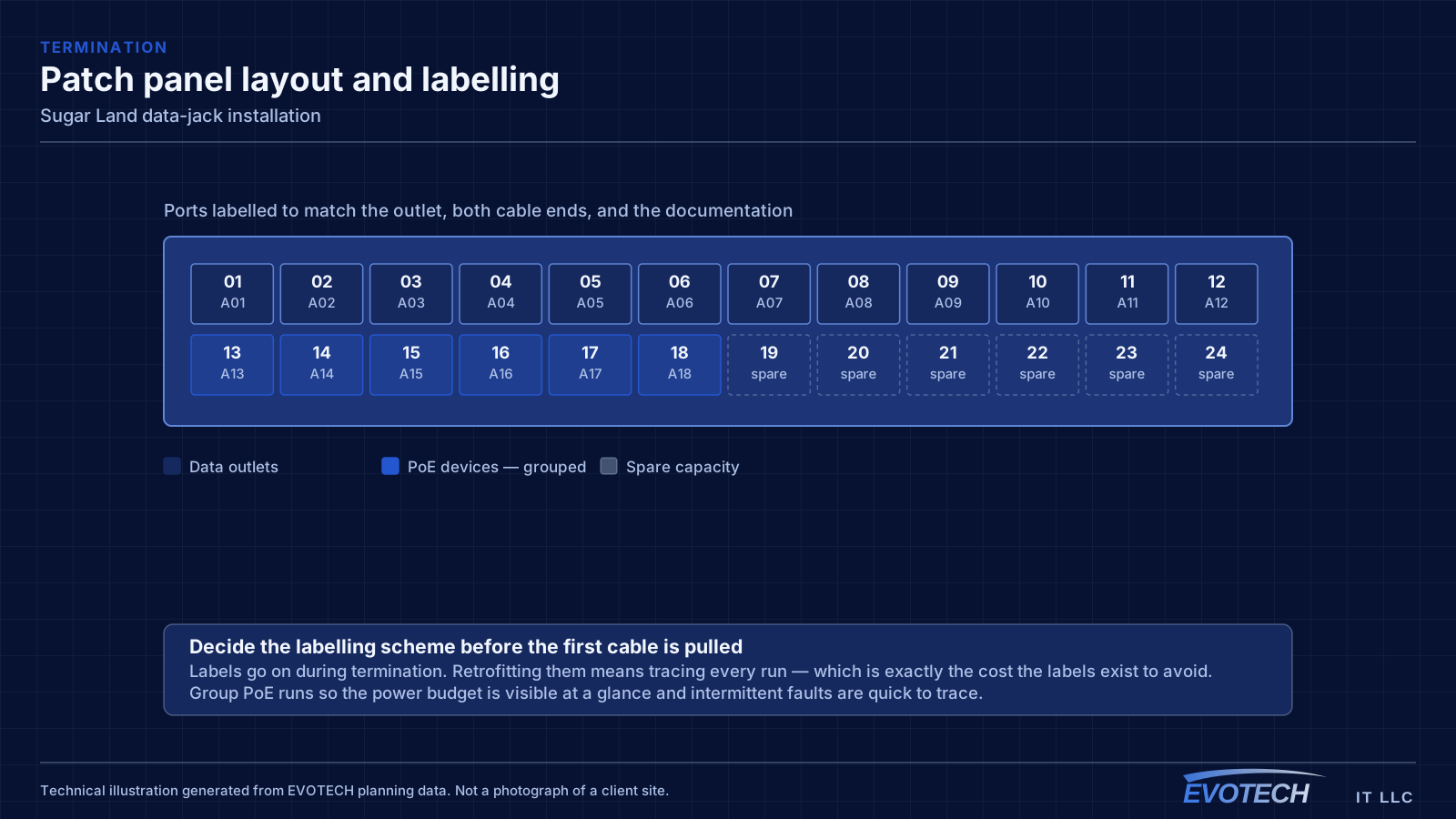
A data jack is the terminated outlet at the end of a horizontal run. It looks trivial, and it is the single most common place for a link to lose performance, because it is where the pairs get untwisted, where a punch-down can be shallow, and where the wrong component category quietly caps the channel.
What data-jack installation usually involves
The dominant failure is untwist. Twisted-pair cable rejects noise because of the twist rate, and every centimetre of pair untwisted at the punch-down is a small crosstalk penalty. Combined across four pairs and two ends, sloppy terminations can move a link from comfortable margin to marginal.
The second failure is component mismatch. A jack rated one category below the cable caps the entire channel at the lower rating, and nothing about the installation looks wrong. The third is mechanical: a plate mounted without a low-voltage bracket, so the cable takes strain every time something is plugged in.
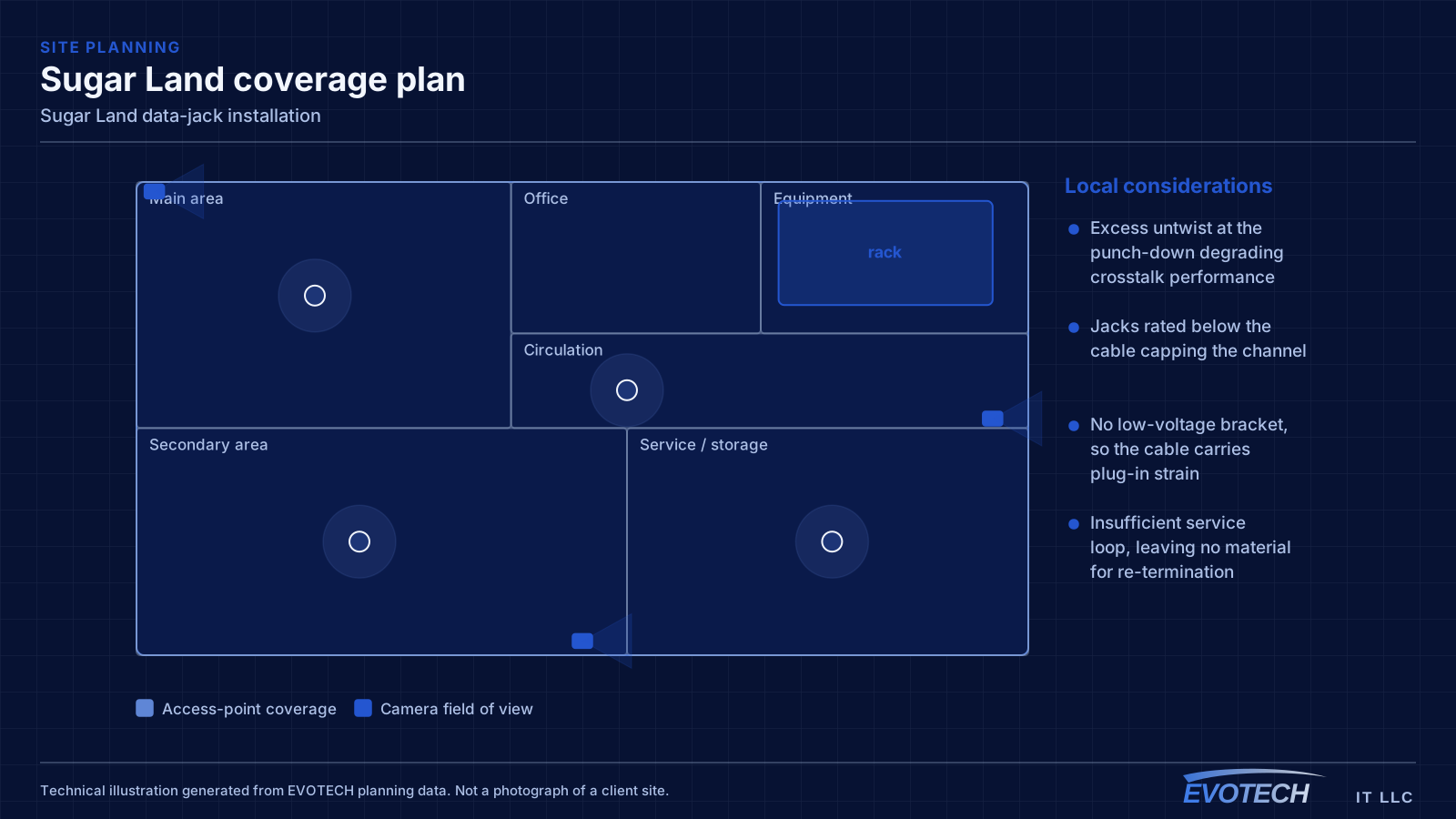
- Excess untwist at the punch-down degrading crosstalk performance
- Jacks rated below the cable capping the channel
- No low-voltage bracket, so the cable carries plug-in strain
- Insufficient service loop, leaving no material for re-termination
- Inconsistent wiring scheme between ends causing split pairs
Sugar Land property conditions that change the plan
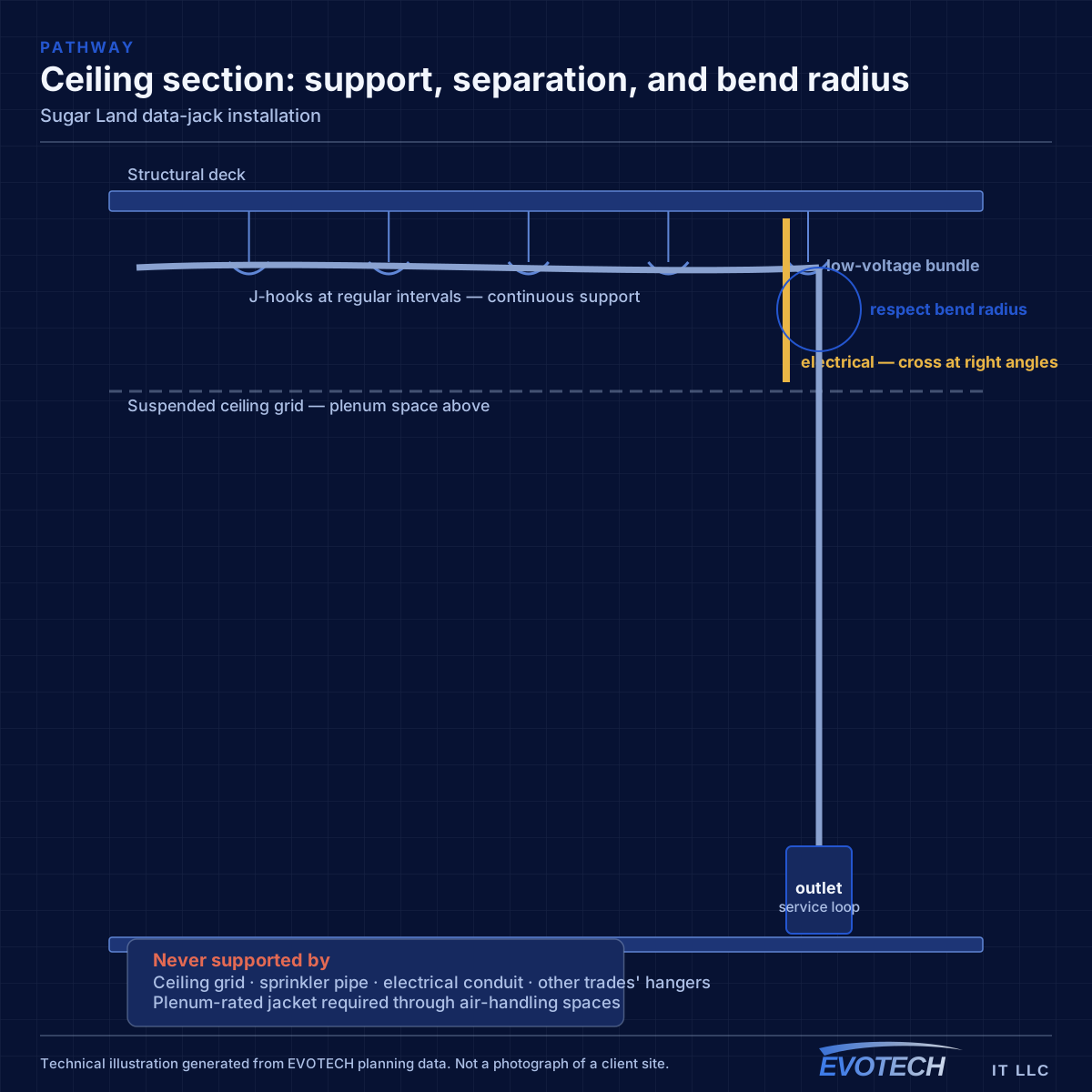
Office suites here typically have accessible suspended grid across the working areas, with hard-lid ceilings in reception, corridors, and some clinical rooms. That mix means a project can be straightforward across most of a floor and then hit a section requiring a very different approach, which is worth identifying at the walkthrough rather than mid-pull.
Medical suites add controlled areas — records storage, medication storage, treatment rooms — that shape both access-control scope and where cameras may and may not go. Those boundaries get agreed at design.
Landlord permissions come first in a multi-tenant building, because they determine what is possible before anything technical does. Riser access, permitted penetrations, after-hours arrangements, and whether a building engineer needs to be present all affect scheduling directly.
- Suspended grid across working areas with hard-lid reception and corridors
- Shared risers and core pathways governed by base-building rules
- Controlled areas in medical suites driving access-control scope
- Retail units with storefront glazing affecting entrance camera placement
- Newer construction generally offering better existing pathway than older stock
- Base-building rules confirmed before scheduling
- Hard-lid areas identified at walkthrough, not during the pull
- Controlled-area boundaries agreed for medical suites
- Equipment room location and whether it is shared or in-suite
- Finish and reinstatement expectations agreed in advance
- Cutover planning where clinical or practice systems are involved
Getting data-jack installation done in Sugar Land
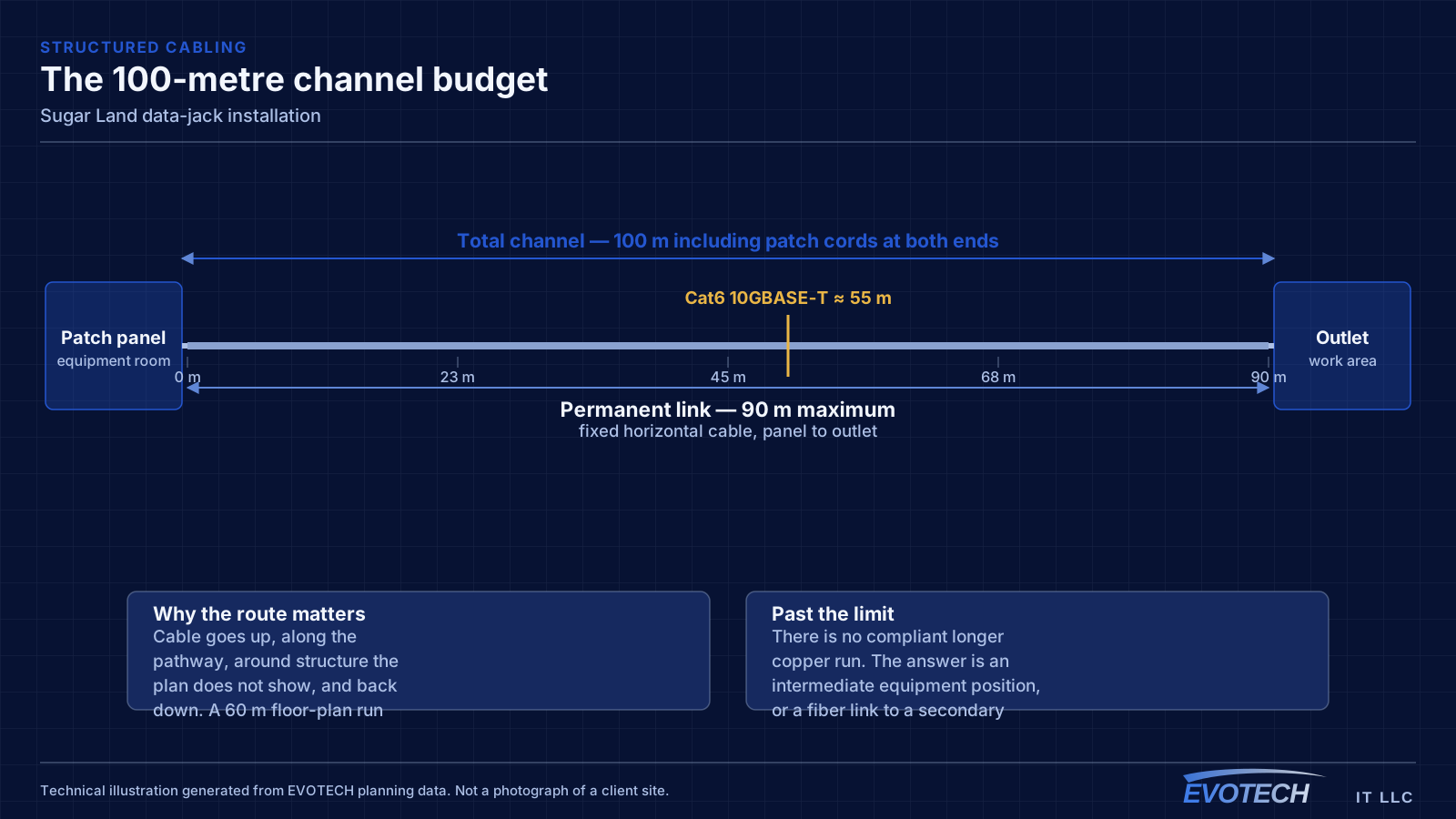
A certification test measures the complete path: patch cord, patch panel, horizontal cable, and outlet. Insertion loss and crosstalk contributions from the connectors are a meaningful share of the total budget, particularly at the higher frequencies where Cat6 and Cat6A links have the least margin. A well-made termination preserves margin; a poor one consumes it.
Most work here happens in occupied space with client- or patient-facing areas, so containment and clean reinstatement are baseline. Ceiling tile handling, dust control during any drilling, and complete clear-down at the end of each session matter more than they would on a shell fit-out.
- Containment and dust control in client-facing areas
- Careful ceiling tile handling and reinstatement
- After-hours access arranged through building management
- Sessions ending with the suite fully operational
- Coordination with practice or office management on controlled-area access
Frequently asked questions
Does EVOTECH have an office in Sugar Land?
No. This is a service-area page: EVOTECH serves Sugar Land without claiming a physical office there. The wording stays as coverage, not a location claim.
Why did a link start failing after a jack was replaced?
Usually untwist or category mismatch. If more pair was untwisted at the punch-down than the standard allows, crosstalk performance drops, and a link that previously passed with small margin can fail. If the replacement jack is a lower category than the cable, the whole channel is capped at the lower rating. Both show up immediately in a certification test.
What usually delays a Sugar Land office project?
Base-building permissions, more often than anything technical. Riser access, permitted core penetrations, and after-hours arrangements are landlord decisions, and confirming them takes time that is easy to underestimate. Resolving those before scheduling avoids a crew arriving to find the riser locked.