

Why this page exists
Fireplace TV mounting in Sugar Land is scoped around the same physical realities EVOTECH weighs everywhere — but read through Sugar Land's specific conditions: commercial base weighted toward professional offices and medical suites rather than industrial space. This page pairs what the service actually involves with what the Sugar Land market changes about it.
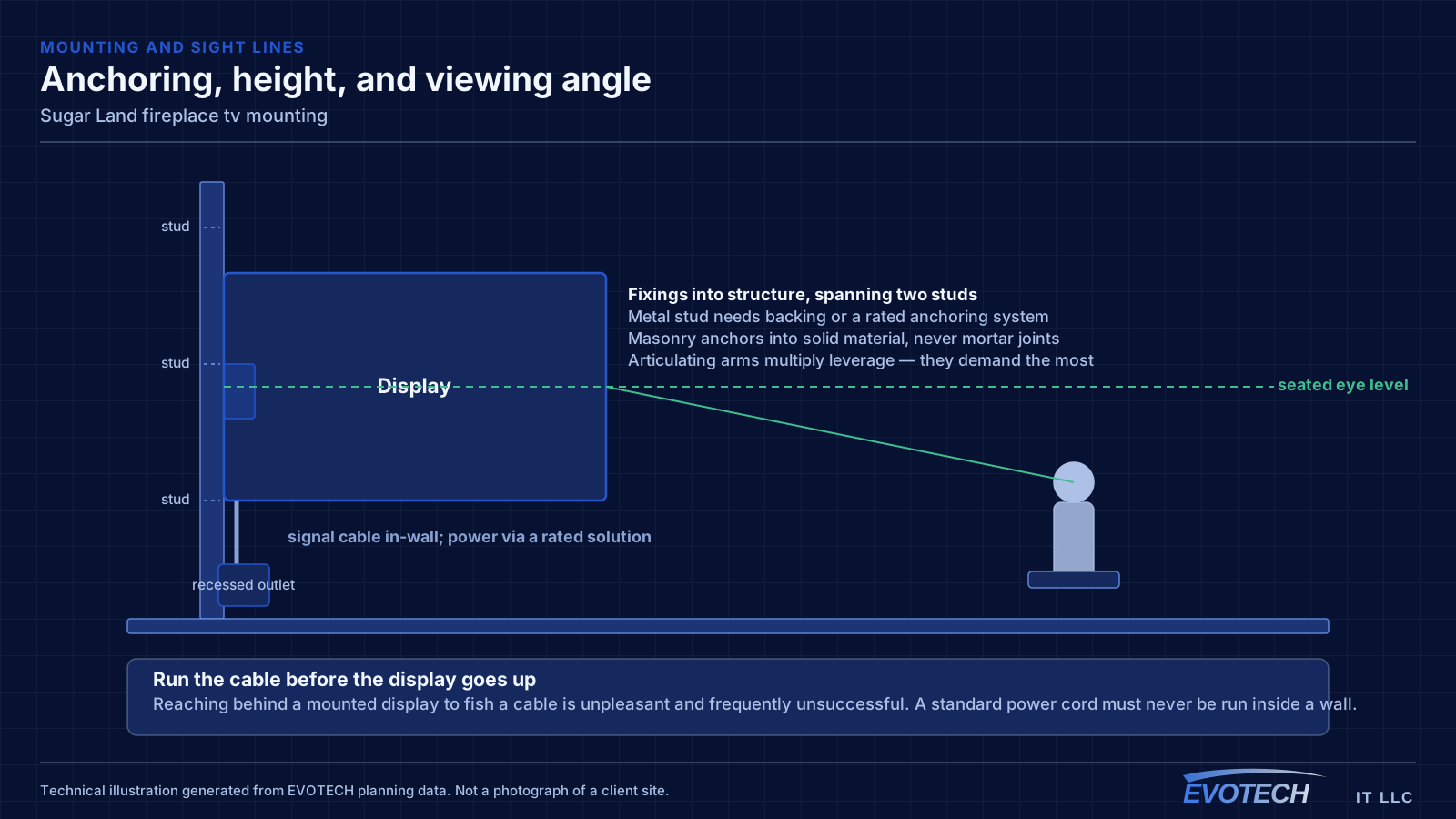
Mounting above a fireplace puts the screen higher than comfortable seated viewing and, depending on the fireplace, into rising heat. The height problem is the one people feel first: a TV centred over a mantel usually forces everyone to look up for the whole show. A tilting mount helps a little; a pull-down mount that brings the screen down and forward to near eye level when in use solves it properly, then returns it above the mantel when idle.
What fireplace tv mounting usually involves
The height compromise is the near-universal complaint: mounted above the mantel, the screen sits well above seated eye level, and a whole evening spent looking up is genuinely uncomfortable. Tilting the panel reduces glare and the angle a little but does not bring the screen down.
Heat is the less obvious but more serious issue. Some fireplaces push enough heat up the wall to sit electronics in a warm zone, which shortens their life or worse. And the surround is frequently masonry or stone, which needs different anchoring from drywall — anchors into solid material, not mortar joints.
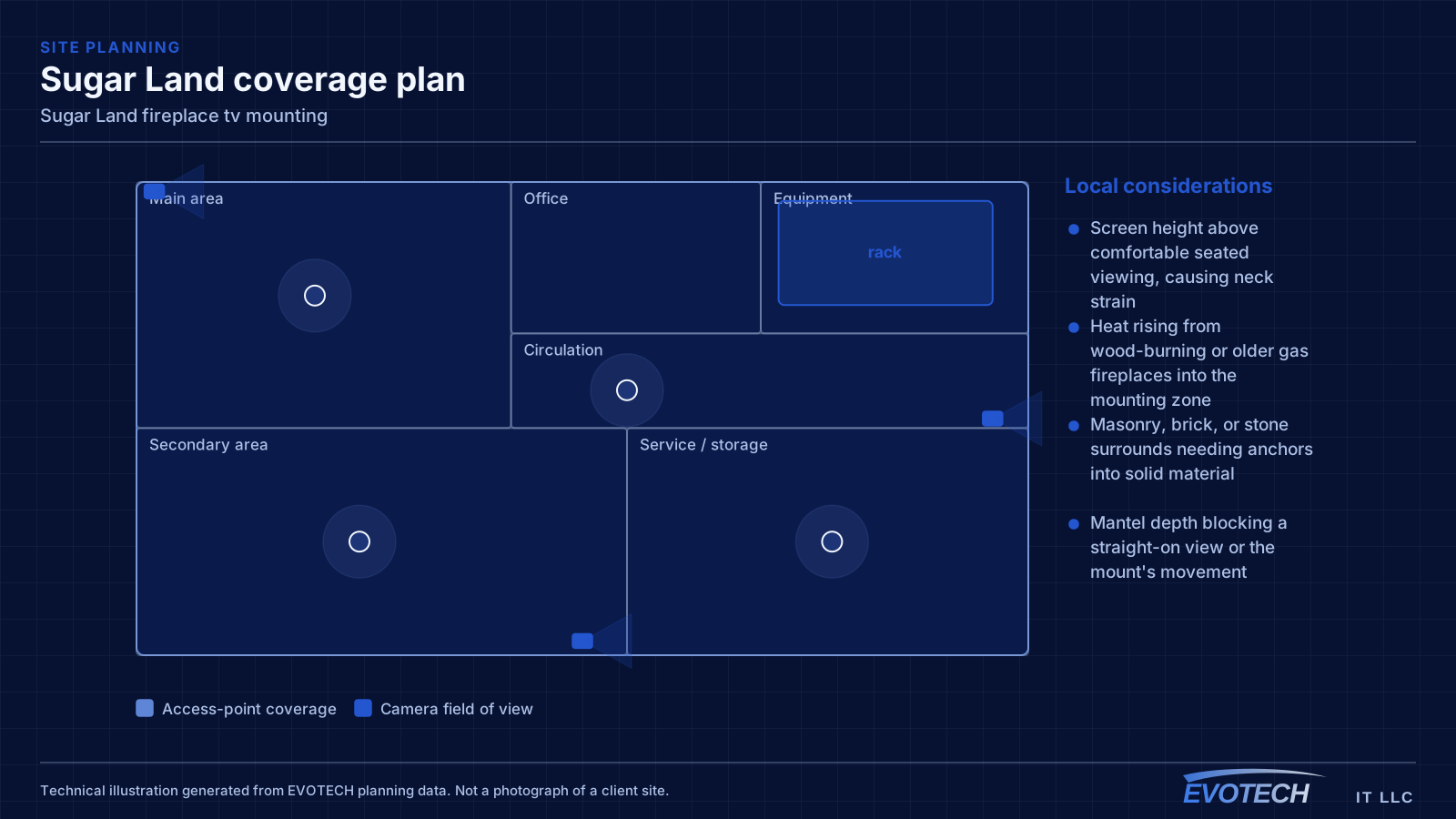
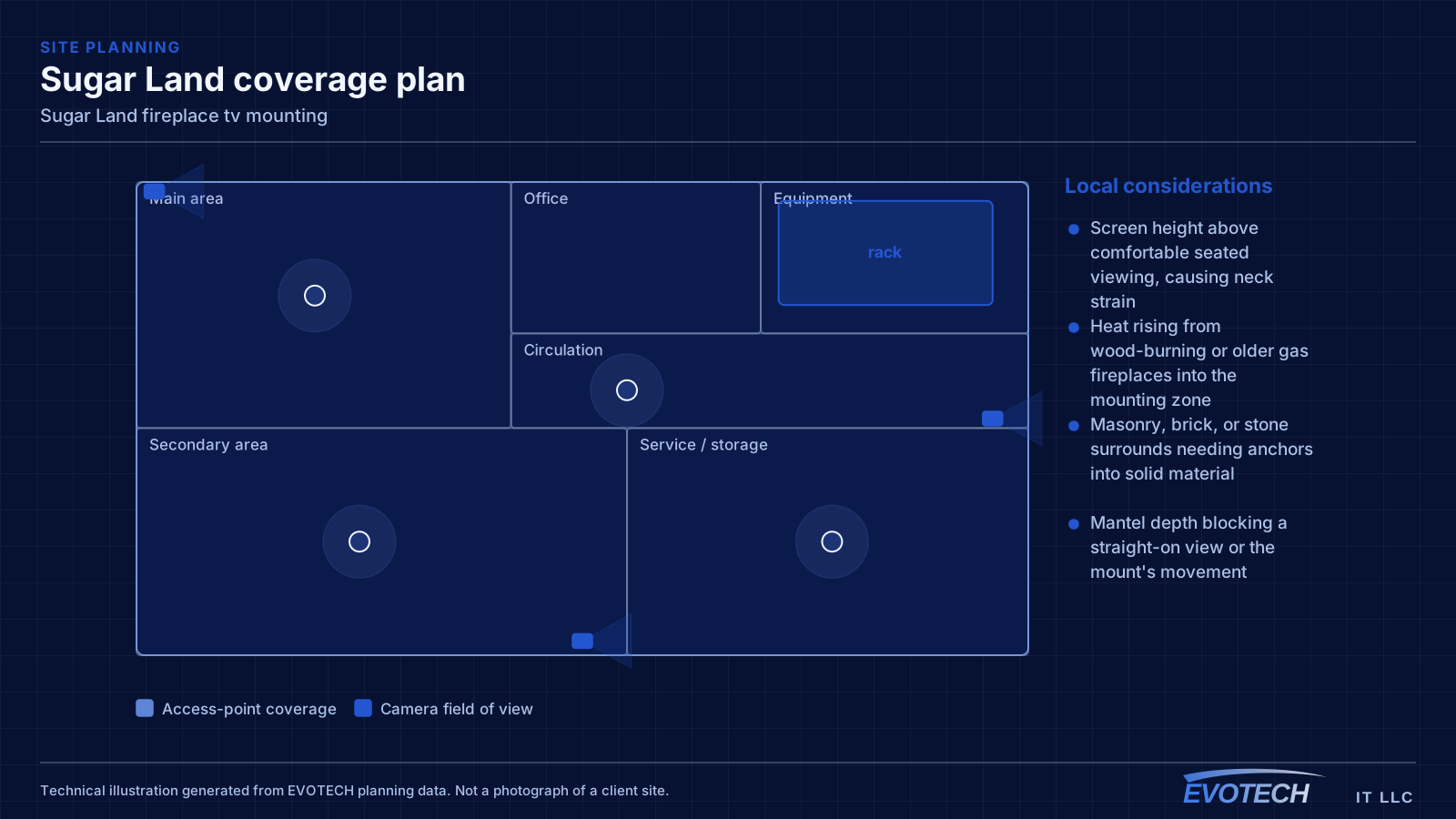
- Screen height above comfortable seated viewing, causing neck strain
- Heat rising from wood-burning or older gas fireplaces into the mounting zone
- Masonry, brick, or stone surrounds needing anchors into solid material
- Mantel depth blocking a straight-on view or the mount's movement
- In-wall cable routing complicated by the fireplace structure
- A tilt-only mount presented as a fix for the height problem
Sugar Land property conditions that change the plan
Office suites here typically have accessible suspended grid across the working areas, with hard-lid ceilings in reception, corridors, and some clinical rooms. That mix means a project can be straightforward across most of a floor and then hit a section requiring a very different approach, which is worth identifying at the walkthrough rather than mid-pull.
Medical suites add controlled areas — records storage, medication storage, treatment rooms — that shape both access-control scope and where cameras may and may not go. Those boundaries get agreed at design.
Landlord permissions come first in a multi-tenant building, because they determine what is possible before anything technical does. Riser access, permitted penetrations, after-hours arrangements, and whether a building engineer needs to be present all affect scheduling directly.
- Suspended grid across working areas with hard-lid reception and corridors
- Shared risers and core pathways governed by base-building rules
- Controlled areas in medical suites driving access-control scope
- Retail units with storefront glazing affecting entrance camera placement
- Newer construction generally offering better existing pathway than older stock
- Base-building rules confirmed before scheduling
- Hard-lid areas identified at walkthrough, not during the pull
- Controlled-area boundaries agreed for medical suites
- Equipment room location and whether it is shared or in-suite
- Finish and reinstatement expectations agreed in advance
- Cutover planning where clinical or practice systems are involved
Getting fireplace tv mounting done in Sugar Land
Height is solved by the mount type. A fixed or tilting mount leaves the screen high; a pull-down mount lowers the panel down and out over the mantel to near seated eye level when in use, which is the only arrangement that genuinely resolves the neck angle. Mantel depth matters here — the mount has to clear it through its full range of motion.
Most work here happens in occupied space with client- or patient-facing areas, so containment and clean reinstatement are baseline. Ceiling tile handling, dust control during any drilling, and complete clear-down at the end of each session matter more than they would on a shell fit-out.
- Containment and dust control in client-facing areas
- Careful ceiling tile handling and reinstatement
- After-hours access arranged through building management
- Sessions ending with the suite fully operational
- Coordination with practice or office management on controlled-area access
Frequently asked questions
Does EVOTECH have an office in Sugar Land?
No. This is a service-area page: EVOTECH serves Sugar Land without claiming a physical office there. The wording stays as coverage, not a location claim.
Is mounting a TV above the fireplace a bad idea?
It is a compromise, and worth naming as one. The screen usually ends up above comfortable seated eye level, and heat can be a concern on some fireplaces. A pull-down mount resolves the height by bringing the screen down to eye level in use, and a heat assessment settles the safety question. Sometimes the honest answer is a different wall, but with the right mount and a suitable fireplace it works well.
What usually delays a Sugar Land office project?
Base-building permissions, more often than anything technical. Riser access, permitted core penetrations, and after-hours arrangements are landlord decisions, and confirming them takes time that is easy to underestimate. Resolving those before scheduling avoids a crew arriving to find the riser locked.