
Why this page exists
Fiber-optic cabling in Sugar Land is scoped around the same physical realities EVOTECH weighs everywhere — but read through Sugar Land's specific conditions: commercial base weighted toward professional offices and medical suites rather than industrial space. This page pairs what the service actually involves with what the Sugar Land market changes about it.
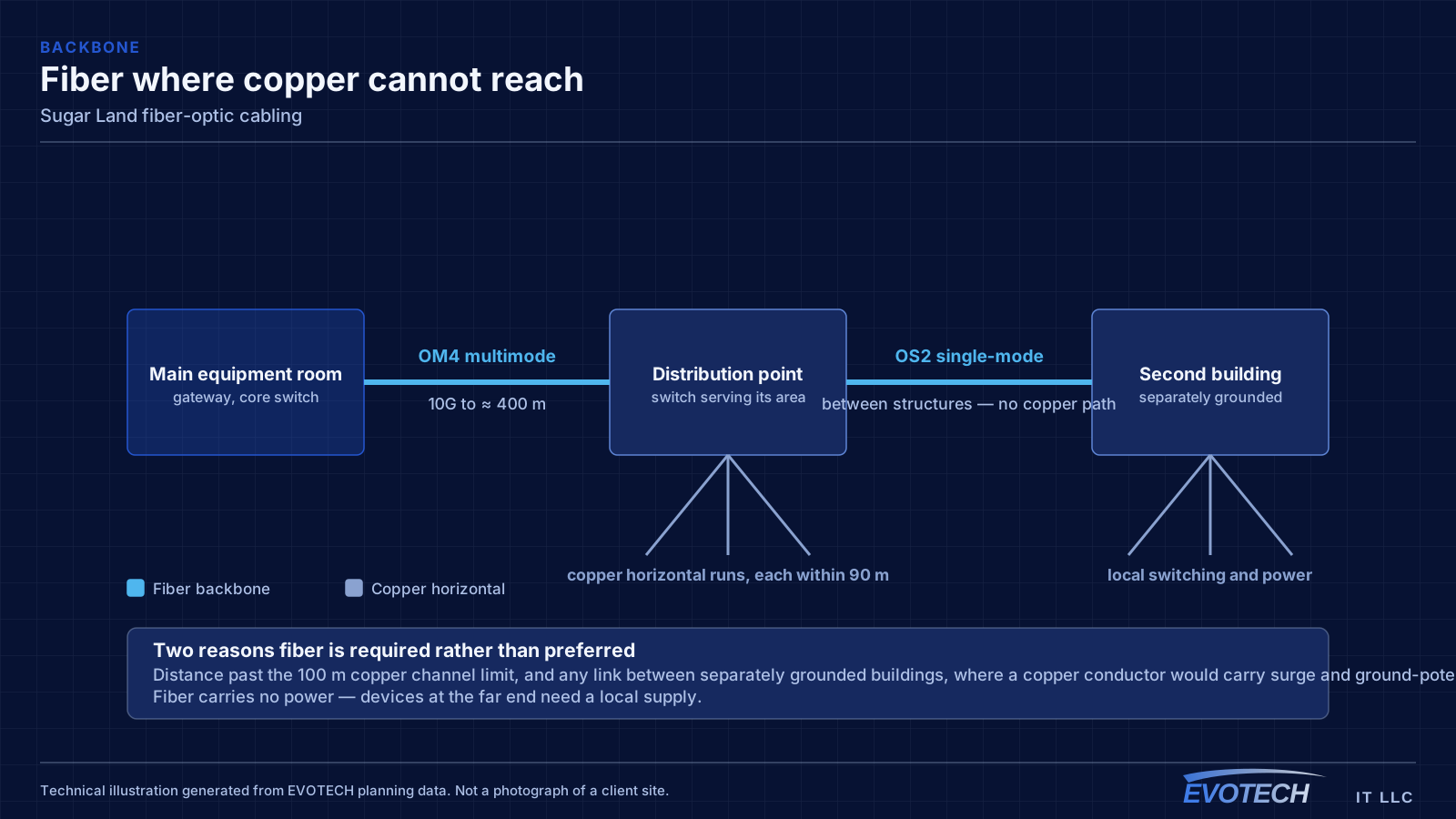
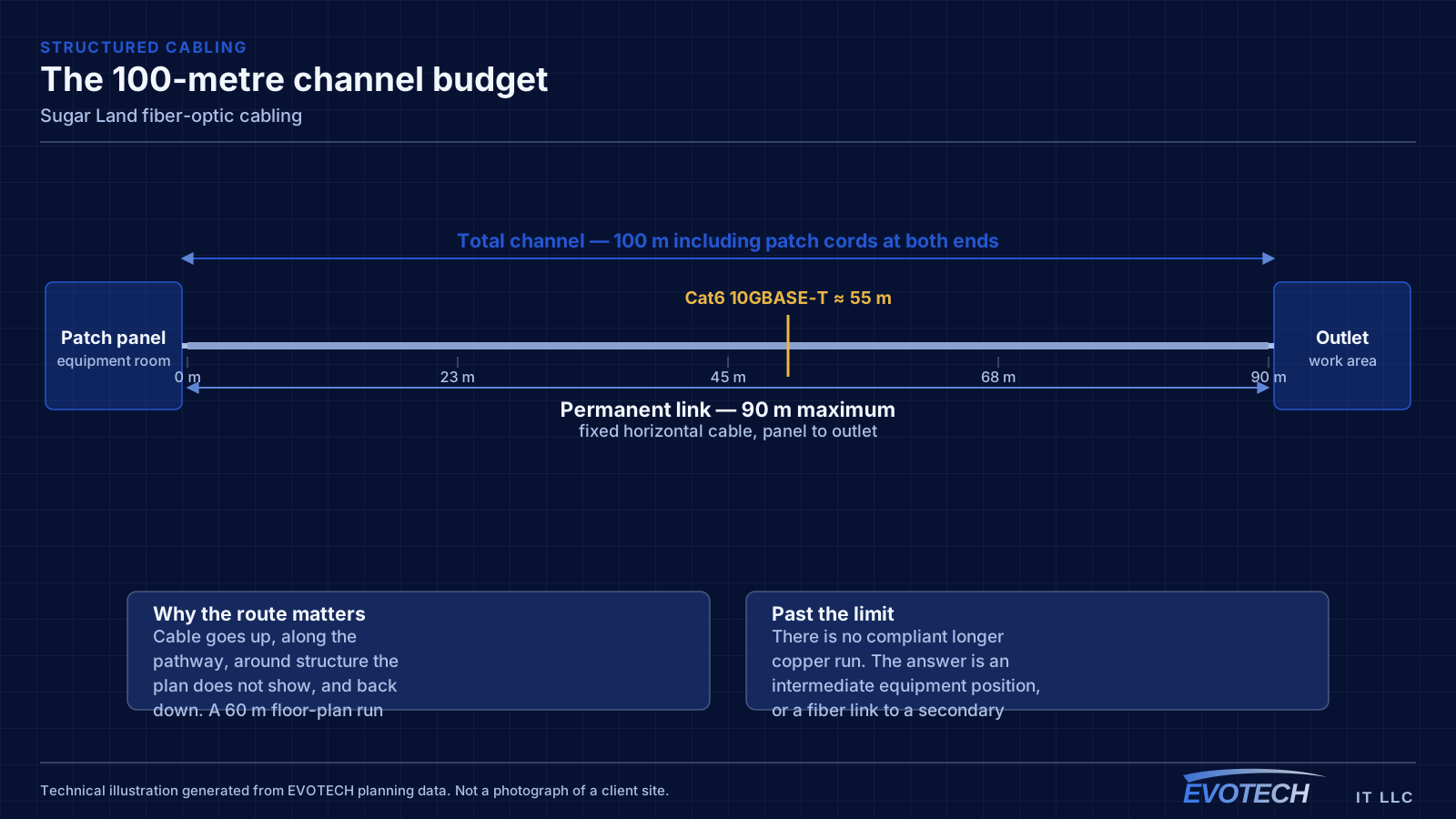
Fiber gets specified for reasons copper cannot address. The first is distance — multimode carries 10 gigabit a few hundred metres and single-mode carries it far further, while copper stops at 100 metres. The second is electrical isolation: a link between two separate buildings should not be a copper conductor, because the two structures can sit at different ground potentials and a lightning event has to go somewhere.
What fiber-optic cabling usually involves
Fiber problems are almost always contamination or handling. A connector end face with a single particle of dust on it can add loss well beyond the link budget, and the particle is invisible without a scope. Inspect-before-connect exists because the failure is so common and so easy to prevent.
The other failures are mechanical: a bend tighter than the cable's minimum radius causing macrobending loss, a pull that exceeded the cable's tension rating and stressed the fibers, and a mismatch between fiber types where a multimode patch cord ends up on a single-mode link.
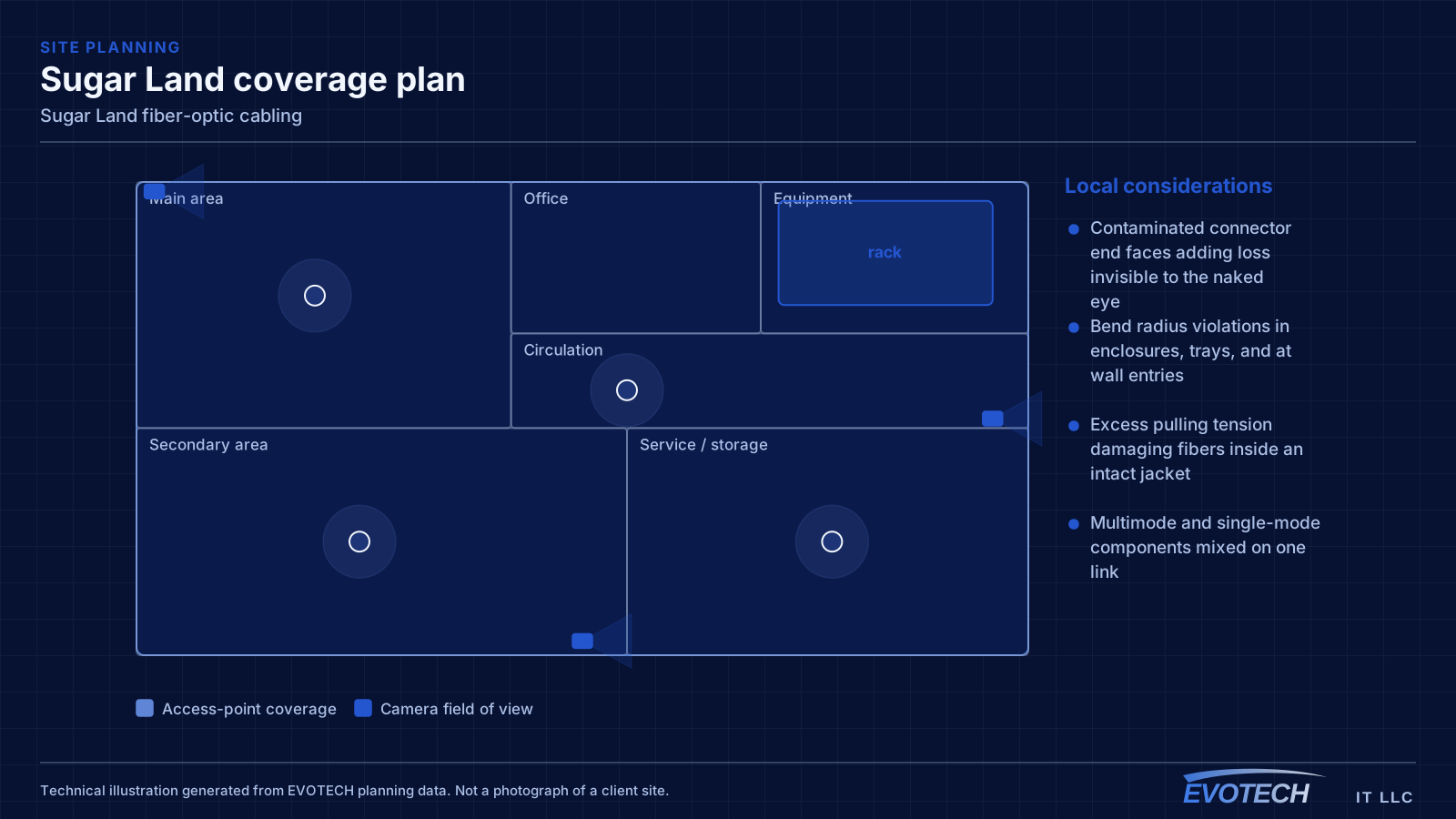
- Contaminated connector end faces adding loss invisible to the naked eye
- Bend radius violations in enclosures, trays, and at wall entries
- Excess pulling tension damaging fibers inside an intact jacket
- Multimode and single-mode components mixed on one link
- Unprotected splice trays with no strain relief or slack storage
Sugar Land property conditions that change the plan
Office suites here typically have accessible suspended grid across the working areas, with hard-lid ceilings in reception, corridors, and some clinical rooms. That mix means a project can be straightforward across most of a floor and then hit a section requiring a very different approach, which is worth identifying at the walkthrough rather than mid-pull.
Medical suites add controlled areas — records storage, medication storage, treatment rooms — that shape both access-control scope and where cameras may and may not go. Those boundaries get agreed at design.
Landlord permissions come first in a multi-tenant building, because they determine what is possible before anything technical does. Riser access, permitted penetrations, after-hours arrangements, and whether a building engineer needs to be present all affect scheduling directly.
- Suspended grid across working areas with hard-lid reception and corridors
- Shared risers and core pathways governed by base-building rules
- Controlled areas in medical suites driving access-control scope
- Retail units with storefront glazing affecting entrance camera placement
- Newer construction generally offering better existing pathway than older stock
- Base-building rules confirmed before scheduling
- Hard-lid areas identified at walkthrough, not during the pull
- Controlled-area boundaries agreed for medical suites
- Equipment room location and whether it is shared or in-suite
- Finish and reinstatement expectations agreed in advance
- Cutover planning where clinical or practice systems are involved
Getting fiber-optic cabling done in Sugar Land
Multimode fiber — OM3 and OM4 in current installations — is the usual choice for in-building backbones. OM3 supports 10 gigabit to roughly 300 metres and OM4 to roughly 400 metres, which covers almost any single building. Single-mode fiber carries far greater distances and is the correct choice for building-to-building links and anything with a long horizon.
Most work here happens in occupied space with client- or patient-facing areas, so containment and clean reinstatement are baseline. Ceiling tile handling, dust control during any drilling, and complete clear-down at the end of each session matter more than they would on a shell fit-out.
- Containment and dust control in client-facing areas
- Careful ceiling tile handling and reinstatement
- After-hours access arranged through building management
- Sessions ending with the suite fully operational
- Coordination with practice or office management on controlled-area access
Popular services nearby
Frequently searched near this area — the pages people look for most.
Frequently asked questions
Does EVOTECH have an office in Sugar Land?
No. This is a service-area page: EVOTECH serves Sugar Land without claiming a physical office there. The wording stays as coverage, not a location claim.
When is fiber necessary rather than optional?
Two situations make it necessary rather than a preference. First, distance: past the 100-metre copper channel limit there is no compliant copper answer. Second, links between separate buildings, where a copper conductor creates a path for surge and ground-potential differences. Inside those two cases fiber is not an upgrade — it is the correct method.
What usually delays a Sugar Land office project?
Base-building permissions, more often than anything technical. Riser access, permitted core penetrations, and after-hours arrangements are landlord decisions, and confirming them takes time that is easy to underestimate. Resolving those before scheduling avoids a crew arriving to find the riser locked.