

Why this page exists
Wi-Fi installation in Stafford is scoped around the same physical realities EVOTECH weighs everywhere — but read through Stafford's specific conditions: commercial base weighted toward warehouse, showroom, and light-industrial buildings rather than office space. This page pairs what the service actually involves with what the Stafford market changes about it.
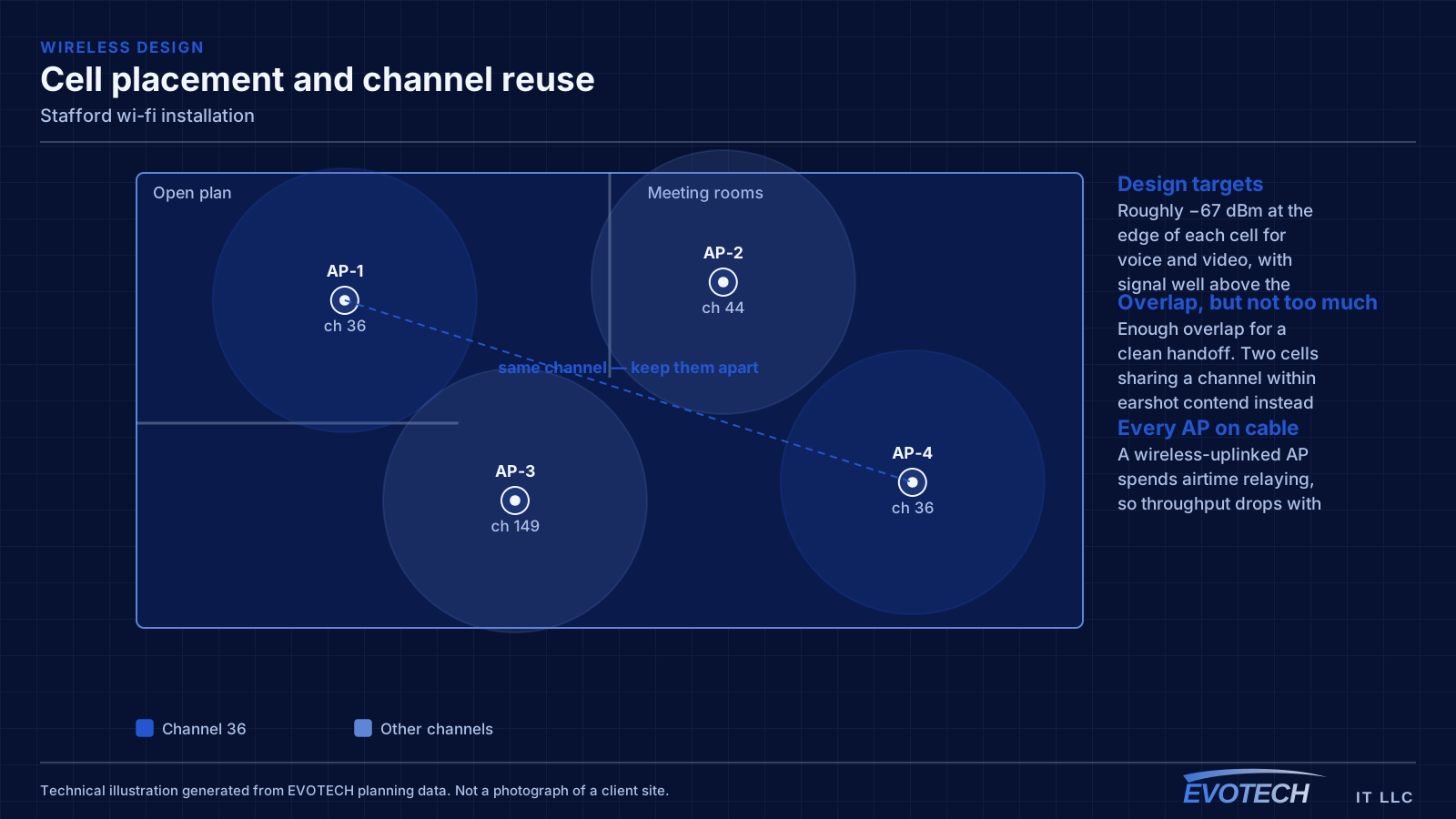
Good Wi-Fi comes from deciding where signal needs to be strong, then placing access points so that each area gets a solid signal from one AP without excessive overlap from others. The target most designs work to is around -67 dBm at the edge of each coverage area for voice and video, with signal comfortably above the local noise floor. Placement follows from that number and from the walls between the AP and the users.
What wi-fi installation usually involves
The most common complaint is a call dropping when someone walks from one room to another. That is a roaming problem, and it usually traces back to coverage design: either the cells overlap too little, so the client hangs onto a dying signal, or they overlap too much on the same channel, so everything is contending.
The second recurring problem is that the wireless network is blamed for a wired or internet issue. A device showing full signal bars and still performing badly is pointing at something past the access point — an oversubscribed uplink, a saturated internet circuit, or a switch port negotiating incorrectly.
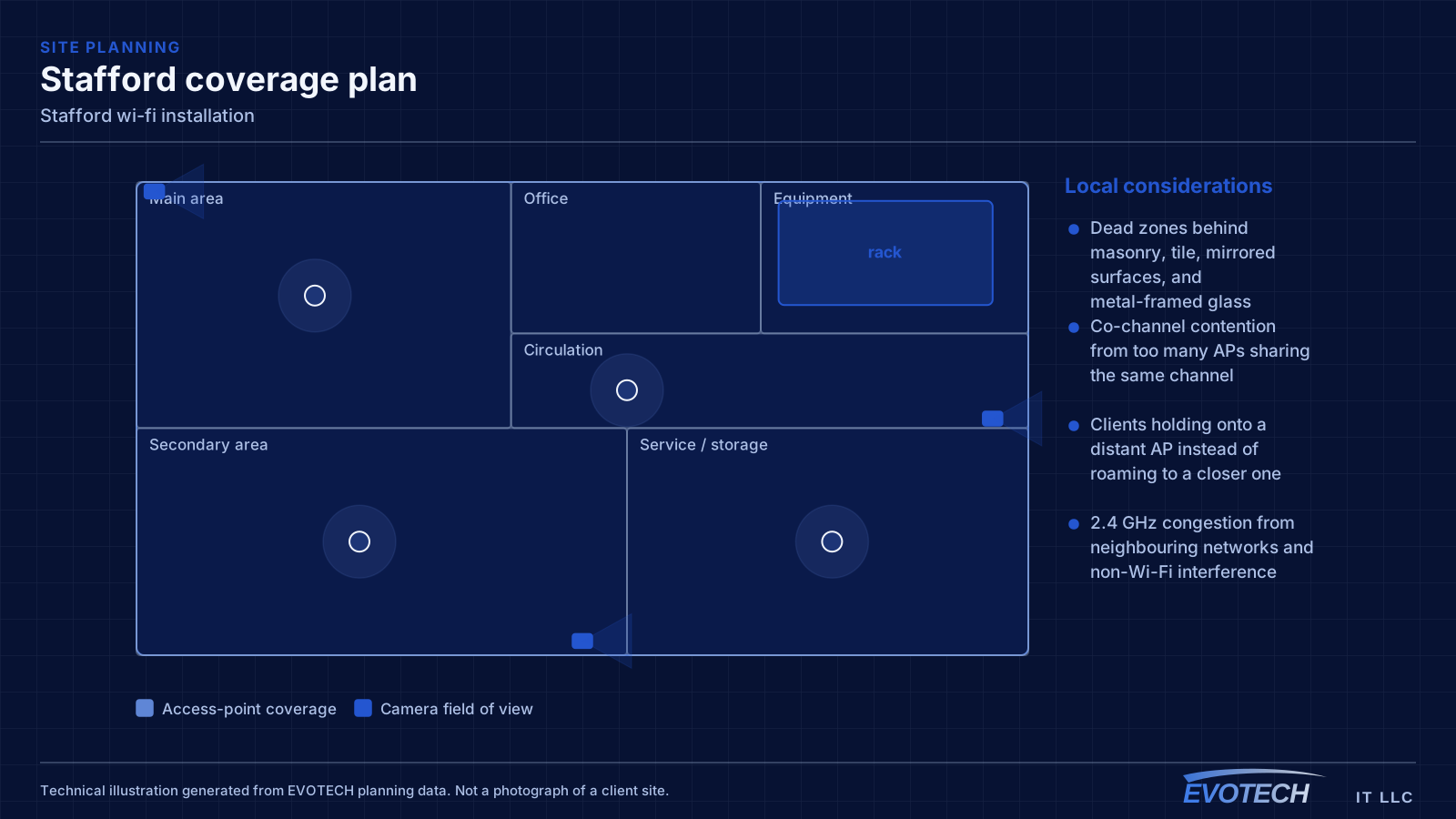
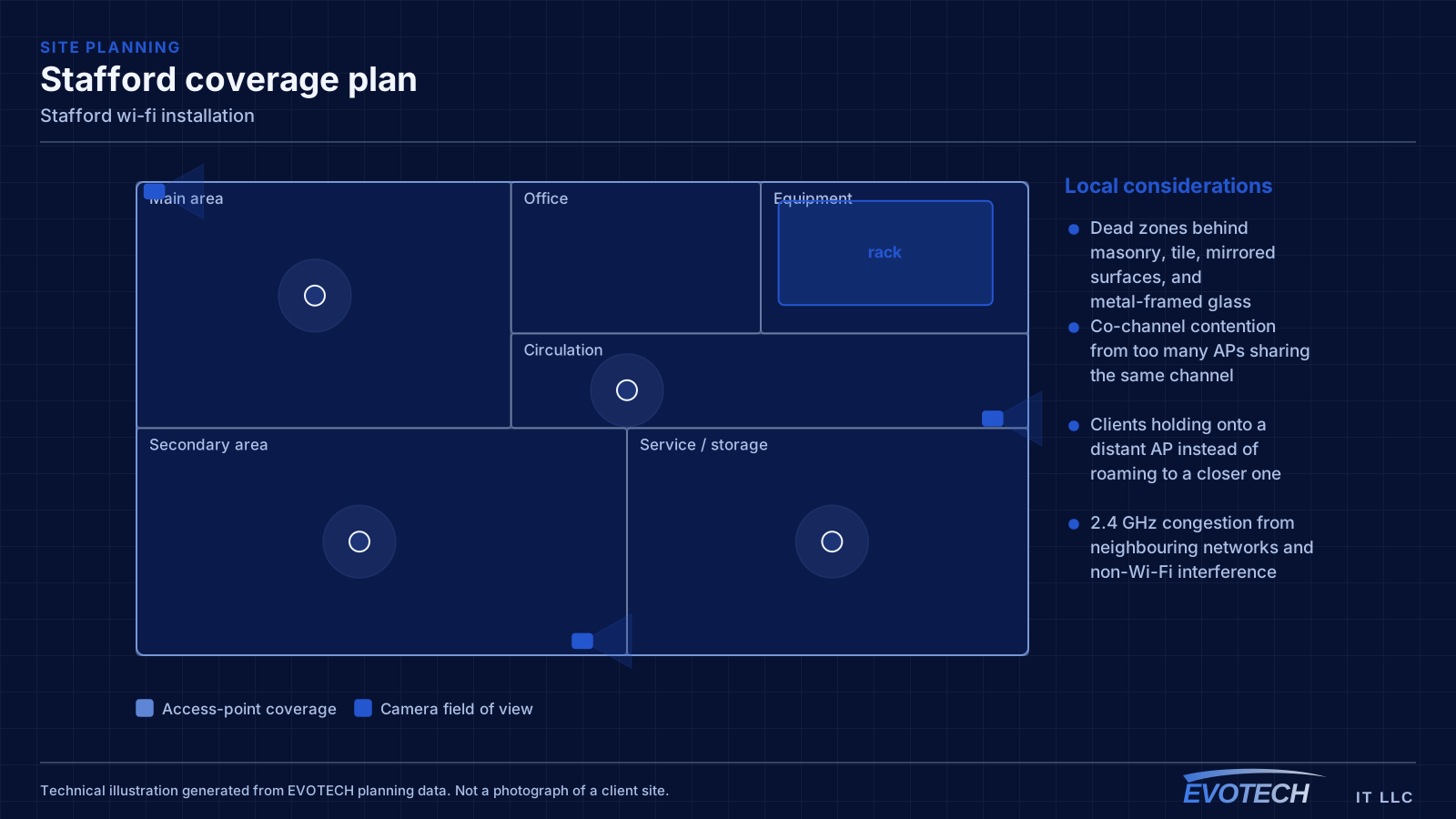
- Dead zones behind masonry, tile, mirrored surfaces, and metal-framed glass
- Co-channel contention from too many APs sharing the same channel
- Clients holding onto a distant AP instead of roaming to a closer one
- 2.4 GHz congestion from neighbouring networks and non-Wi-Fi interference
- Access points fed by repeaters instead of cable, halving effective throughput
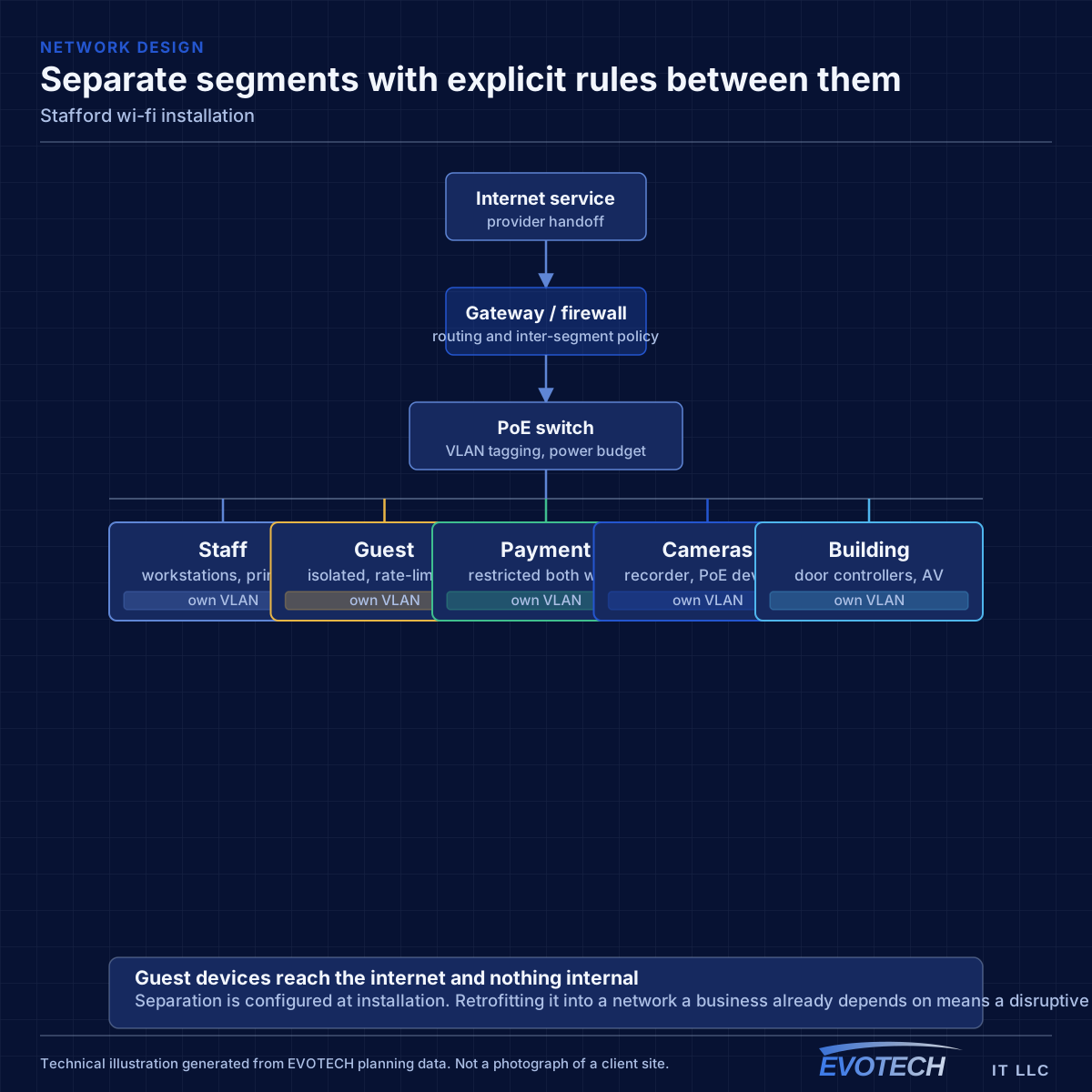
- Guest and business traffic sharing one network with no separation
Stafford property conditions that change the plan
Steel structure and metal cladding reflect wireless signal, which produces coverage patterns that do not match the intuition built from working in drywall offices. Add racking and stock, and the environment changes again — which is why designs based on an empty-building survey should be treated as provisional here.
Distance is the other constant. A building whose far corner sits beyond 100 metres of cable path from the equipment room needs an intermediate distribution point fed by fiber. That is standard practice, and it is more reliable than any attempt to stretch a copper run or bridge the gap wirelessly.
Two decisions dominate: where the intermediate distribution points go, and how access points are positioned relative to the racking. The first is arithmetic — measure the cable paths and place distribution points so every device sits within the limit. The second is a design judgement that benefits from validating with the racking loaded rather than empty.
- Metal structure reflecting signal and complicating coverage prediction
- Racking and stock changing the environment after the survey
- Footprints exceeding copper distance from a single position
- Small conditioned office areas attached to large operational space
- Dock and yard areas needing their own approach
- Fiber to intermediate distribution points where distance requires
- Access-point positioning designed for aisles, validated with stock in place
- Mounting height chosen deliberately rather than defaulting to the roof deck
- Equipment sited in conditioned space or a filtered enclosure
- Dock and yard camera positions resolved for distance and power
Getting wi-fi installation done in Stafford
Wireless capacity comes from having multiple non-overlapping channels in use across a space. In North America, 2.4 GHz offers three non-overlapping 20 MHz channels, which is why it congests so quickly — in a dense building the neighbours are using them too. The 5 GHz band offers far more channels, including DFS channels that require radar detection and which many designs skip unnecessarily. The 6 GHz band, where equipment and regulations permit, adds substantially more spectrum with the caveat that only newer client devices can use it.
High-level work needs lift access, and that needs floor space clear of racking, stock, and forklift traffic — usually the largest scheduling constraint on a warehouse project. Coordinating it with operations often means working during quieter shifts or scheduled shutdowns.
- Lift access requiring clear floor coordinated with operations
- Work often scheduled during quieter shifts or shutdowns
- Pathways routed clear of forklift and racking impact zones
- Proper support and containment for exposed runs
- Dust protection for equipment in operational areas
Frequently asked questions
Does EVOTECH have an office in Stafford?
No. This is a service-area page: EVOTECH serves Stafford without claiming a physical office there. The wording stays as coverage, not a location claim.
Why does a call drop when walking between rooms?
That is a roaming symptom. Either the coverage areas do not overlap enough, so the device holds a fading signal past the point of usefulness, or they overlap heavily on the same channel, so the handoff happens into a congested cell. Both are fixed by adjusting placement, power, and the channel plan rather than by adding another access point at the same settings.
Why is wireless harder in a metal building?
Steel reflects, which produces coverage patterns quite unlike those in drywall construction — strong in some places, unexpectedly weak in others, with reflections that interfere with each other. Add stocked racking, which absorbs signal, and a design based on an empty building no longer applies. Validation with stock in place is the step that matters.