

Why this page exists
This pairing is justified because Stafford's warehouse and flex-space concentration presents two conditions absent from office environments: metal structure that reflects signal unpredictably, and footprints that exceed copper distance from a single equipment position.
Steel structure and metal cladding reflect signal, producing coverage patterns that do not match expectations built in drywall buildings. Then racking gets installed and stocked, and the environment changes again — absorbing signal in the aisles where the scanners actually are.
The second condition is distance. Warehouse footprints frequently exceed what a single equipment room can serve within the 100-metre copper limit, which makes the network topology a design decision rather than a default.
Designing for aisles, validating with stock
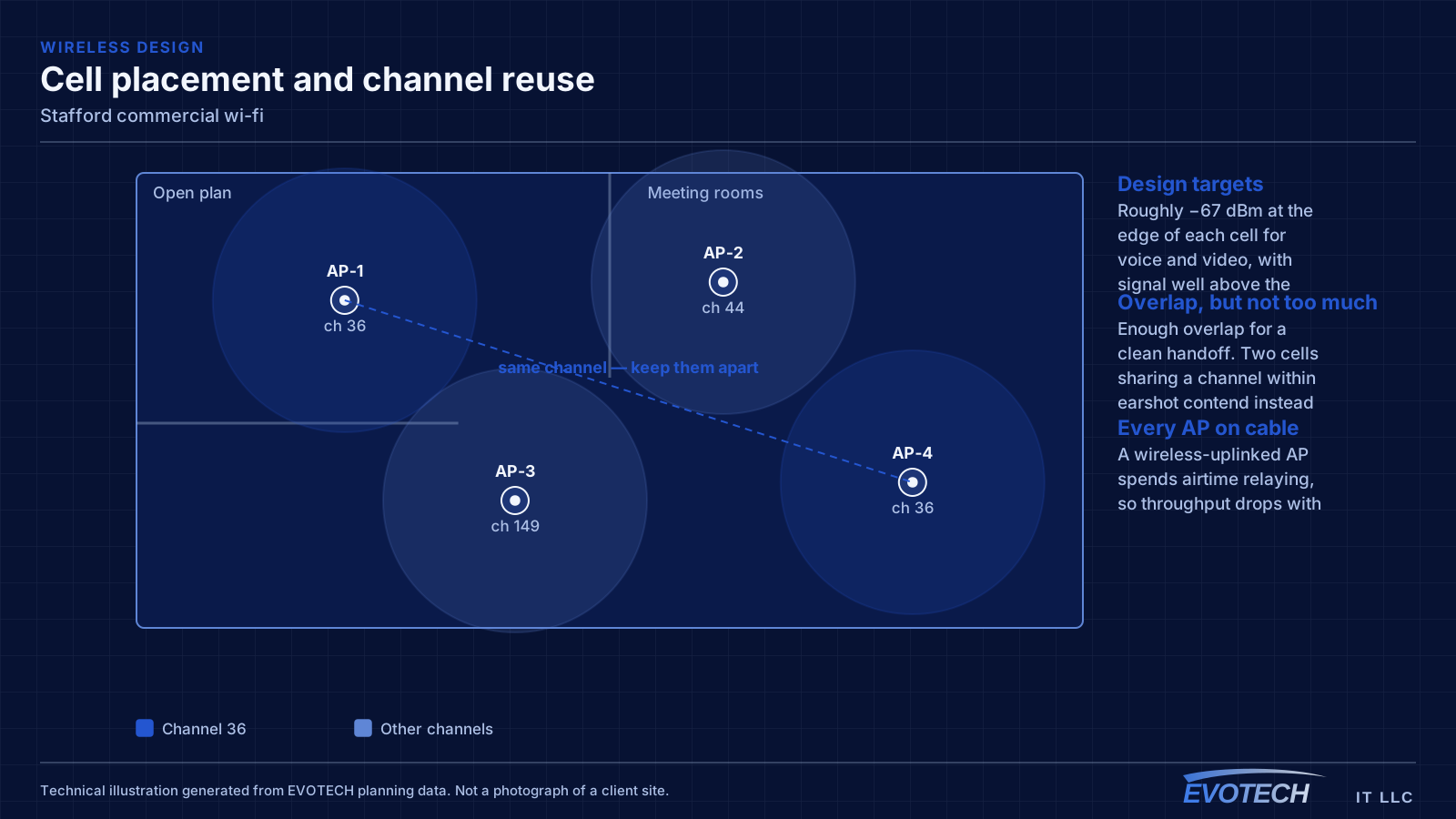
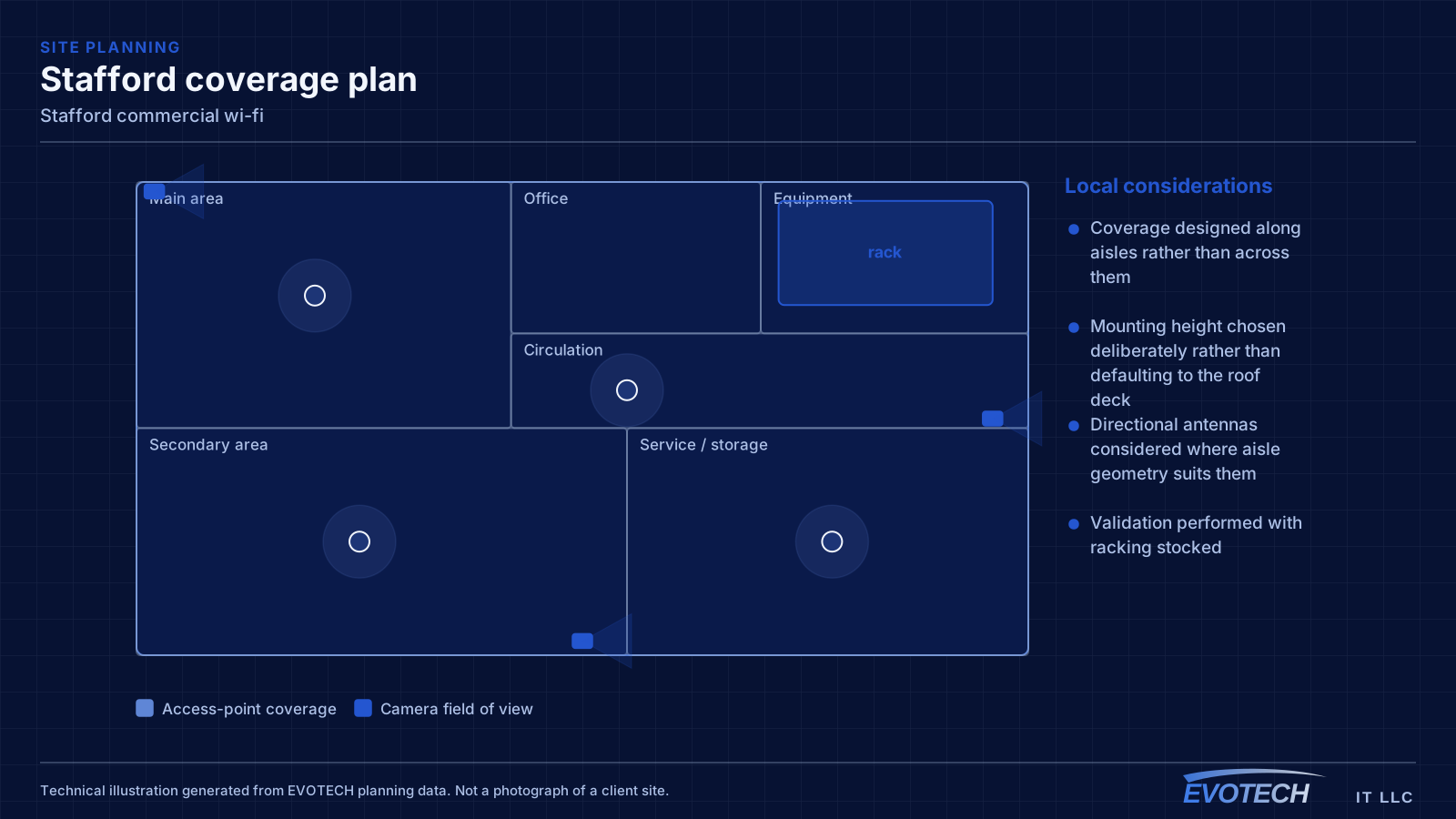
Coverage gets designed along the aisles rather than across the open floor, because that is where the devices are and because racking blocks the cross-aisle paths. Mounting height is a deliberate choice: roof-deck mounting is convenient but puts the access point above the racking, forcing signal down through stock.
Whatever the design says, validation happens with the racking loaded. An empty-building survey is a starting point, not a result, and treating it as one is the most common cause of warehouse coverage complaints after fit-out.
- Coverage designed along aisles rather than across them
- Mounting height chosen deliberately rather than defaulting to the roof deck
- Directional antennas considered where aisle geometry suits them
- Validation performed with racking stocked
- Roaming tested by walking loaded aisles with a real device
Topology and equipment placement
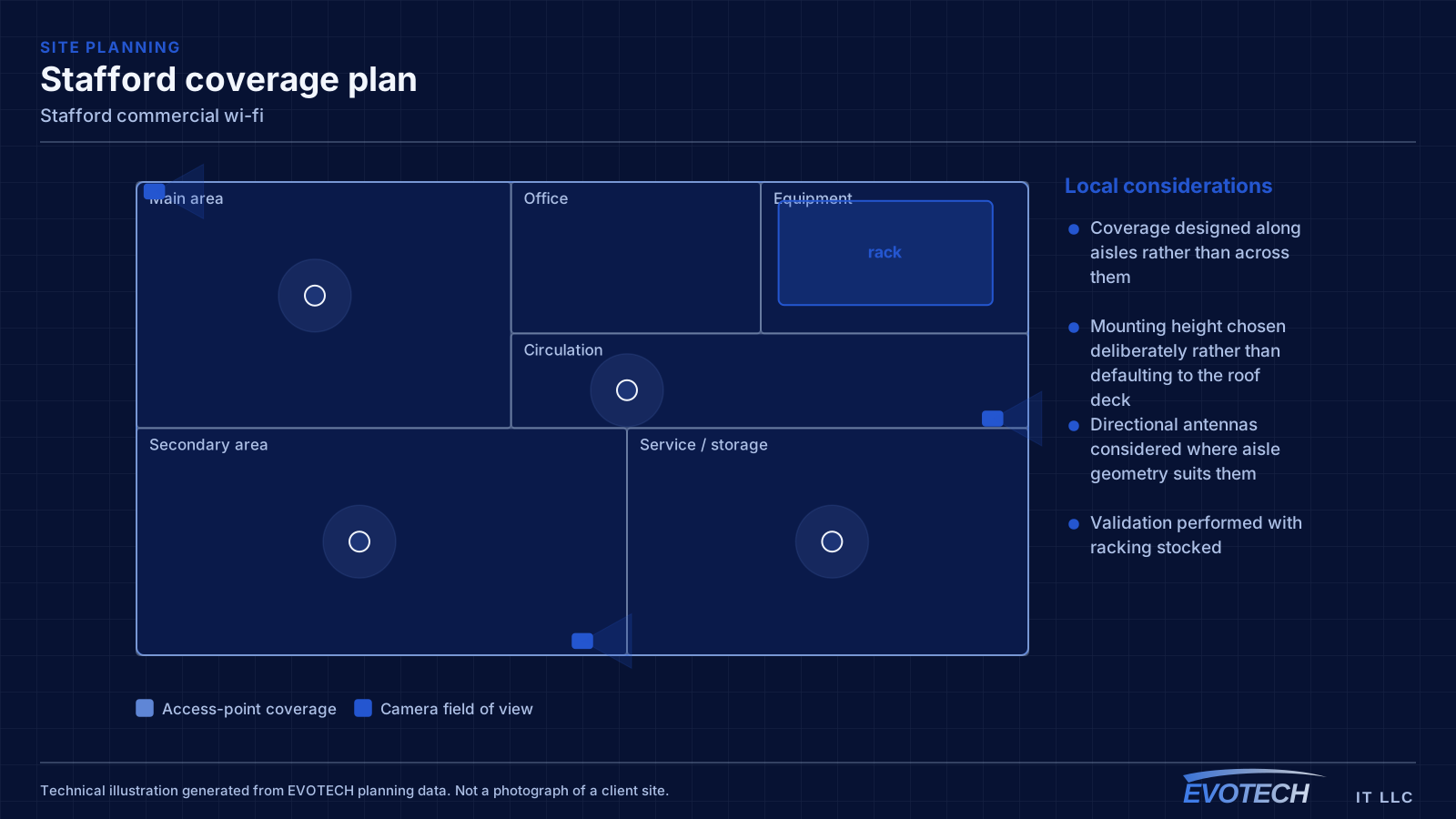
Where the far end of the building sits beyond copper reach, an intermediate distribution point fed by fiber serves that area with copper within the limit. This is standard structured-cabling practice and considerably more reliable than stretching a run or bridging wirelessly.
Equipment placement matters more here than in conditioned buildings. A rack in unconditioned operational space faces summer temperatures and airborne dust; siting it in the office area or in a filtered enclosure extends equipment life meaningfully.
- Fiber to intermediate distribution points where distance requires
- Copper runs from each distribution point kept within the channel limit
- Equipment sited in conditioned space or a filtered enclosure
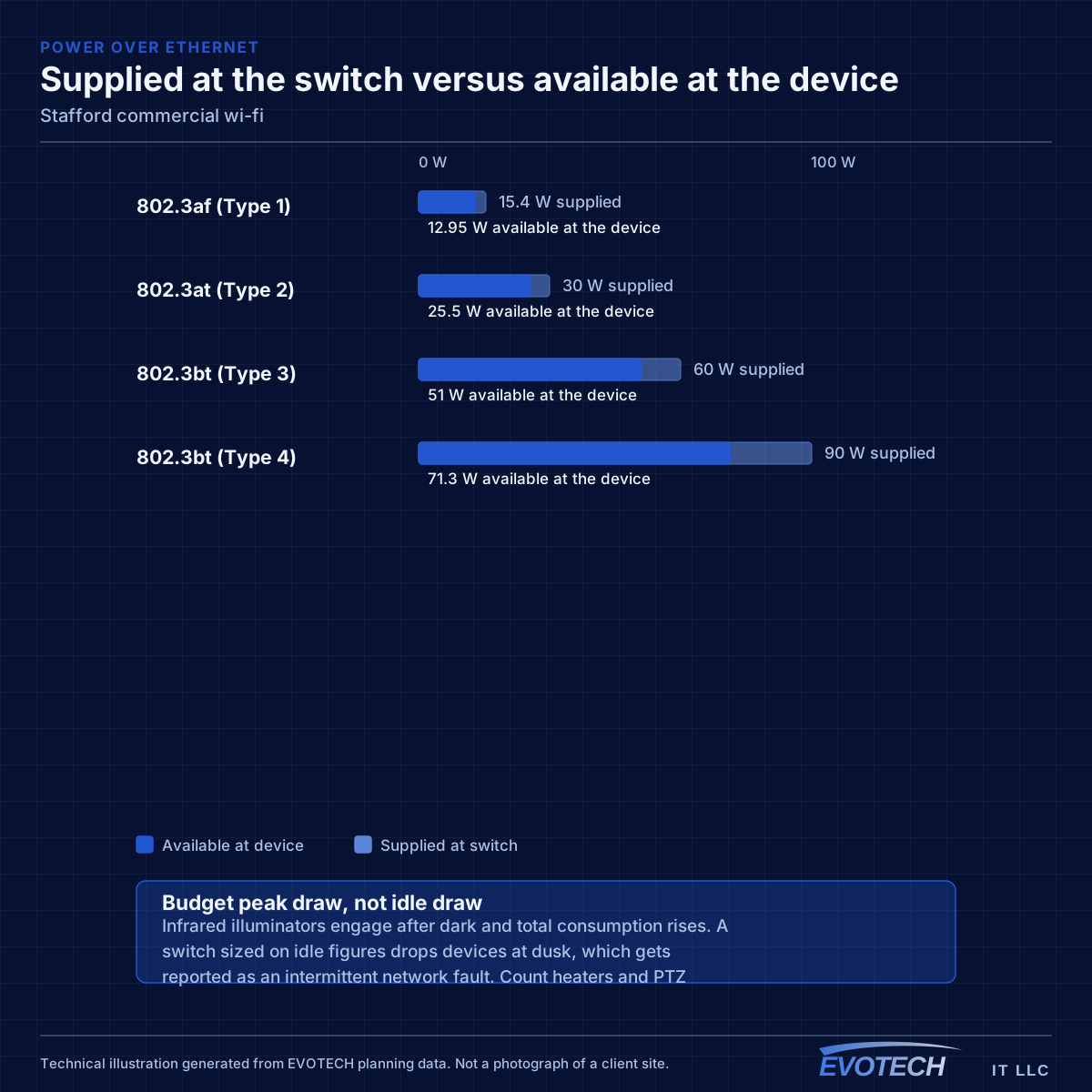
- Switch PoE budget sized for access points and any cameras together
- Office and operational areas segmented from each other
Access and operations
High-level work needs lift access, and lift access needs floor space clear of racking, stock, and forklift traffic. Coordinating that with operations is usually the largest scheduling constraint on a warehouse project, and it often means working during quieter shifts or a scheduled shutdown.
Cable pathways in operational areas stay clear of forklift and racking impact zones, with proper support and containment rather than runs laid loose across structure.
- Lift access coordinated with operations for clear floor space
- Work often scheduled during quieter shifts or shutdowns
- Pathways routed clear of forklift and racking impact zones
- Exposed runs properly supported and contained
- Dust protection for equipment in operational areas
Frequently asked questions
Why does an empty-building survey not hold up?
Because stock changes the radio environment. Metal racking reflects and palletised goods absorb, and the aisles where handheld devices operate are exactly where that absorption happens. A survey done before fit-out is a useful starting point, but validation has to happen with the racking loaded.
Should access points go on the roof deck?
Not by default. Roof-deck mounting is convenient but places the access point above the racking, so signal has to travel down through stock to reach devices in the aisles. Mounting at or near racking height and covering along the aisles usually serves handheld and forklift-mounted devices better.
How is the far end of a large warehouse served?
With an intermediate distribution point fed by fiber, serving its area with copper inside the 100-metre limit. Past that limit there is no compliant copper answer, and this approach is both standard practice and far more reliable than stretching a run or bridging the gap wirelessly.