
Why this page exists
Commercial Wi-Fi in Webster is scoped around the same physical realities EVOTECH weighs everywhere — but read through Webster's specific conditions: a concentration of medical suites with controlled areas and clinical scheduling. This page pairs what the service actually involves with what the Webster market changes about it.
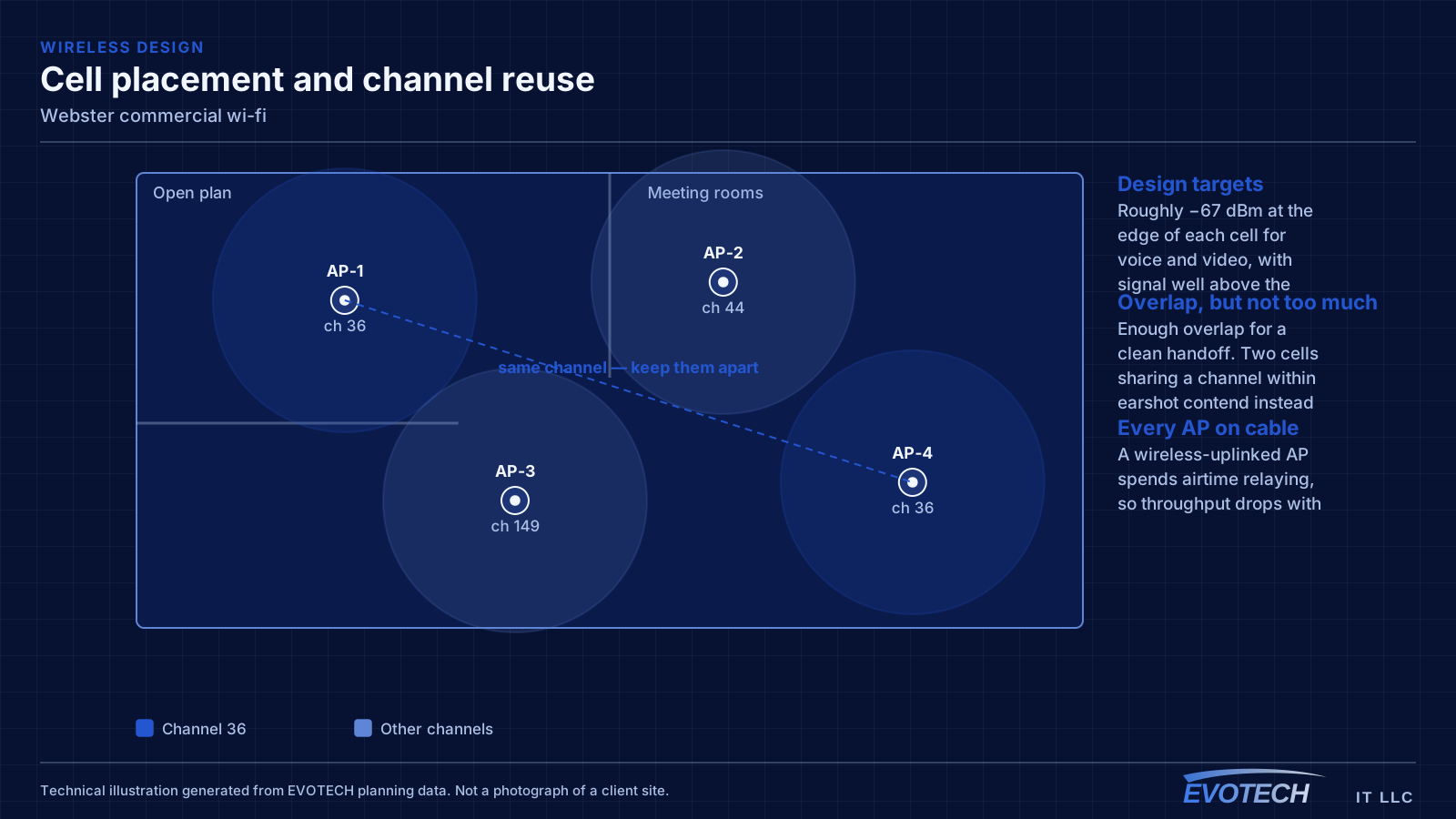
In a business space the binding constraint is usually capacity, not coverage. A twelve-person conference room with laptops, phones, a display system, and a room controller can put more demand into one cell than an entire floor of scattered desks. Design starts by counting devices per area and what those devices are doing, then works out how many access points and how much spectrum that area needs.
What commercial wi-fi usually involves
The characteristic commercial failure is the meeting room that fails at the worst moment. Everyone joins the same call from the same cell, the shared channel saturates, and the video degrades for the whole room. This is a capacity design issue that a coverage-only survey will never surface.
The second is guest traffic with no boundary. An open network that reaches the same address space as the point-of-sale system or the camera recorder is a real exposure, and it is also a support problem, because guest usage then competes directly with business systems for bandwidth.
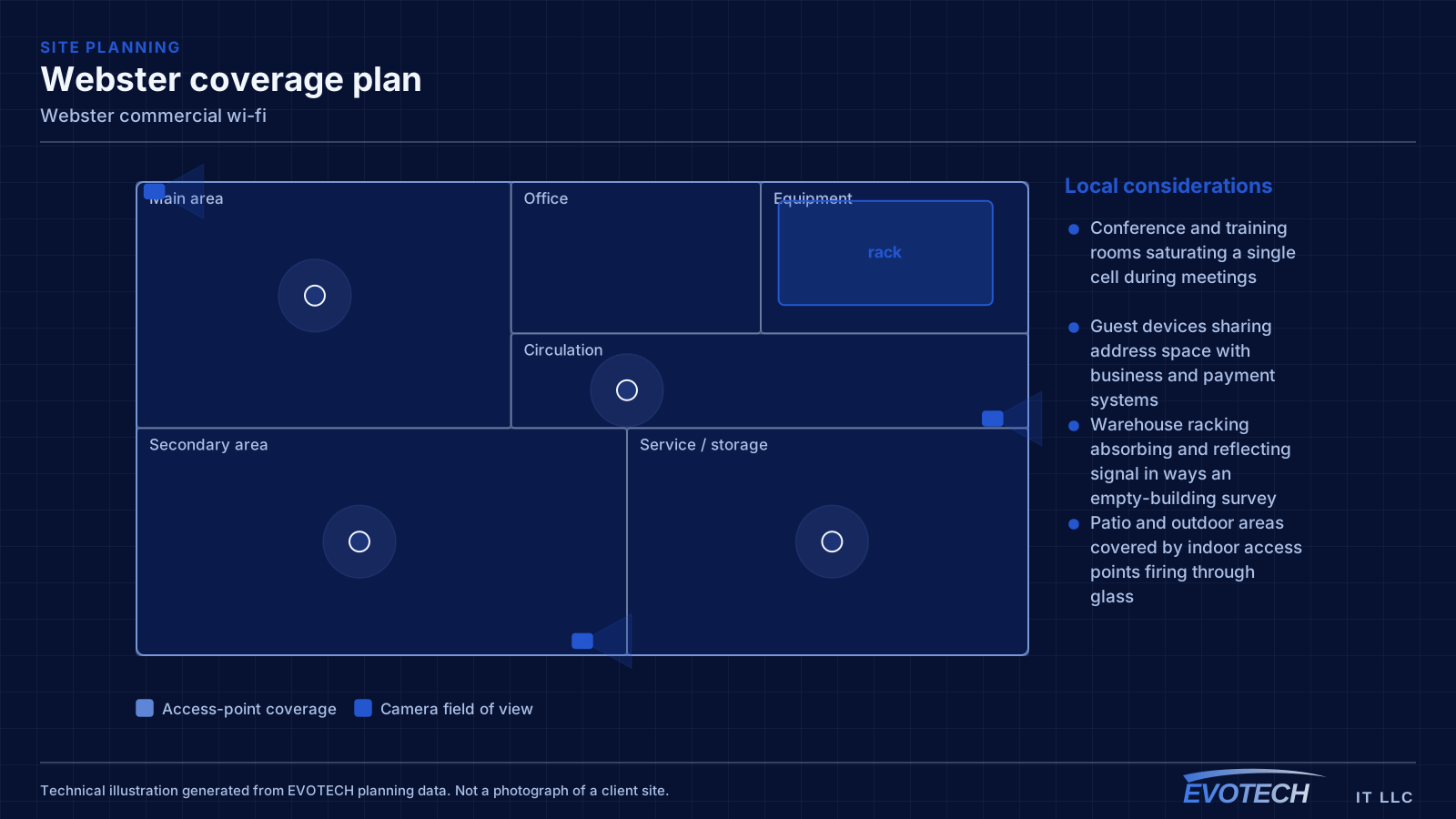
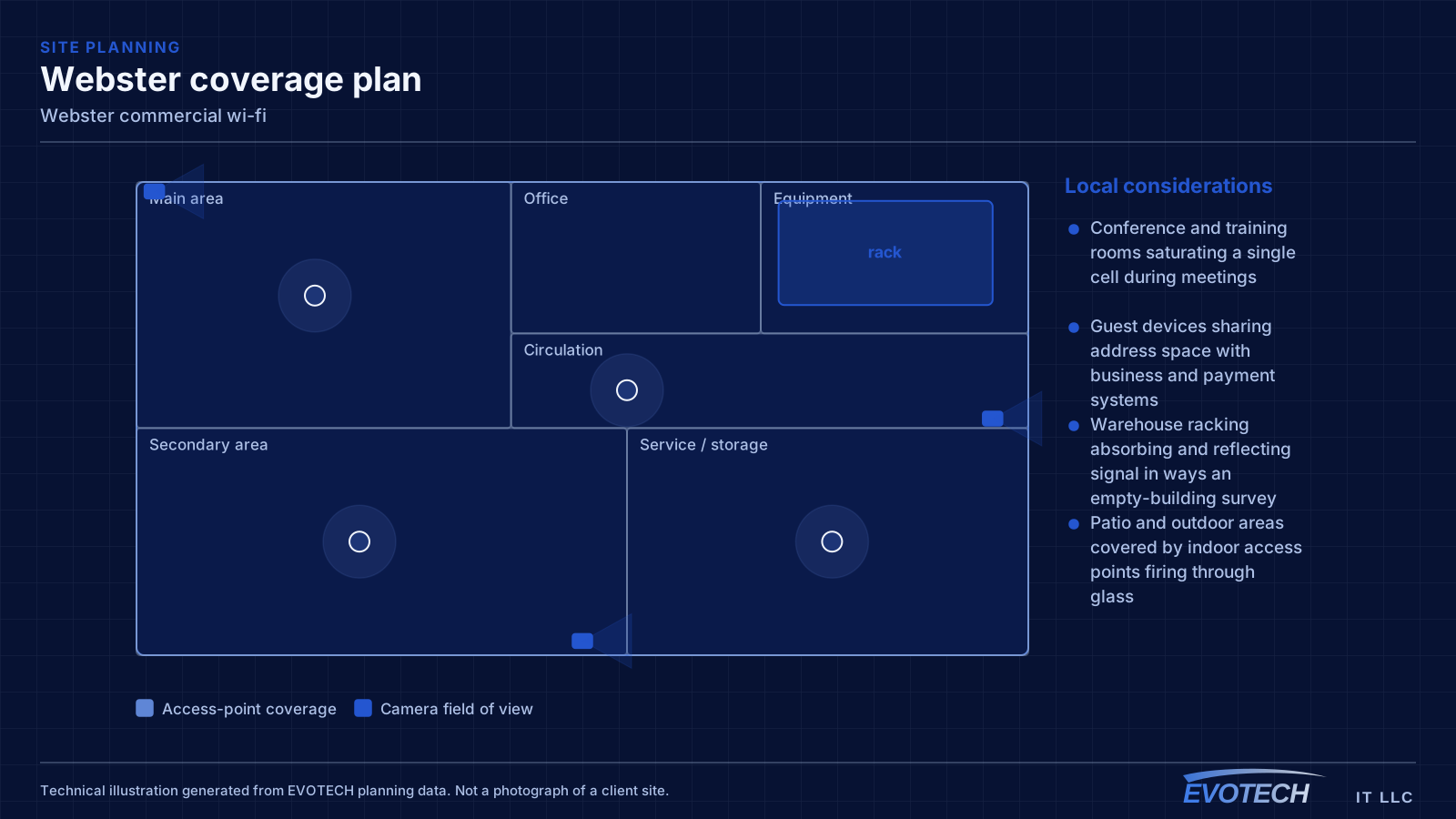
- Conference and training rooms saturating a single cell during meetings
- Guest devices sharing address space with business and payment systems
- Warehouse racking absorbing and reflecting signal in ways an empty-building survey missed
- Patio and outdoor areas covered by indoor access points firing through glass
- Neighbouring tenants' networks occupying the same channels
- Access points added ad hoc without revisiting the channel plan
Webster property conditions that change the plan
Medical suites bring controlled areas — records and medication storage — that drive access-control scope and camera boundaries, and clinical schedules that constrain cutovers. Retail and hospitality bring payment and guest segmentation, and storefront glazing that complicates entrance cameras.
Multi-tenant buildings add base-building permissions that often shape the schedule more than the technical scope.
Medical work agrees controlled-area and camera boundaries and schedules cutovers around clinical sessions. Retail and hospitality separate payment, guest, and operations traffic. Multi-tenant permissions are confirmed before scheduling.
- Medical suites with controlled areas
- Retail and hospitality with segmentation needs
- Multi-tenant buildings with base-building rules
- Suspended-grid tenant-improvement buildouts
- Storefront glazing affecting entrance cameras
- Controlled-area and camera boundaries in medical suites
- Payment, guest, and operations segmentation in retail and hospitality
- Base-building permissions confirmed before scheduling
- Entrance cameras framed to avoid storefront backlighting
- Cutovers scheduled around clinical sessions
Getting commercial wi-fi done in Webster
Capacity planning works from the airtime side. Every device on a channel takes turns; a slower device holds the channel longer for the same amount of data. That is why one legacy device on 2.4 GHz can visibly slow a cell, and why moving capable clients to higher bands and to narrower, more numerous channels usually helps more than adding hardware.
Client- and patient-facing areas need containment and clean reinstatement; after-hours access is arranged through building management; residential follows summer attic scheduling.
- Containment and clean reinstatement in finished areas
- After-hours access through building management
- Medical cutovers around clinical sessions
- Rated exterior housings and sealed penetrations
- Residential attic work scheduled early in summer
Popular services nearby
Frequently searched near this area — the pages people look for most.
Frequently asked questions
Does EVOTECH have an office in Webster?
No. This is a service-area page: EVOTECH serves Webster without claiming a physical office there. The wording stays as coverage, not a location claim.
How many access points does a business space need?
It comes out of density rather than area. A quiet office floor might be covered by a handful of access points; a conference-heavy floor with the same square footage might need more, concentrated where people gather. The count is an output of counting devices per area and understanding what they do — which is why a walkthrough beats a per-square-foot rule.
Does EVOTECH have an office in Webster?
No. This site does not claim a physical office in Webster or anywhere else. Webster is described as a service-area market — coverage, not a location claim.