
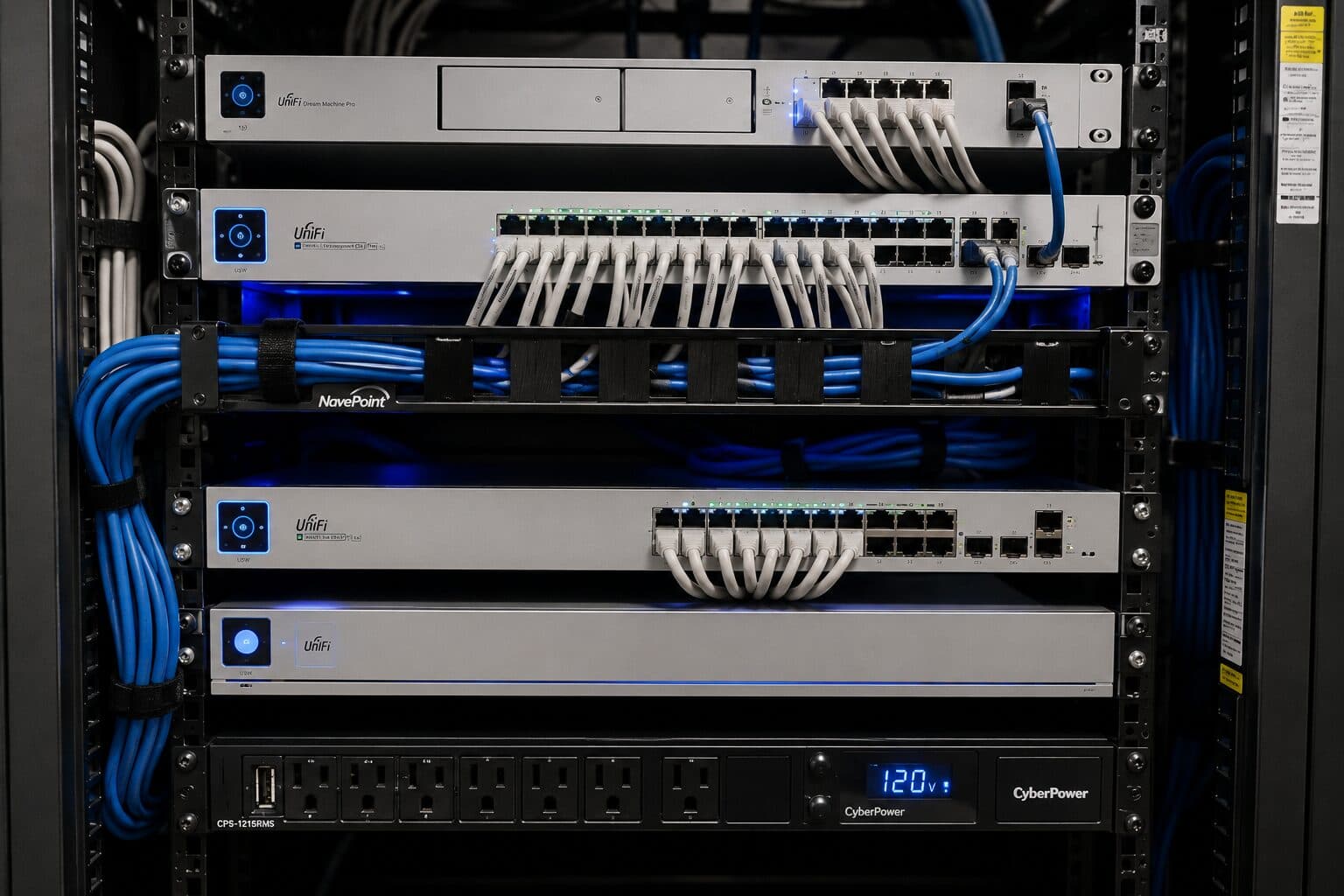
Why this page exists
Wi-Fi installation in Spring is scoped around the same physical realities EVOTECH weighs everywhere — but read through Spring's specific conditions: retail and food-service commercial base where payment-system separation is a standing requirement. This page pairs what the service actually involves with what the Spring market changes about it.
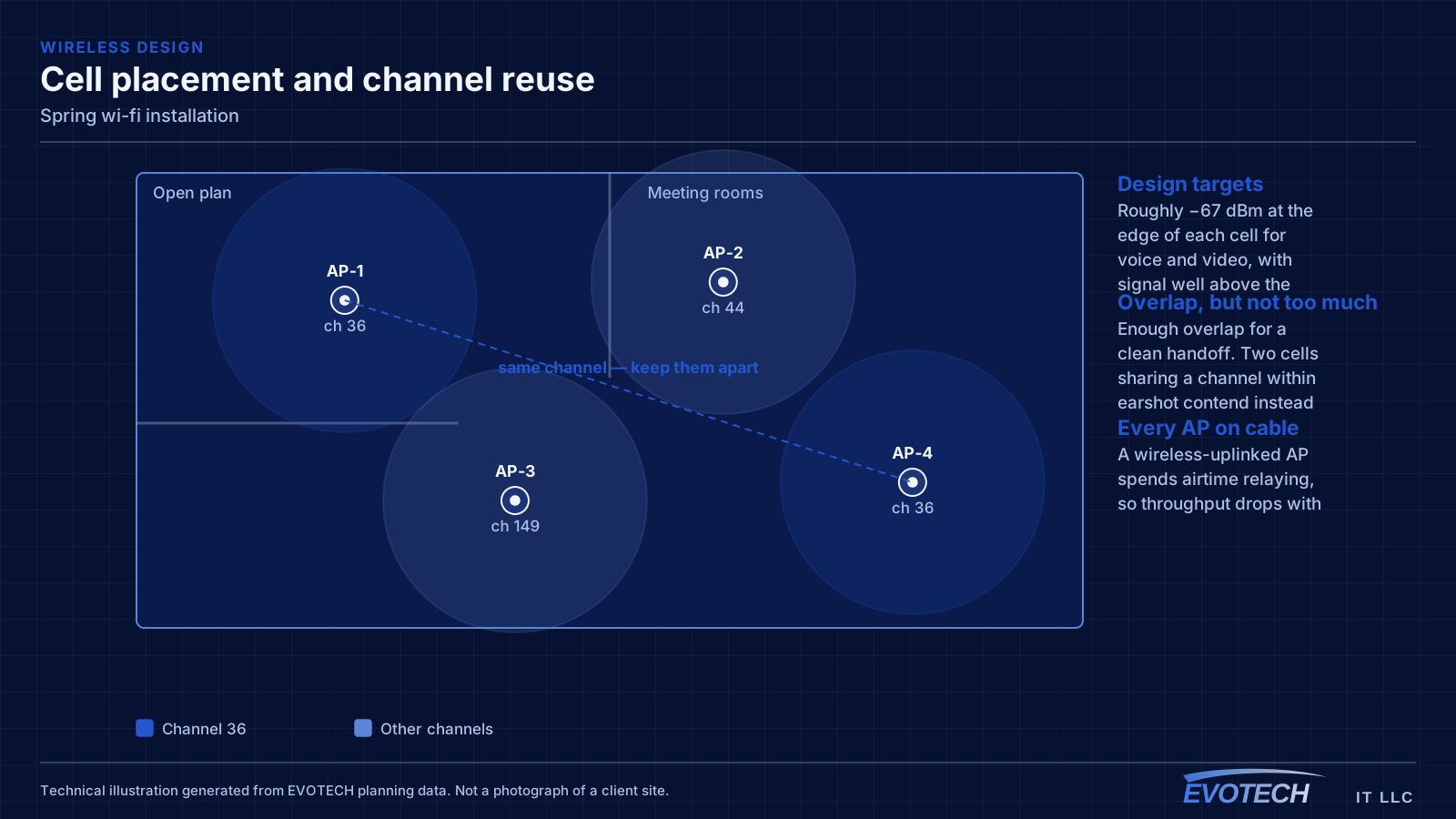
Good Wi-Fi comes from deciding where signal needs to be strong, then placing access points so that each area gets a solid signal from one AP without excessive overlap from others. The target most designs work to is around -67 dBm at the edge of each coverage area for voice and video, with signal comfortably above the local noise floor. Placement follows from that number and from the walls between the AP and the users.
What wi-fi installation usually involves
The most common complaint is a call dropping when someone walks from one room to another. That is a roaming problem, and it usually traces back to coverage design: either the cells overlap too little, so the client hangs onto a dying signal, or they overlap too much on the same channel, so everything is contending.
The second recurring problem is that the wireless network is blamed for a wired or internet issue. A device showing full signal bars and still performing badly is pointing at something past the access point — an oversubscribed uplink, a saturated internet circuit, or a switch port negotiating incorrectly.
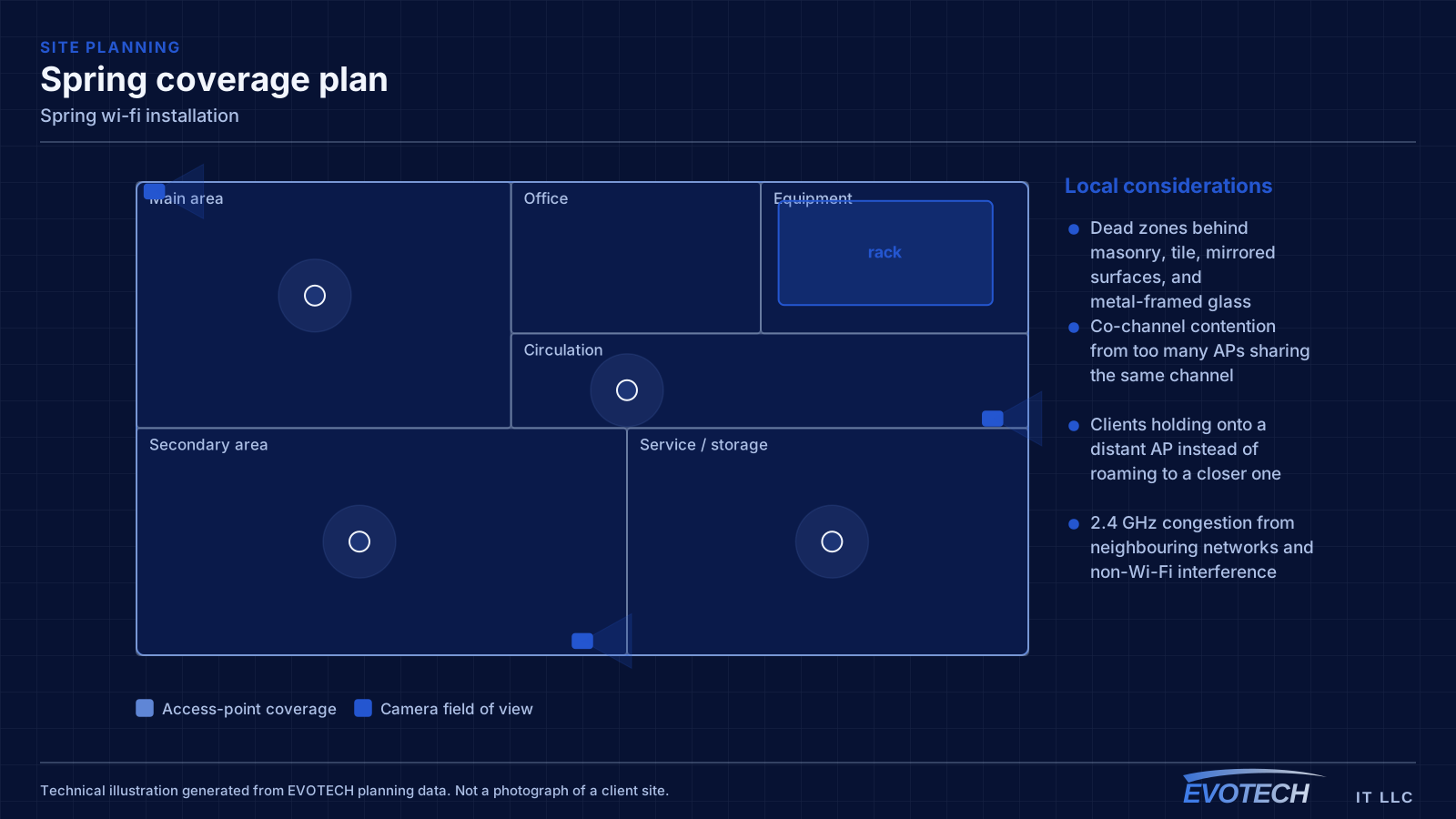
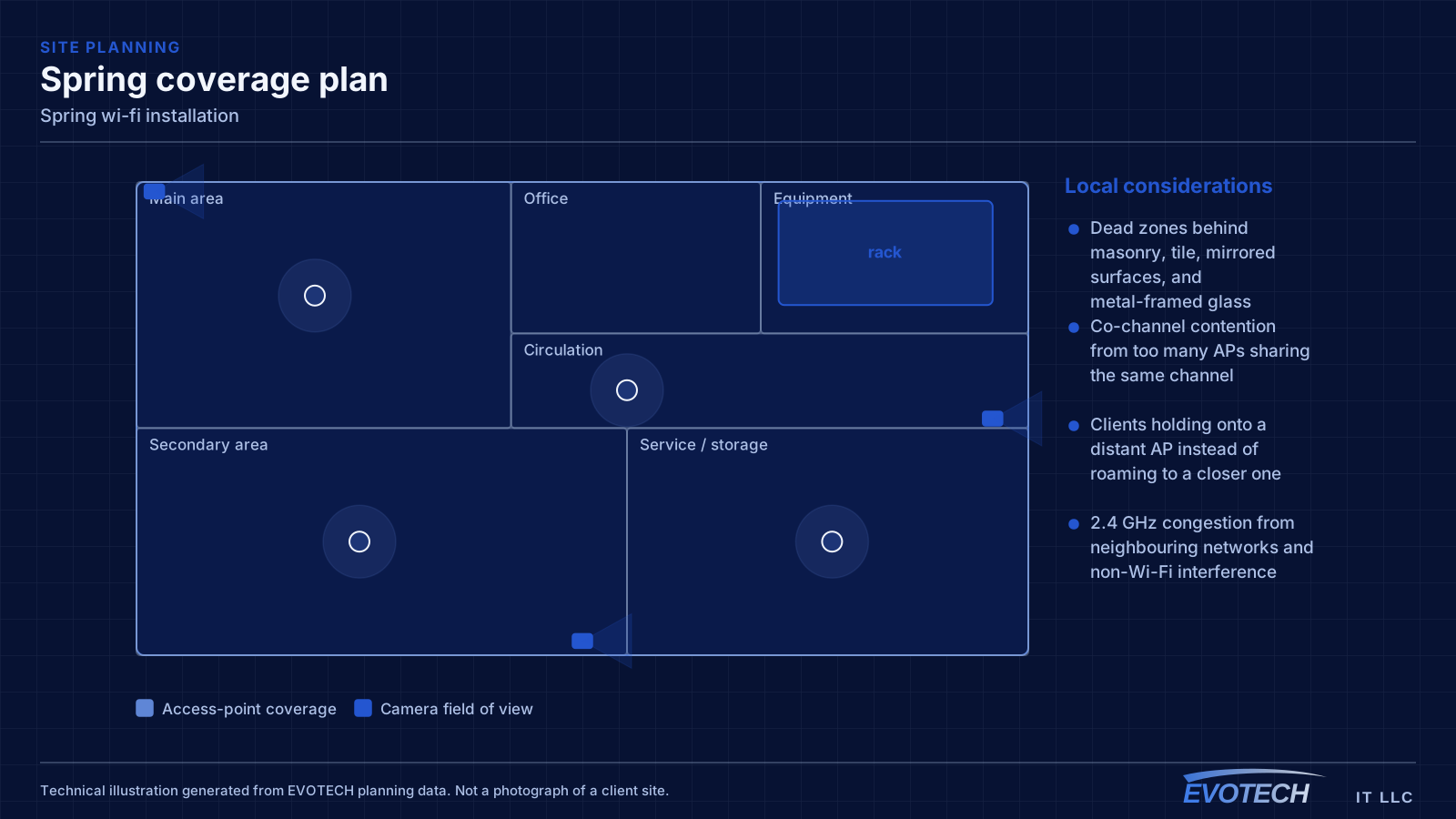
- Dead zones behind masonry, tile, mirrored surfaces, and metal-framed glass
- Co-channel contention from too many APs sharing the same channel
- Clients holding onto a distant AP instead of roaming to a closer one
- 2.4 GHz congestion from neighbouring networks and non-Wi-Fi interference
- Access points fed by repeaters instead of cable, halving effective throughput
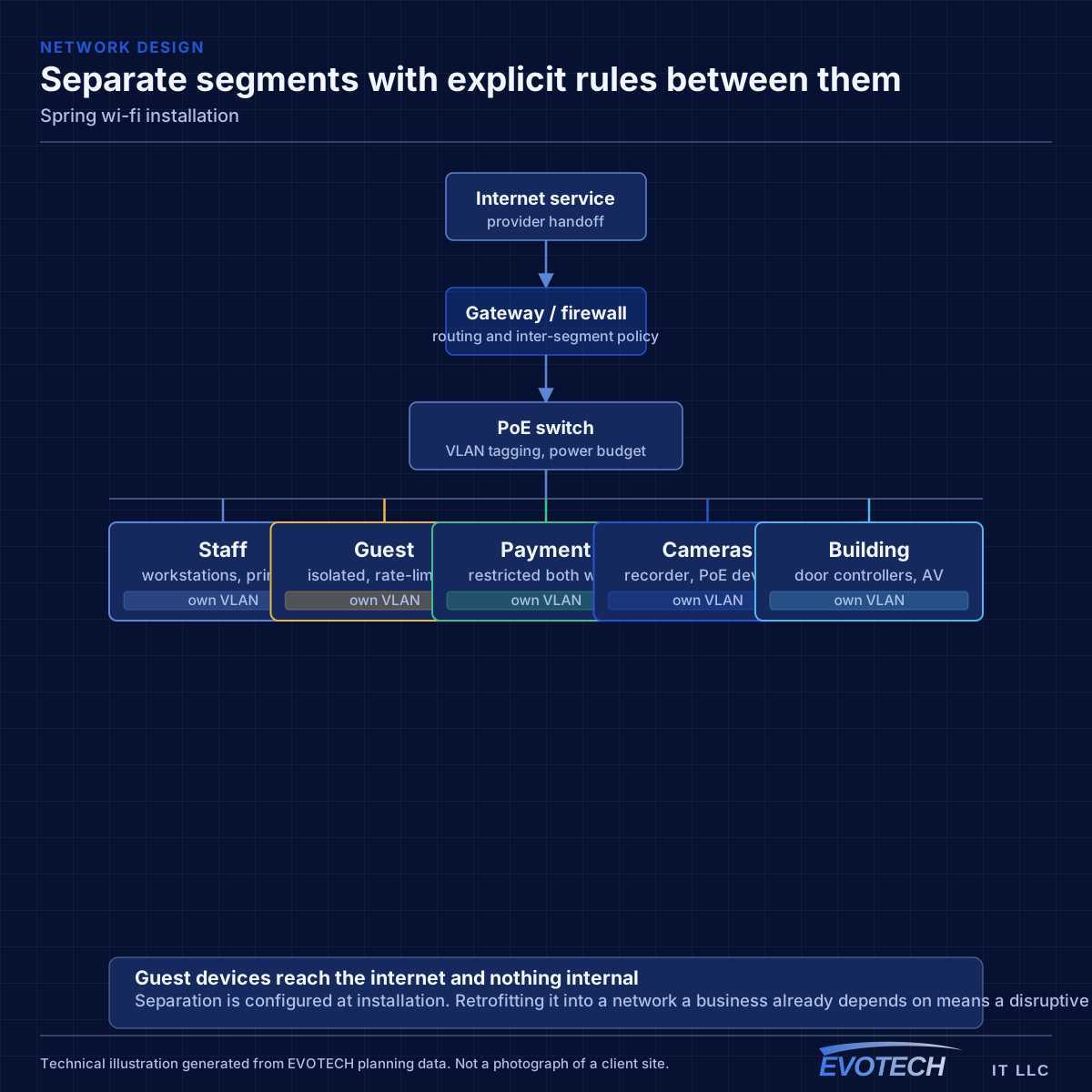
- Guest and business traffic sharing one network with no separation
Spring property conditions that change the plan
Retail and restaurant units in this area span several construction types. A converted space may have open structure overhead and easy routing; a mall unit may be hard lid throughout; a newer pad site usually has suspended grid. The scope difference between these is significant even when the floor area and outlet count are identical.
What stays constant across all of them is the network requirement: separate segments for payment, operations, and guest, with guest isolated and rate-limited. That is a configuration matter rather than a construction one, and it applies regardless of what the ceiling looks like.
For commercial work: what the ceiling actually is across the whole unit, where the equipment can live so it stays cool and dry, how the networks will be separated, and what the available working window is.
- Ceiling construction varying widely between adjacent units
- Payment, operations, and guest separation required consistently
- Kitchen environments constraining equipment placement in food service
- Storefront glazing affecting entrance camera framing
- Landlord rules applying in leased and centre units
- Ceiling construction confirmed across the whole unit, not just the front
- Equipment position away from kitchen heat and moisture
- Network segmentation agreed before installation
- Entrance camera positioned to avoid daylight backlighting
- Working window and landlord permissions established
Getting wi-fi installation done in Spring
Wireless capacity comes from having multiple non-overlapping channels in use across a space. In North America, 2.4 GHz offers three non-overlapping 20 MHz channels, which is why it congests so quickly — in a dense building the neighbours are using them too. The 5 GHz band offers far more channels, including DFS channels that require radar detection and which many designs skip unnecessarily. The 6 GHz band, where equipment and regulations permit, adds substantially more spectrum with the caveat that only newer client devices can use it.
Food-service work happens outside service hours, with each session ending with the site operational for the next opening. Retail work can often proceed during trading with containment and barriered ladder areas, though anything over the sales floor or noisy is better placed before opening.
- Food-service work outside service hours
- Retail work during trading with containment where feasible
- Merchandise and surface protection throughout
- Sessions ending with the site fully operational
- Residential attic work scheduled early during summer
Frequently asked questions
Does EVOTECH have an office in Spring?
No. This is a service-area page: EVOTECH serves Spring without claiming a physical office there. The wording stays as coverage, not a location claim.
Why does a call drop when walking between rooms?
That is a roaming symptom. Either the coverage areas do not overlap enough, so the device holds a fading signal past the point of usefulness, or they overlap heavily on the same channel, so the handoff happens into a congested cell. Both are fixed by adjusting placement, power, and the channel plan rather than by adding another access point at the same settings.
Why does payment-system separation come up on every retail and restaurant project?
Because it addresses both a security and an operational risk. A payment terminal sharing a flat network with guest devices is reachable from those devices, and guest usage can also saturate the connection payment processing depends on. Separating them at installation is straightforward; doing it later in a running business is not.