

Why this page exists
TV mounting in Pearland is scoped around the same physical realities EVOTECH weighs everywhere — but read through Pearland's specific conditions: newer residential subdivisions with wide floor plans and builder-installed structured cable of variable quality. This page pairs what the service actually involves with what the Pearland market changes about it.
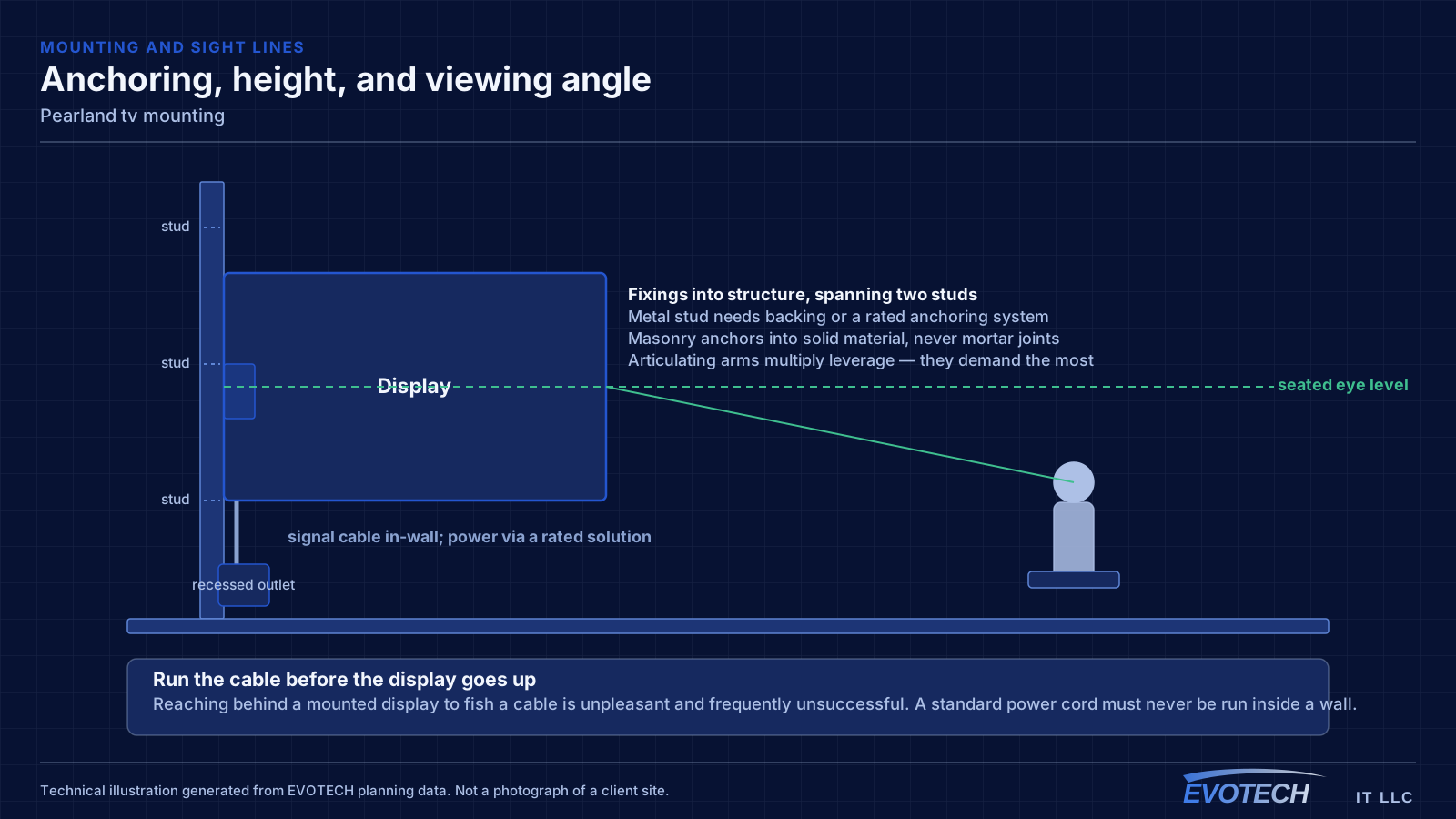
The mount has to transfer the display's weight into something structural. In wood-framed walls that means lag bolts into studs. In masonry it means appropriate anchors set into solid material rather than mortar joints. In metal-stud walls — common in commercial buildings — standard wood-stud technique does not apply, and larger displays generally need backing or a purpose-made metal-stud anchoring system.
What tv mounting usually involves
The serious problem is anchoring. A large display cantilevered on an articulating arm exerts substantial leverage on its fixings, and an arm anchored into drywall alone or into a single stud is a genuine hazard rather than an aesthetic issue. Metal-stud walls are the common commercial version of this, where fixings that feel solid during installation are not rated for sustained load.
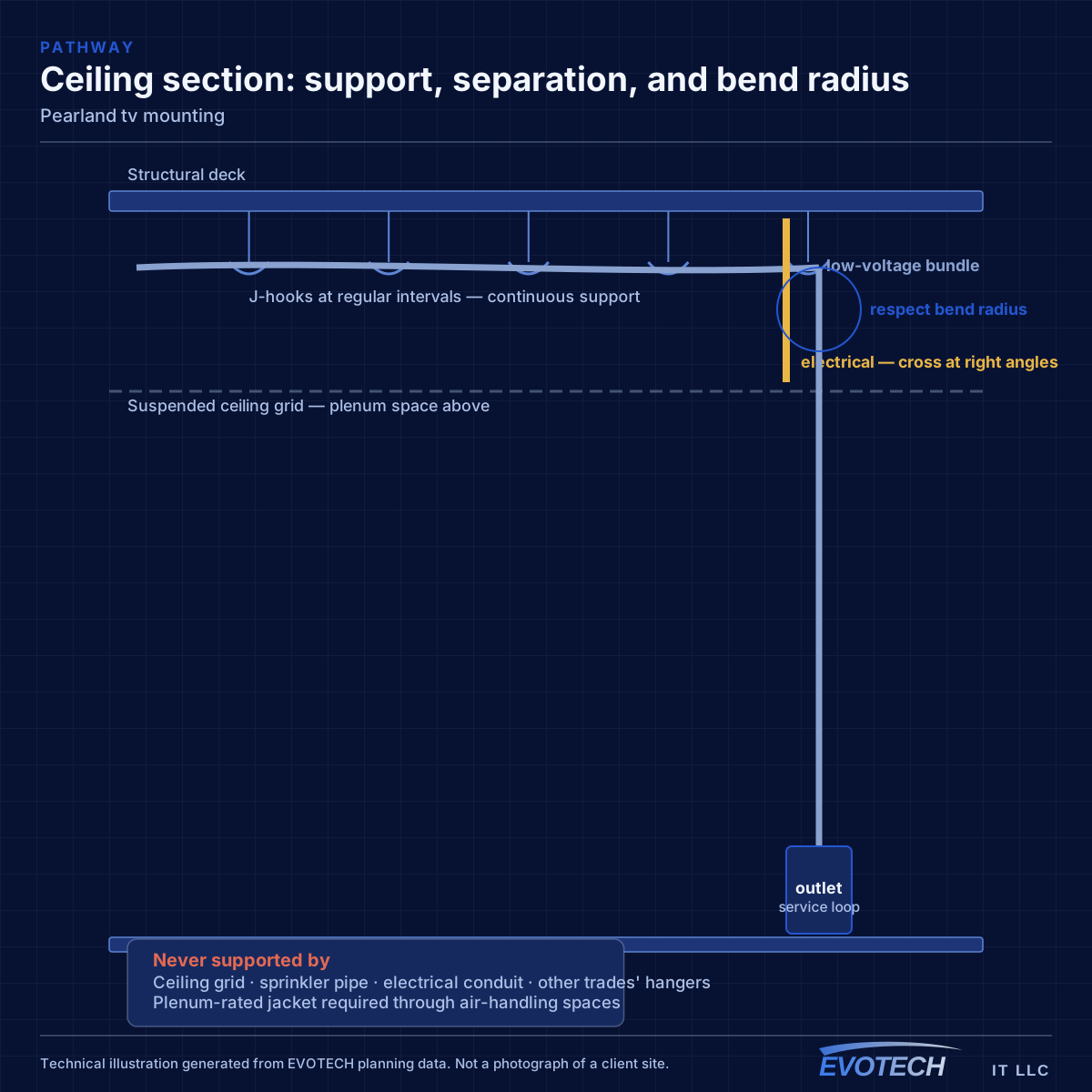
The second problem is cabling. Running a power cord through a wall is not appropriate; the correct approach is either an in-wall rated power solution or a recessed outlet behind the display. Signal cables can be routed in-wall, but they need to be in place before the display goes up, because reaching behind a mounted display to fish a cable is unpleasant and often unsuccessful.
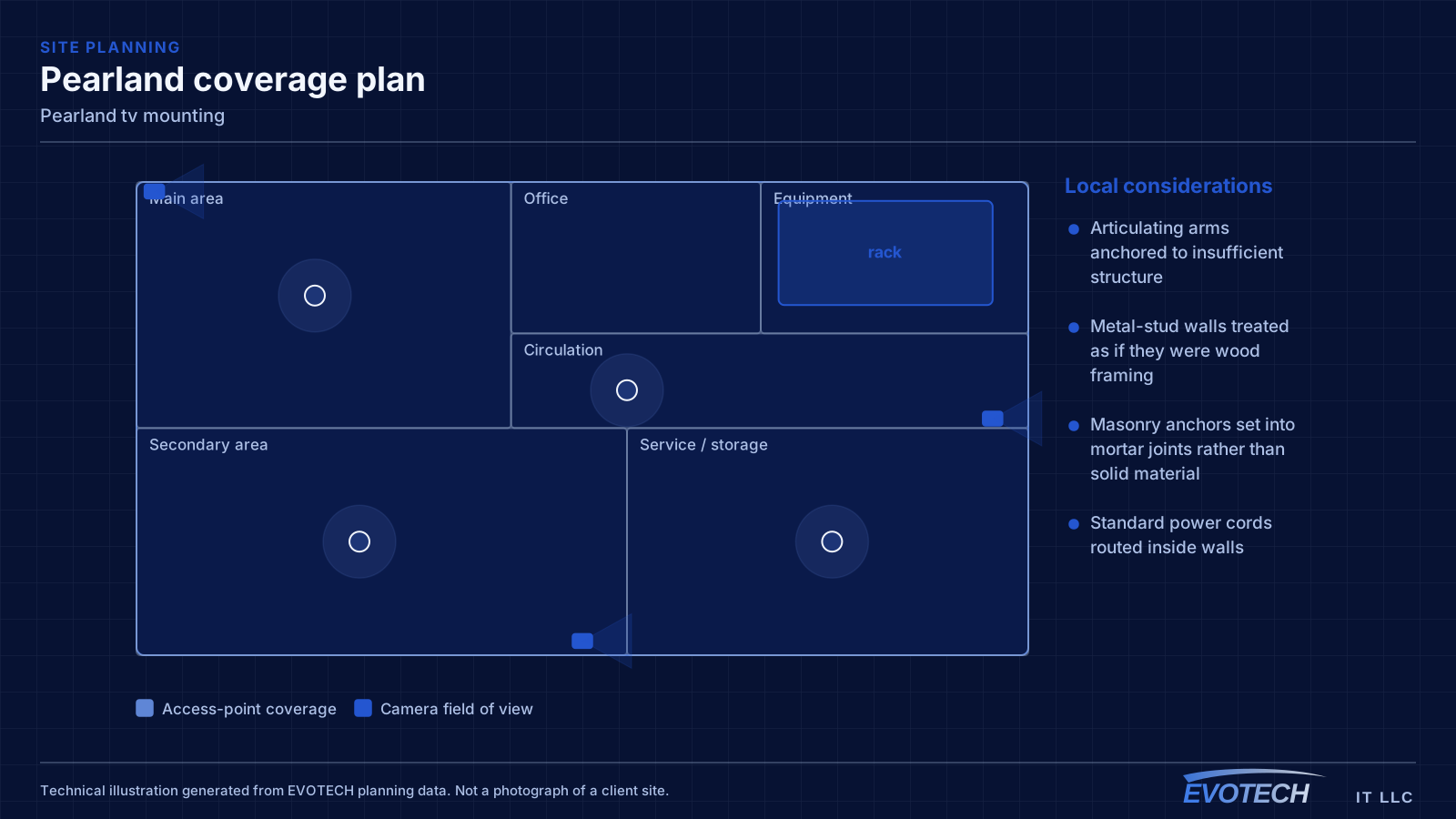
- Articulating arms anchored to insufficient structure
- Metal-stud walls treated as if they were wood framing
- Masonry anchors set into mortar joints rather than solid material
- Standard power cords routed inside walls
- Signal cables not run before mounting, leaving no route afterwards
- Viewing height chosen for the wall rather than for the seating
- Outdoor installations using indoor mounts that corrode
Pearland property conditions that change the plan
Residential construction is recent enough that attic access is generally good and builder cable is often present. As elsewhere in the newer suburbs, that cable typically terminates at wall outlets rather than ceiling positions, so the work involves testing what exists and adding what is missing.
Commercial space is newer too, which helps — suspended grid and reasonable pathway are the norm. The complications are behavioural rather than structural: medical suites have controlled areas and clinical schedules, and restaurants have kitchen conditions and service hours.
Residential projects here scope around the same three questions as elsewhere in the newer suburbs: what exists and does it test clean, where do the access points need to be, and where should the equipment live so it is not sitting in an unconditioned garage.
- Recent residential construction with good attic access
- Builder cable present but usually terminating at wall outlets only
- Newer commercial with suspended grid and usable pathway
- Medical suites with controlled areas and clinical scheduling
- Food service with kitchen environment and narrow work windows
- Existing residential cable tested before being designed around
- Ceiling access-point positions added where builders did not provide them
- Controlled-area and camera boundaries agreed for medical suites
- Payment-system segmentation established at installation for food service
- Equipment positions chosen for temperature, not just cable convenience
Getting tv mounting done in Pearland
In wood framing, fixings go into studs with lag bolts sized for the mount and the display weight, spanning two studs where the mount allows. In solid masonry, appropriate anchors go into the brick or block itself rather than the mortar, which is weaker. Metal-stud walls need either plywood backing installed behind the drywall — straightforward during construction, more involved afterwards — or a metal-stud anchoring system designed for the load, particularly for anything articulating.
The two commercial environments have opposite scheduling profiles. Medical work happens around clinical sessions, typically early, late, or on non-clinical days. Food service happens outside service hours, with each session ending with the site operational for the next opening.
- Medical work scheduled around clinical sessions
- Food-service work outside service hours, site operational at each session's end
- Residential attic work early during summer months
- Dust containment in clinical and occupied residential spaces
- Exterior equipment rated for regional humidity and rainfall
Popular services nearby
Frequently searched near this area — the pages people look for most.
Frequently asked questions
Does EVOTECH have an office in Pearland?
No. This is a service-area page: EVOTECH serves Pearland without claiming a physical office there. The wording stays as coverage, not a location claim.
Can a TV be mounted on a metal-stud wall?
Yes, but not with wood-stud technique. Metal studs are thin and will not hold lag bolts under sustained load. The reliable approaches are plywood backing behind the drywall — easy during construction, more involved afterwards — or an anchoring system made for metal studs and rated for the display weight. This matters most with articulating arms, which multiply the load considerably.
Is builder-installed cable in newer homes here usable?
Frequently, after testing. The runs are often sound and can be re-terminated and patched into a proper switch. What they rarely include is ceiling positions for access points, which is usually the addition that actually solves the coverage complaint.