
Why this page exists
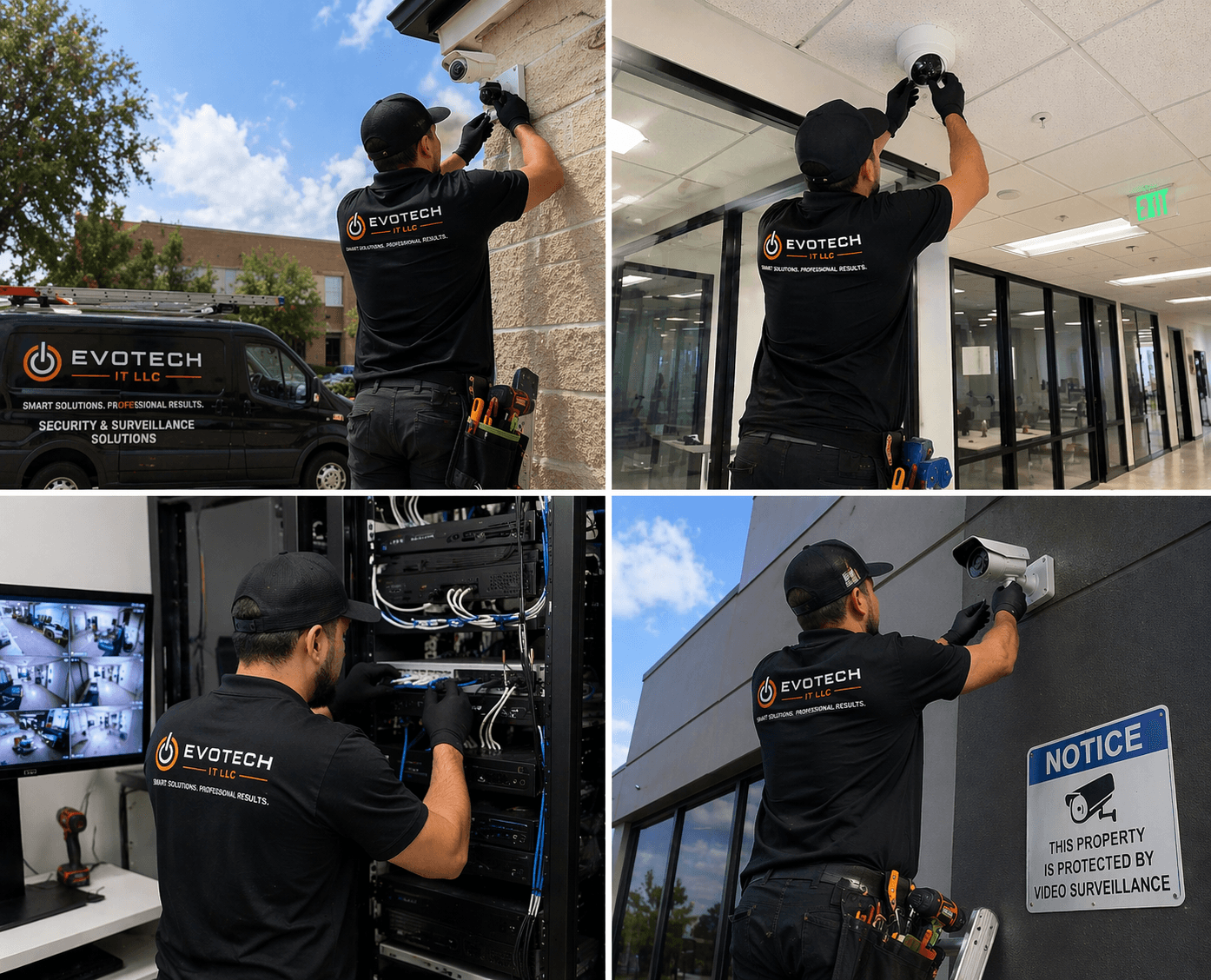
This pairing exists because Katy's larger residential lots put subjects at greater distances from practical mounting positions, which changes lens and framing decisions in ways that tighter urban lots do not.
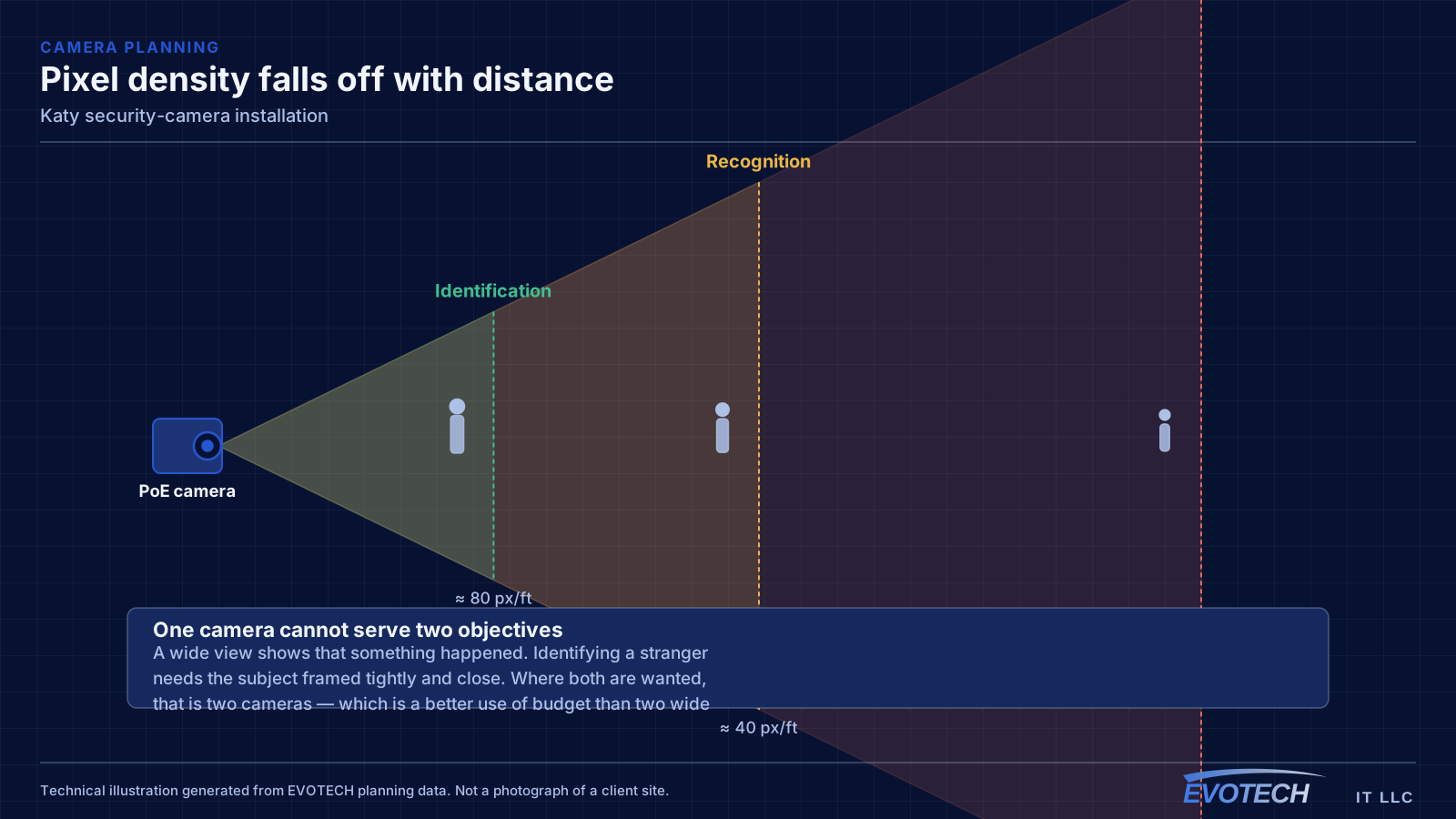
On a compact lot, a camera under the eave covers the approach at a distance where identification is straightforward. On a wider frontage with a longer driveway, the same camera at the same position produces footage that shows a person arriving without showing who they are.
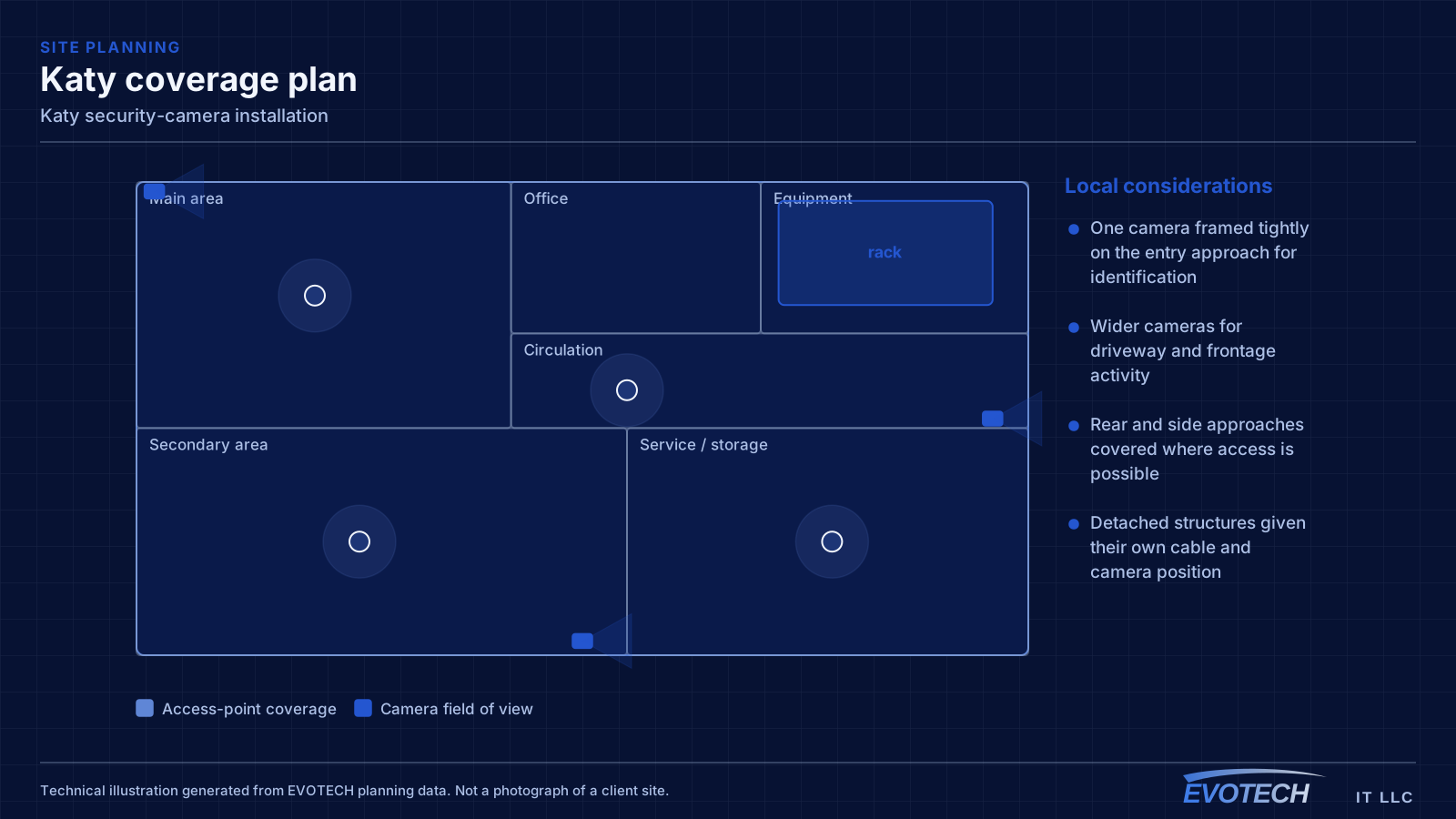
The response is not more cameras. It is deciding what each view has to accomplish and framing accordingly — one camera tight on the entry approach for identification, others wider for activity across the drive and frontage.
One tight view, several wide ones
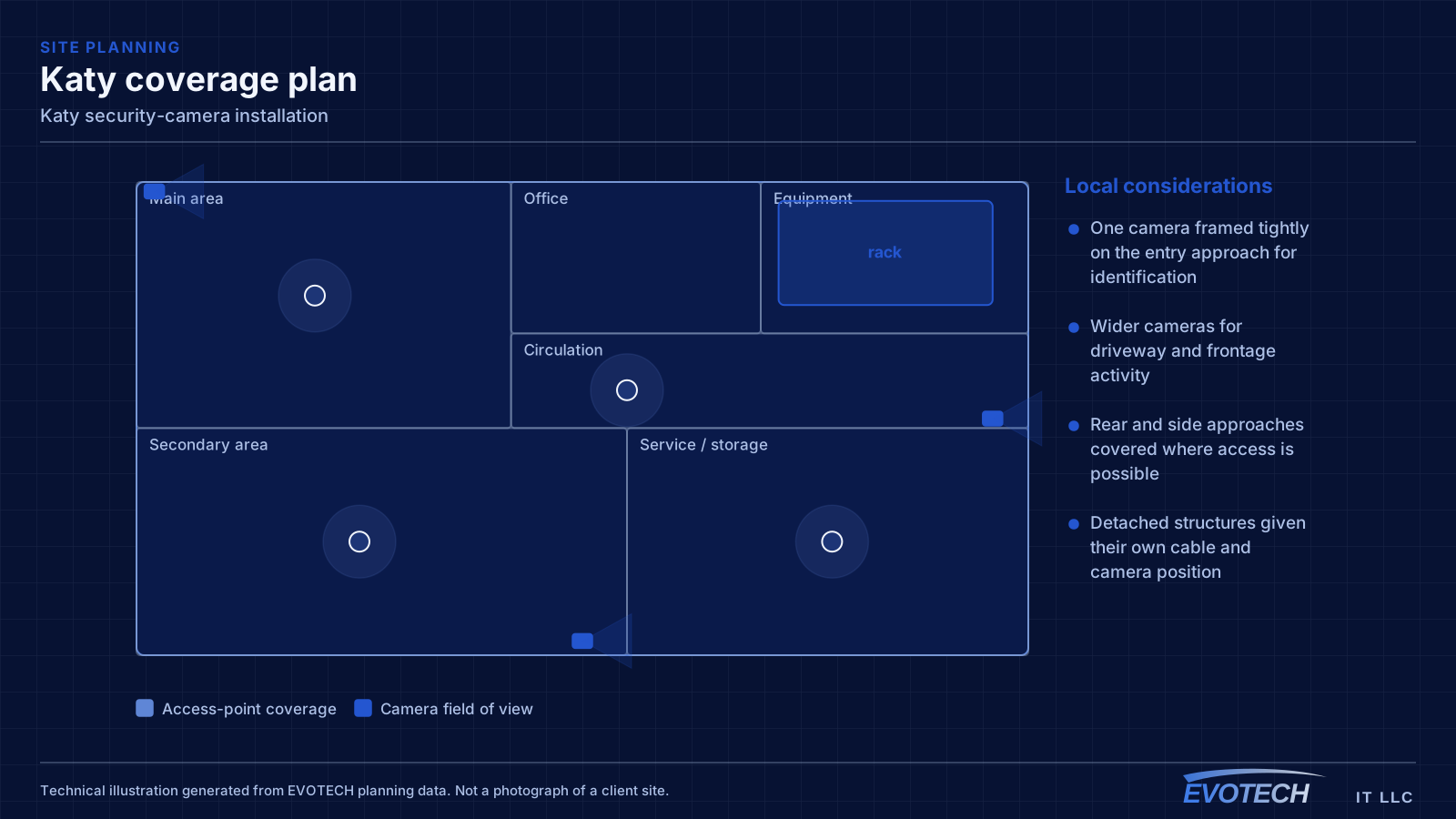
The reliable arrangement on a wide frontage is a single camera framed tightly on the path people actually walk to the door, positioned close enough that a face fills a useful part of the frame, plus wider cameras covering the driveway and frontage for activity and vehicle movement.
Trying to do both jobs with one wide camera is the most common cause of disappointing residential footage. The wide view is genuinely useful for context; it is simply not going to identify a stranger at thirty metres.
- One camera framed tightly on the entry approach for identification
- Wider cameras for driveway and frontage activity
- Rear and side approaches covered where access is possible
- Detached structures given their own cable and camera position
- Cameras aimed to cover the property and its approaches only
Distance, power, and storage
Longer lots push cable distances up, and camera positions at the far end of a drive need checking against the 100-metre limit before anything is specified. Positions beyond it need an intermediate powered location or a fiber leg with local power.
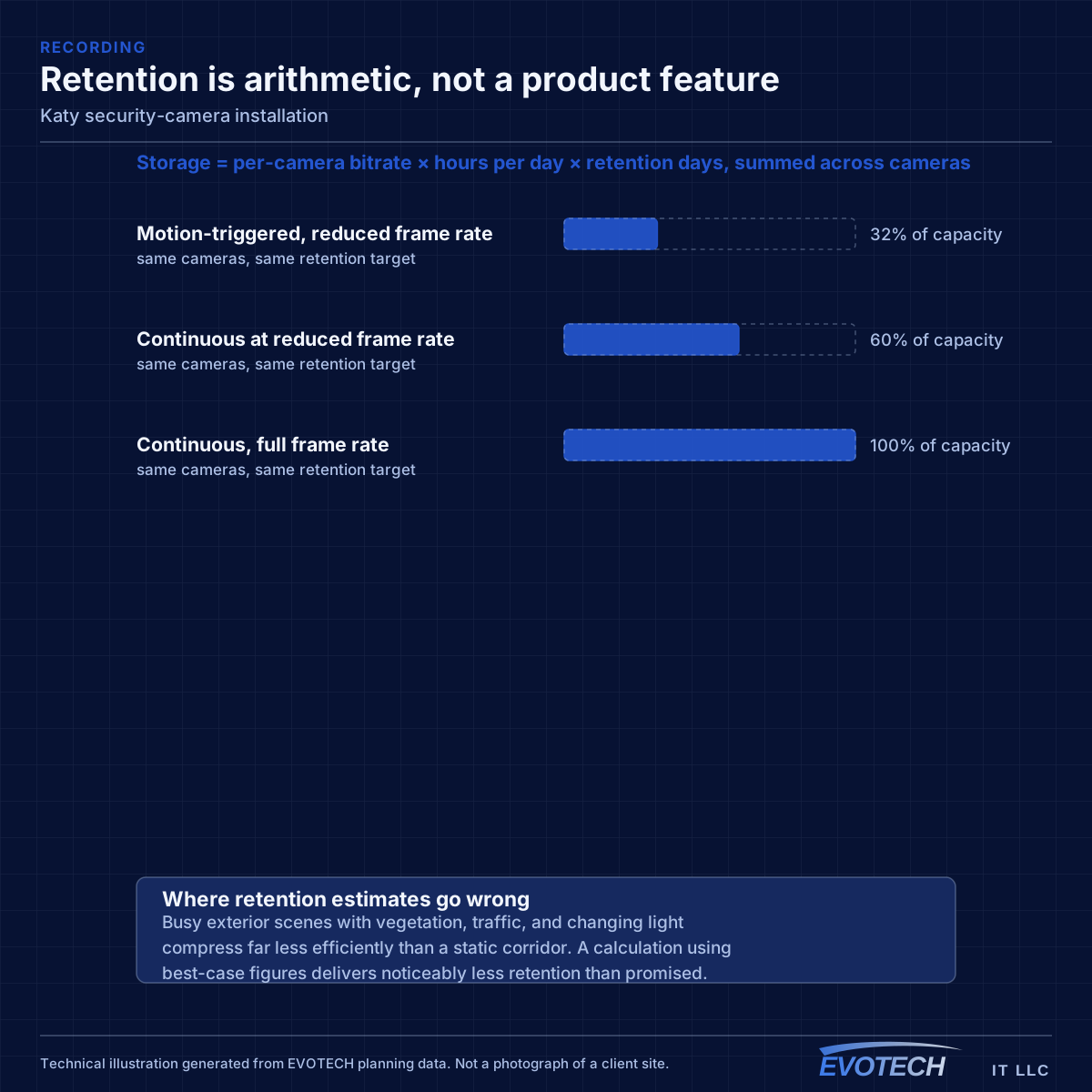
Storage follows from retention and scene activity. Exterior scenes with vegetation and traffic compress poorly, so a calculation based on best-case figures will overestimate retention noticeably.
- Cable distances checked against the 100 m channel limit
- Switch PoE budget sized for peak draw with illuminators active
- Storage calculated from realistic exterior bitrates
- Recorder and switch on a UPS
- Detection zones tuned so street traffic does not fill the recording
Mounting and equipment placement
Deep soffits shelter cameras well and create an infrared problem when the camera sits too close to the surrounding surface — the illumination bounces off the soffit straight back into the lens. Mounting far enough out, or using separate illumination, resolves it.
Equipment placement is the other local consideration. Garages are the convenient position and run hot for much of the year; a recorder there has a shorter life than the same unit in a conditioned closet.
- Cameras mounted clear of soffit surfaces to avoid infrared reflection
- Exterior penetrations sealed with proper drip loops
- Housings rated for driven rain rather than nominal weather resistance
- Recorder sited in conditioned space where possible
- Footage reviewed after dark before sign-off
Popular services nearby
Frequently searched near this area — the pages people look for most.
Frequently asked questions
Why does the driveway camera not identify anyone?
Distance and framing. Pixel density on the subject falls off with distance and with wider fields of view, so a camera covering a long driveway spreads its resolution across the whole scene. A separate camera framed tightly on the path to the door, closer to where people actually walk, is what produces identifiable footage.
Can a camera at the back of a large lot be reached?
It depends on the distance. Within the 100-metre channel limit a normal PoE run works. Beyond it, the answer is an intermediate powered position or a fiber leg with local power — not a longer copper run, which will not perform reliably regardless of what it appears to do initially.
Where should the recorder go?
Somewhere conditioned, if at all possible. Garages are convenient and run hot for a large part of the year, and heat is the main determinant of how long a recorder and its drives last. A closet with power and some ventilation is a better home even if it costs a little more cable.