

Why this page exists
PoE camera installation in Katy is scoped around the same physical realities EVOTECH weighs everywhere — but read through Katy's specific conditions: housing stock skewed toward newer, larger single-family construction with wide floor plans that exceed single-router coverage. This page pairs what the service actually involves with what the Katy market changes about it.
A PoE camera takes its power from the same Ethernet cable that carries its video, which removes the need for a local outlet at every mounting position. That is the entire practical appeal: one run per camera, no electrician at each soffit, and centralised power that can sit behind a UPS so the cameras stay up during a short outage.
What poe camera installation usually involves
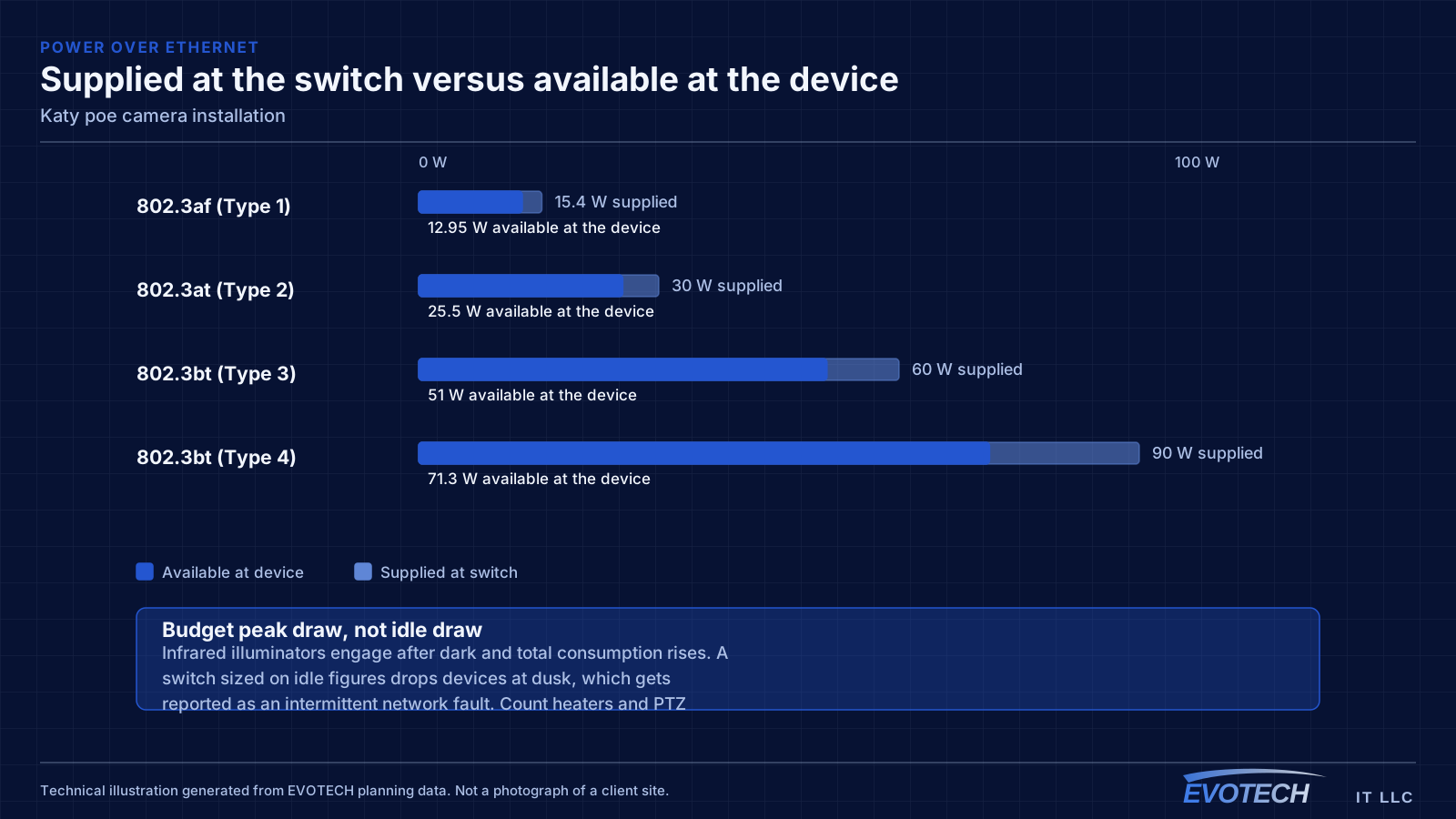
The characteristic PoE problem is a camera that reboots under specific conditions — usually at night when its infrared illuminator switches on and its draw rises. If the switch is near its budget, the additional load pushes it over and devices drop. Because it happens after dark, it often gets reported as an intermittent network fault.
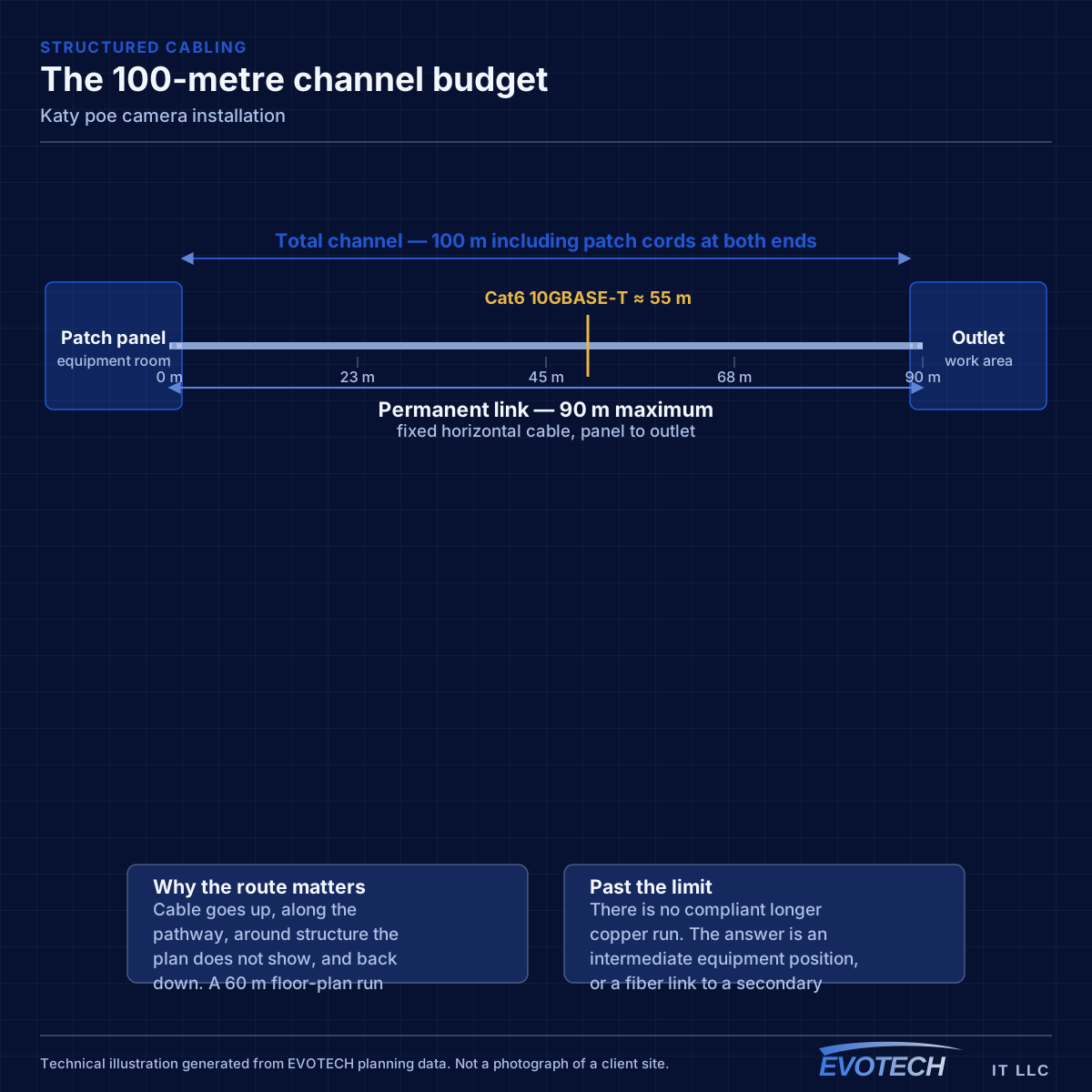
The second problem is distance. PoE inherits the same 100-metre channel limit as any Ethernet run, and voltage drop over long runs on thin conductors reduces the power actually reaching the camera. A run that works at 60 metres may be marginal at 95 with a high-draw device on the end.
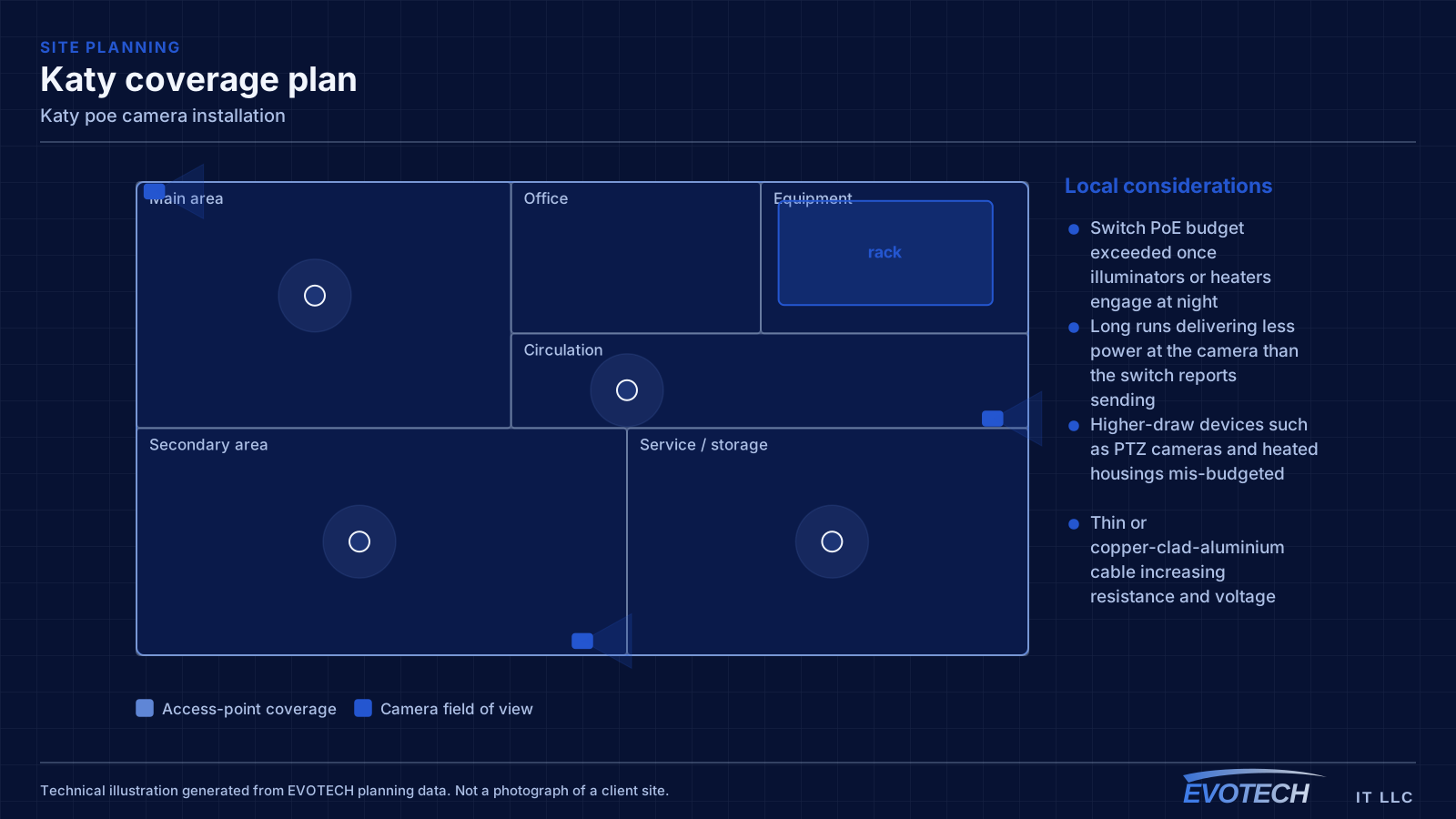
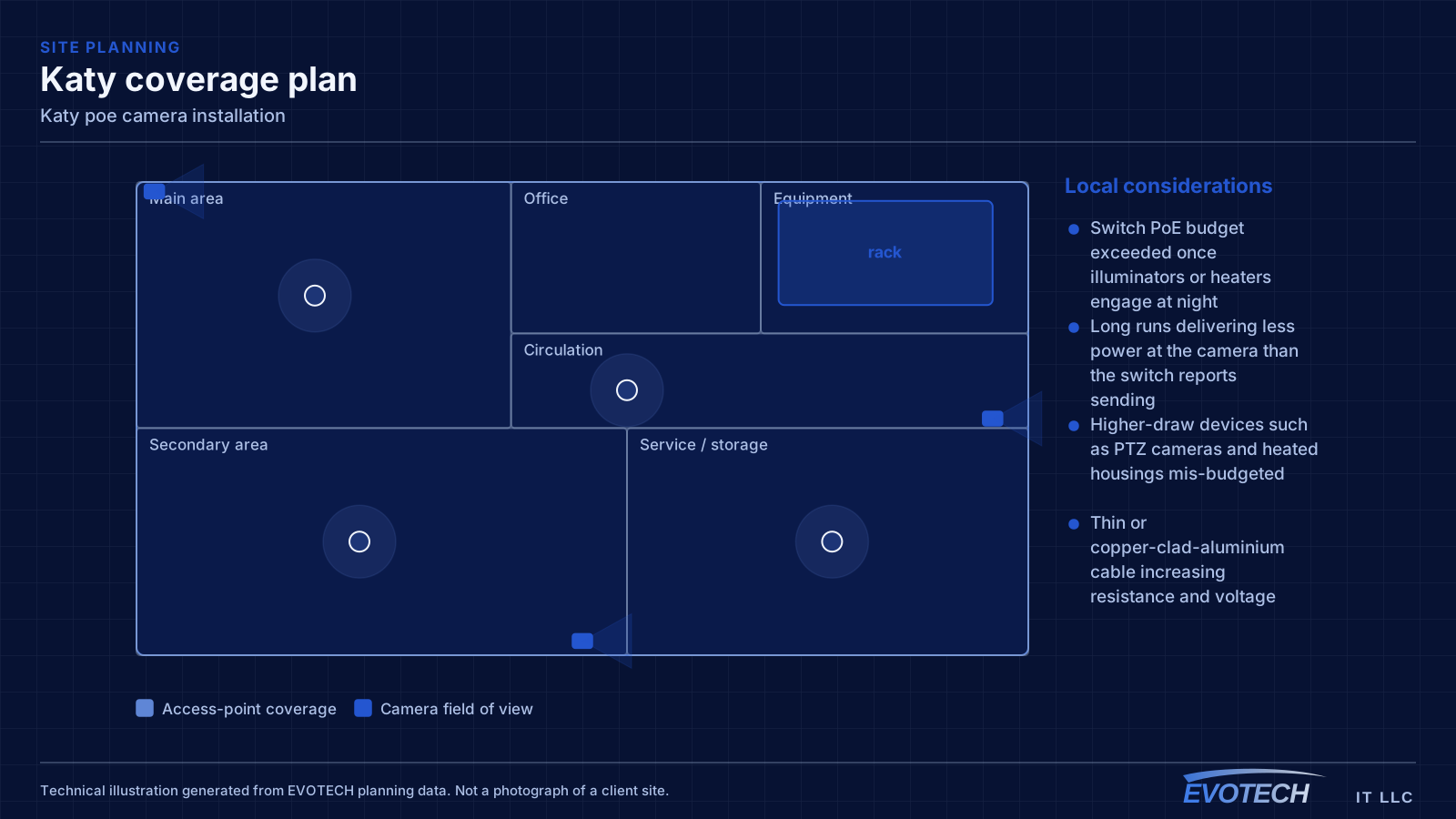
- Switch PoE budget exceeded once illuminators or heaters engage at night
- Long runs delivering less power at the camera than the switch reports sending
- Higher-draw devices such as PTZ cameras and heated housings mis-budgeted
- Thin or copper-clad-aluminium cable increasing resistance and voltage drop
- Dense PoE bundles heating and raising insertion loss
- No UPS on the switch, so cameras drop with any brief power interruption
Katy property conditions that change the plan
The characteristic Katy residential project involves a house with more area than a single wireless position can cover and an equipment location chosen by the builder for cable convenience rather than for coverage. A media panel in the garage is a fine place to terminate cable and a poor place to originate a wireless signal from.
The useful consequence is that the cable often already exists. Builder-installed runs to bedrooms and living areas can frequently be repurposed — tested, re-terminated where necessary, and patched into a proper switch — which reduces the work to adding the runs that are genuinely missing, usually ceiling positions for access points.
The work divides into three parts. First, establish what the builder actually installed and whether it tests clean — a panel full of terminated cable is only useful if the runs are sound and land somewhere helpful. Second, decide where the access points need to be, which in a wide floor plan usually means two or three central ceiling positions rather than one. Third, sort out the equipment position, which often means adding a switch at the panel and sometimes relocating the primary equipment somewhere with ventilation.
- Wide single- and two-storey floor plans exceeding single-position coverage
- Media panels commonly in garages or perimeter utility spaces
- Builder cable frequently reusable after testing and re-termination
- Ceiling access-point positions usually absent and needing to be added
- Attic access generally good, making added runs straightforward
- Test and inventory existing builder-installed cable before planning new runs
- Two or three central ceiling positions rather than one high-power router
- Switch and equipment provision at the media panel
- Consider relocating primary equipment where the panel has no ventilation
- Outdoor coverage for patios and detached structures planned separately
Getting poe camera installation done in Katy
The standards define escalating power classes. Type 1 (802.3af) supplies up to about 15.4 W at the switch with roughly 12.95 W available at the device. Type 2 (802.3at) raises that to about 30 W supplied and 25.5 W available. Type 3 and Type 4 under 802.3bt reach roughly 60 W and 90 W supplied, with about 51 W and 71 W available respectively. The gap between supplied and available is the loss in the cable, and it grows with length and with thinner conductors.
Attic access in this housing stock is generally good, which makes added runs comparatively efficient — the constraint is heat rather than access, so summer work is scheduled early. Garage-located media panels are frequently unconditioned, which matters for equipment placement: a switch in a hot garage cabinet has a shorter life than the same switch in a conditioned closet.
- Good attic access, with heat rather than geometry as the constraint
- Garage media panels often unconditioned, affecting equipment life
- Detached structures needing their own cable or a deliberate wireless link
- Outdoor patio coverage as a common addition
- Occupied-home working practice: dust control and daily clear-down
Frequently asked questions
Does EVOTECH have an office in Katy?
No. This is a service-area page: EVOTECH serves Katy without claiming a physical office there. The wording stays as coverage, not a location claim.
Why do cameras reboot at night but work fine during the day?
Almost always PoE budget. Infrared illuminators engage after dark and the total draw rises, pushing the switch past its budget. It presents as intermittent camera dropouts and gets misdiagnosed as a network fault. The fix is a switch with sufficient budget and headroom, calculated from peak draw rather than idle.
The house has a media panel with cables already in it — is that enough?
It is a useful head start and rarely the whole answer. Builder cable typically runs to wall outlets rather than to ceiling positions where access points belong, and the panel is often in a garage rather than centrally. The usual work is testing what exists, adding the ceiling runs, and sorting out equipment placement.