
Why this page exists
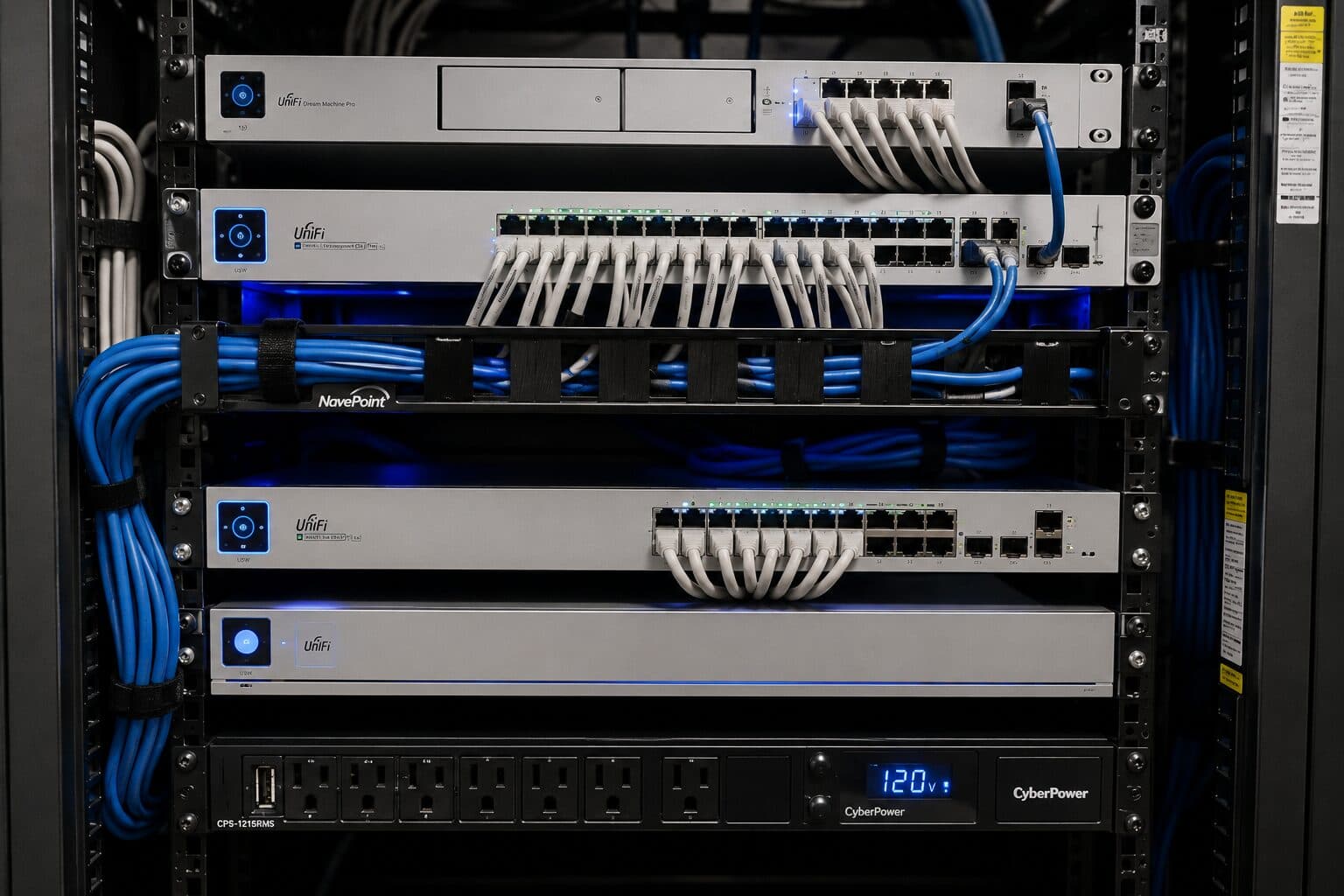
This pairing exists because UniFi deployments in this market frequently combine network, cameras, and door hardware on one PoE infrastructure, and the resulting power budgeting is where most local installations go wrong.
The appeal of a single-vendor deployment is operational: one interface for the network, the wireless, the cameras, and often the door hardware, which makes it manageable for sites without a dedicated network administrator.
The two failure modes are consistent. Devices get adopted on default settings with no segmentation, so the network is capable and configured as though it were not. And switches get chosen on port count while the total PoE draw — with camera illuminators and door hardware included — exceeds the budget, producing reboots that look like network faults.
The PoE budget conversation, before anything is ordered
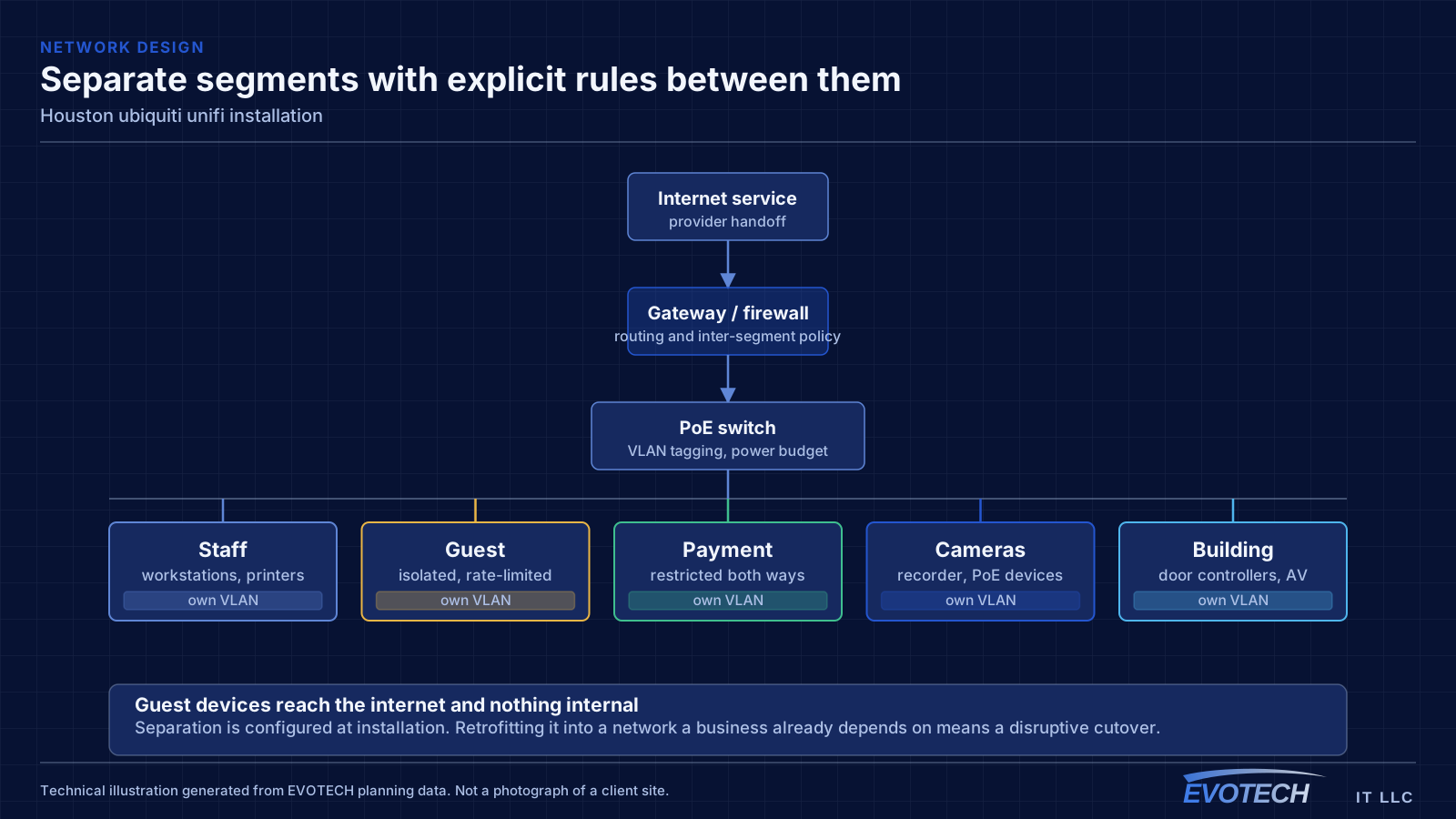
Total the peak draw of every powered device — access points, cameras with illuminators active, door readers and controllers — and compare it against the switch's PoE budget with headroom left over. Idle figures are misleading, because the load that breaks a marginal budget is the one that arrives after dark.
Pan-tilt-zoom cameras and any device with a heater sit in a different class entirely and need accounting for individually rather than being averaged in with access points.
- Peak draw totalled, not idle draw
- Illuminator and heater loads counted explicitly
- Switch selected on PoE budget as well as port count
- Headroom left for the devices added in year two
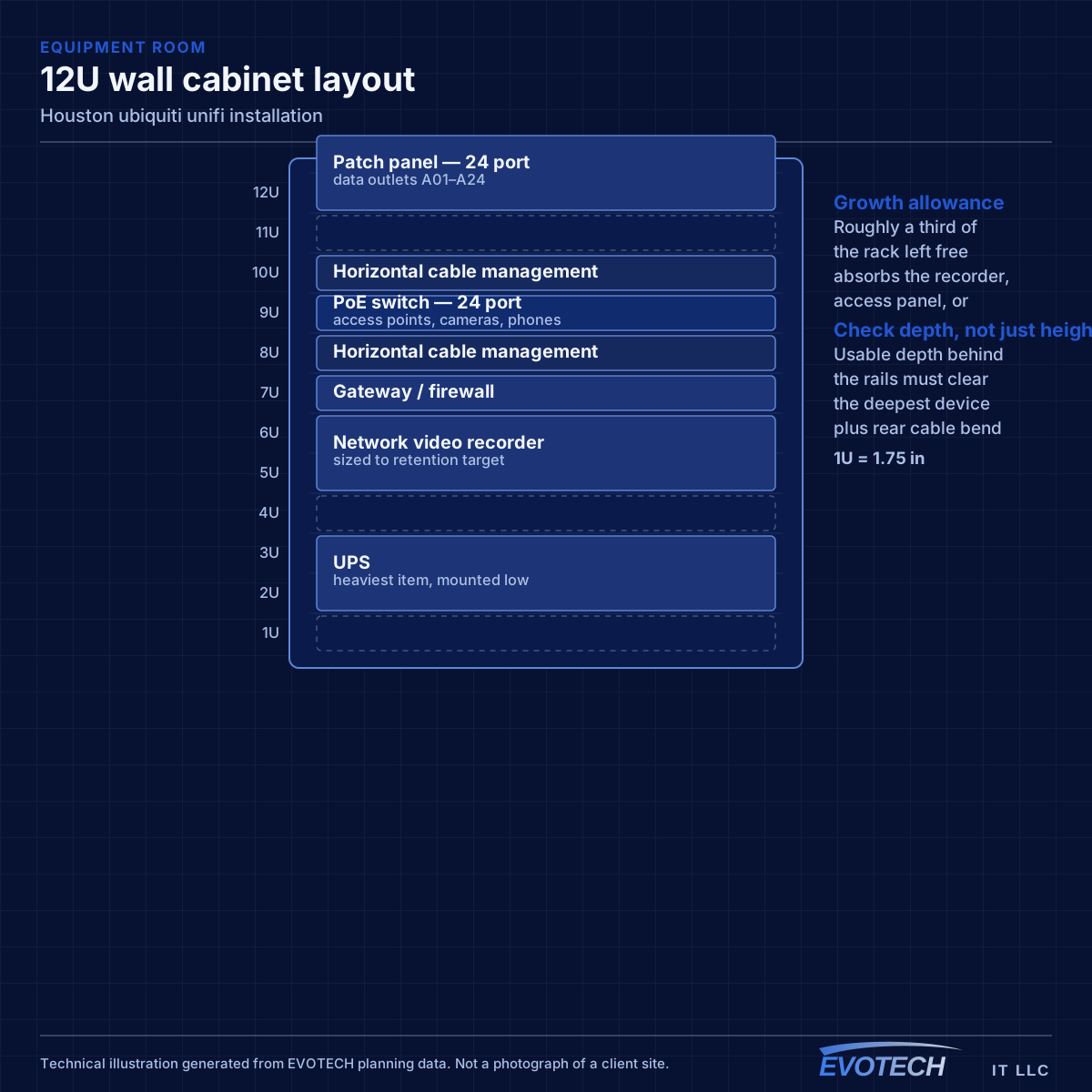
- Switch placed on a UPS so a brief outage does not drop everything
Segmentation, controller, and backups
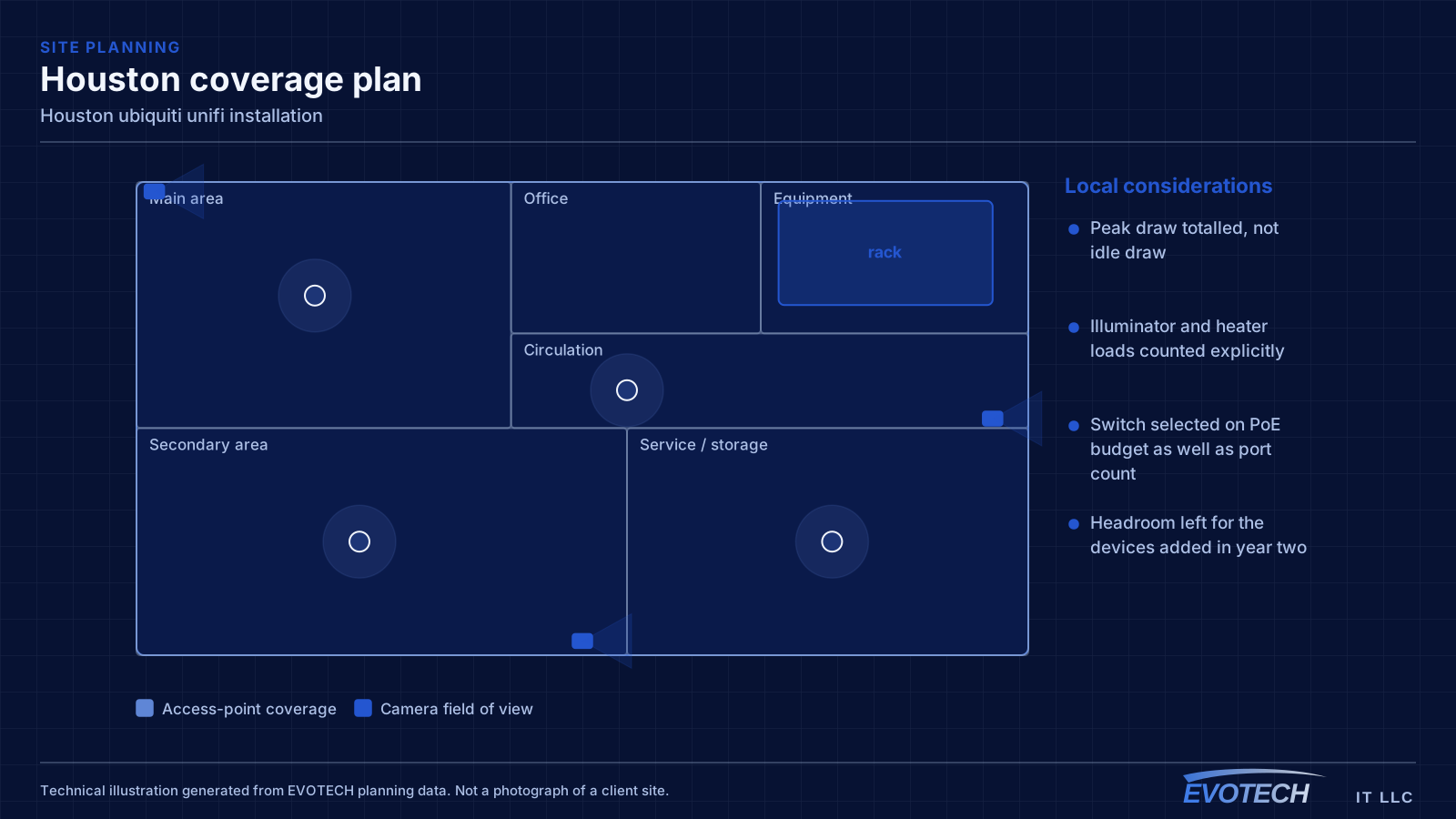
Segmentation is where most of the practical value sits: separate networks for staff or household devices, guests, cameras, and door hardware, with explicit rules between them. A guest network that cannot reach the camera recorder is a meaningful improvement and costs only configuration.
The controller holds the design. It should run on hardware that stays online rather than on someone's workstation, and its configuration should be backed up — a lost controller with no backup means rebuilding the network's design rather than restoring it.
- Separate segments for primary devices, guests, cameras, and door hardware
- Explicit rules governing what may reach what
- Controller on hardware that stays online
- Configuration backups taken and stored
- Firmware kept deliberately aligned rather than drifting
Installation and handover
Migrations from existing equipment need a planned cutover so the site is not running half on one design and half on another for a day. Camera storage is sized against a stated retention target and then verified against actual consumption over the following week.
Handover matters more on single-vendor deployments than people expect, because the interface makes a lot possible and it helps to know which parts to leave alone.
- Cutover sequence planned for migrations
- Camera retention verified against measured consumption
- Remote access configured with appropriate per-user permissions
- Segmentation tested by attempting cross-network access
- Documentation and controller backup handed over
Popular services nearby
Frequently searched near this area — the pages people look for most.
Frequently asked questions
Is EVOTECH a Ubiquiti dealer or partner?
No. Ubiquiti and UniFi are trademarks of their owner, and this site claims no manufacturer authorization, dealership, partnership, or endorsement. EVOTECH installs, configures, and supports the equipment as an independent contractor.
Why do UniFi cameras reboot at night?
Nearly always the PoE budget. Infrared illuminators engage after dark and total draw rises past what the switch can supply, so devices drop and come back. Because it happens after hours it usually gets reported as an intermittent network fault. Sizing the switch from peak draw with headroom prevents it.
Where should the controller run?
On hardware that stays online — dedicated hardware for a business site rather than software on a workstation that gets shut down. Configured devices keep passing traffic if the controller goes offline, but centralised management stops, and a lost controller with no configuration backup means rebuilding the design from scratch.