

Why this page exists
A Houston camera page is justified by two regional factors that materially change installation practice: sustained humidity with driven rain events that defeat nominally weather-resistant housings, and strong daylight contrast at glazed entrances.
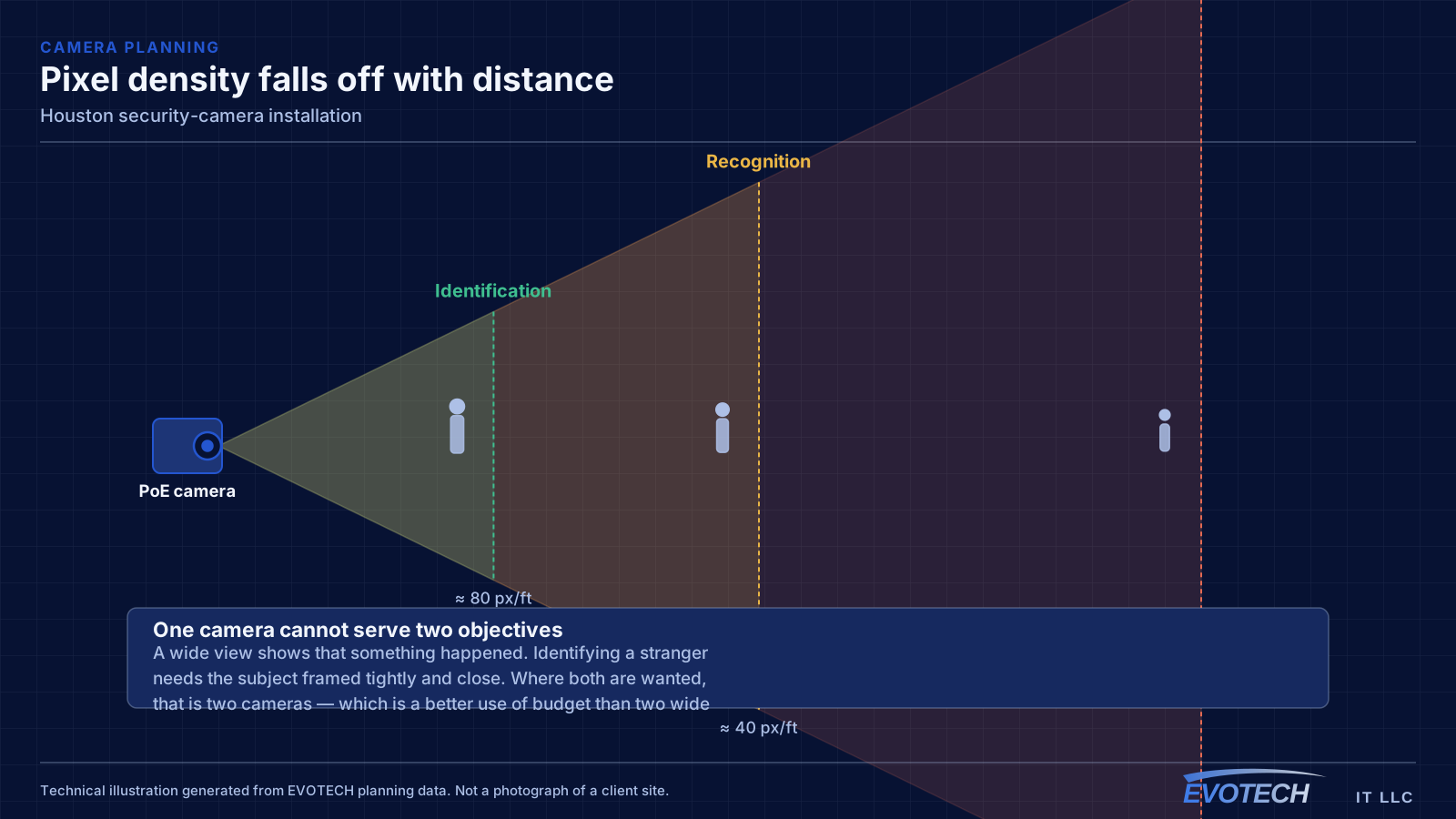
The design question is never how many cameras. It is what each view has to accomplish — showing that activity occurred, recognising someone already known, or identifying a stranger — because each requires progressively more pixel density on the subject, which sets the lens and the mounting distance.
On top of that sit two local realities. Exterior equipment here faces sustained humidity and driven rain, so housings and sealing practice have to be genuinely rated rather than nominally weather-resistant. And strong daylight against glazed entrances produces silhouettes unless the camera is positioned to avoid shooting into the light.
Objectives per view, then position
Each camera gets a stated objective before it gets a position. An entrance camera intended to identify people is framed tightly on the approach at a distance that gives enough pixel density; a yard camera showing general activity is framed wide and is not expected to identify anyone. Conflating the two is the most common reason footage disappoints.
Position then follows from the objective and from the light. At a glazed entrance, that usually means placing the identification camera to view across the approach from inside rather than shooting outward through the glass into daylight.
- Objective stated per view: detect, recognise, or identify
- Framing and lens chosen from the distance to the subject
- Positions avoiding direct sun, sky, and shooting through glazing
- Infrared kept clear of nearby soffits, eaves, and walls
- Cameras aimed to cover the client's own property and approaches only

Retention, storage, and power
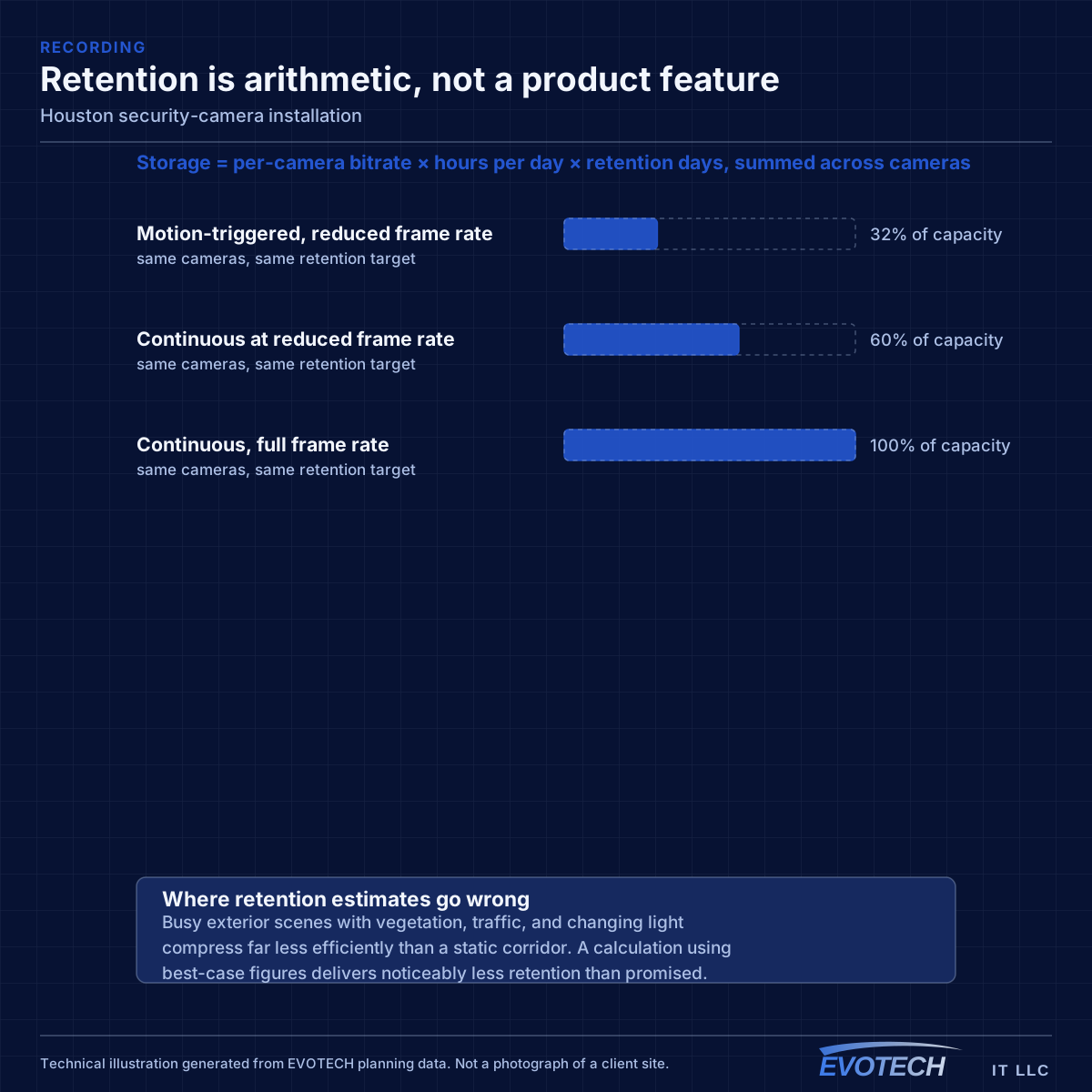
Retention is arithmetic: per-camera bitrate multiplied by hours recorded per day multiplied by the retention target, summed across cameras. Busy exterior scenes compress far less efficiently than static interior ones, so estimates should use realistic figures rather than best-case ones.
Power runs alongside it. PoE cameras draw more once illuminators engage after dark, and the switch has to carry that peak with headroom. Both the recorder and the switch belong on a UPS so a short outage does not create a gap in the footage.
- Retention target stated, then storage calculated from realistic bitrates
- Recording mode chosen deliberately: continuous, motion, or a hybrid rate
- Switch PoE budget sized for peak draw with illuminators active
- Recorder and switch on a UPS
- Drives suited to a continuous-write workload, with health monitoring enabled
Exterior installation in this climate
Every exterior penetration gets sealed properly with a drip loop, and every exterior housing has to be rated for driven rain rather than for nominal weather resistance. Shortcuts here fail within a season or two, and the failure is usually a camera full of condensation rather than an obvious break.
Mounting height involves a trade. High mounting protects the camera and widens the view but steepens the angle, and a steep angle mostly records the tops of heads. For identification views, mounting nearer face height along the approach produces far better footage.
- Exterior penetrations sealed with proper drip loops
- Housings rated for driven rain, not nominal weather resistance
- Mounting height balanced against viewing angle for identification views
- Infrared reflection checked against nearby surfaces after dark
- Footage reviewed in daylight and after dark before sign-off

Popular services nearby
Frequently searched near this area — the pages people look for most.
Frequently asked questions
Why does the entrance camera only show silhouettes?
It is shooting into daylight. A camera inside pointed out through a glazed entrance sees a bright background and a dark subject, which is the worst case for identification. Positioning it to view across the approach from inside, rather than through the glass, resolves it far more effectively than adjusting exposure settings.
Do exterior cameras really need higher-rated housings here?
Yes. Sustained humidity and driven rain events find any weakness in sealing, and the typical failure is internal condensation rather than an obvious break — a camera that looks fine and produces a hazy image. Proper rating and proper drip loops at every penetration are what make the difference over a few seasons.
How long should footage be kept?
Long enough that an incident is still on disk when someone notices it — two weeks is a common baseline and thirty days a frequent business requirement. Retention, camera count, resolution, and frame rate are a single calculation, and busy outdoor scenes consume considerably more than the estimate suggests if best-case compression figures were used.