
Why this page exists
This pairing is justified because Houston's older commercial building stock frequently presents doors with worn closers and misaligned frames, and automating an unreliable door produces a system that gets blamed for faults the opening was already causing.
The credential technology gets the attention and the door causes the problems. A closer that no longer pulls the door fully shut generates constant held-open alarms; a misaligned strike produces intermittent failures that get attributed to credentials or to the reader.
In older stock, assessing and often correcting the door hardware is part of the project rather than a precondition someone else handles. Automating a door that was already unreliable moves the blame without fixing anything.
The door survey that comes first
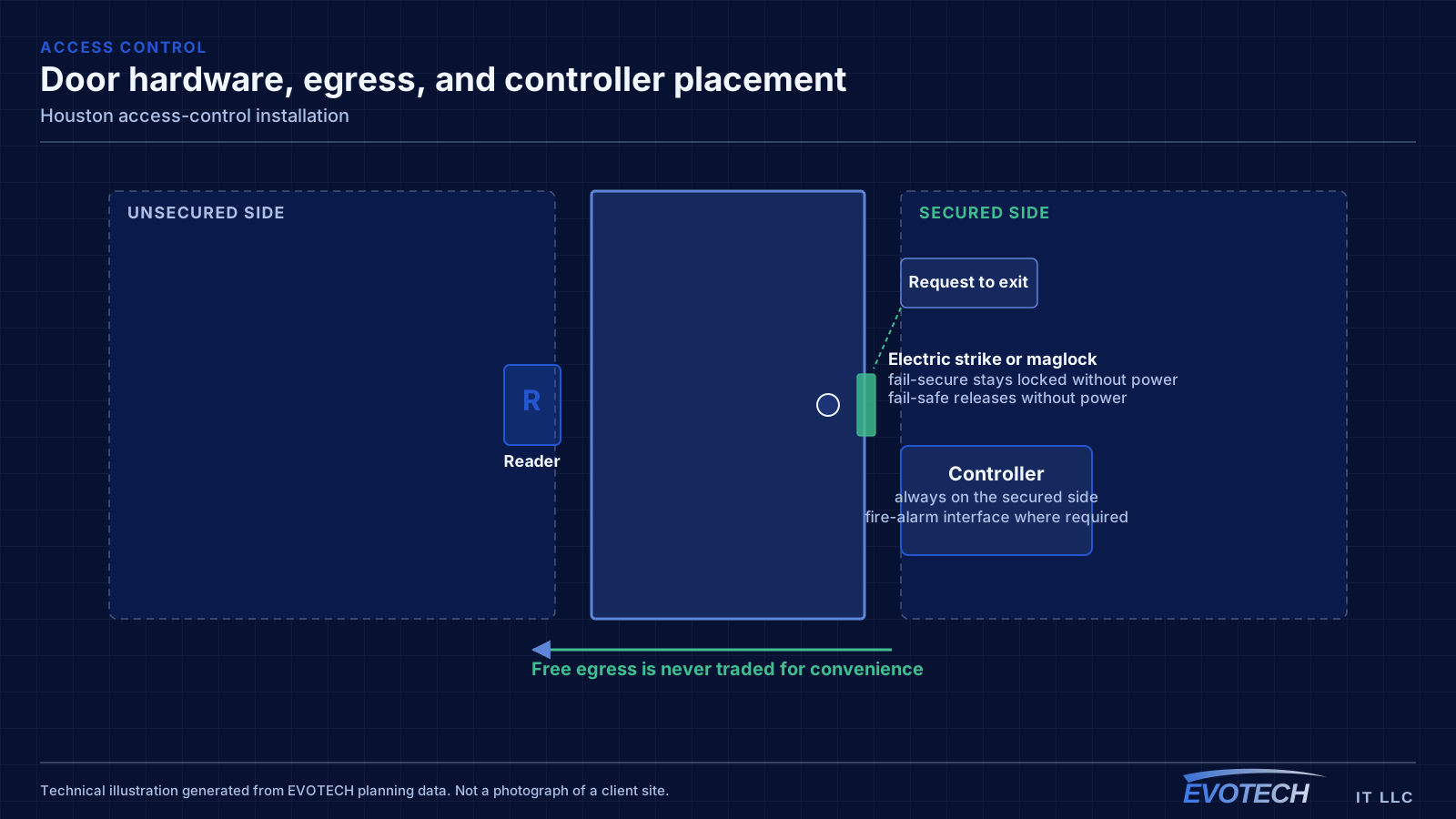
Every opening gets assessed before any hardware is specified: frame material and construction, the door's swing and condition, whether the closer still works properly, what hardware is already fitted, and whether power can reach it. Aluminium storefront framing in particular constrains what strikes and locks are viable.
The outcome of that survey frequently includes closer repair or replacement. It is unglamorous, and it is the difference between a system that works and one that generates alarms everybody learns to ignore.
- Frame material, door condition, and swing recorded per opening
- Closer condition assessed and corrected where needed
- Existing hardware evaluated for reuse or replacement
- Power availability at each opening confirmed
- Controller position identified on the secured side
Lock selection and egress
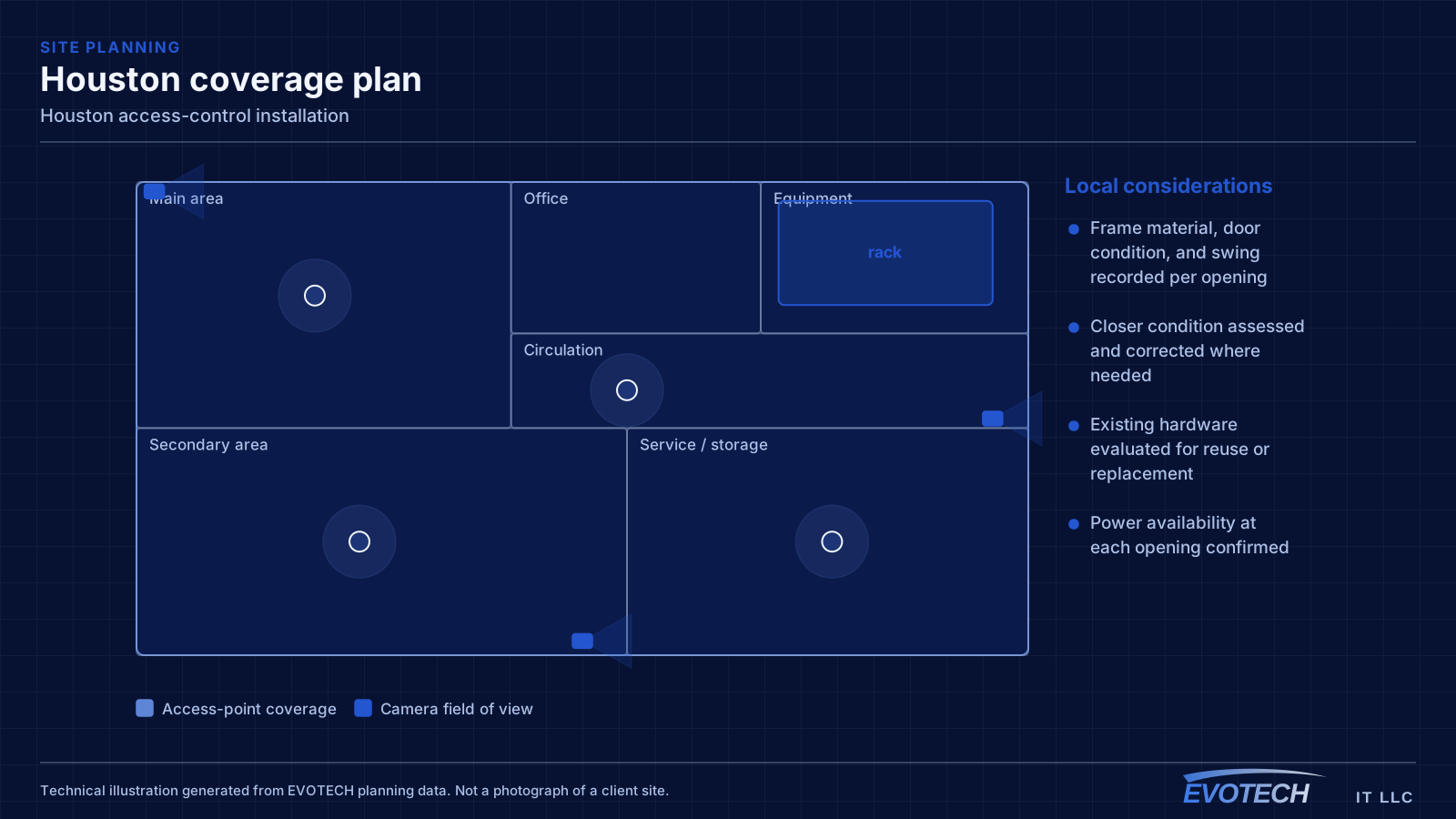
Lock type determines power-loss behaviour. A magnetic lock is fail-safe and releases when power is removed; a standard electric strike is typically fail-secure and stays locked, though the door still opens from the inside by its mechanical hardware. Which is correct for a given opening depends on its role and on applicable life-safety requirements, and it is a design decision rather than a preference.
Free egress is guaranteed by mechanical exit hardware, request-to-exit devices positioned to cover the actual approach from inside, and a fire-alarm interface where controlled doors must release. Where a magnetic lock is used, these arrangements are what make the installation appropriate rather than hazardous.
- Lock type selected per opening against its role and life-safety requirements
- Free egress preserved by mechanical hardware and request-to-exit devices
- Request-to-exit coverage checked against the real approach path
- Fire-alarm interface coordinated with the responsible parties
- Door position sensors fitted to detect held-open and forced conditions

Commissioning and administration
Commissioning tests the failure modes, not just successful entry: revoked credentials denied, egress working from inside on every controlled door, power-loss behaviour matching the design, and alarm release verified with the responsible parties present.
Administration is handed over with a defined process for issuing and revoking credentials. Shared credentials destroy the audit record, and access that is never revoked erodes the value the system was installed to provide.
- Valid, invalid, and revoked credentials all tested and logged
- Egress verified from inside on every controlled opening
- Power-loss behaviour confirmed per opening
- Fire-alarm release verified with responsible parties present
- Issue and revocation process handed over in writing
Popular services nearby
Frequently searched near this area — the pages people look for most.
Frequently asked questions
Why do access-control faults so often turn out to be the door?
Because the electronics report exactly what they see. A closer that no longer shuts the door fully produces held-open alarms; a misaligned strike produces intermittent latch failures. Both present as system faults and neither is one. In older commercial stock, correcting the door hardware is usually part of the project.
Can people still leave during a power failure?
They must be able to, and the design guarantees it. Mechanical exit hardware on the inside, request-to-exit devices that release the lock as someone approaches, and a fire-alarm interface where required all exist for that reason. Free egress is a requirement rather than a feature to be traded for convenience.
Are older key fobs secure enough?
It depends entirely on the format. Older low-frequency proximity credentials can be copied with inexpensive equipment and are better treated as a convenience than a security control. Modern encrypted and mobile credentials are substantially more resistant, which is worth knowing when deciding what to install alongside an existing system.