

Why this page exists
This pairing exists because Houston's larger commercial floor plates routinely produce cable routes long enough to change the Cat6 specification decision — a distinction that matters less in buildings with compact floor plans.
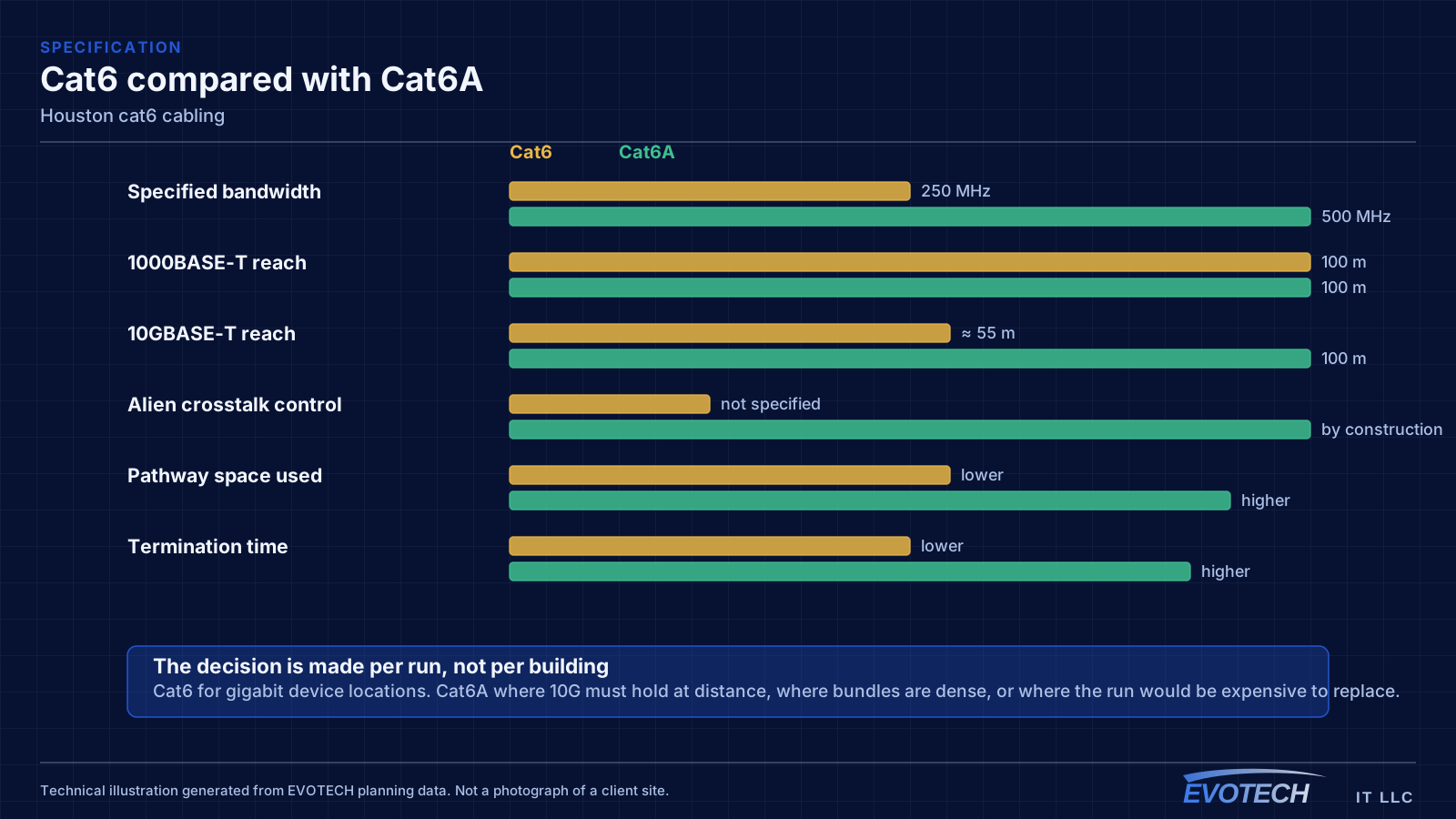
Cat6 carries gigabit across the full 100-metre channel without difficulty, which covers nearly everything that plugs into a wall plate. Its limit appears at 10 gigabit, where the supported distance drops to roughly 55 metres and falls further in dense bundles.
In a compact suite that limit rarely binds. In a large floor plate where cable routes wrap around a building core, a run intended to carry 10G can easily exceed the short-run budget without anyone noticing until the link negotiates down. That is why the decision belongs at the run level here rather than at the building level.
Where the specification decision actually bites
The runs that matter are the ones intended to carry more than gigabit: uplinks between equipment positions, high-density access points, and any workstation position handling large files. For those, the route length decides the answer. Under about 55 metres with a loosely bundled pathway, Cat6 is defensible. Past that, or in a tight bundle of many identical runs, Cat6A is the honest specification.
For everything else — desk outlets, phones, printers, door controllers, most cameras — Cat6 is not a compromise. It is the right specification, and running Cat6A everywhere costs pathway capacity that a mixed design keeps for future runs.
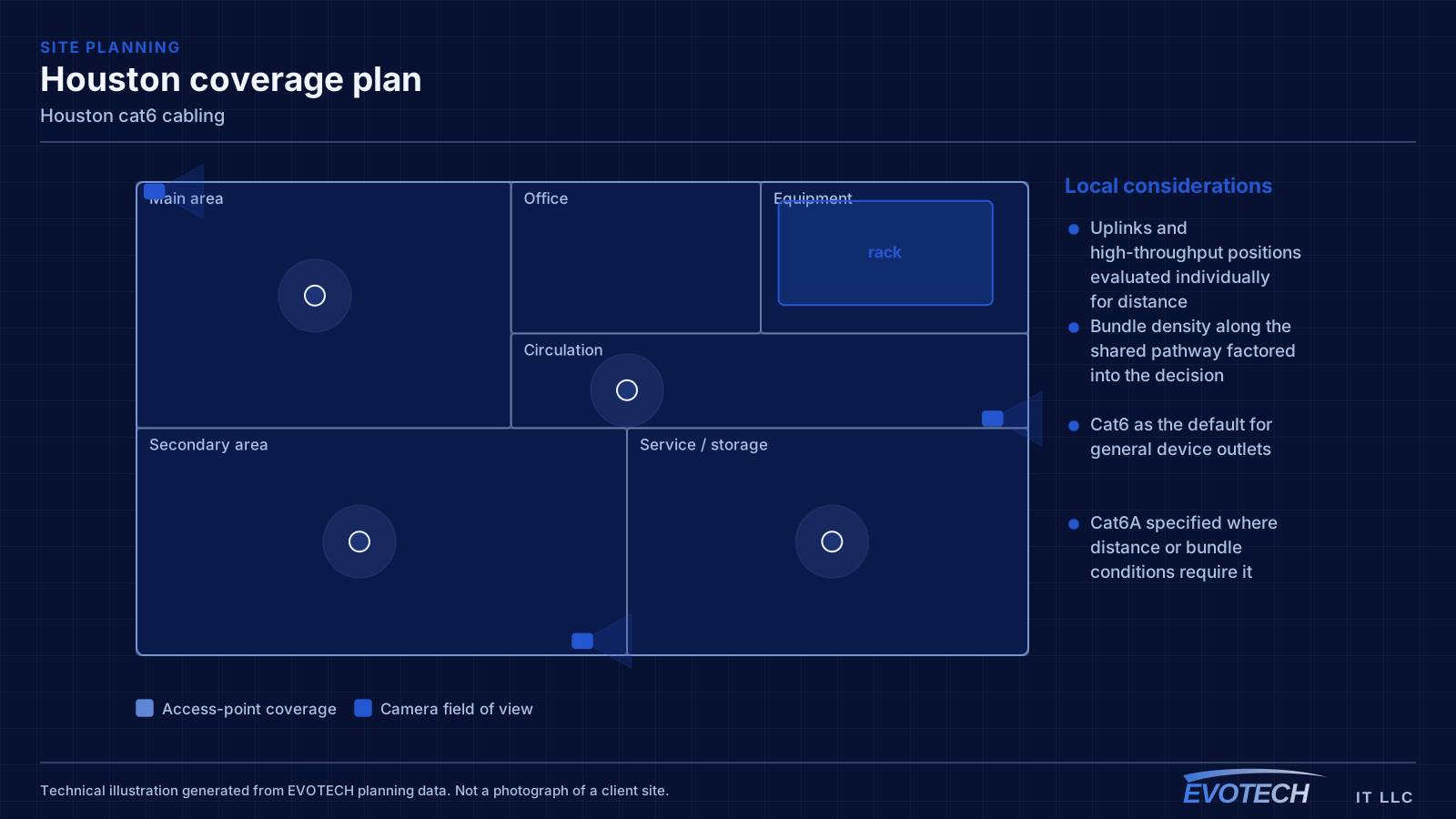
- Uplinks and high-throughput positions evaluated individually for distance
- Bundle density along the shared pathway factored into the decision
- Cat6 as the default for general device outlets
- Cat6A specified where distance or bundle conditions require it
- Components matched end to end so the channel holds its rating
Measuring the route, not the floor plan
The single most useful step is measuring the actual cable route for the runs under consideration. That means the path up into the ceiling, along the available pathway, around whatever the plan does not show, down the wall, and out to the outlet — plus patch cords at both ends.
Where several runs sit near the limit, the alternative worth pricing is a secondary distribution point. A small switch in a closet fed by fiber can be cheaper than upgrading a dozen long runs to Cat6A, and it removes the distance question entirely.
- Actual route length measured for any run considered for 10G
- Patch cord length included in the channel budget
- Secondary distribution point priced as an alternative to long upgraded runs
- Pathway fill recalculated when Cat6A is specified, since the cable is larger
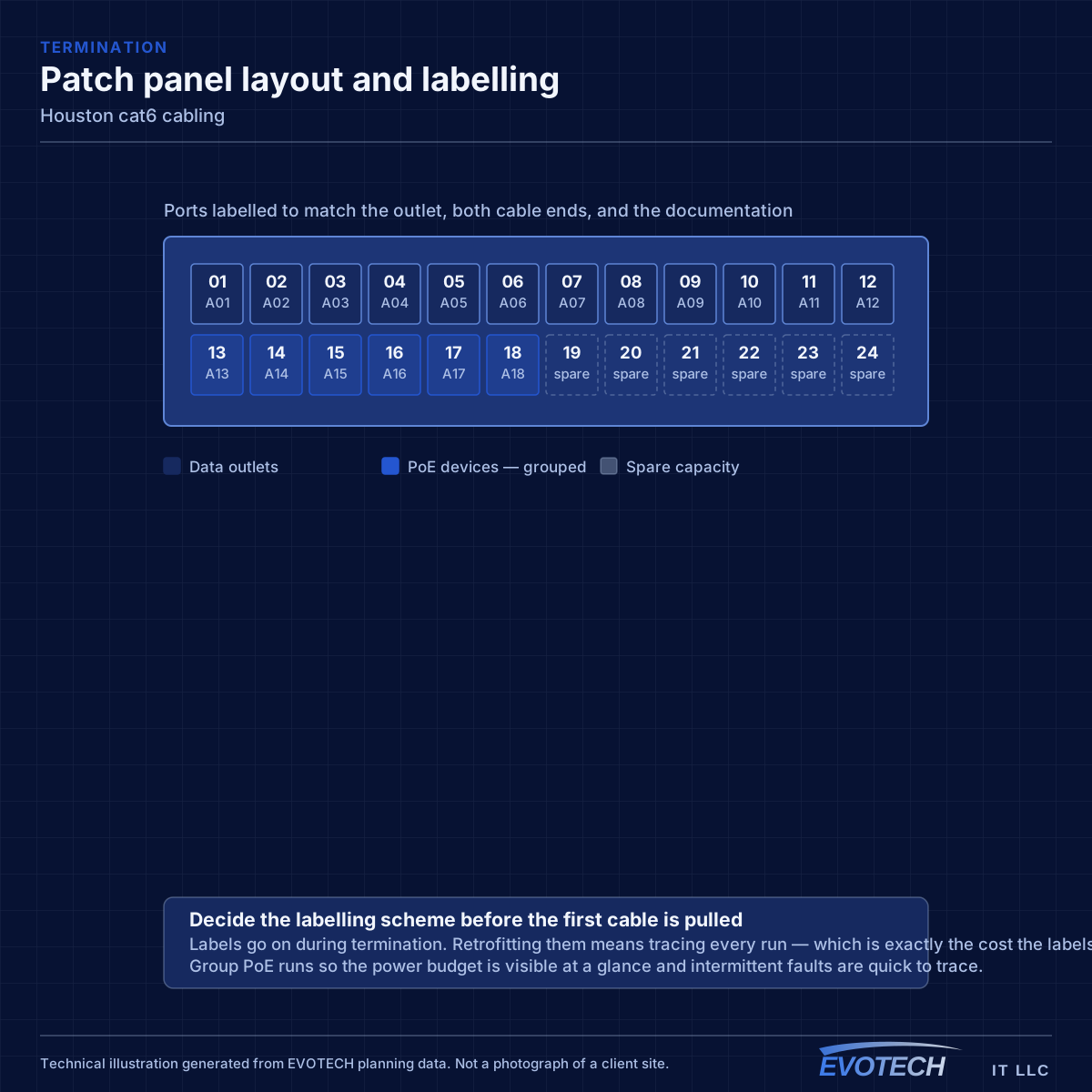
- Jack and panel category matched to the cable on every run
Practical installation notes
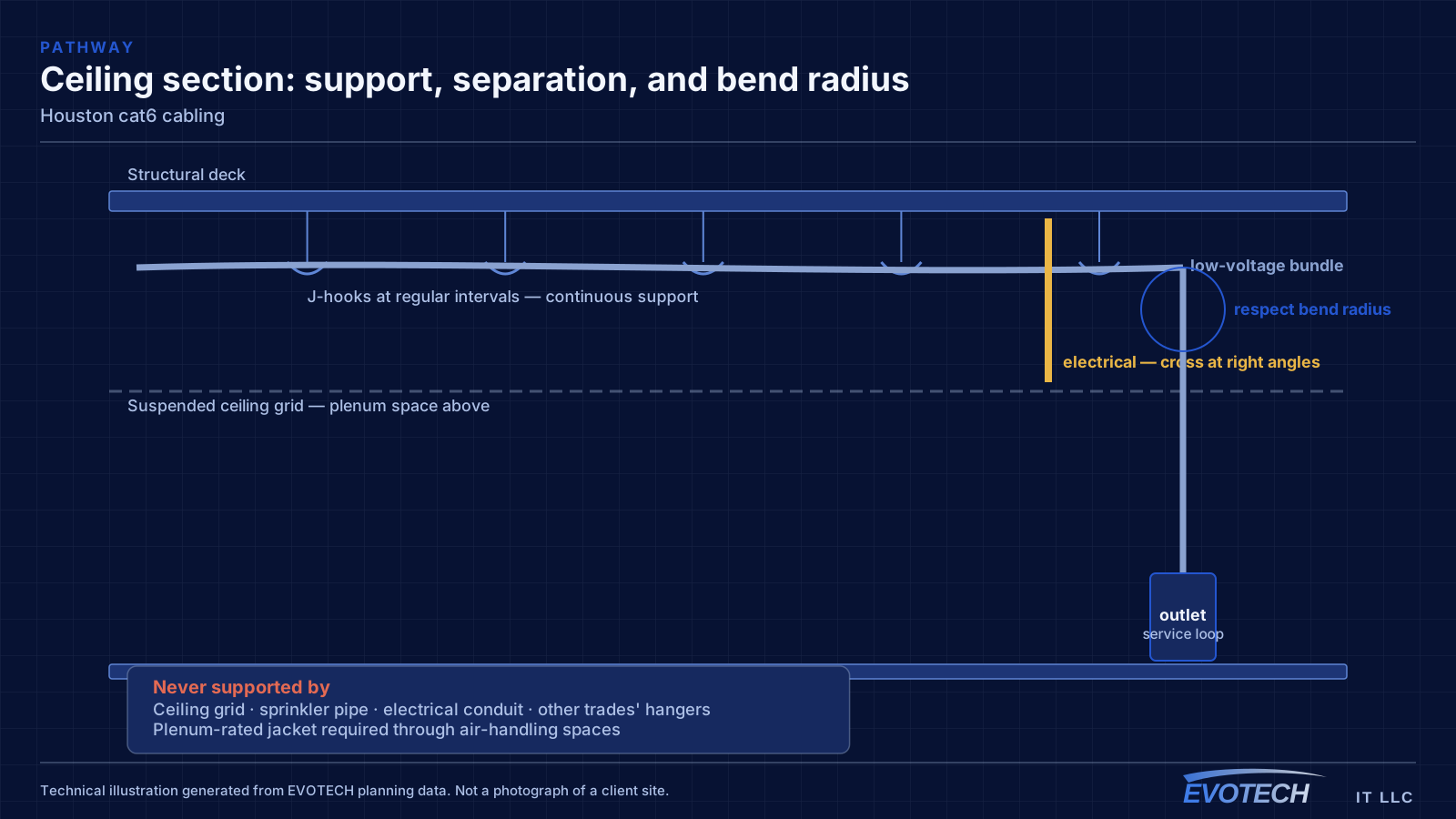
Cat6A is stiffer and larger, which changes both the pull and the rack dressing. A pathway sized comfortably for Cat6 may not take the same count in Cat6A, and a rack laid out for tidy Cat6 gets crowded. Both are worth checking before ordering rather than discovering during installation.
Where shielded construction is specified, termination takes longer and shield bonding has to be consistent at both ends. Inconsistent bonding performs worse than a well-installed unshielded run, so it is a decision that has to come with the practice to support it.
- Pathway fill recalculated for larger cable diameter
- Rack space and management planned for stiffer cable
- Shielded terminations budgeted for the extra time they take
- Bundles kept loose where PoE load is significant
- Certification run at the limits for the specified category, not a lower one
Popular services nearby
Frequently searched near this area — the pages people look for most.
Frequently asked questions
Should a Houston office specify Cat6A throughout?
It is rarely wrong technically, but it costs pathway capacity and termination time across every run, including the many that only ever need gigabit. A mixed design — Cat6A on uplinks, high-density positions, and long or inaccessible runs, Cat6 elsewhere — usually delivers the same practical outcome while leaving pathway free for future additions.
How do you know whether a run exceeds the short-run 10G budget?
By measuring the actual route rather than the floor-plan distance. Cable goes up, along whatever pathway exists, around structure the plan does not show, and back down, with patch cords at both ends. In larger floor plates that regularly turns an apparent 60 metres into something closer to 95.
Does a Cat6 run terminated on older hardware still count as Cat6?
No. Category applies to the assembled channel, so a Cat6 cable terminated on a Cat5e jack and patched with a Cat5e cord is a Cat5e channel. Certification testing will report it as such, which is one of the more common surprises when an existing installation gets tested for the first time.