
Why this page exists
Video-doorbell installation in Cypress is scoped around the same physical realities EVOTECH weighs everywhere — but read through Cypress's specific conditions: large newer residential floor plans that exceed single-position wireless coverage. This page pairs what the service actually involves with what the Cypress market changes about it.
A video doorbell is a small camera with a doorbell button, and the three things that make it work well are adequate power, a sensible viewing angle, and a solid network connection at the door. Existing doorbell wiring often provides power, but many older transformers were sized for a mechanical chime and do not supply enough for a camera that streams and records.
What video-doorbell installation usually involves
The most common failure is a doorbell that works intermittently, drops its video, or reboots when someone presses the button. That pattern almost always indicates insufficient power — either a transformer below the required rating or a chime configuration the device cannot work with.
The second is wireless. The front door is frequently the furthest point from the router, often through an exterior wall and sometimes behind brick veneer. A device with a marginal connection produces delayed notifications and choppy video, and no amount of doorbell configuration fixes a signal problem.
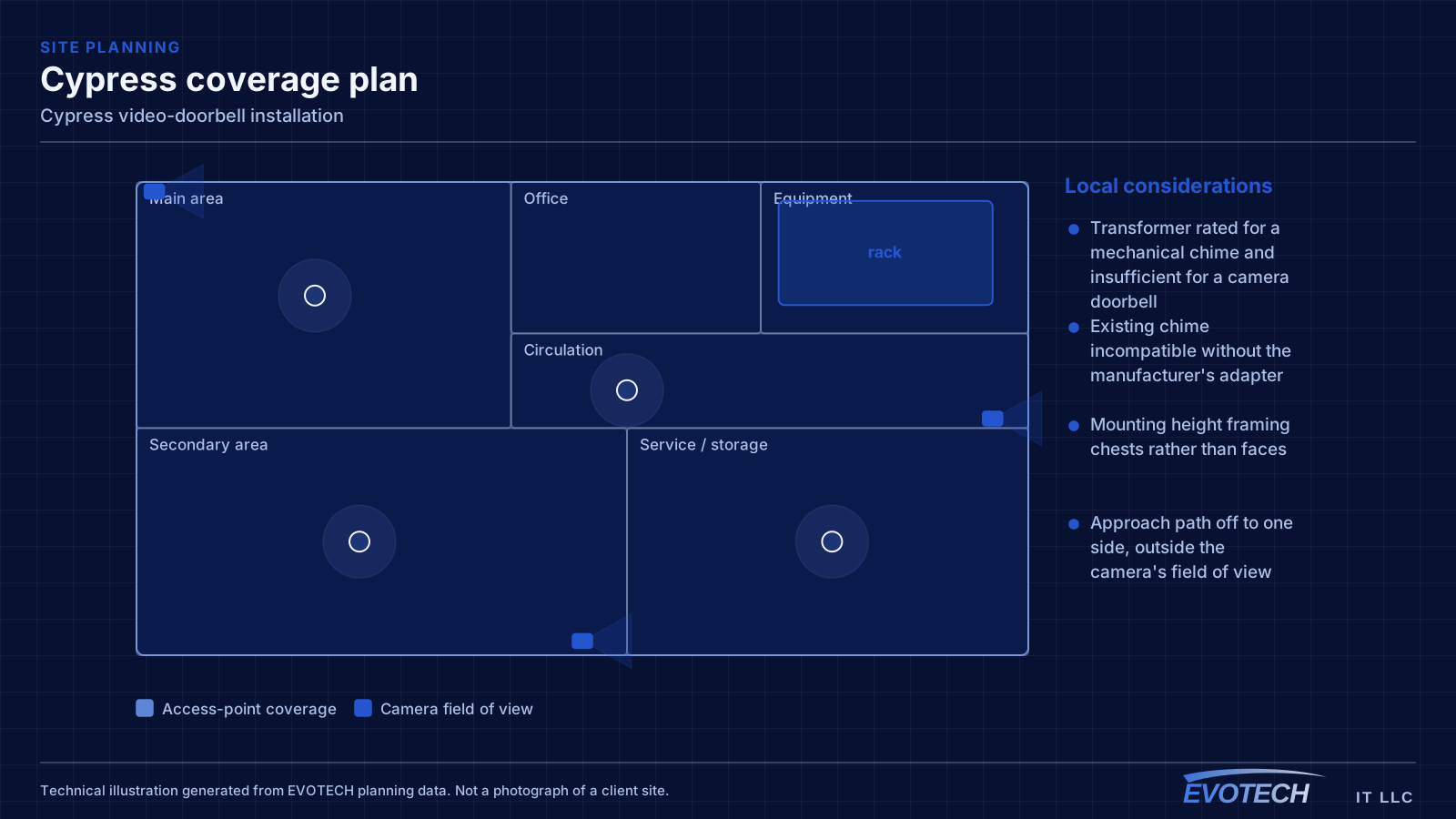
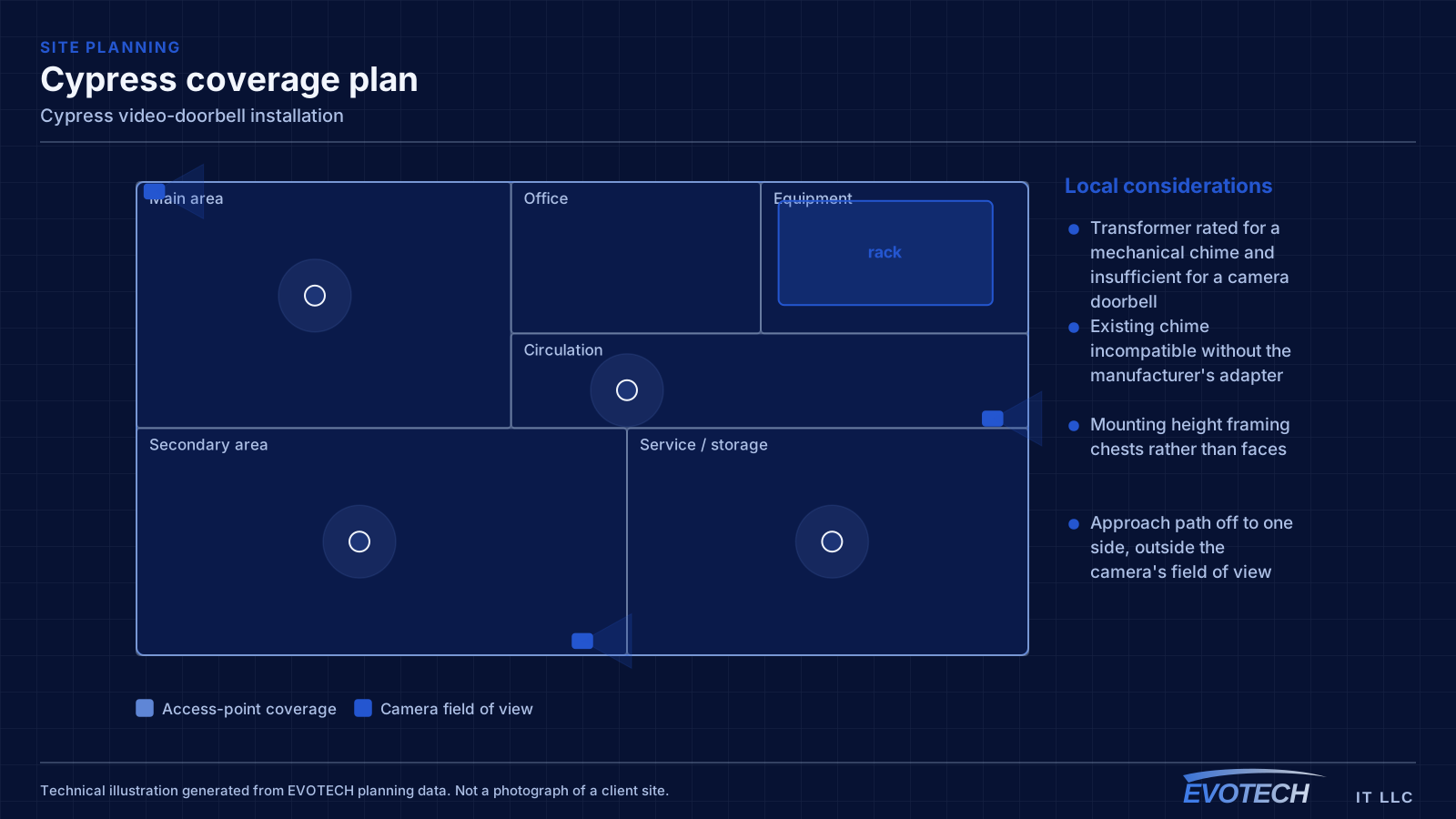
- Transformer rated for a mechanical chime and insufficient for a camera doorbell
- Existing chime incompatible without the manufacturer's adapter
- Mounting height framing chests rather than faces
- Approach path off to one side, outside the camera's field of view
- Weak wireless signal at the door causing delays and dropped clips
- Direct sun or a bright background silhouetting visitors at certain times of day
Cypress property conditions that change the plan
Residential construction here follows the wider suburban pattern — slab foundations, accessible attics, wide floor plans — with the coverage consequences that implies. The reliable arrangement remains multiple wired ceiling positions rather than one powerful device.
Community and worship facilities are a distinct category. Large main spaces with high ceilings need coverage planned for the volume rather than the floor area, and the mounting positions are frequently high enough to require lift access. These buildings also tend to have been extended over time, so pathway varies between sections.
Renovation work carries genuine uncertainty about what is behind the walls and above the ceilings. The practical approach is to treat pathway discovery as a scoped activity rather than an assumption — confirm what exists before committing to a design that depends on it.
- Wide residential floor plans needing multiple wired access-point positions
- Large main spaces in community facilities requiring distributed coverage
- High mounting positions needing lift access
- Buildings extended over time with inconsistent pathway between sections
- Retail units with varying ceiling construction unit to unit
- Pathway discovery treated as scoped work in renovation projects
- Coverage design validated by walking the space after installation
- Lift access planned where mounting positions are high
- Existing installation assessed rather than assumed usable
- Phased approaches where buildings are being renovated in sections
Getting video-doorbell installation done in Cypress
Camera doorbells specify a voltage and minimum VA rating for their transformer. Many houses have transformers sized only for a mechanical chime, which is a much smaller load. When the supply is marginal the device may appear to work and then fail when the camera and radio draw peak current — typically at the moment the button is pressed. Replacing the transformer with one meeting the device specification resolves a large share of these cases.
Community facilities have use patterns that constrain scheduling in ways commercial buildings do not — evenings and weekends are frequently the busiest times, so weekday daytime work is often the available window. That is the opposite of most commercial installations and worth planning around.
- Weekday daytime windows for community and worship facilities
- Lift access requiring clear floor space coordinated with use
- Residential attic work scheduled early in summer months
- Dust control and daily clear-down in occupied properties
- Phasing where budgets or use patterns require it
Frequently asked questions
Does EVOTECH have an office in Cypress?
No. This is a service-area page: EVOTECH serves Cypress without claiming a physical office there. The wording stays as coverage, not a location claim.
Why does the doorbell keep going offline or restarting?
Most often the transformer. Many houses have a transformer sized for a mechanical chime, which is a much smaller load than a camera doorbell. The device appears to work until it draws peak current — usually at the button press — and then drops. Confirming the transformer meets the device's stated voltage and VA rating resolves a large share of these cases.
How is coverage planned for a large open main space?
By volume and by seating rather than by floor area. High ceilings change the geometry — an access point at roof height covers differently than one at a lower mounting position — and the reliable approach is to design for the areas where people actually are, then validate by walking the space with the room set up as it normally is.