
Why this page exists
Smart home & smart locks in Cypress is scoped around the same physical realities EVOTECH weighs everywhere — but read through Cypress's specific conditions: large newer residential floor plans that exceed single-position wireless coverage. This page pairs what the service actually involves with what the Cypress market changes about it.
Smart-home devices are easy to buy and easy to end up with a drawer of apps that half-work. Getting a home that actually behaves means three decisions up front: which ecosystem everything lives in — a voice platform, a phone platform, or a manufacturer's own app — so devices cooperate instead of each needing their own login; whether devices talk over Wi-Fi or through a hub using a low-power protocol; and which functions must keep working when the internet drops. A smart lock that only unlocks from the cloud is a problem the first time the connection goes down.
What smart home & smart locks usually involves
The characteristic smart-home problem is a device that works most of the time — which, for a lock or a camera, is not good enough. The usual causes are weak wireless at the device's location, a cloud dependency that fails when the connection blips, and automations that quietly stop firing without telling anyone.
The second is ecosystem sprawl: five brands, five apps, and no way to make a routine span them. Deciding on one platform, and choosing devices that speak to it, turns a pile of gadgets into a system.
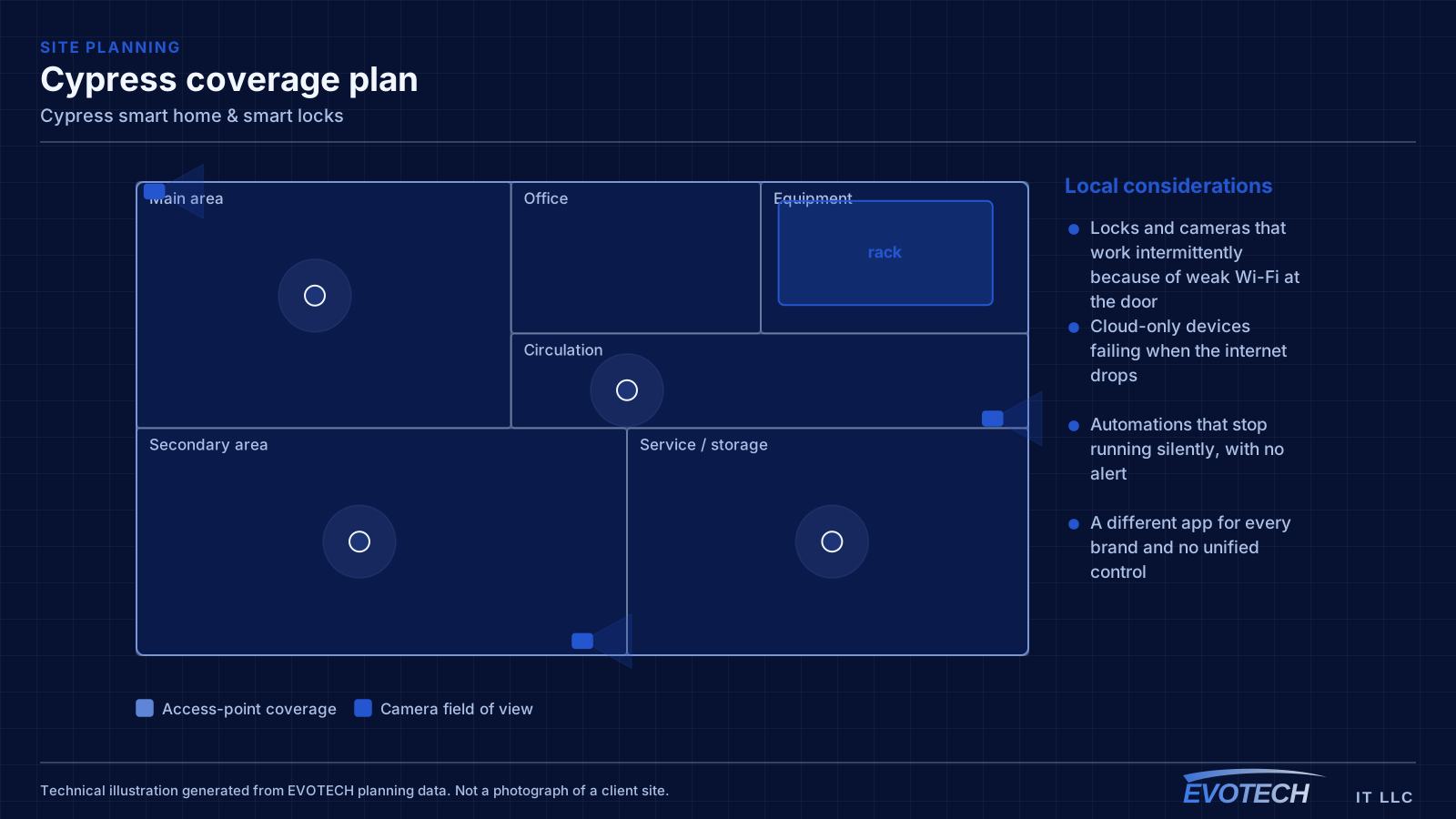
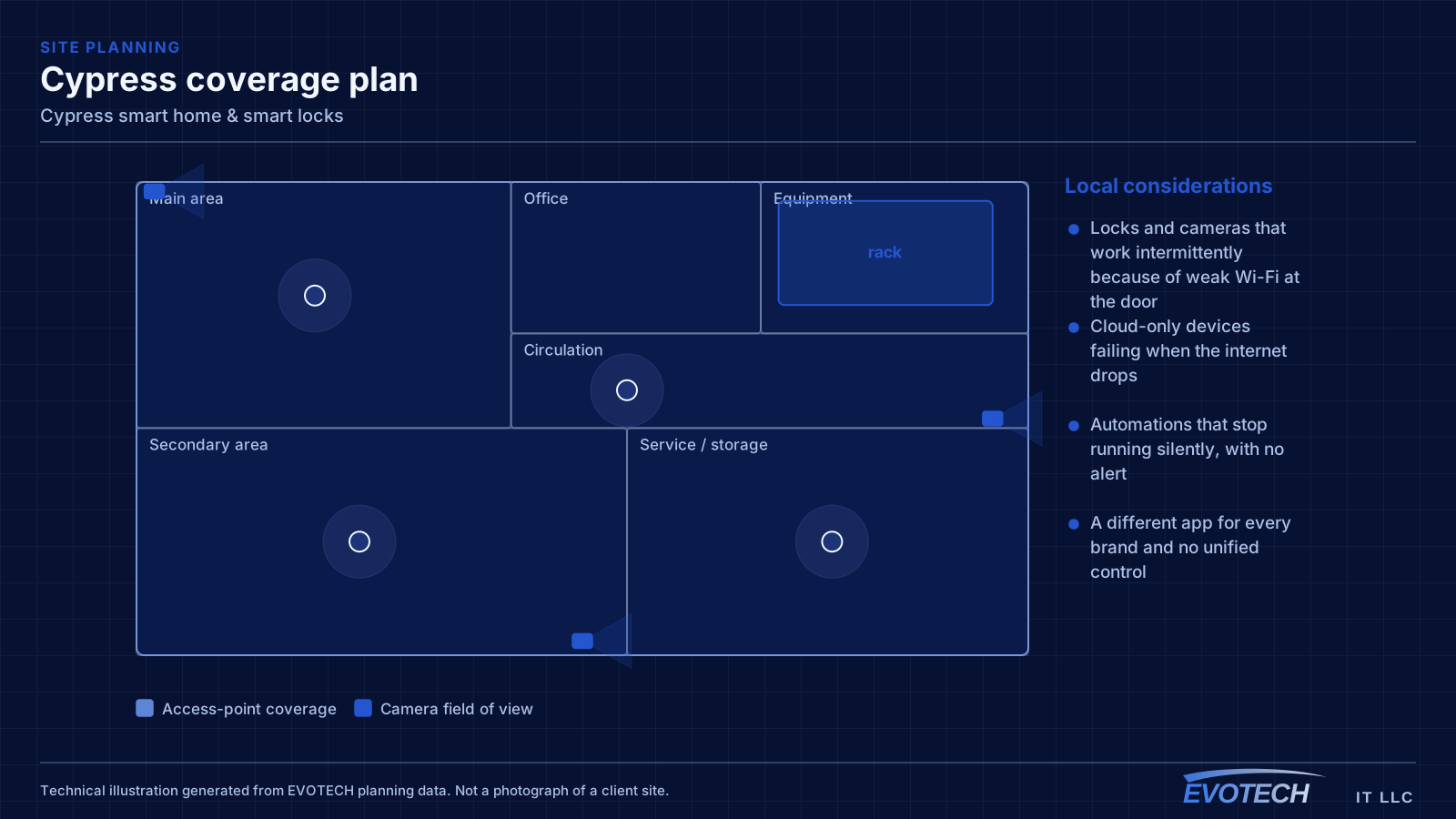
- Locks and cameras that work intermittently because of weak Wi-Fi at the door
- Cloud-only devices failing when the internet drops
- Automations that stop running silently, with no alert
- A different app for every brand and no unified control
- Smart locks fitted to doors that are misaligned or swollen, so they jam
- Dead batteries with no monitoring, locking people out
Cypress property conditions that change the plan
Residential construction here follows the wider suburban pattern — slab foundations, accessible attics, wide floor plans — with the coverage consequences that implies. The reliable arrangement remains multiple wired ceiling positions rather than one powerful device.
Community and worship facilities are a distinct category. Large main spaces with high ceilings need coverage planned for the volume rather than the floor area, and the mounting positions are frequently high enough to require lift access. These buildings also tend to have been extended over time, so pathway varies between sections.
Renovation work carries genuine uncertainty about what is behind the walls and above the ceilings. The practical approach is to treat pathway discovery as a scoped activity rather than an assumption — confirm what exists before committing to a design that depends on it.
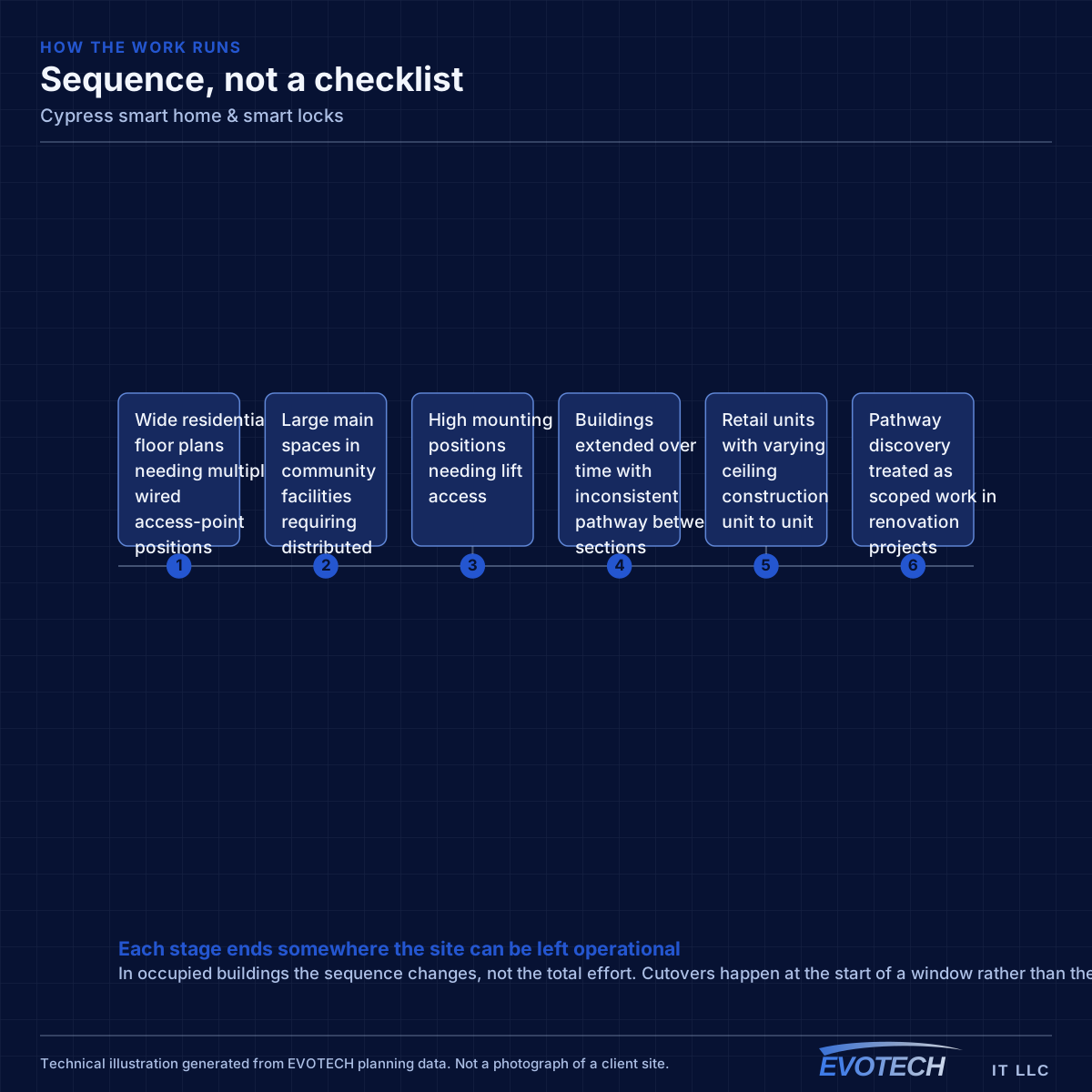
- Wide residential floor plans needing multiple wired access-point positions
- Large main spaces in community facilities requiring distributed coverage
- High mounting positions needing lift access
- Buildings extended over time with inconsistent pathway between sections
- Retail units with varying ceiling construction unit to unit
- Pathway discovery treated as scoped work in renovation projects
- Coverage design validated by walking the space after installation
- Lift access planned where mounting positions are high
- Existing installation assessed rather than assumed usable
- Phased approaches where buildings are being renovated in sections
Getting smart home & smart locks done in Cypress
The ecosystem decision is the one that shapes everything else. Committing to a single platform — whichever suits the household's phones and habits — lets devices share routines and one control surface, at the cost of favouring devices that support it. A hub adds a second layer: many reliable smart-home devices use a low-power mesh protocol rather than Wi-Fi, which keeps them off the main network and off the router's client count, and a modern hub bridges those to the chosen platform. Newer interoperability standards are narrowing the gap between ecosystems, but device support still has to be checked rather than assumed.
Community facilities have use patterns that constrain scheduling in ways commercial buildings do not — evenings and weekends are frequently the busiest times, so weekday daytime work is often the available window. That is the opposite of most commercial installations and worth planning around.
- Weekday daytime windows for community and worship facilities
- Lift access requiring clear floor space coordinated with use
- Residential attic work scheduled early in summer months
- Dust control and daily clear-down in occupied properties
- Phasing where budgets or use patterns require it
Frequently asked questions
Does EVOTECH have an office in Cypress?
No. This is a service-area page: EVOTECH serves Cypress without claiming a physical office there. The wording stays as coverage, not a location claim.
Which smart-home ecosystem should we use?
Usually the one that matches the phones and habits in the house, because that is the control surface everyone already reaches for. Committing to one platform lets devices share routines instead of each needing its own app — the tradeoff is favouring devices that support it. Newer interoperability standards are narrowing the differences, but it is still worth checking that the specific devices you want work with the platform you choose.
How is coverage planned for a large open main space?
By volume and by seating rather than by floor area. High ceilings change the geometry — an access point at roof height covers differently than one at a lower mounting position — and the reliable approach is to design for the areas where people actually are, then validate by walking the space with the room set up as it normally is.