PoE camera installation for warehouses, in League City
PoE camera installation for warehouses in League City is a three-part question: what poe camera installation involves, what warehouses need from it, and what League City changes about the install. Coastal proximity raising the weight on exterior sealing, rated housings, and surge protection.
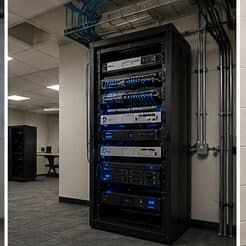
The design consequence is that the switch is now a power supply. Each camera draws a certain class of power, and the total across every powered device has to fit within the switch's PoE budget with room to spare. A switch with enough ports but not enough watts produces intermittent camera reboots that look like network faults.
Cover the aisles, reach the far end, watch the docks
Warehouse projects come down to three things: wireless that works down the aisles with stock in place, a network topology that reaches the far end of the building properly, and camera coverage at the points where goods and vehicles move.
Office areas within the warehouse are comparatively ordinary and are usually the easiest part of the project.
- Access points positioned to cover along aisles rather than across them
- Intermediate equipment positions linked by fiber where distance requires
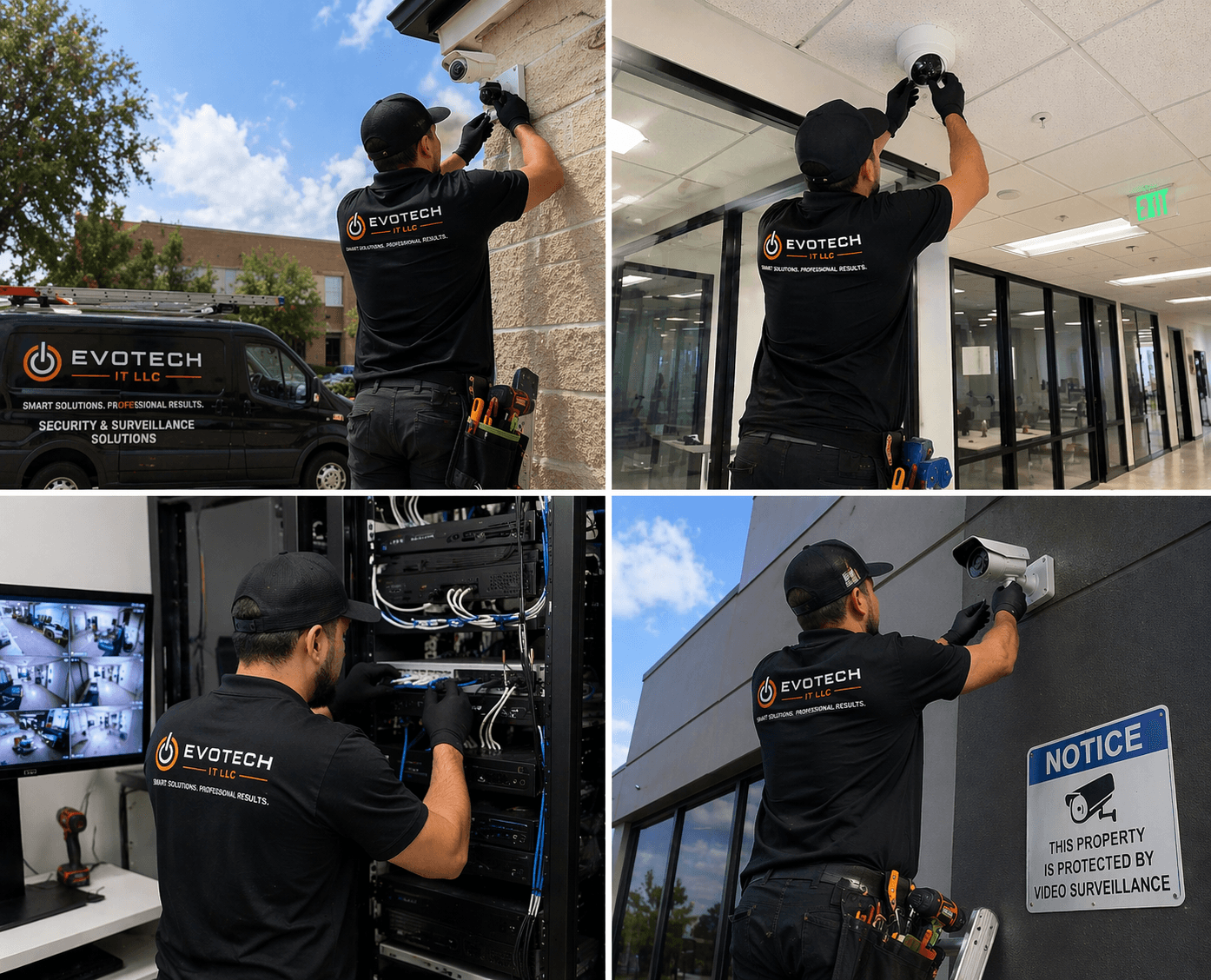
- Dock doors, receiving, and yard gates covered by cameras
- Scanner and handheld roaming validated with stock in place
- Equipment protected from dust and temperature in unconditioned areas
What changes poe camera installation from job to job
Scope depends on the power profile as much as the camera count.
- Camera count and the class each one requires
- Whether any devices need higher-power classes for motors, heaters, or illuminators
- Cable distance to each position
- Switch selection and whether existing switching has budget available
- Exterior penetrations, junction boxes, and weather sealing
- UPS capacity for the desired runtime
- Access requirements for elevated mounting
League City: what the location changes
The starting point for any League City job is one local fact. Coastal proximity raising the weight on exterior sealing, rated housings, and surge protection. That single condition shapes where cable can run, where equipment can sit, and how coverage is laid out — more than any spec sheet does. Two more conditions weigh on it. Storm-season resilience planning, favouring UPS and failover where uptime matters. Newer suburban slab-foundation homes with multi-room coverage needs. Together they make the route specific to this pocket, which is why a short walkthrough or a few clear photos settle the scope faster than a floor plan can.
- Coastal proximity raising the weight on exterior sealing, rated housings, and surge protection
- Storm-season resilience planning, favouring UPS and failover where uptime matters
- Newer suburban slab-foundation homes with multi-room coverage needs
- Growing medical and retail commercial space
- Gulf Coast humidity and driven-rain events as a routine design factor
Getting it done in League City
The meaningful PoE test is under peak load after dark, because that is the condition that exposes budget problems.
Warehouse camera coverage concentrates where goods and vehicles move: dock doors, receiving and shipping areas, yard gates, and the boundary between operational and office space. These views answer the questions warehouse footage is actually asked — what arrived, what left, and when.
Getting League City work done means planning around the site as it actually is. Growing medical and retail commercial space. Gulf Coast humidity and driven-rain events as a routine design factor. Both matter as much as the design to how and when the work happens. The scope is drawn from the real property, the coverage is stated as a service area rather than an office, and unverifiable specifics about League City are kept off the page on purpose.
Frequently asked questions
Is poe camera installation for warehouses different in League City?
The sector needs stay the same, but the install changes with the place. In League City, the conditions above — not the warehouses label — decide routes, mounting, and equipment placement, which is why this page pairs all three.
Why do cameras reboot at night but work fine during the day?
Almost always PoE budget. Infrared illuminators engage after dark and the total draw rises, pushing the switch past its budget. It presents as intermittent camera dropouts and gets misdiagnosed as a network fault. The fix is a switch with sufficient budget and headroom, calculated from peak draw rather than idle.