Why this page exists
Business phone & VoIP for warehouses is shaped by how the space is used, not just by the service itself. Warehouses bring their own operating constraints, and this page pairs what business phone & voip actually involves with what that environment changes about it.
Modern business phones run over the data network — VoIP handsets plug into the same switches as everything else and draw their power from PoE. That is the appeal: one cabling system, central management, and features like auto-attendant, voicemail-to-email, call groups, and remote extensions that older key systems could not offer. The decision that shapes the rest is on-premise versus cloud: an on-site call server you own and maintain, or a hosted service where the provider runs the platform and the site just needs handsets, power, and a good circuit.
The building changes its own radio environment
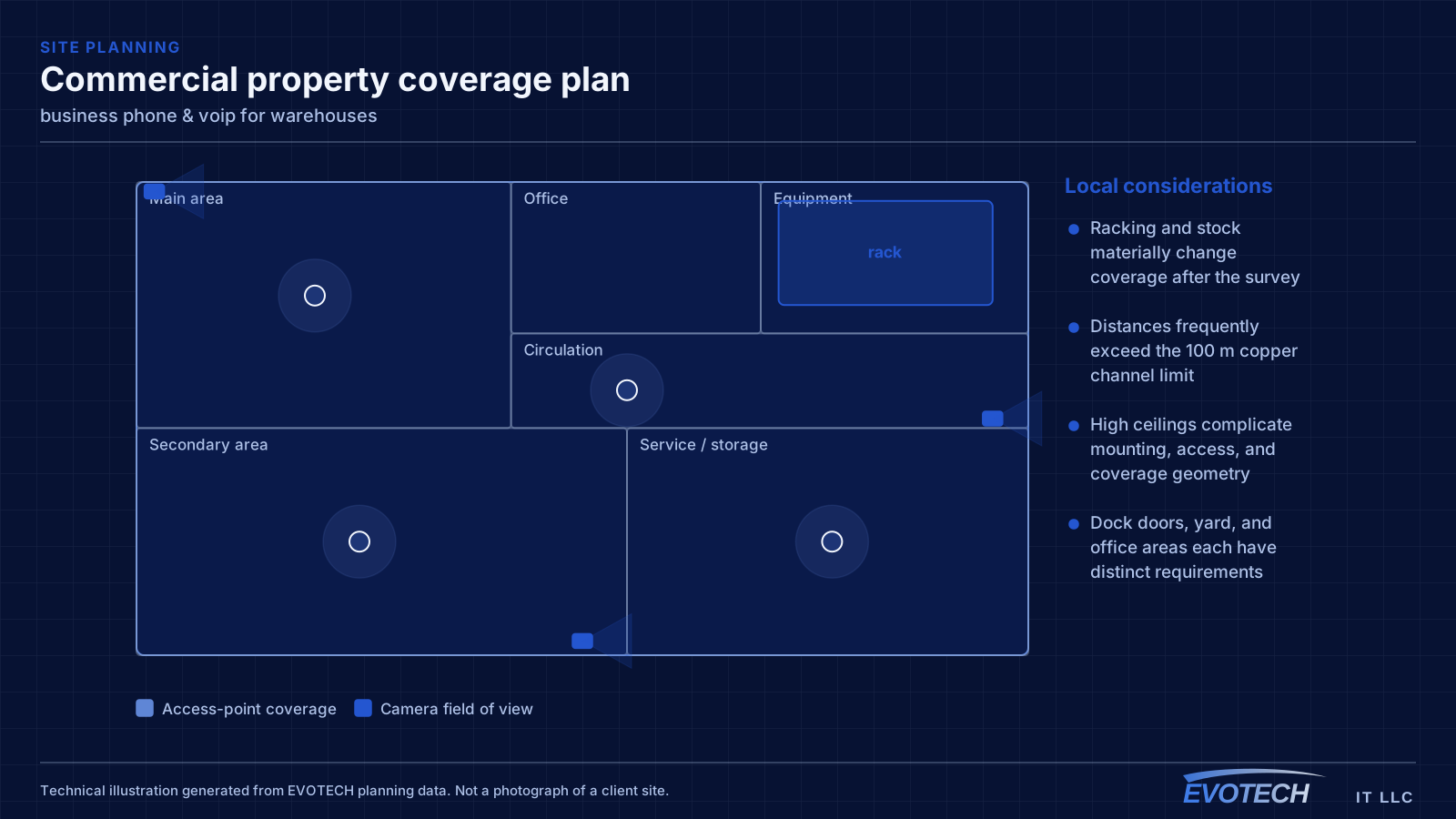
A warehouse surveyed empty and a warehouse full of stock are different radio environments. Metal racking reflects, palletised inventory absorbs, and coverage that measured well across an open floor can disappear once the aisles fill. Any design based on an empty-building survey should be treated as provisional.
The second defining feature is distance. Warehouse footprints regularly exceed what a single equipment room can serve within the 100-metre copper limit, which means either intermediate equipment positions connected by fiber or a deliberately distributed design.
- Racking and stock materially change coverage after the survey
- Distances frequently exceed the 100 m copper channel limit
- High ceilings complicate mounting, access, and coverage geometry
- Dock doors, yard, and office areas each have distinct requirements
What business phone & voip usually involves
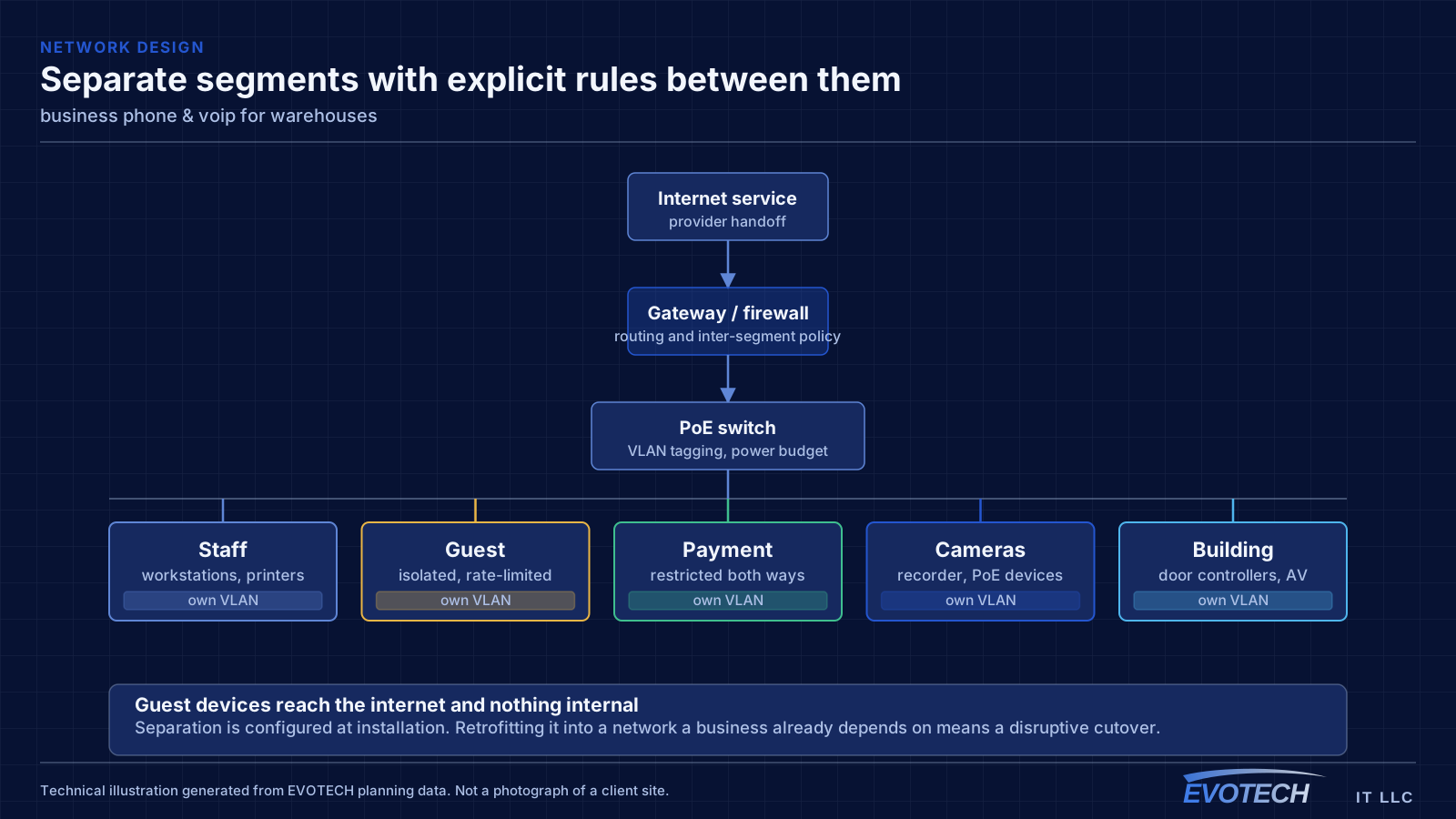
The defining VoIP problem is call quality on a network that was never prepared for voice. Jitter — variation in packet timing — makes speech robotic; packet loss clips words; and both get worse when a backup or a large upload competes for the same uplink. Voice needs to be prioritised over other traffic, and its own segment, or it inherits every congestion event on the network.
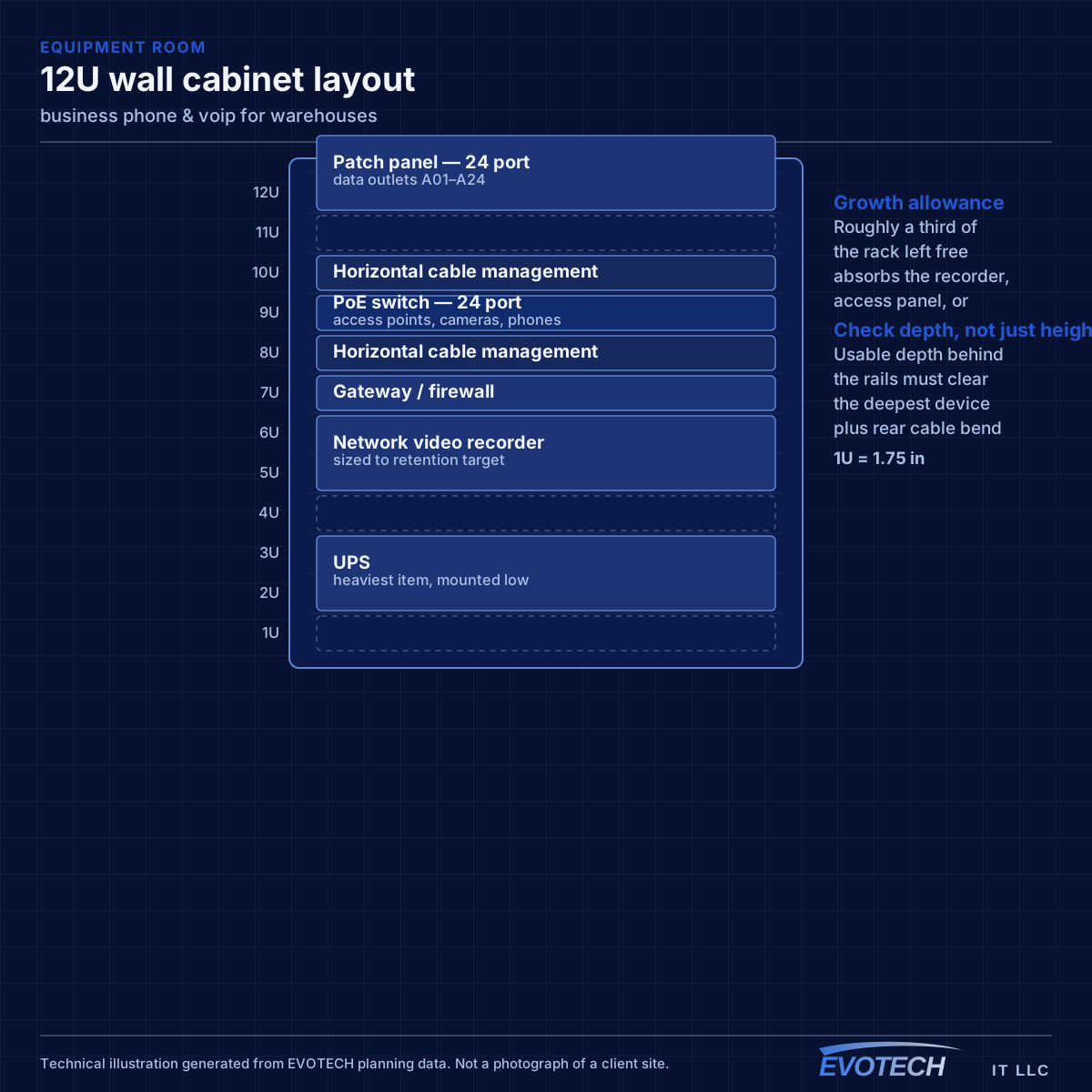
The second problem is power. PoE handsets, a PoE switch, and the call server all have to stay up for phones to work, and a site that puts its phones on an unprotected switch loses its phones with every brief outage — including the ability to call for help.
- Jitter and packet loss on an unprioritised network clipping and dropping calls
- Voice traffic sharing a congested uplink with backups and uploads
- PoE budget exhausted when handsets are added to an existing switch
- No UPS on the phone equipment, so an outage takes the phones down
- Insufficient internet upload bandwidth for the number of simultaneous calls
- Number porting scheduled without a cutover plan, risking dead lines
Topology, mounting height, and roaming for handhelds
Where a building exceeds copper reach from a single position, the usual answer is one or more intermediate distribution points fed by fiber, each serving its area with copper within the limit. This is standard structured-cabling practice and it is far more reliable than attempting to stretch copper or bridge wirelessly across the building.
Access-point mounting height is a genuine design decision in high-ceiling spaces, not a default. Mounting at the roof deck maximises line of sight but puts the access point far from the devices and often above the racking, where the signal has to travel down through stock. Mounting lower — at or just above racking height, aimed along the aisles — frequently produces better coverage where the scanners actually are.
Roaming matters because the primary clients are mobile. A forklift-mounted or handheld scanner moving down an aisle needs clean handoffs between cells. That is a function of overlap and channel planning, and it is best validated by walking the aisles with the racking loaded.
- Fiber to intermediate distribution points where distance exceeds copper limits
- Mounting height chosen deliberately rather than defaulting to the roof deck
- Coverage designed along aisles, with directional antennas where useful
- Roaming validated by walking loaded aisles, not an empty floor
- Office, operations, and building-system traffic segmented
Prioritisation, power, and how many calls the circuit carries
Voice quality is protected by keeping voice traffic separate and prioritised. A dedicated voice network segment, with quality-of-service marking so switches and the gateway send voice packets ahead of bulk data, is what keeps calls clean when the network is busy. Without it, a call and a large file transfer compete as equals, and the call loses.
- A dedicated voice segment with quality-of-service prioritisation
- Concurrent-call capacity bounded by upload bandwidth and codec
- PoE budget sized for every handset with headroom
- Call server and switch on a UPS
- On-premise versus hosted decided on who maintains the platform
Frequently asked questions
What changes about business phone & voip in warehouses?
The operating environment does. Warehouses bring specific constraints — how the space is used, when work can happen, and what has to keep running — and those shape the business phone & voip plan as much as the service's own technical requirements.
Why do our VoIP calls sound choppy when the internet seems fine?
Almost always jitter or contention rather than raw bandwidth. Voice packets are time-sensitive, and on a network that treats them the same as a backup or a large upload they get delayed or dropped whenever the network is busy. A dedicated voice segment with quality-of-service prioritisation fixes the majority of these cases without changing the internet plan.
Why did warehouse Wi-Fi get worse after the racking was stocked?
Because the stock changed the radio environment. Metal racking reflects and palletised goods absorb, so coverage measured across an open floor no longer applies. This is why warehouse designs should assume loaded conditions and why validation should happen with the aisles full.