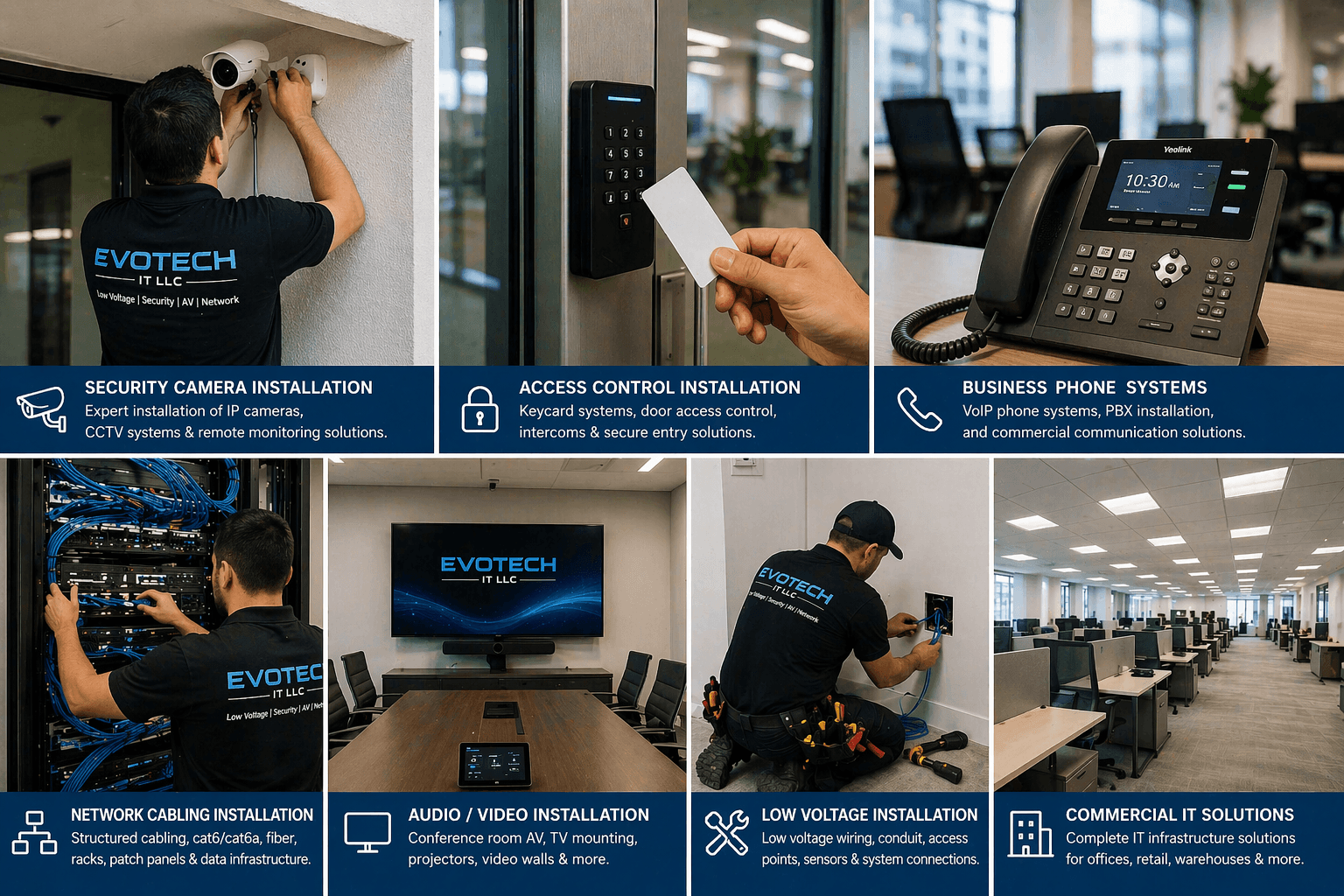
Data-jack installation for schools and educational facilities, in Baytown
Data-jack installation for schools and educational facilities in Baytown is a three-part question: what data-jack installation involves, what schools and educational facilities need from it, and what Baytown changes about the install. An industrial and refining base with rugged operational environments.
Most data-jack work is one of three things: adding new outlets to existing runs that were left coiled in a wall, replacing damaged or worn jacks, or re-terminating outlets that fail a test. The third is the most common on inherited buildings.
Per-classroom capacity and controlled entry
Two priorities dominate: enough wireless capacity in each classroom to serve a full class simultaneously, and controlled entry at the points where people come into the campus.
Both benefit from being designed at a campus level rather than building by building, because the addressing, segmentation, and management overhead of a piecemeal approach grows quickly.
- Access-point capacity planned per classroom, not per building area
- Fiber backbone between buildings and to distribution points
- Controlled entry at main and secondary access points
- Separate segments for student, staff, administrative, and building systems
- Coverage extended to gymnasiums, libraries, and outdoor gathering areas
Where data-jack installation goes wrong — and how it's avoided
The mistakes here are small motions with long consequences.
- Stripping back far more jacket than needed and untwisting pairs generously
- Mixing T568A and T568B between the two ends of a run
- Cutting cable to exact length with no service loop
- Mounting a plate directly to drywall with no bracket
- Reusing a jack of unknown category because it was already on the shelf
Baytown: what the location changes
The starting point for any Baytown job is one local fact. An industrial and refining base with rugged operational environments. That single condition shapes where cable can run, where equipment can sit, and how coverage is laid out — more than any spec sheet does. Two more conditions weigh on it. Older commercial stock needing pathway remediation and rack cleanup. Newer retail development with more straightforward conditions. Together they make the route specific to this pocket, which is why a short walkthrough or a few clear photos settle the scope faster than a floor plan can.
- An industrial and refining base with rugged operational environments
- Older commercial stock needing pathway remediation and rack cleanup
- Newer retail development with more straightforward conditions
- Coastal humidity and driven rain requiring durable exterior sealing and surge protection
- Slab-foundation residential following the regional pattern
Getting it done in Baytown
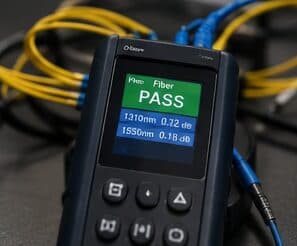
A jack is only finished when the link tests clean. Wire map catches scheme errors and split pairs; a full certification confirms the termination preserved enough margin for the rated category.
Camera coverage on a school campus concentrates on entrances, circulation between buildings, parking and drop-off areas, and the perimeter. Corridors are common; classrooms are not, and that boundary is agreed at design.
Getting Baytown work done means planning around the site as it actually is. Coastal humidity and driven rain requiring durable exterior sealing and surge protection. Slab-foundation residential following the regional pattern. Both matter as much as the design to how and when the work happens. The scope is drawn from the real property, the coverage is stated as a service area rather than an office, and unverifiable specifics about Baytown are kept off the page on purpose.
Frequently asked questions
Is data-jack installation for schools and educational facilities different in Baytown?
The sector needs stay the same, but the install changes with the place. In Baytown, the conditions above — not the schools and educational facilities label — decide routes, mounting, and equipment placement, which is why this page pairs all three.
Why did a link start failing after a jack was replaced?
Usually untwist or category mismatch. If more pair was untwisted at the punch-down than the standard allows, crosstalk performance drops, and a link that previously passed with small margin can fail. If the replacement jack is a lower category than the cable, the whole channel is capped at the lower rating. Both show up immediately in a certification test.