Why this page exists
Technology for retail stores in Tomball sits where two things meet: how retail stores actually operate, and what Tomball specifically brings to the building. A historic small-town core with masonry buildings and limited pathway.
Retail work often happens during trading hours, which introduces constraints food service does not have: customers moving through the space, merchandise that must be protected from dust, and ladder work that has to be barriered off. Some work is genuinely better done before opening, but a lot of it can proceed with proper containment.
Installing in an open store
Retail work often happens during trading hours, which introduces constraints food service does not have: customers moving through the space, merchandise that must be protected from dust, and ladder work that has to be barriered off. Some work is genuinely better done before opening, but a lot of it can proceed with proper containment.
Ceiling type varies more in retail than in offices. Open-deck ceilings in a converted space, hard-lid areas in a fitted-out mall unit, and suspended grid in a newer build each imply different pathway approaches, and a single store can contain all three.
- Containment and barriers for work during trading hours
- Merchandise protection from dust and debris
- Mixed ceiling types within a single unit
- Landlord and centre-management approval where the unit is leased
- Sequencing so the sales floor is clear at opening
Tomball: what the location adds
A historic small-town core with masonry buildings and limited pathway. In Tomball, that is where the plan begins, because it changes cable paths, device placement, and access-point counts before anything else does. Growing retail and medical buildouts with suspended-grid ceilings and tenant-improvement conditions. Larger properties and outbuildings toward the northern edge, bringing longer runs. None of these are generic checklist items — each moves the design in a direction a citywide assumption would miss, and the honest recommendation always depends on what this particular property allows.
- A historic small-town core with masonry buildings and limited pathway
- Growing retail and medical buildouts with suspended-grid ceilings and tenant-improvement conditions
- Larger properties and outbuildings toward the northern edge, bringing longer runs
- Slab-foundation residential across established and newer subdivisions
- Gulf Coast humidity requiring rated exterior housings and sealed penetrations
The floor plan is not permanent
Retail interiors get reset. Fixtures move, register positions shift for seasonal layouts, and a stockroom gets reorganised around whatever the current inventory demands. A network installed as if the layout were fixed becomes an obstacle within a couple of resets.
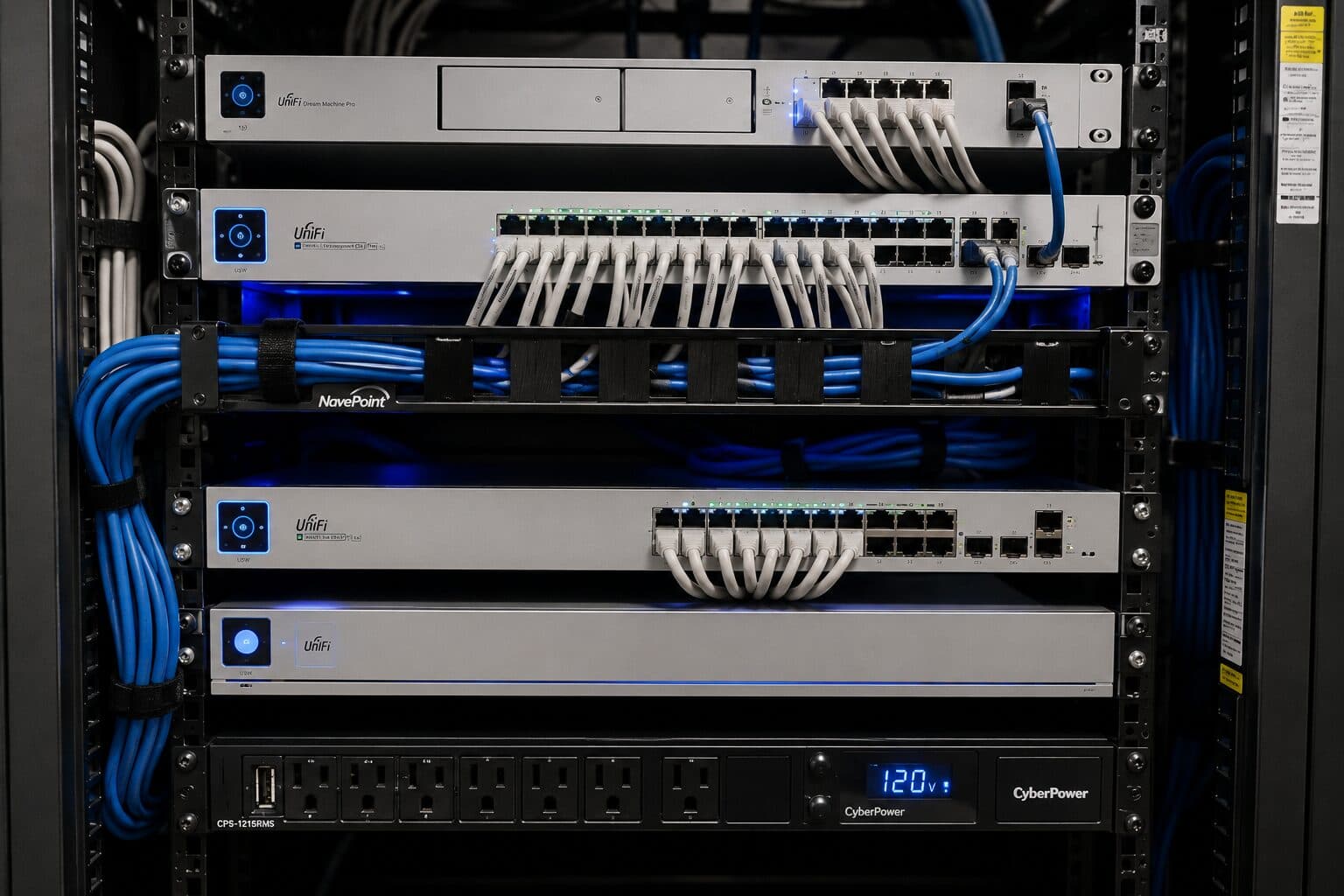
That argues for a specific design posture: more outlets than currently needed at likely fixture positions, ceiling access points placed to cover zones rather than aimed at current register locations, and a rack with spare capacity because the device count only ever goes up.
- Fixture and register positions change with seasonal resets
- Stockroom and receiving areas need connectivity that survives reorganisation
- Customer-facing technology increases the device count over time
- Coverage has to work with shelving in place, not in an empty store
Installing in Tomball
The cheapest moment to add a cable is while the ceiling is already open. Retail benefits more than most environments from spare runs terminated at likely future positions, because the alternative is a surface raceway across a sales floor.
On site, the schedule and working method turn on conditions like these. Slab-foundation residential across established and newer subdivisions. Gulf Coast humidity requiring rated exterior housings and sealed penetrations. Both shape how and when a crew can actually operate, which is why EVOTECH scopes each Tomball job from the property itself rather than assuming one approach fits every address. Coverage is stated as a service area, never an office claim, and anything about Tomball that cannot be verified is left out instead of invented.
Popular services nearby
Frequently searched near this area — the pages people look for most.
Frequently asked questions
What do retail stores in Tomball usually need first?
It varies by site, but the pattern for retail stores holds in Tomball: get the network and cabling backbone right, then layer cameras and access on top. What Tomball changes is the physical install — the conditions listed above drive routes and equipment placement more than the sector alone does.
How many network outlets should a retail space have?
More than the current fixture plan suggests. Retail layouts get reset, and adding a run while the ceiling is open costs a fraction of retrofitting one across a finished sales floor. Terminated spare runs at likely register and fixture positions are among the cheapest insurance in a retail fit-out.