Fiber-optic cabling for retail stores, in Rosenberg
Fiber-optic cabling for retail stores in Rosenberg is a three-part question: what fiber-optic cabling involves, what retail stores need from it, and what Rosenberg changes about the install. Warehousing and light-industrial buildings along the highway corridor, with metal construction that reflects wireless signal and needs proper cable support.
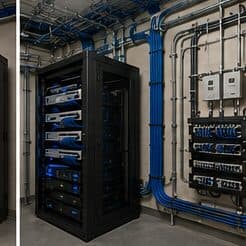
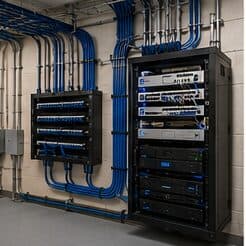
Inside a single building, fiber typically appears as a backbone between the main equipment room and intermediate closets, with copper handling the horizontal runs from those closets out to devices. That split is the standard structured-cabling shape and it exists because each medium is doing what it is good at.
The floor plan is not permanent
Retail interiors get reset. Fixtures move, register positions shift for seasonal layouts, and a stockroom gets reorganised around whatever the current inventory demands. A network installed as if the layout were fixed becomes an obstacle within a couple of resets.
That argues for a specific design posture: more outlets than currently needed at likely fixture positions, ceiling access points placed to cover zones rather than aimed at current register locations, and a rack with spare capacity because the device count only ever goes up.
- Fixture and register positions change with seasonal resets
- Stockroom and receiving areas need connectivity that survives reorganisation
- Customer-facing technology increases the device count over time
- Coverage has to work with shelving in place, not in an empty store
Where fiber-optic cabling goes wrong — and how it's avoided
Fiber punishes shortcuts more visibly than copper does.
- Mating connectors without inspecting and cleaning end faces
- Installing exactly the strand count needed with no spares
- Violating bend radius inside enclosures where slack is coiled
- Pulling on the fibers rather than the cable's strength member
- Running copper between separate buildings to save on fiber
- Leaving unused connectors uncapped in a dusty environment
Rosenberg: what the location changes
What separates a Rosenberg scope from the rest of the city is concrete and local. Warehousing and light-industrial buildings along the highway corridor, with metal construction that reflects wireless signal and needs proper cable support. An older rail-town commercial core with masonry buildings and limited existing pathway. Newer suburban subdivisions on slab foundations following the regional attic-routing pattern. That short list is what actually drives the design in this pocket, and it is why photographs or a brief site visit beat a floor plan — the plan follows the building's real constraints, not the neighborhood name on the map.
- Warehousing and light-industrial buildings along the highway corridor, with metal construction that reflects wireless signal and needs proper cable support
- An older rail-town commercial core with masonry buildings and limited existing pathway
- Newer suburban subdivisions on slab foundations following the regional attic-routing pattern
- Dust exposure in industrial and distribution environments, affecting rack and equipment placement
- Gulf Coast humidity and driven-rain events requiring rated exterior housings and sealed penetrations
Getting it done in Rosenberg
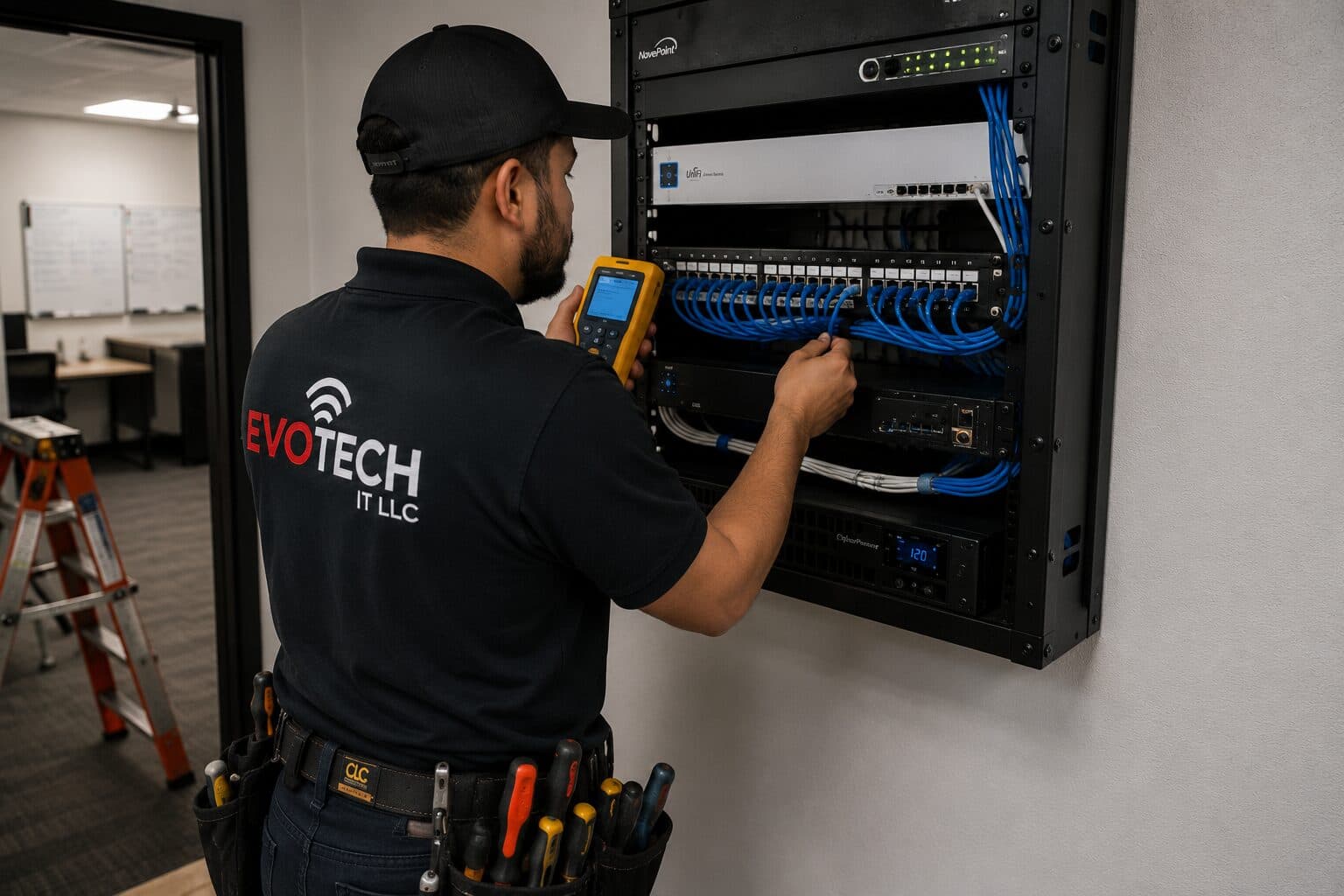
The baseline test is an insertion-loss measurement across the installed link, compared against the calculated budget for that distance and connector count. A link that passes with margin is a link that will tolerate a future re-patch.
Payment systems sit on their own segment for the same reasons they do in food service. What differs in retail is the number of mobile devices: handheld scanners, mobile checkout tablets, and inventory devices that move continuously across the floor and depend on clean roaming between access points.
Execution in Rosenberg is planned around real conditions, not a template. Dust exposure in industrial and distribution environments, affecting rack and equipment placement. Gulf Coast humidity and driven-rain events requiring rated exterior housings and sealed penetrations. These decide the sequence, the access, and the method as much as the design does. EVOTECH describes Rosenberg as coverage rather than a place it occupies, and omits any area detail it cannot confirm — building and site conditions only, no invented landmarks or promised arrival times.
Popular services nearby
Frequently searched near this area — the pages people look for most.
Frequently asked questions
Is fiber-optic cabling for retail stores different in Rosenberg?
The sector needs stay the same, but the install changes with the place. In Rosenberg, the conditions above — not the retail stores label — decide routes, mounting, and equipment placement, which is why this page pairs all three.
When is fiber necessary rather than optional?
Two situations make it necessary rather than a preference. First, distance: past the 100-metre copper channel limit there is no compliant copper answer. Second, links between separate buildings, where a copper conductor creates a path for surge and ground-potential differences. Inside those two cases fiber is not an upgrade — it is the correct method.