Fiber-optic cabling for retail stores, in Spring
Fiber-optic cabling for retail stores in Spring is a three-part question: what fiber-optic cabling involves, what retail stores need from it, and what Spring changes about the install. Retail and food-service commercial base where payment-system separation is a standing requirement.
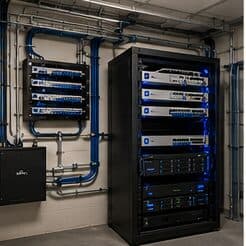
Inside a single building, fiber typically appears as a backbone between the main equipment room and intermediate closets, with copper handling the horizontal runs from those closets out to devices. That split is the standard structured-cabling shape and it exists because each medium is doing what it is good at.
Installing in an open store
Retail work often happens during trading hours, which introduces constraints food service does not have: customers moving through the space, merchandise that must be protected from dust, and ladder work that has to be barriered off. Some work is genuinely better done before opening, but a lot of it can proceed with proper containment.
Ceiling type varies more in retail than in offices. Open-deck ceilings in a converted space, hard-lid areas in a fitted-out mall unit, and suspended grid in a newer build each imply different pathway approaches, and a single store can contain all three.
- Containment and barriers for work during trading hours
- Merchandise protection from dust and debris
- Mixed ceiling types within a single unit
- Landlord and centre-management approval where the unit is leased
- Sequencing so the sales floor is clear at opening
What drives the cost of fiber-optic cabling here
Fiber cost concentrates in the route and the terminations rather than the cable itself.
- Route length and construction method, especially for outdoor segments
- Strand count and whether spares are included
- Number of terminations and the method used
- Enclosures, trays, and protection hardware
- Transceivers at each end
- Testing and documentation depth
- Trenching, boring, or aerial work on between-building routes
Spring: what the location changes
The starting point for any Spring job is one local fact. Retail and food-service commercial base where payment-system separation is a standing requirement. That single condition shapes where cable can run, where equipment can sit, and how coverage is laid out — more than any spec sheet does. Two more conditions weigh on it. Ceiling construction varying considerably between adjacent units, from open deck to hard lid to suspended grid. Restaurant kitchen environments requiring equipment placement away from heat, steam, and grease-laden air. Together they make the route specific to this pocket, which is why a short walkthrough or a few clear photos settle the scope faster than a floor plan can.
- Retail and food-service commercial base where payment-system separation is a standing requirement
- Ceiling construction varying considerably between adjacent units, from open deck to hard lid to suspended grid
- Restaurant kitchen environments requiring equipment placement away from heat, steam, and grease-laden air
- Storefront glazing on retail units complicating daylight entrance camera placement
- Residential areas following the regional slab-foundation and attic-routing pattern
Getting it done in Spring
The baseline test is an insertion-loss measurement across the installed link, compared against the calculated budget for that distance and connector count. A link that passes with margin is a link that will tolerate a future re-patch.
The cheapest moment to add a cable is while the ceiling is already open. Retail benefits more than most environments from spare runs terminated at likely future positions, because the alternative is a surface raceway across a sales floor.
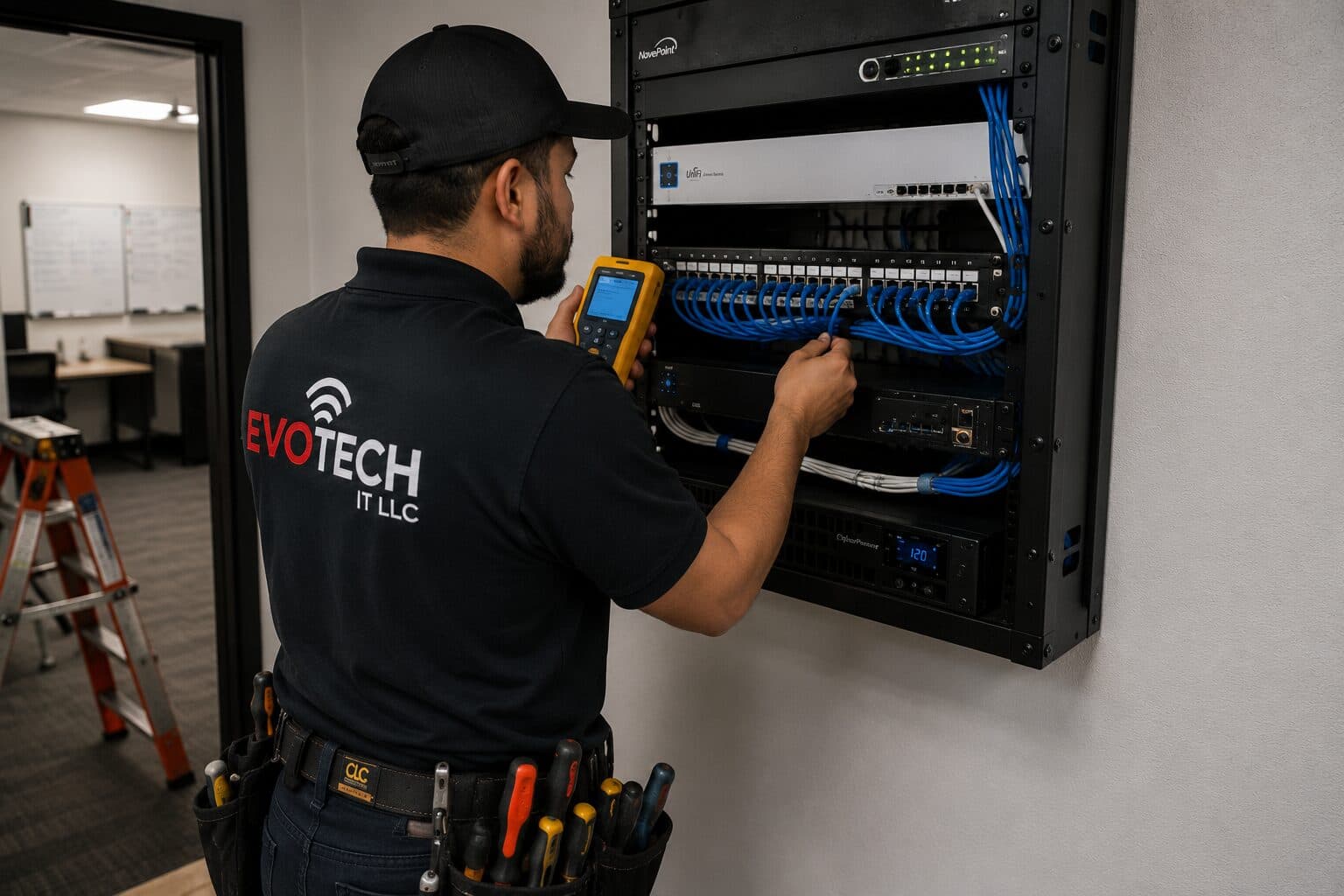
Execution in Spring is planned around real conditions, not a template. Storefront glazing on retail units complicating daylight entrance camera placement. Residential areas following the regional slab-foundation and attic-routing pattern. These decide the sequence, the access, and the method as much as the design does. EVOTECH describes Spring as coverage rather than a place it occupies, and omits any area detail it cannot confirm — building and site conditions only, no invented landmarks or promised arrival times.
Popular services nearby
Frequently searched near this area — the pages people look for most.
Frequently asked questions
Is fiber-optic cabling for retail stores different in Spring?
The sector needs stay the same, but the install changes with the place. In Spring, the conditions above — not the retail stores label — decide routes, mounting, and equipment placement, which is why this page pairs all three.
When is fiber necessary rather than optional?
Two situations make it necessary rather than a preference. First, distance: past the 100-metre copper channel limit there is no compliant copper answer. Second, links between separate buildings, where a copper conductor creates a path for surge and ground-potential differences. Inside those two cases fiber is not an upgrade — it is the correct method.