PoE camera installation for retail stores, in League City
PoE camera installation for retail stores in League City is a three-part question: what poe camera installation involves, what retail stores need from it, and what League City changes about the install. Coastal proximity raising the weight on exterior sealing, rated housings, and surge protection.
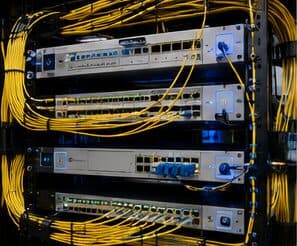
The design consequence is that the switch is now a power supply. Each camera draws a certain class of power, and the total across every powered device has to fit within the switch's PoE budget with room to spare. A switch with enough ports but not enough watts produces intermittent camera reboots that look like network faults.
Registers, handhelds, and the guest question
Payment systems sit on their own segment for the same reasons they do in food service. What differs in retail is the number of mobile devices: handheld scanners, mobile checkout tablets, and inventory devices that move continuously across the floor and depend on clean roaming between access points.
Roaming is therefore a first-class design concern rather than an afterthought. A scanner that drops its session walking from the sales floor into the stockroom generates a support call every day. That means coverage areas need to overlap enough for a clean handoff, with a channel plan that keeps adjacent cells from contending.
Guest Wi-Fi in retail is a marketing decision as much as a technical one. Where it exists, it needs isolation and a bandwidth cap. Where it does not, saying so plainly is better than an open network nobody maintains.
- Payment systems on a dedicated segment
- Coverage designed for clean roaming across the sales floor and into the stockroom
- Handheld and mobile checkout devices treated as the primary wireless clients
- Guest access isolated and rate-limited where offered
- Back-office and inventory systems separated from customer-facing traffic
Where poe camera installation goes wrong — and how it's avoided
PoE mistakes are almost always arithmetic mistakes made early.
- Sizing the switch on port count and ignoring the PoE budget
- Budgeting idle draw and being surprised by the night-time load
- Using copper-clad aluminium cable on long PoE runs
- Tightly bundling many high-power runs with no thought to heat
- Leaving the switch off a UPS so a brief flicker takes the whole system down
- Assuming a mid-span injector solves a budget problem it does not address
League City: what the location changes
What separates a League City scope from the rest of the city is concrete and local. Coastal proximity raising the weight on exterior sealing, rated housings, and surge protection. Storm-season resilience planning, favouring UPS and failover where uptime matters. Newer suburban slab-foundation homes with multi-room coverage needs. That short list is what actually drives the design in this pocket, and it is why photographs or a brief site visit beat a floor plan — the plan follows the building's real constraints, not the neighborhood name on the map.
- Coastal proximity raising the weight on exterior sealing, rated housings, and surge protection
- Storm-season resilience planning, favouring UPS and failover where uptime matters
- Newer suburban slab-foundation homes with multi-room coverage needs
- Growing medical and retail commercial space
- Gulf Coast humidity and driven-rain events as a routine design factor
Getting it done in League City
The meaningful PoE test is under peak load after dark, because that is the condition that exposes budget problems.
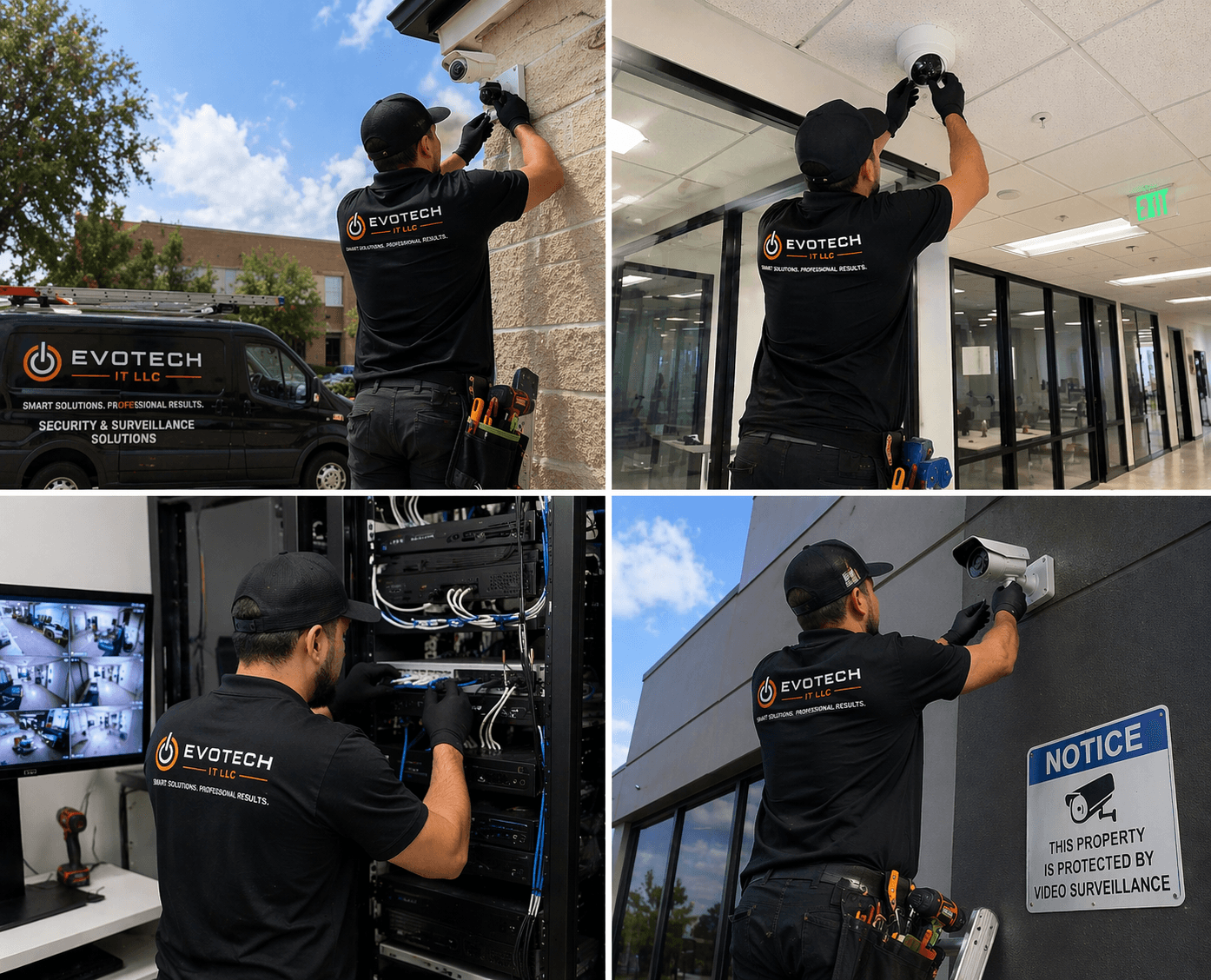
Retail work often happens during trading hours, which introduces constraints food service does not have: customers moving through the space, merchandise that must be protected from dust, and ladder work that has to be barriered off. Some work is genuinely better done before opening, but a lot of it can proceed with proper containment.
Execution in League City is planned around real conditions, not a template. Growing medical and retail commercial space. Gulf Coast humidity and driven-rain events as a routine design factor. These decide the sequence, the access, and the method as much as the design does. EVOTECH describes League City as coverage rather than a place it occupies, and omits any area detail it cannot confirm — building and site conditions only, no invented landmarks or promised arrival times.
Popular services nearby
Frequently searched near this area — the pages people look for most.
Frequently asked questions
Is poe camera installation for retail stores different in League City?
The sector needs stay the same, but the install changes with the place. In League City, the conditions above — not the retail stores label — decide routes, mounting, and equipment placement, which is why this page pairs all three.
Why do cameras reboot at night but work fine during the day?
Almost always PoE budget. Infrared illuminators engage after dark and the total draw rises, pushing the switch past its budget. It presents as intermittent camera dropouts and gets misdiagnosed as a network fault. The fix is a switch with sufficient budget and headroom, calculated from peak draw rather than idle.