PoE camera installation for retail stores, in Missouri City
PoE camera installation for retail stores in Missouri City is a three-part question: what poe camera installation involves, what retail stores need from it, and what Missouri City changes about the install. Housing stock spanning both established and recent construction, producing materially different retrofit conditions between neighbourhoods.
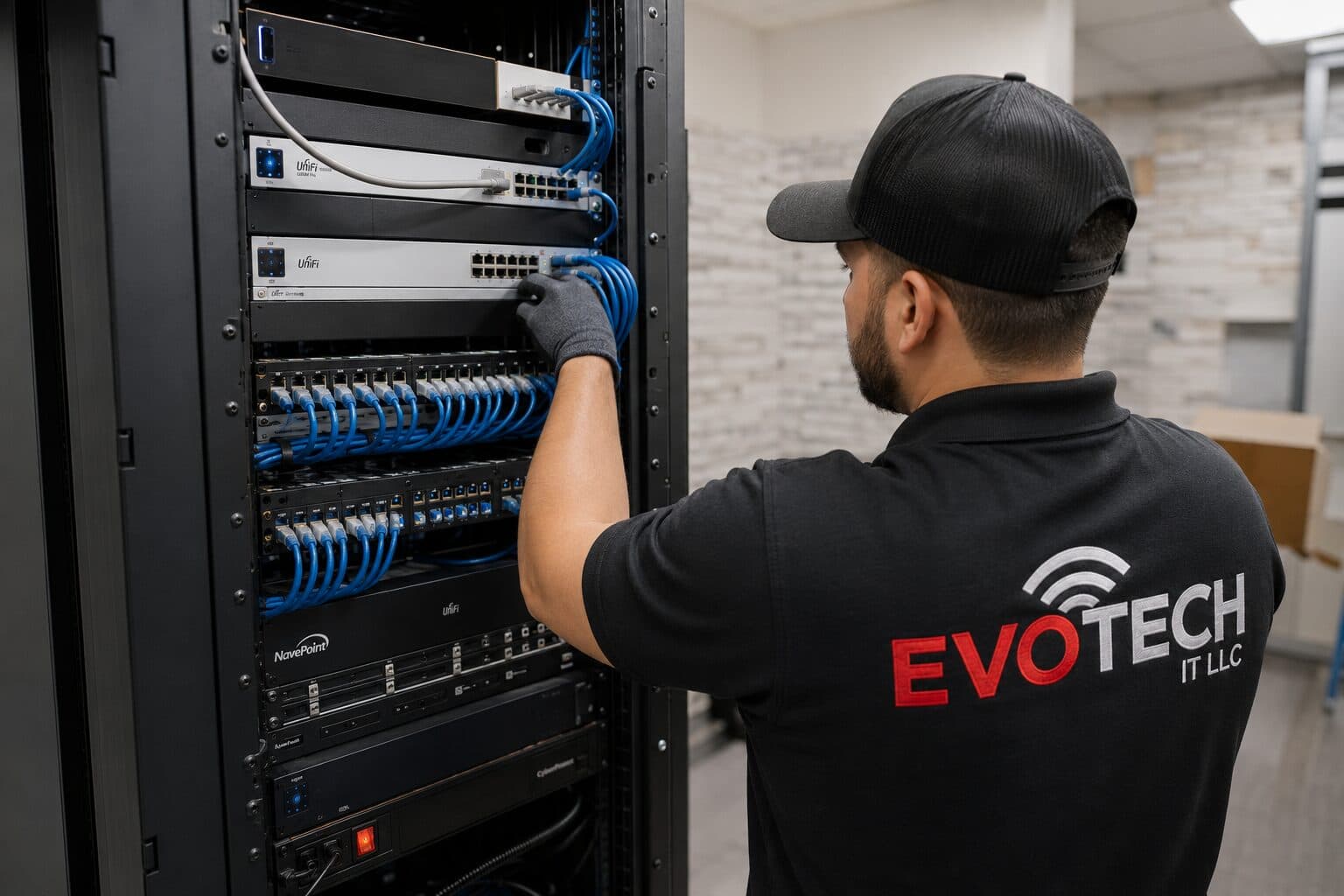
The design consequence is that the switch is now a power supply. Each camera draws a certain class of power, and the total across every powered device has to fit within the switch's PoE budget with room to spare. A switch with enough ports but not enough watts produces intermittent camera reboots that look like network faults.
Coverage that answers retail questions
Retail camera coverage typically concentrates on registers, entrances and exits, the stockroom door, and receiving. Those four locations answer most of what retail footage gets asked about — transaction disputes, entry and exit identification, and inventory movement.
Sales floor coverage is a different objective. It shows activity and general movement rather than identifying individuals, and framing it that way avoids the common mistake of installing wide floor cameras and expecting identification-grade footage from them.
Entrances have a lighting problem worth planning around. A camera pointed at a glass storefront during daylight sees a bright background and a dark figure. Positioning the identification camera to view the approach from inside, rather than shooting straight out through the glass, produces far better results than any camera setting.
- Register views framed for transaction detail
- Entrance and exit views framed for identification, avoiding backlight
- Stockroom and receiving door coverage for inventory questions
- Sales floor coverage framed for activity rather than identification
- Retention set to cover the lag before discrepancies are noticed
What drives the cost of poe camera installation here
The power design and the cable routes dominate.
- Camera count and their power classes
- Switch capacity, both ports and PoE budget
- Cable run count, length, and route difficulty
- Exterior mounting hardware and weather sealing
- UPS sizing
- Elevated access requirements
Missouri City: what the location changes
The starting point for any Missouri City job is one local fact. Housing stock spanning both established and recent construction, producing materially different retrofit conditions between neighbourhoods. That single condition shapes where cable can run, where equipment can sit, and how coverage is laid out — more than any spec sheet does. Two more conditions weigh on it. Older homes without structured cabling and with less accessible attic space than newer subdivisions. Newer subdivision homes following the regional pattern of builder panels and good attic access. Together they make the route specific to this pocket, which is why a short walkthrough or a few clear photos settle the scope faster than a floor plan can.
- Housing stock spanning both established and recent construction, producing materially different retrofit conditions between neighbourhoods
- Older homes without structured cabling and with less accessible attic space than newer subdivisions
- Newer subdivision homes following the regional pattern of builder panels and good attic access
- Small office and retail suites where ceiling construction and lease terms are the main variables
- Slab-on-grade construction throughout, keeping attic routing as the primary retrofit path
Getting it done in Missouri City
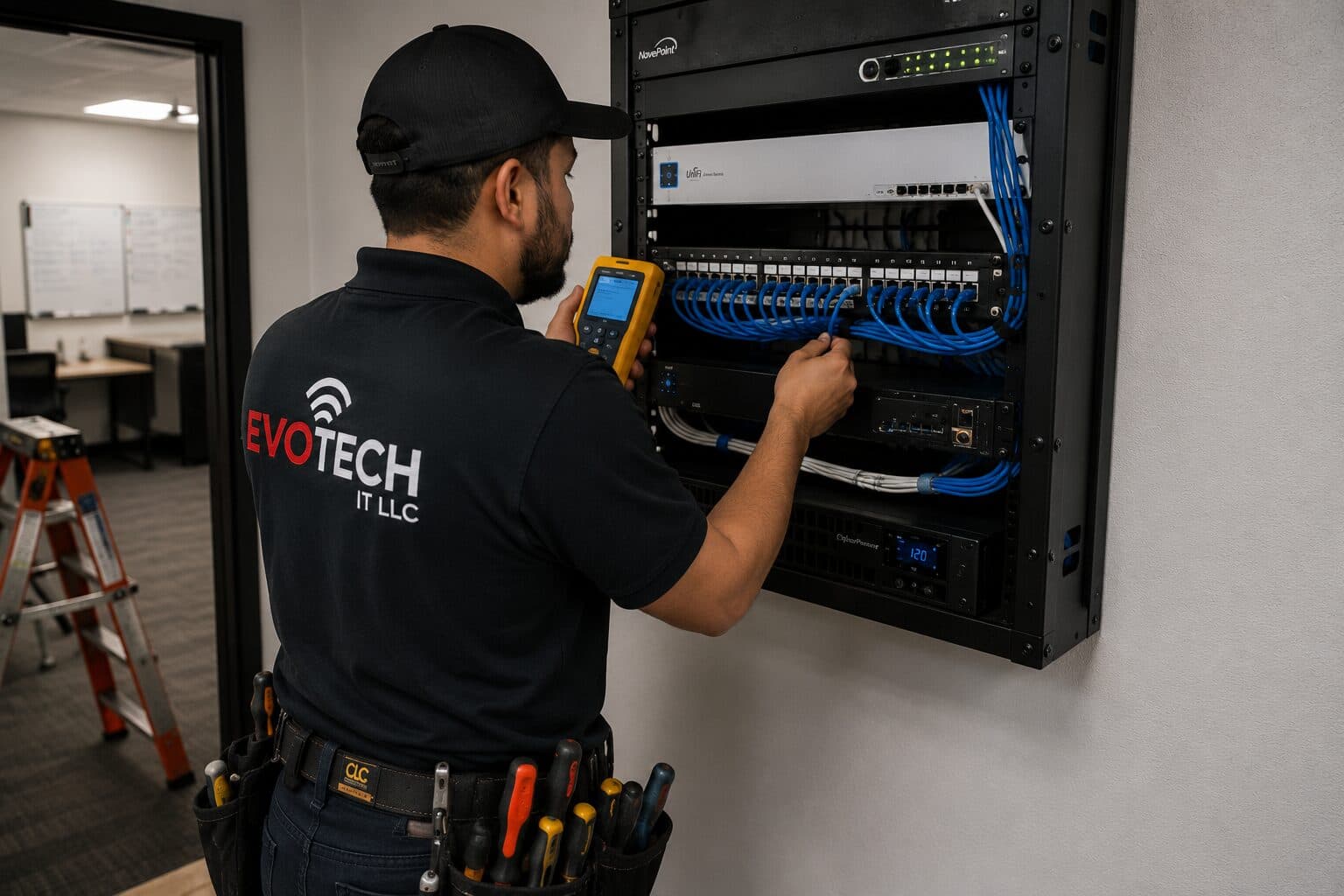
The meaningful PoE test is under peak load after dark, because that is the condition that exposes budget problems.
Retail interiors get reset. Fixtures move, register positions shift for seasonal layouts, and a stockroom gets reorganised around whatever the current inventory demands. A network installed as if the layout were fixed becomes an obstacle within a couple of resets.
Getting Missouri City work done means planning around the site as it actually is. Small office and retail suites where ceiling construction and lease terms are the main variables. Slab-on-grade construction throughout, keeping attic routing as the primary retrofit path. Both matter as much as the design to how and when the work happens. The scope is drawn from the real property, the coverage is stated as a service area rather than an office, and unverifiable specifics about Missouri City are kept off the page on purpose.
Popular services nearby
Frequently searched near this area — the pages people look for most.
Frequently asked questions
Is poe camera installation for retail stores different in Missouri City?
The sector needs stay the same, but the install changes with the place. In Missouri City, the conditions above — not the retail stores label — decide routes, mounting, and equipment placement, which is why this page pairs all three.
Why do cameras reboot at night but work fine during the day?
Almost always PoE budget. Infrared illuminators engage after dark and the total draw rises, pushing the switch past its budget. It presents as intermittent camera dropouts and gets misdiagnosed as a network fault. The fix is a switch with sufficient budget and headroom, calculated from peak draw rather than idle.