Fiber-optic cabling for multifamily properties, in Pearland
Fiber-optic cabling for multifamily properties in Pearland is a three-part question: what fiber-optic cabling involves, what multifamily properties need from it, and what Pearland changes about the install. Newer residential subdivisions with wide floor plans and builder-installed structured cable of variable quality.
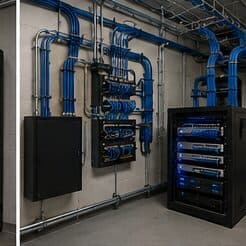
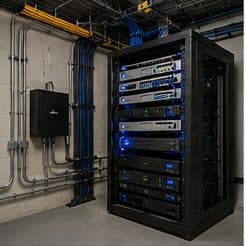
Fiber gets specified for reasons copper cannot address. The first is distance — multimode carries 10 gigabit a few hundred metres and single-mode carries it far further, while copper stops at 100 metres. The second is electrical isolation: a link between two separate buildings should not be a copper conductor, because the two structures can sit at different ground potentials and a lightning event has to go somewhere.
Entry, packages, and common-area coverage
The systems residents notice are entry and packages. An entry system that reliably lets residents in and lets them grant access to visitors, and a package room that works, generate more satisfaction than any other technology on the property.
Behind those, common-area wireless coverage in amenity spaces, and camera coverage at entries, parking, and package areas, cover most of what the property needs.
- Controlled entry with fast credential issue and revocation at turnover
- Intercom that lets residents grant visitor access reliably
- Package room access controlled and recorded
- Common-area and amenity-space wireless coverage
- Camera coverage at entries, parking, and package areas
Where fiber-optic cabling goes wrong — and how it's avoided
Fiber punishes shortcuts more visibly than copper does.
- Mating connectors without inspecting and cleaning end faces
- Installing exactly the strand count needed with no spares
- Violating bend radius inside enclosures where slack is coiled
- Pulling on the fibers rather than the cable's strength member
- Running copper between separate buildings to save on fiber
- Leaving unused connectors uncapped in a dusty environment
Pearland: what the location changes
Newer residential subdivisions with wide floor plans and builder-installed structured cable of variable quality. In Pearland, that is where the plan begins, because it changes cable paths, device placement, and access-point counts before anything else does. Expanding medical office space with controlled-area access requirements and clinical scheduling constraints. Food-service commercial space with kitchen environments and narrow after-hours working windows. None of these are generic checklist items — each moves the design in a direction a citywide assumption would miss, and the honest recommendation always depends on what this particular property allows.
- Newer residential subdivisions with wide floor plans and builder-installed structured cable of variable quality
- Expanding medical office space with controlled-area access requirements and clinical scheduling constraints
- Food-service commercial space with kitchen environments and narrow after-hours working windows
- Slab-on-grade residential foundations making attic routing the standard retrofit path
- Newer commercial construction generally offering suspended-grid ceilings and usable pathway
Getting it done in Pearland
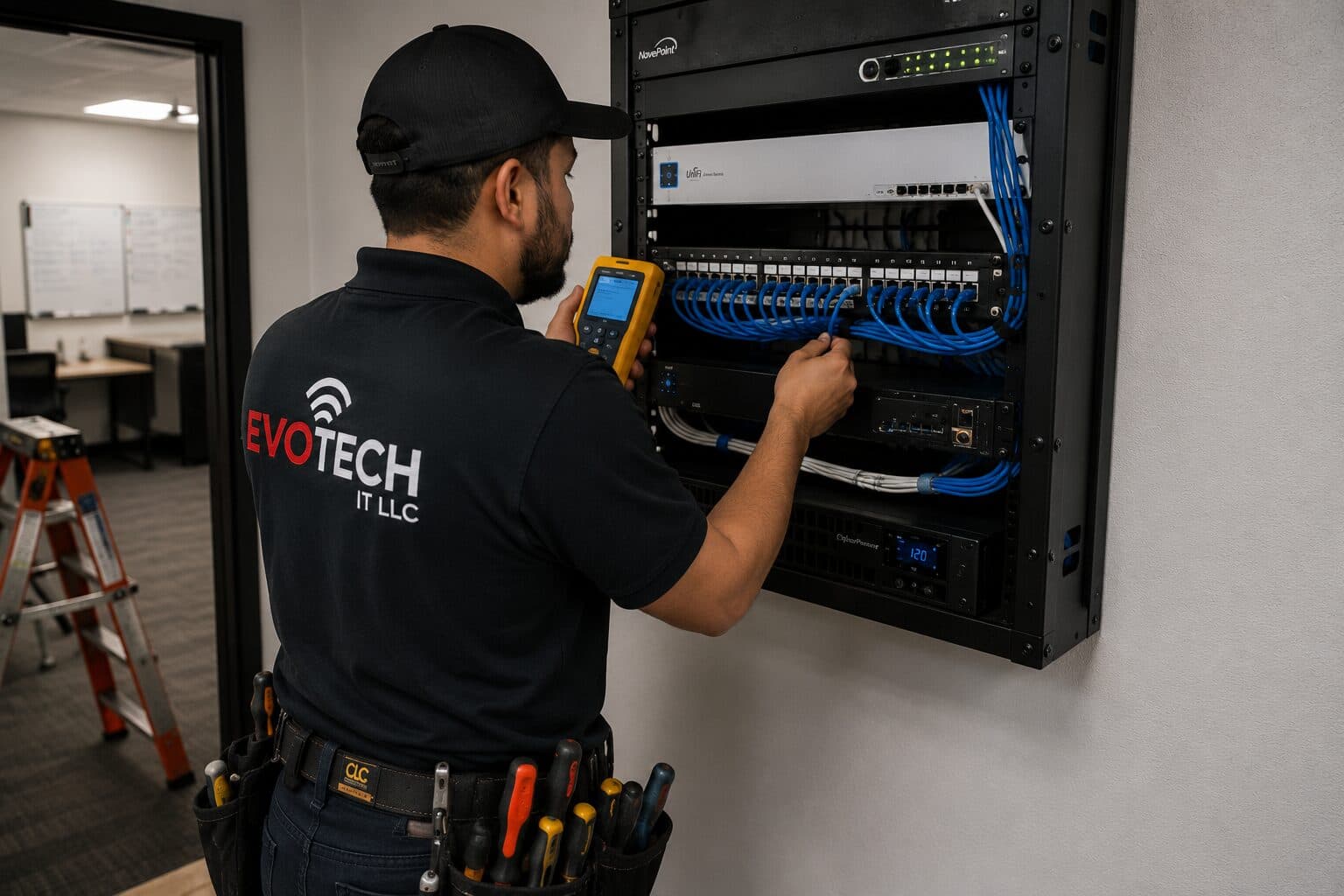
The baseline test is an insertion-loss measurement across the installed link, compared against the calculated budget for that distance and connector count. A link that passes with margin is a link that will tolerate a future re-patch.
Camera coverage focuses on the points where the property has a legitimate operational interest: building entries, package rooms, parking areas and garages, amenity spaces, and the leasing office. Framing at entries should be tight enough for identification; parking coverage is usually about vehicle movement rather than identifying individuals.
On site, the schedule and working method turn on conditions like these. Slab-on-grade residential foundations making attic routing the standard retrofit path. Newer commercial construction generally offering suspended-grid ceilings and usable pathway. Both shape how and when a crew can actually operate, which is why EVOTECH scopes each Pearland job from the property itself rather than assuming one approach fits every address. Coverage is stated as a service area, never an office claim, and anything about Pearland that cannot be verified is left out instead of invented.
Popular services nearby
Frequently searched near this area — the pages people look for most.
Frequently asked questions
Is fiber-optic cabling for multifamily properties different in Pearland?
The sector needs stay the same, but the install changes with the place. In Pearland, the conditions above — not the multifamily properties label — decide routes, mounting, and equipment placement, which is why this page pairs all three.
When is fiber necessary rather than optional?
Two situations make it necessary rather than a preference. First, distance: past the 100-metre copper channel limit there is no compliant copper answer. Second, links between separate buildings, where a copper conductor creates a path for surge and ground-potential differences. Inside those two cases fiber is not an upgrade — it is the correct method.