Why this page exists
Security-camera installation for home offices is shaped by how the space is used, not just by the service itself. Home offices bring their own operating constraints, and this page pairs what security-camera installation actually involves with what that environment changes about it.
The useful design question is not how many cameras a property needs. It is what each camera has to accomplish. Detecting that a person is present, recognising someone you already know, and identifying a stranger from footage are three different requirements, and they need increasing pixel density on the subject. Planning guidance commonly cited from industry standards puts detection in the region of ten pixels per foot of subject, recognition around forty, and identification around eighty.
The house is competing with the work
A home office shares its connection with everything else in the house, and household demand is highest during exactly the hours that matter least to the household and most to the person working. Streaming, gaming, backups, and connected devices all contend for the same circuit and, if the office is on wireless, for the same airtime.
The second factor is position. Home offices frequently end up in a spare bedroom at the far corner of the house, which is often the worst wireless position in the building — furthest from the router, through the most walls.
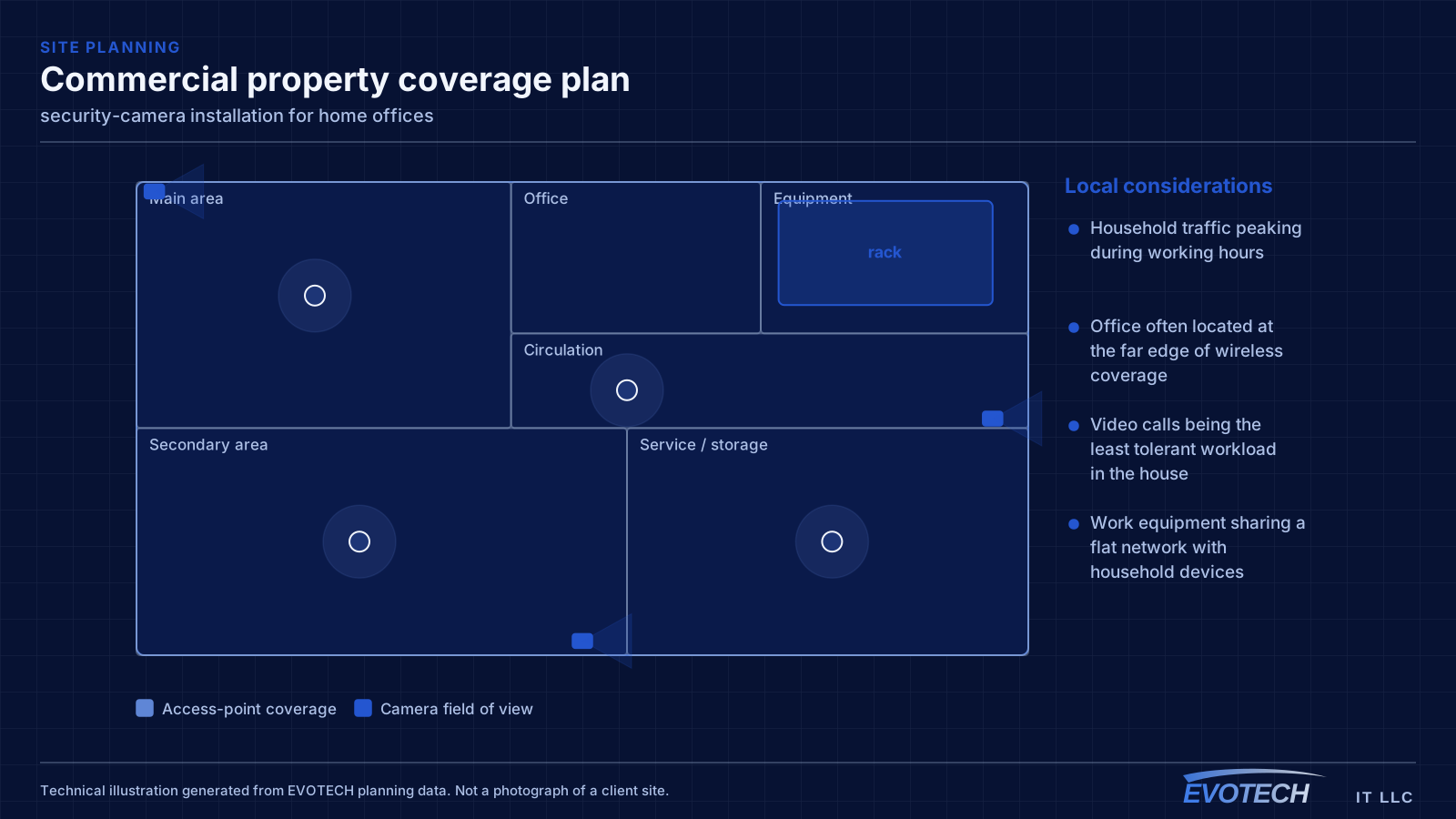
- Household traffic peaking during working hours
- Office often located at the far edge of wireless coverage
- Video calls being the least tolerant workload in the house
- Work equipment sharing a flat network with household devices
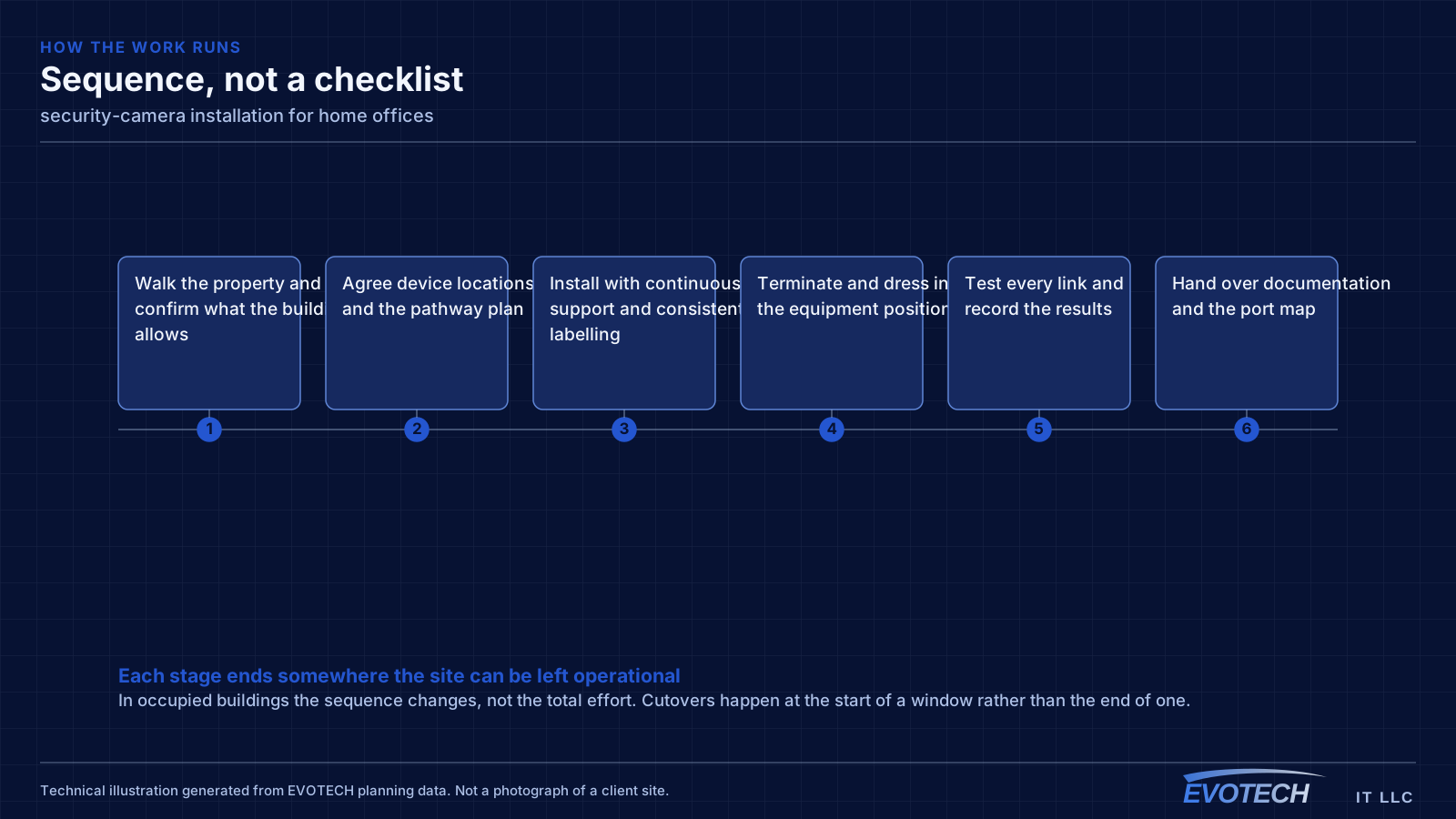
What security-camera installation usually involves
The dominant complaint about existing systems is footage that shows an event happened without showing anything useful about it. That is a design outcome: the camera was too far away, the lens too wide, or the scene lit so that the subject appears as a silhouette.
Backlighting is the specific and very common version of this. A camera pointed at a glass entrance during daylight sees a bright background and a dark figure. Wide dynamic range helps, but positioning that avoids shooting directly into the light source helps more.
- Wide-angle coverage that produces recognisable scenes but unidentifiable people
- Cameras pointed toward windows or the sky, silhouetting anyone in frame
- Infrared illumination reflecting off a nearby wall, soffit, or spider web and washing out the image
- Retention too short to be useful by the time an incident is noticed
- No remote access configured, so footage is only available on site
- Cameras mounted where they are exposed to tampering or weather they were not rated for
The single cable that fixes most of it
A wired connection to the desk eliminates the variables that cause most home-office call problems: signal strength, interference from neighbouring networks, and contention with household devices for airtime. In slab-foundation construction the run typically goes up into the attic and down an interior wall, which is why the destination wall matters more than the distance.
Where the office must stay wireless, the fix is placement rather than power. An access point in the hallway near the office, mounted on the ceiling and connected by cable, serves the room far better than a more powerful router at the other end of the house. Turning up transmit power on a distant router mostly raises interference.
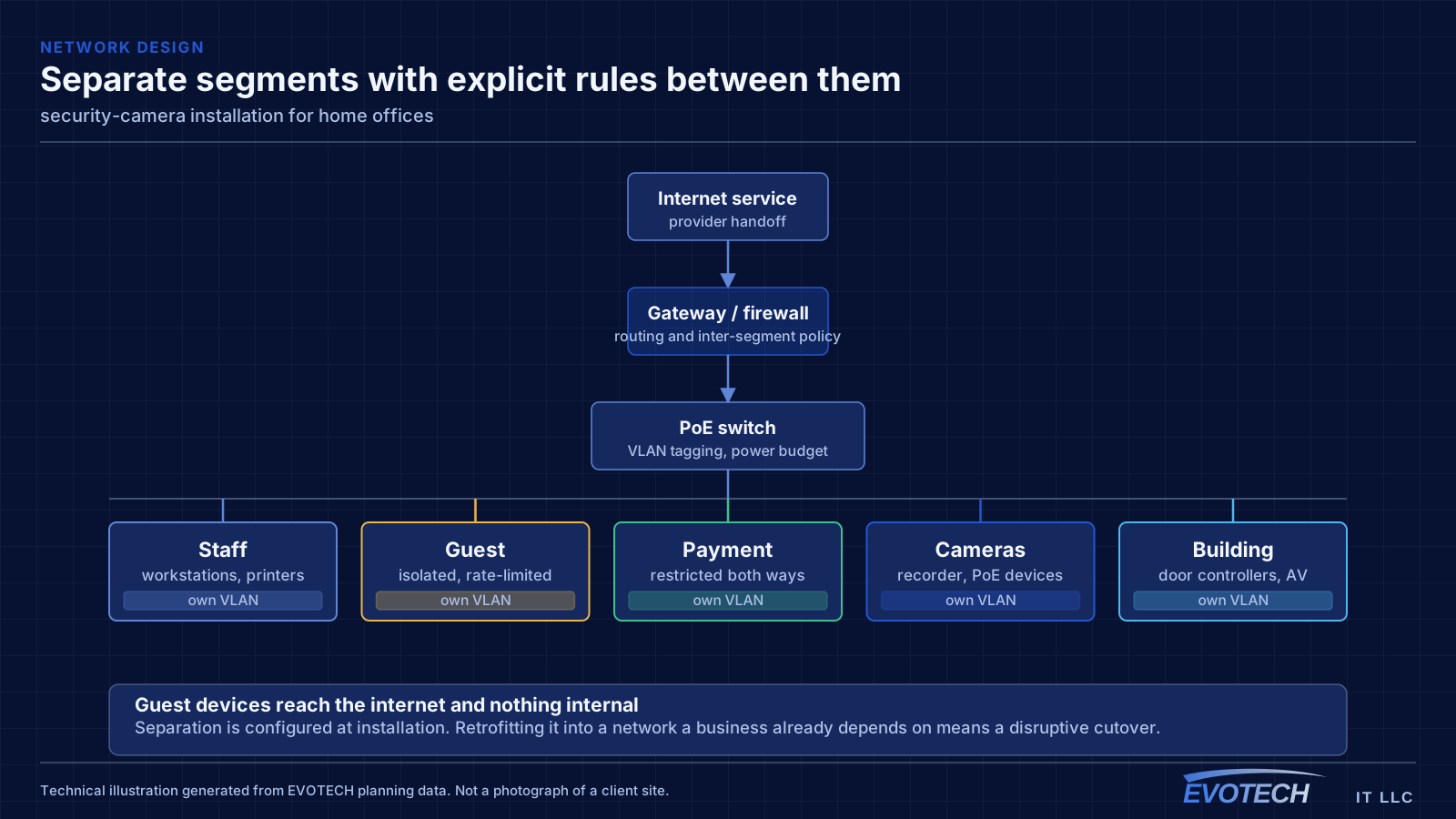
Separation is worth doing even at home. A separate network for work equipment, distinct from household devices and from guests, limits what a compromised household device can reach. This is straightforward on most current equipment and costs nothing but configuration.
- Wired run to the desk as the highest-value single change
- Access point placed near the office rather than more power from a distant router
- Attic-to-interior-wall routing in slab-foundation homes
- Separate network segment for work equipment
- Stationary household devices wired to free up airtime
Pixel density, lighting, field of view, and mounting height
Pixel density on the target is the governing figure. It falls off with distance and with wider fields of view, so the design pairs each camera's resolution and lens with the distance to the area it must cover. A camera intended for identification at an entry door is placed close and framed tightly; a camera intended to show general activity across a yard is framed wide and is not expected to identify anyone.
- Commonly cited planning targets: roughly 10 px/ft detection, 40 px/ft recognition, 80 px/ft identification
- Frame identification cameras tightly on the approach rather than across a whole area
- Avoid aiming into windows, sky, or fixed light sources
- Keep infrared illumination clear of nearby walls, soffits, and obstructions
- Balance mounting height against viewing angle; steep angles rarely identify anyone
- Match housing rating to the actual exposure, including driven rain and heat
Popular services nearby
Frequently searched near this area — the pages people look for most.
Frequently asked questions
What changes about security-camera installation in home offices?
The operating environment does. Home offices bring specific constraints — how the space is used, when work can happen, and what has to keep running — and those shape the security-camera installation plan as much as the service's own technical requirements.
How many cameras does a property need?
Count objectives, not walls. Each area needs a stated purpose — detect activity, recognise a known person, or identify a stranger — and the camera serving it is chosen for that purpose. A property with four well-framed cameras at the points that matter usually produces more useful footage than one with twelve wide shots covering everything approximately.
Why do work calls degrade in the afternoon?
Usually contention. Household demand rises when people are home, and if the office is on wireless it competes both for the internet circuit and for airtime on the same radio channel. A wired connection to the desk removes the airtime half of that immediately, which is why it is the first thing worth doing.