
Why this page exists
Network troubleshooting in Rosenberg is scoped around the same physical realities EVOTECH weighs everywhere — but read through Rosenberg's specific conditions: warehousing and light-industrial buildings along the highway corridor, with metal construction that reflects wireless signal and needs proper cable support. This page pairs what the service actually involves with what the Rosenberg market changes about it.
Effective troubleshooting is a process of elimination against a specific, reproducible symptom. 'The internet is slow' is not yet a diagnosis — slow for whom, on which devices, wired or wireless, at what times, to which destinations. Those answers usually point at a layer before any equipment is touched.
What network troubleshooting usually involves
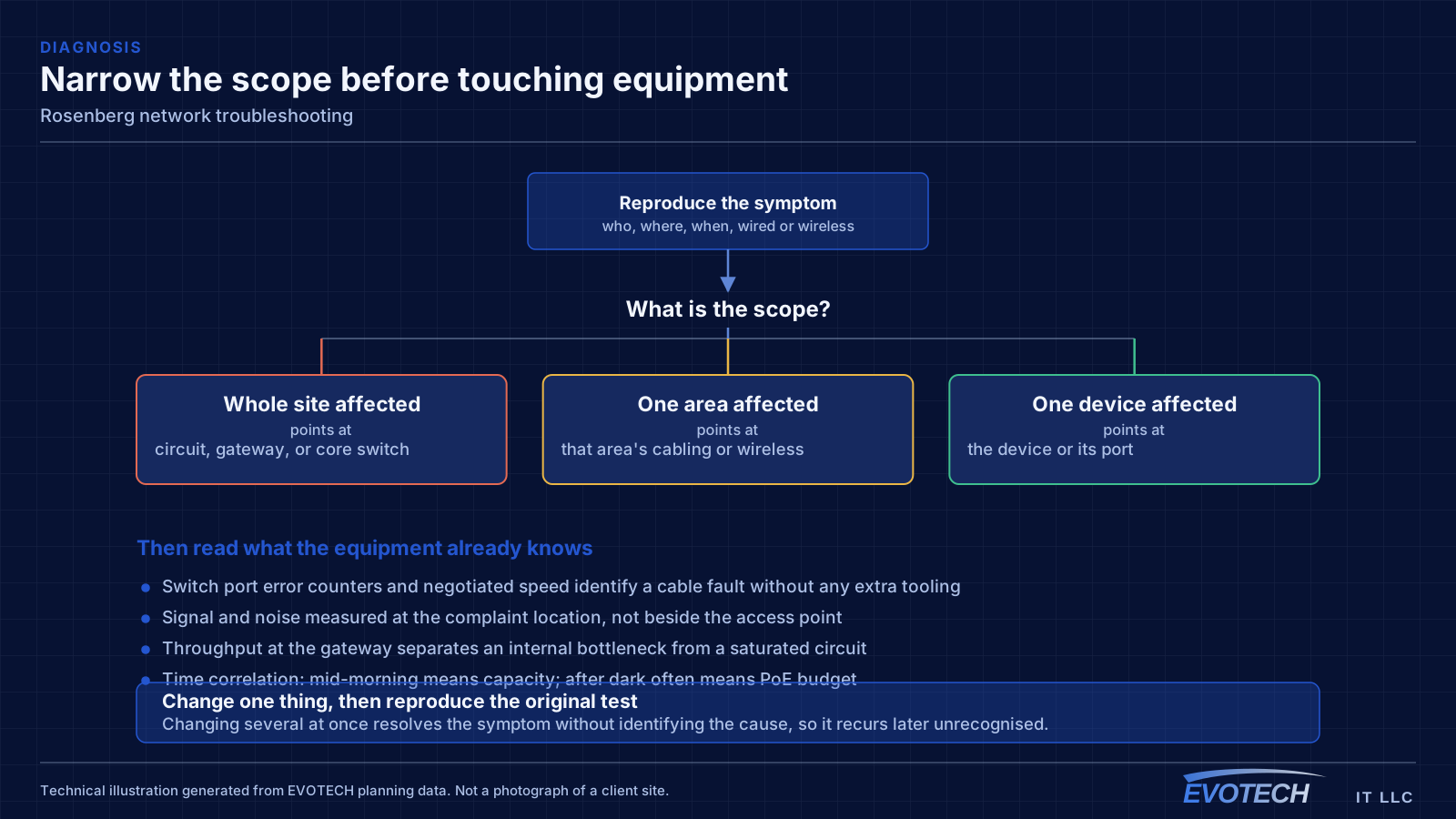
The single most useful distinction is between a problem affecting everything and a problem affecting one device or area. Everything at once points toward the shared path — the circuit, the gateway, or the main switch. One area points toward that area's cabling, its access point, or its switch. One device points at the device or its port.
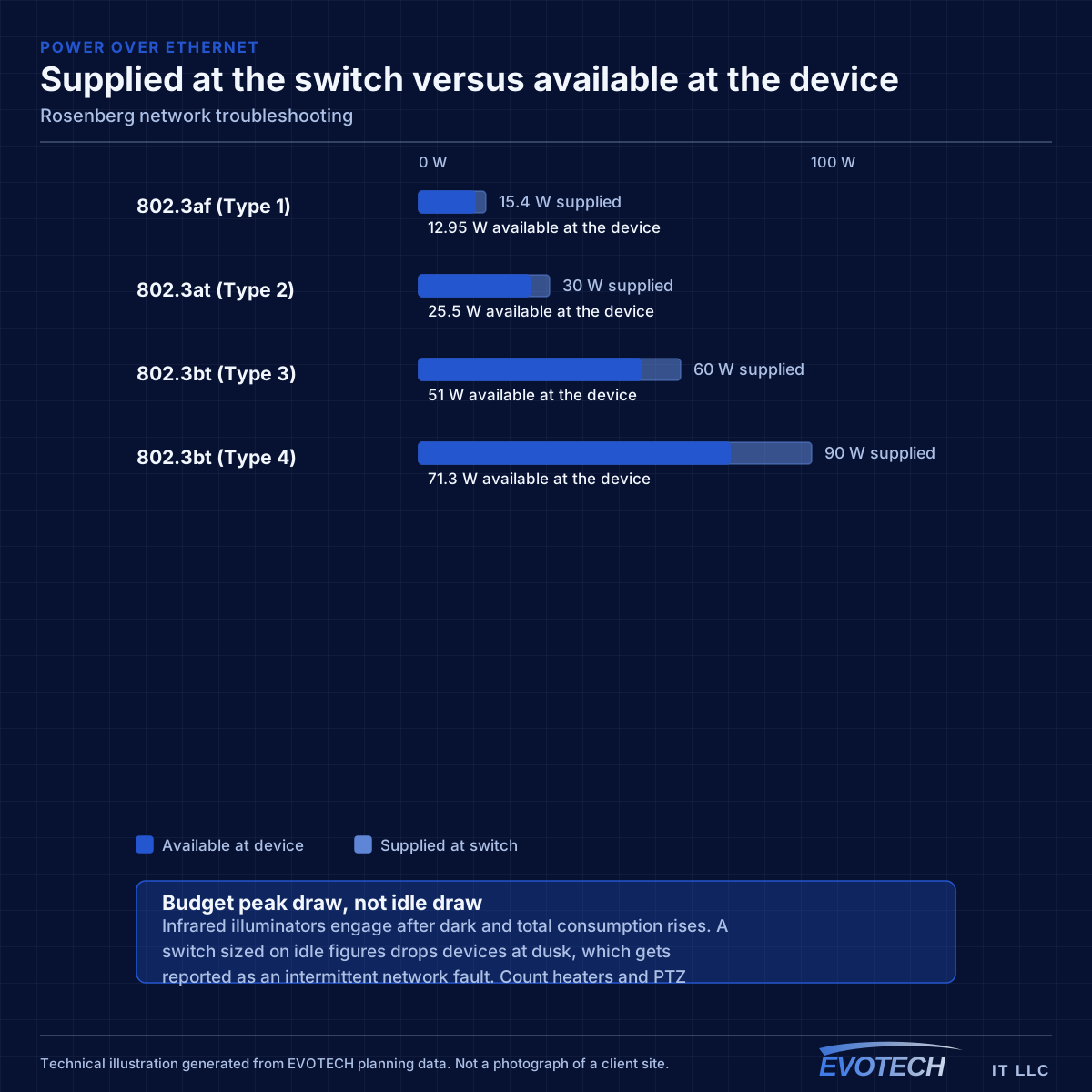
Timing is the second most useful clue. A problem that appears mid-morning and disappears at night is capacity related. A problem that appears after dark suggests something engaging on a schedule — camera illuminators pushing a PoE budget over is the classic example. A problem that appears at random is more often physical: a marginal termination, a failing port, or a cable that moves.
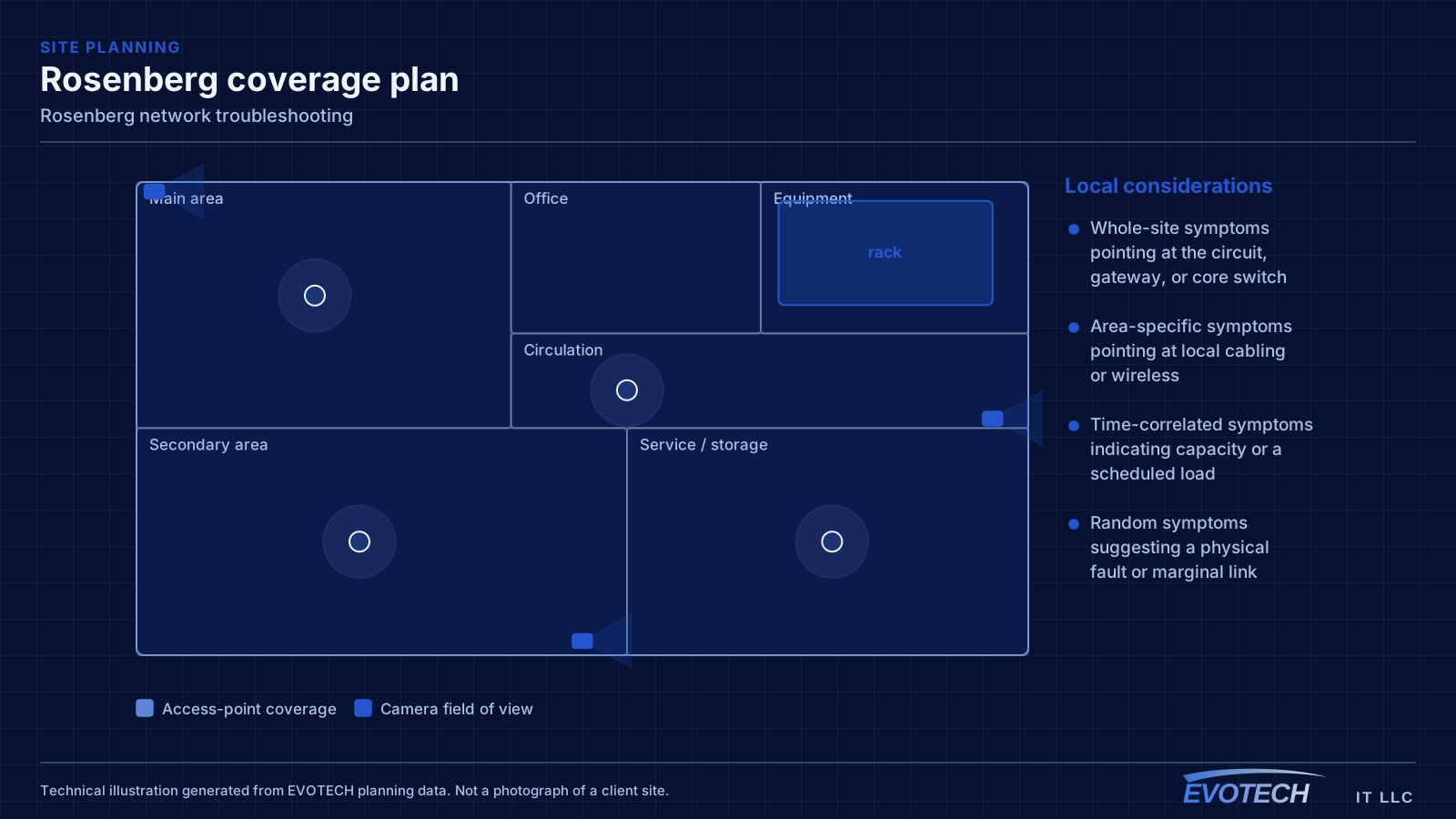
- Whole-site symptoms pointing at the circuit, gateway, or core switch
- Area-specific symptoms pointing at local cabling or wireless
- Time-correlated symptoms indicating capacity or a scheduled load
- Random symptoms suggesting a physical fault or marginal link
- Duplicate addressing or a rogue device handing out addresses
- Switching loops flooding a network after a cable was patched in twice
- Speed or duplex mismatches producing errors rather than outright failure
Rosenberg property conditions that change the plan
Distribution and light-industrial buildings dominate the commercial stock, and metal construction behaves very differently from drywall — signal reflects, footprints often exceed copper reach, and equipment needs protection from dust and unconditioned temperatures.
The historic core is masonry with hard ceilings and little usable pathway, so runs there frequently need new containment. Newer residential and retail on the outskirts is straightforward suburban construction.
For warehouse and distribution work, distance and metal construction drive the design: intermediate distribution points fed by fiber where a single equipment room cannot reach, and coverage validated with racking stocked rather than empty.
- Metal distribution and light-industrial buildings
- Masonry downtown stock with limited pathway
- Slab-foundation suburban housing and retail pads
- Unconditioned operational areas affecting equipment life
- Long cable runs in large-footprint buildings
- Fiber to intermediate points where footprints exceed copper reach
- Wireless validated under real stock conditions in metal buildings
- Equipment sited in conditioned space or filtered enclosures
- New pathway where the downtown core has none
- Dust protection for operational-area equipment
Getting network troubleshooting done in Rosenberg
Switch port statistics are the most underused diagnostic resource on most networks. Error counters, discards, and negotiated speed for each port are already being recorded, and a port showing rising errors identifies a cable or connector problem without any additional testing. A port that negotiated 100 Mbps when it should be at 1 Gbps points at a damaged pair or a marginal termination.
Warehouse work often needs lift access coordinated around operations and forklift traffic, and exterior equipment needs housings rated for humidity and driven rain rather than nominal weather resistance.
- Lift access coordinated with warehouse operations
- Work scheduled around distribution shifts where needed
- Rated exterior housings and sealed penetrations
- Residential attic work scheduled early in summer heat
- Cable pathways kept clear of forklift and racking zones
Frequently asked questions
Does EVOTECH have an office in Rosenberg?
No. This is a service-area page: EVOTECH serves Rosenberg without claiming a physical office there. The wording stays as coverage, not a location claim.
Why is the network slow only in the afternoon?
Time-correlated symptoms usually mean capacity rather than a fault. Something is consuming the shared resource at that time — backups, updates, more people on site, or a scheduled process. Measuring at the gateway during the slow period, and comparing it to a quiet period, distinguishes a saturated circuit from an internal bottleneck quickly.
Does EVOTECH have an office in Rosenberg?
No. This site does not claim a physical office in Rosenberg or anywhere else. Rosenberg is described as a service-area market — coverage, not a location claim.