
Why this page exists
Business phone & VoIP in Pearland is scoped around the same physical realities EVOTECH weighs everywhere — but read through Pearland's specific conditions: newer residential subdivisions with wide floor plans and builder-installed structured cable of variable quality. This page pairs what the service actually involves with what the Pearland market changes about it.
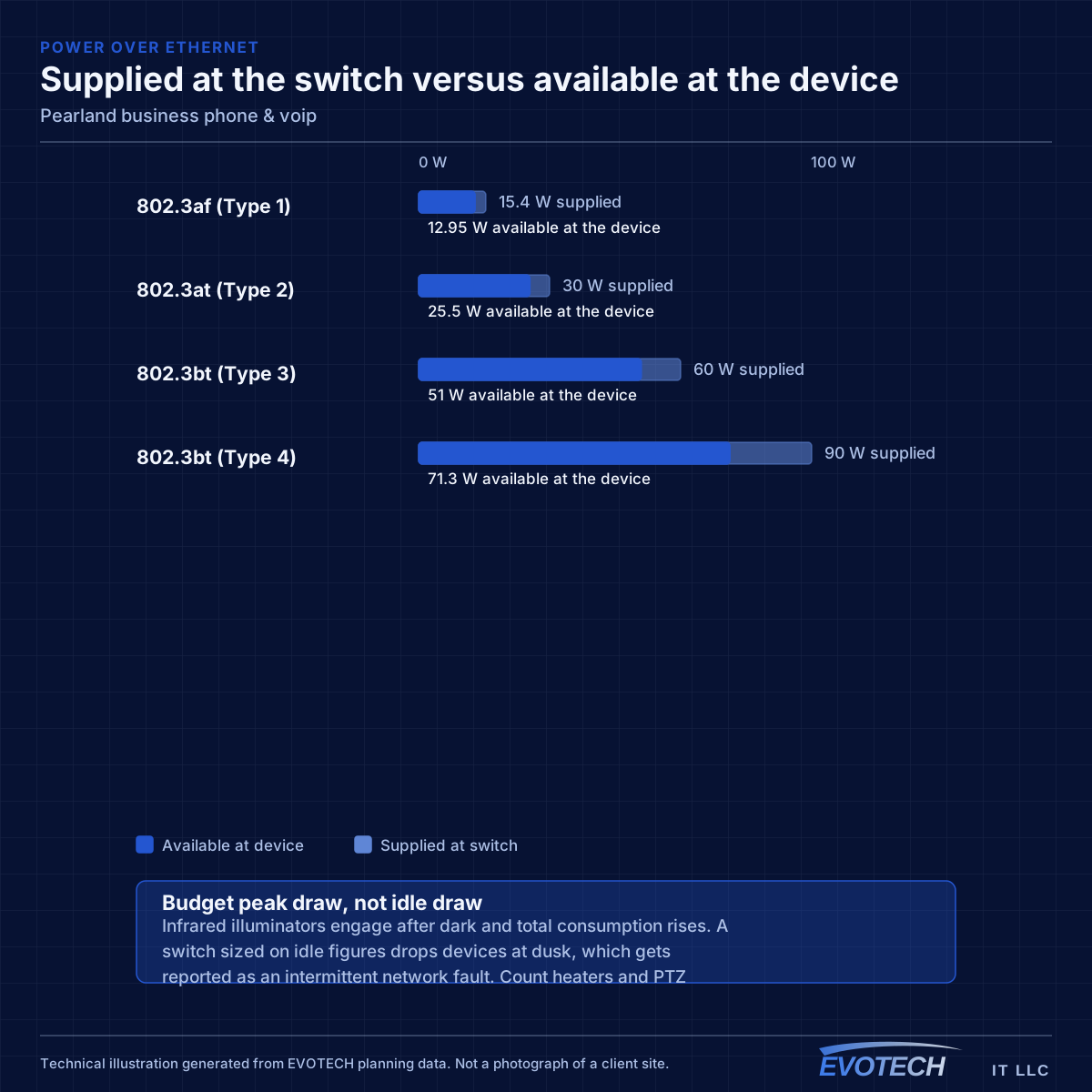
Modern business phones run over the data network — VoIP handsets plug into the same switches as everything else and draw their power from PoE. That is the appeal: one cabling system, central management, and features like auto-attendant, voicemail-to-email, call groups, and remote extensions that older key systems could not offer. The decision that shapes the rest is on-premise versus cloud: an on-site call server you own and maintain, or a hosted service where the provider runs the platform and the site just needs handsets, power, and a good circuit.
What business phone & voip usually involves
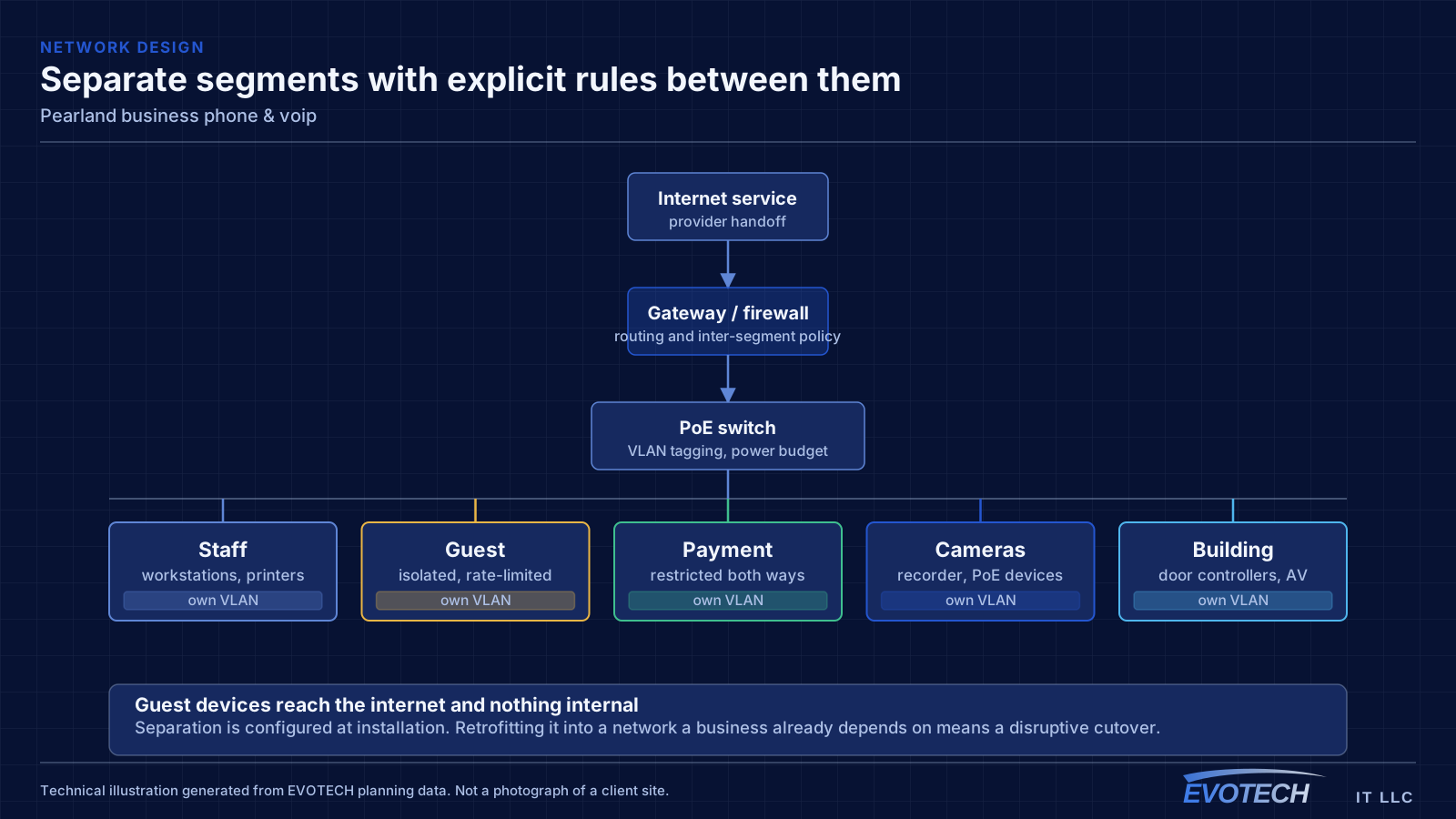
The defining VoIP problem is call quality on a network that was never prepared for voice. Jitter — variation in packet timing — makes speech robotic; packet loss clips words; and both get worse when a backup or a large upload competes for the same uplink. Voice needs to be prioritised over other traffic, and its own segment, or it inherits every congestion event on the network.
The second problem is power. PoE handsets, a PoE switch, and the call server all have to stay up for phones to work, and a site that puts its phones on an unprotected switch loses its phones with every brief outage — including the ability to call for help.
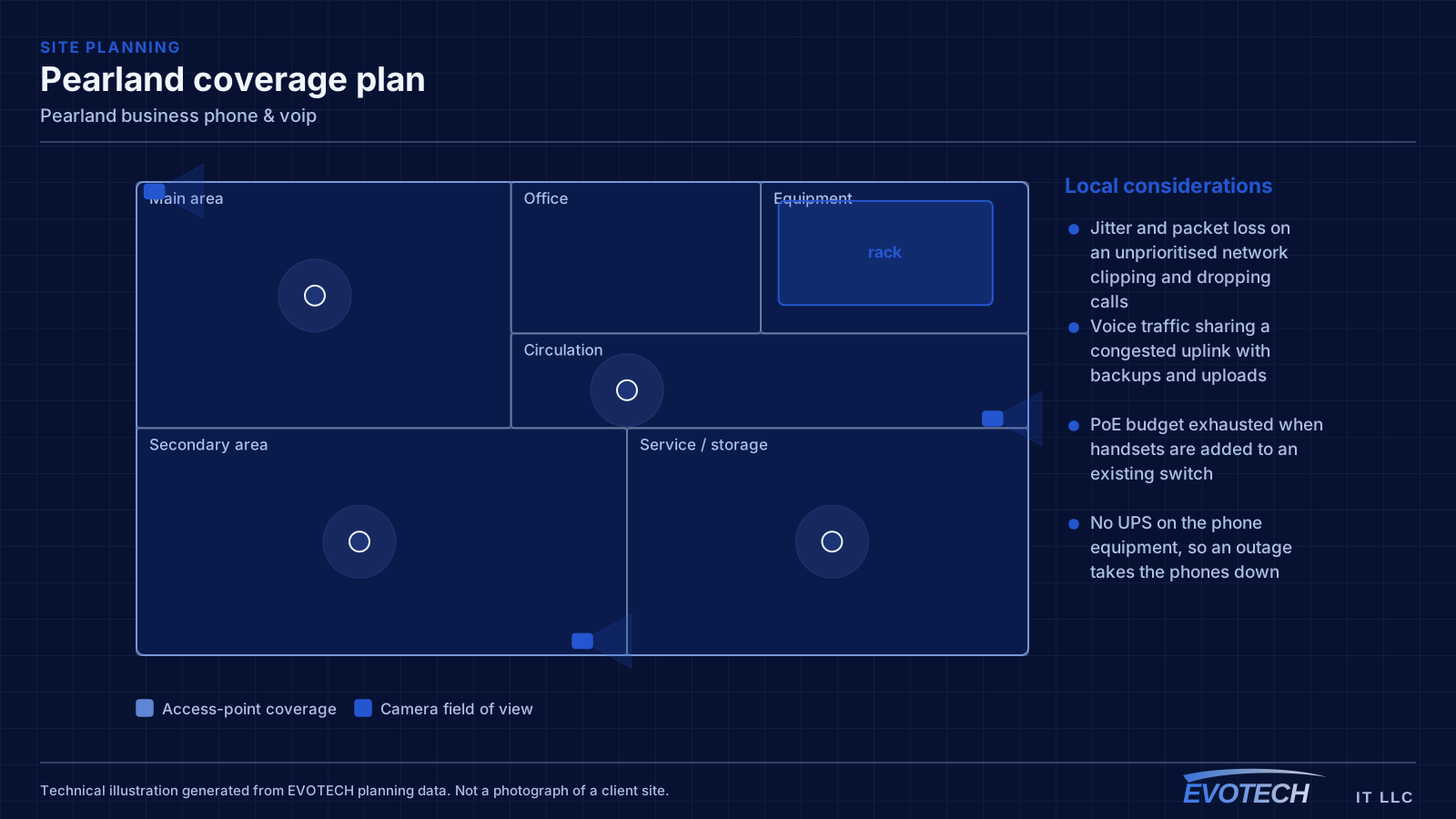
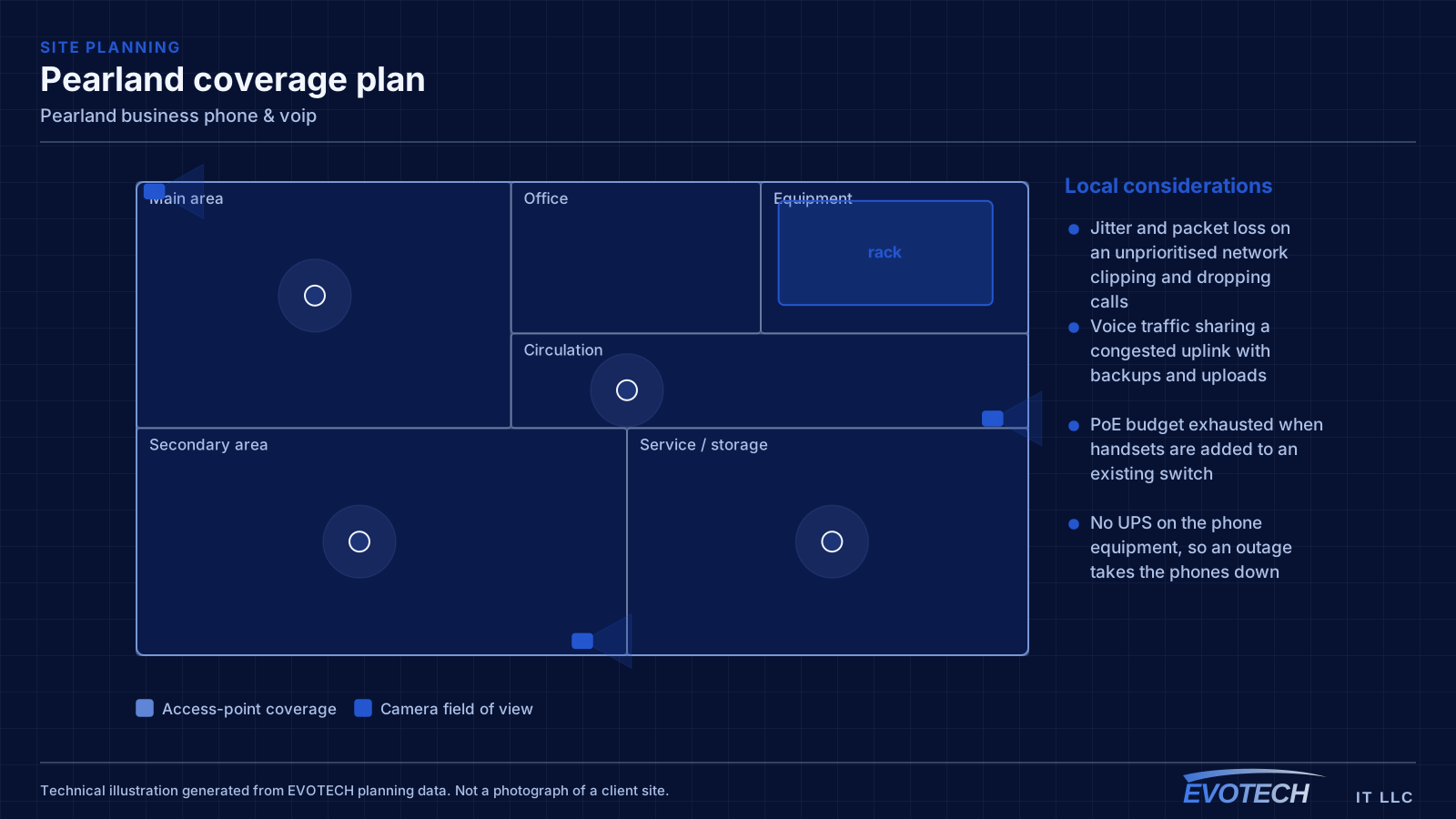
- Jitter and packet loss on an unprioritised network clipping and dropping calls
- Voice traffic sharing a congested uplink with backups and uploads
- PoE budget exhausted when handsets are added to an existing switch
- No UPS on the phone equipment, so an outage takes the phones down
- Insufficient internet upload bandwidth for the number of simultaneous calls
- Number porting scheduled without a cutover plan, risking dead lines
Pearland property conditions that change the plan
Residential construction is recent enough that attic access is generally good and builder cable is often present. As elsewhere in the newer suburbs, that cable typically terminates at wall outlets rather than ceiling positions, so the work involves testing what exists and adding what is missing.
Commercial space is newer too, which helps — suspended grid and reasonable pathway are the norm. The complications are behavioural rather than structural: medical suites have controlled areas and clinical schedules, and restaurants have kitchen conditions and service hours.
Residential projects here scope around the same three questions as elsewhere in the newer suburbs: what exists and does it test clean, where do the access points need to be, and where should the equipment live so it is not sitting in an unconditioned garage.
- Recent residential construction with good attic access
- Builder cable present but usually terminating at wall outlets only
- Newer commercial with suspended grid and usable pathway
- Medical suites with controlled areas and clinical scheduling
- Food service with kitchen environment and narrow work windows
- Existing residential cable tested before being designed around
- Ceiling access-point positions added where builders did not provide them
- Controlled-area and camera boundaries agreed for medical suites
- Payment-system segmentation established at installation for food service
- Equipment positions chosen for temperature, not just cable convenience
Getting business phone & voip done in Pearland
Voice quality is protected by keeping voice traffic separate and prioritised. A dedicated voice network segment, with quality-of-service marking so switches and the gateway send voice packets ahead of bulk data, is what keeps calls clean when the network is busy. Without it, a call and a large file transfer compete as equals, and the call loses.
The two commercial environments have opposite scheduling profiles. Medical work happens around clinical sessions, typically early, late, or on non-clinical days. Food service happens outside service hours, with each session ending with the site operational for the next opening.
- Medical work scheduled around clinical sessions
- Food-service work outside service hours, site operational at each session's end
- Residential attic work early during summer months
- Dust containment in clinical and occupied residential spaces
- Exterior equipment rated for regional humidity and rainfall
Frequently asked questions
Does EVOTECH have an office in Pearland?
No. This is a service-area page: EVOTECH serves Pearland without claiming a physical office there. The wording stays as coverage, not a location claim.
Why do our VoIP calls sound choppy when the internet seems fine?
Almost always jitter or contention rather than raw bandwidth. Voice packets are time-sensitive, and on a network that treats them the same as a backup or a large upload they get delayed or dropped whenever the network is busy. A dedicated voice segment with quality-of-service prioritisation fixes the majority of these cases without changing the internet plan.
Is builder-installed cable in newer homes here usable?
Frequently, after testing. The runs are often sound and can be re-terminated and patched into a proper switch. What they rarely include is ceiling positions for access points, which is usually the addition that actually solves the coverage complaint.