

Why this page exists
Cat6 cabling in Missouri City is scoped around the same physical realities EVOTECH weighs everywhere — but read through Missouri City's specific conditions: housing stock spanning both established and recent construction, producing materially different retrofit conditions between neighbourhoods. This page pairs what the service actually involves with what the Missouri City market changes about it.
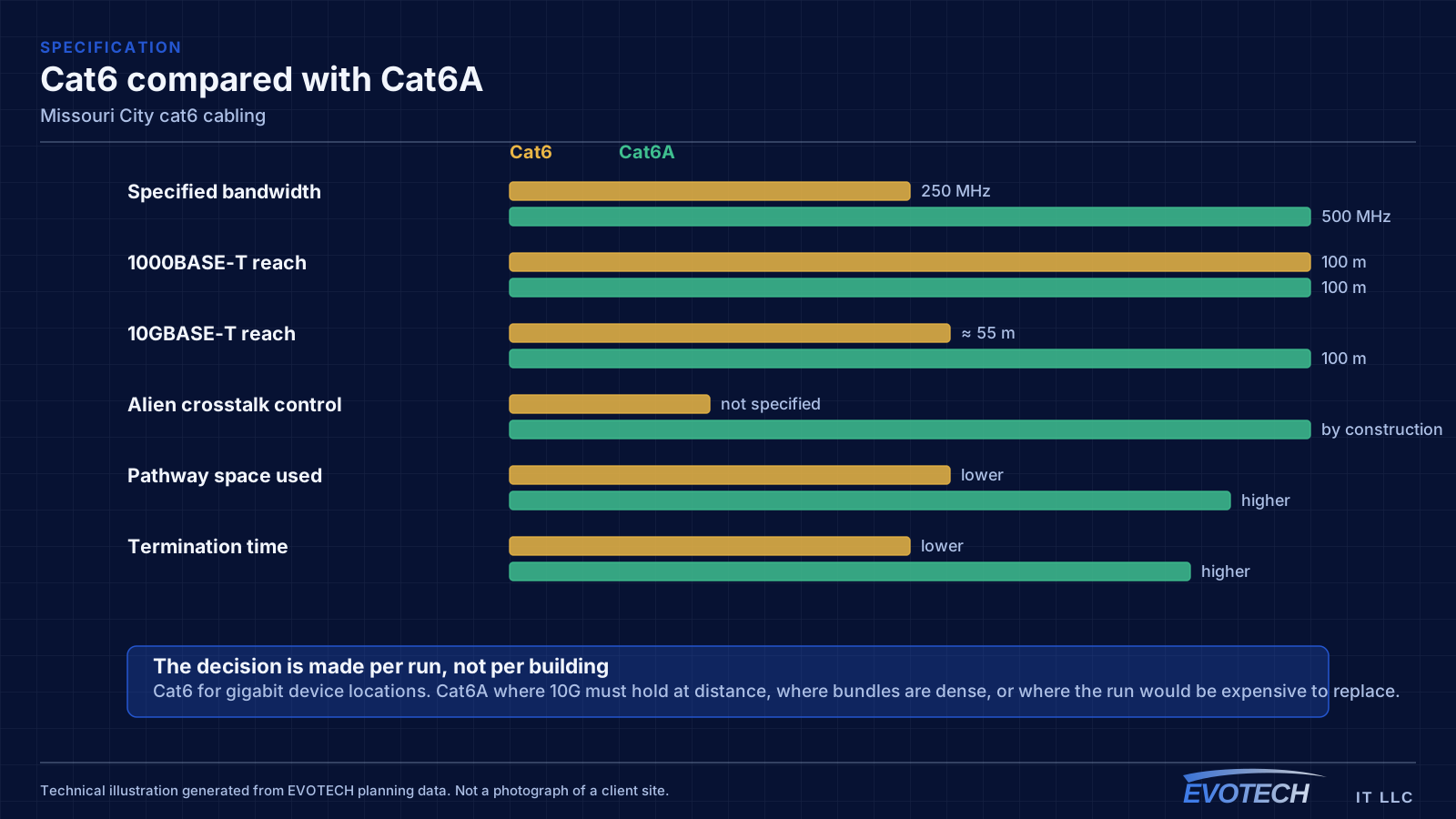
Cat6 carries gigabit Ethernet across the full 100-metre channel without drama, and that covers the overwhelming majority of what plugs into an office or home wall plate: computers, phones, printers, access points, cameras, and door controllers. Where it gets interesting is 10 gigabit. Cat6 can carry 10GBASE-T, but only to roughly 55 metres, and that figure assumes a favourable alien-crosstalk environment — cables not bundled tightly with many neighbours carrying the same signal.
What cat6 cabling usually involves
The failure mode with Cat6 is rarely the cable itself. It is the assumption that anything with eight conductors performs the same. Bulk cable sold as Cat6 varies in construction, and a run that skips the certification test may sit just inside or just outside the limits without anyone knowing until a device starts renegotiating its link speed.
The second problem is bundling. Alien crosstalk — interference between adjacent cables rather than between pairs inside one cable — is the specific mechanism that constrains Cat6 at 10G. A run that would be fine alone can degrade when it is cinched into a bundle of forty identical cables sharing a tray.
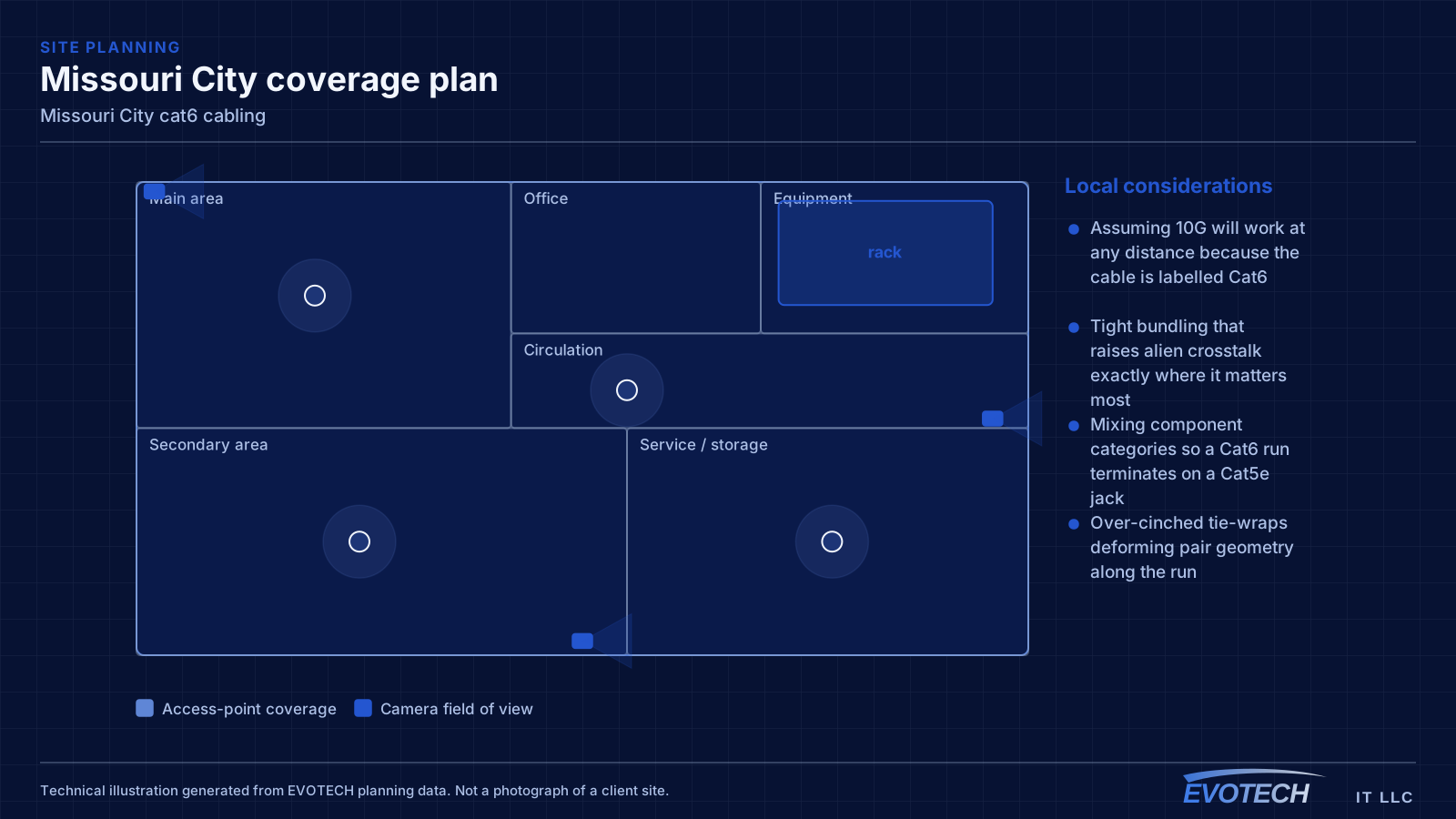
- Assuming 10G will work at any distance because the cable is labelled Cat6
- Tight bundling that raises alien crosstalk exactly where it matters most
- Mixing component categories so a Cat6 run terminates on a Cat5e jack
- Over-cinched tie-wraps deforming pair geometry along the run
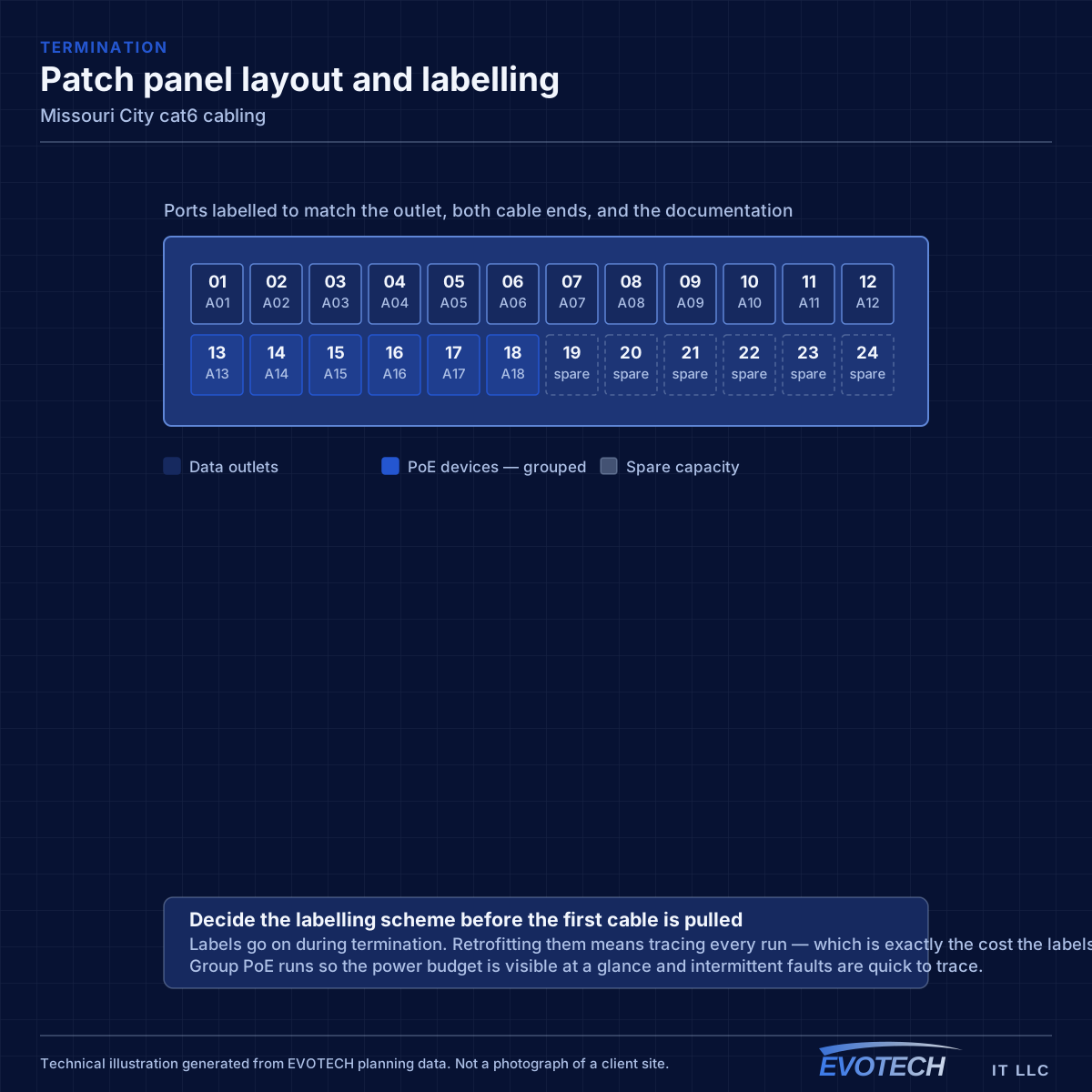
- No certification record, so marginal links are invisible until something misbehaves
Missouri City property conditions that change the plan
In older homes, the assumption should be that nothing usable exists. Attic access may be more restricted, wall construction differs, and any existing low-voltage cable is likely to predate anything worth reusing. These projects are genuine retrofits and scope accordingly.
In newer areas the pattern matches the rest of the suburbs — a builder panel, terminated runs to wall outlets, and a coverage problem caused by floor-plan width and a perimeter equipment position.
Because conditions vary so much by property age, the walkthrough carries more weight here than in a uniform subdivision. Attic accessibility, wall construction, and whether any existing cable is worth testing are the three questions that set the scope.
- Older homes: no usable existing cable, more restricted attic access
- Newer homes: builder panels, reusable runs, coverage gaps at ceiling positions
- Wall construction varying with build era
- Small commercial suites with compact scope
- Leased retail units where landlord rules apply
- Attic accessibility confirmed before planning residential runs
- Existing cable tested rather than assumed usable
- Wall construction checked for blocking and insulation
- Ceiling construction confirmed in commercial suites
- Landlord permissions established for leased units
Getting cat6 cabling done in Missouri City
Cat6 is specified to 250 MHz. That bandwidth comfortably supports 1000BASE-T over a 100-metre channel. 10GBASE-T needs roughly 500 MHz of usable bandwidth, which is why the supported distance drops. The published guidance places Cat6 10G support at around 55 metres, and reduces it further in dense bundles where alien crosstalk is high.
Residential work follows the regional pattern of early summer scheduling for attic access and careful occupied-home practice. Older homes sometimes need a surface raceway or a small access cut where no cavity path exists, and that is worth discussing before work starts rather than mid-run.
- Early summer scheduling for attic work
- Surface raceway or access cut discussed in advance where no cavity path exists
- Dust control and daily clear-down in occupied homes
- Single-visit scheduling for compact commercial scopes
- Exterior equipment rated for regional humidity and rainfall
Frequently asked questions
Does EVOTECH have an office in Missouri City?
No. This is a service-area page: EVOTECH serves Missouri City without claiming a physical office there. The wording stays as coverage, not a location claim.
Is Cat6 enough, or should everything be Cat6A?
For most device locations Cat6 is enough, because most devices need gigabit and will for a long time. Cat6A earns its place on runs that must carry 10G at distance, runs sitting in dense bundles, and uplinks between equipment positions. Specifying Cat6A for the whole building is rarely wrong technically, but it costs pathway space and termination time that a mixed design keeps.
Can Ethernet be added to an older home here?
Usually, though the route matters more than in newer construction. Interior destination walls reachable from an attic are straightforward; exterior walls with insulation and bracing are harder. Where no cavity path exists, the honest alternatives are a small access cut that gets patched, a surface raceway, or relocating the device — worth deciding before any cutting begins.