

Why this page exists
Ethernet installation in Missouri City is scoped around the same physical realities EVOTECH weighs everywhere — but read through Missouri City's specific conditions: housing stock spanning both established and recent construction, producing materially different retrofit conditions between neighbourhoods. This page pairs what the service actually involves with what the Missouri City market changes about it.
Ethernet installation in an existing building means finding a path from a central equipment position to each room that needs a wired connection, getting cable through that path without opening more wall than necessary, and terminating both ends cleanly. In a two-storey house with an accessible attic, that is often straightforward. In a single-storey house on a slab with a hard ceiling, it is the whole job.
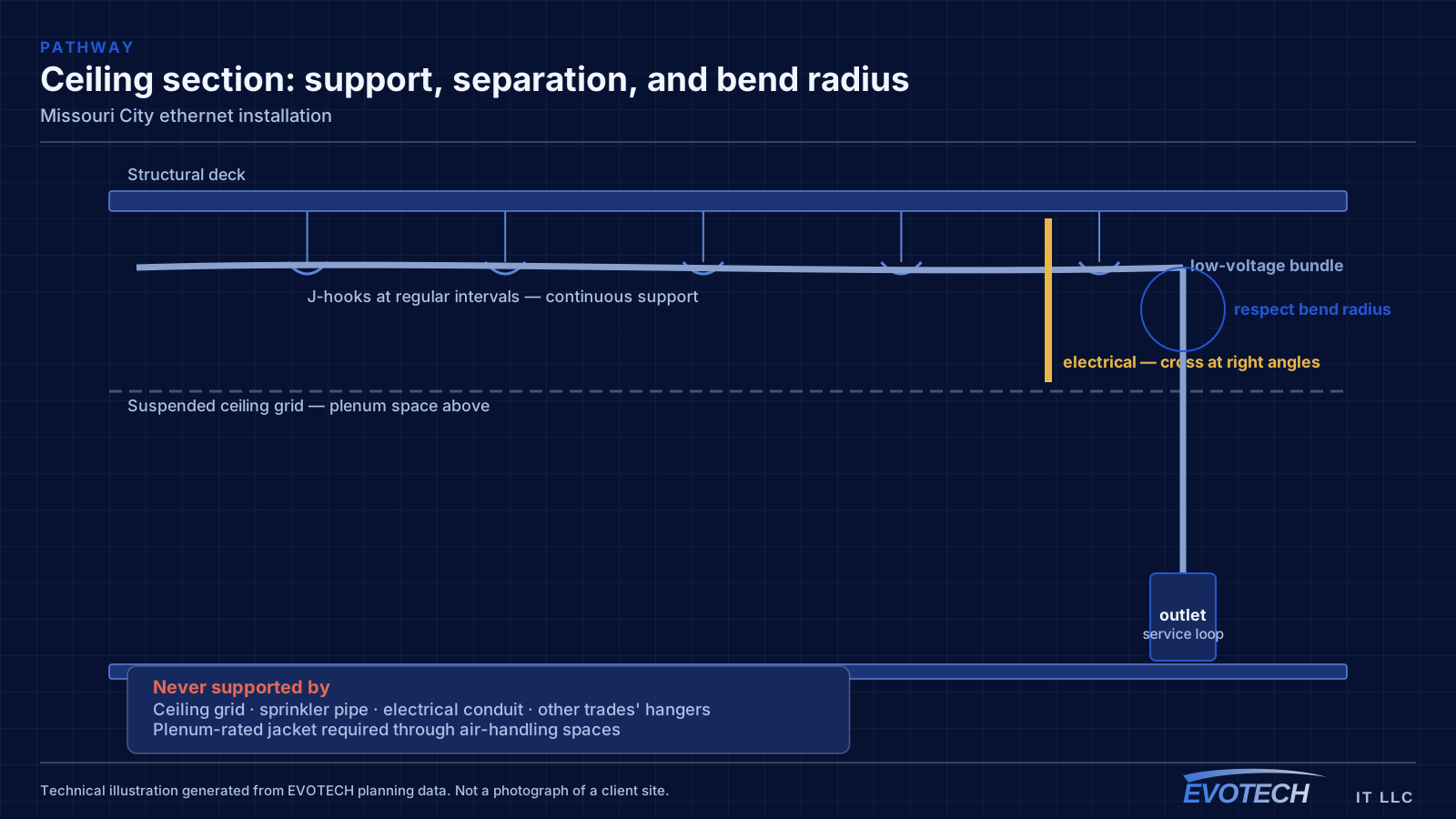
What ethernet installation usually involves
The problems in retrofit Ethernet work are physical rather than electrical. Fire blocking inside a wall cavity stops a fish tape halfway. A brick veneer means the exterior is not a viable path. A slab foundation removes the underfloor option entirely, which in much of the Houston area is the normal condition and pushes the route up into the attic.
The other recurring problem is equipment placement. The incoming internet service often lands somewhere inconvenient — a garage wall, a closet with no power, a corner of the living room — and the wired design has to either work from there or include moving the handoff to a better position.
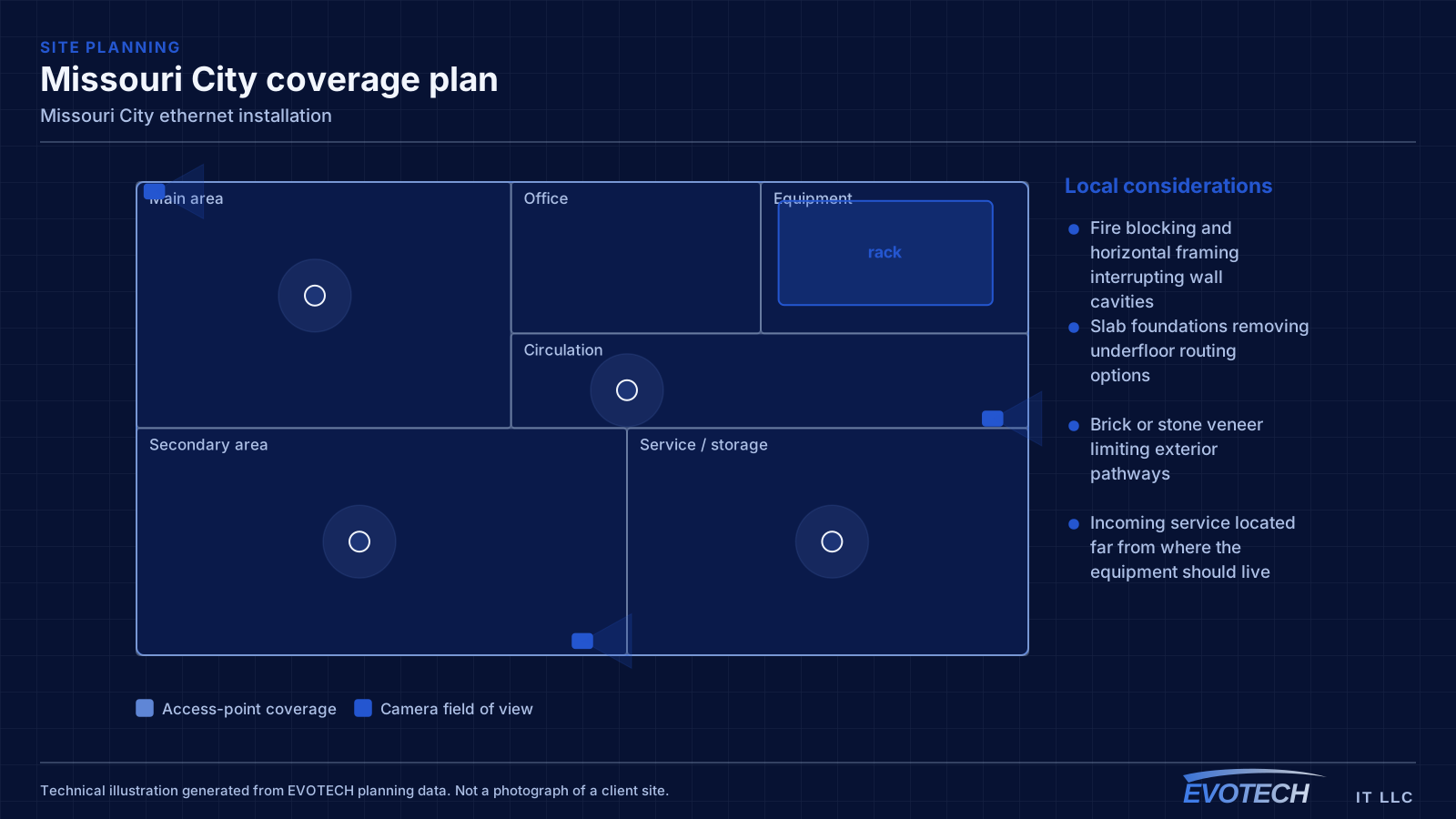
- Fire blocking and horizontal framing interrupting wall cavities
- Slab foundations removing underfloor routing options
- Brick or stone veneer limiting exterior pathways
- Incoming service located far from where the equipment should live
- No dedicated power at the intended equipment position
- Attic temperatures in summer constraining working hours and equipment placement
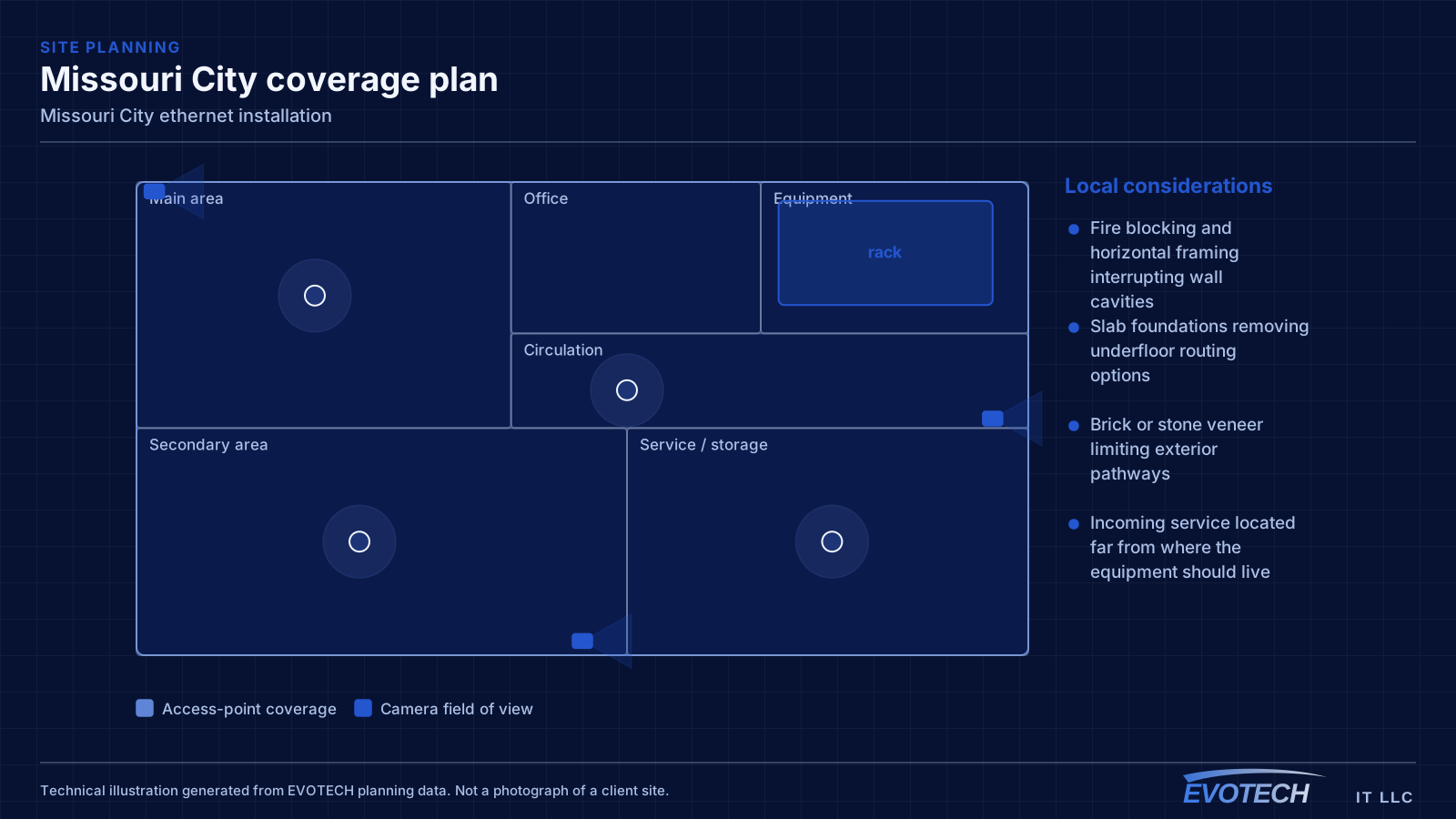
Missouri City property conditions that change the plan
In older homes, the assumption should be that nothing usable exists. Attic access may be more restricted, wall construction differs, and any existing low-voltage cable is likely to predate anything worth reusing. These projects are genuine retrofits and scope accordingly.
In newer areas the pattern matches the rest of the suburbs — a builder panel, terminated runs to wall outlets, and a coverage problem caused by floor-plan width and a perimeter equipment position.
Because conditions vary so much by property age, the walkthrough carries more weight here than in a uniform subdivision. Attic accessibility, wall construction, and whether any existing cable is worth testing are the three questions that set the scope.
- Older homes: no usable existing cable, more restricted attic access
- Newer homes: builder panels, reusable runs, coverage gaps at ceiling positions
- Wall construction varying with build era
- Small commercial suites with compact scope
- Leased retail units where landlord rules apply
- Attic accessibility confirmed before planning residential runs
- Existing cable tested rather than assumed usable
- Wall construction checked for blocking and insulation
- Ceiling construction confirmed in commercial suites
- Landlord permissions established for leased units
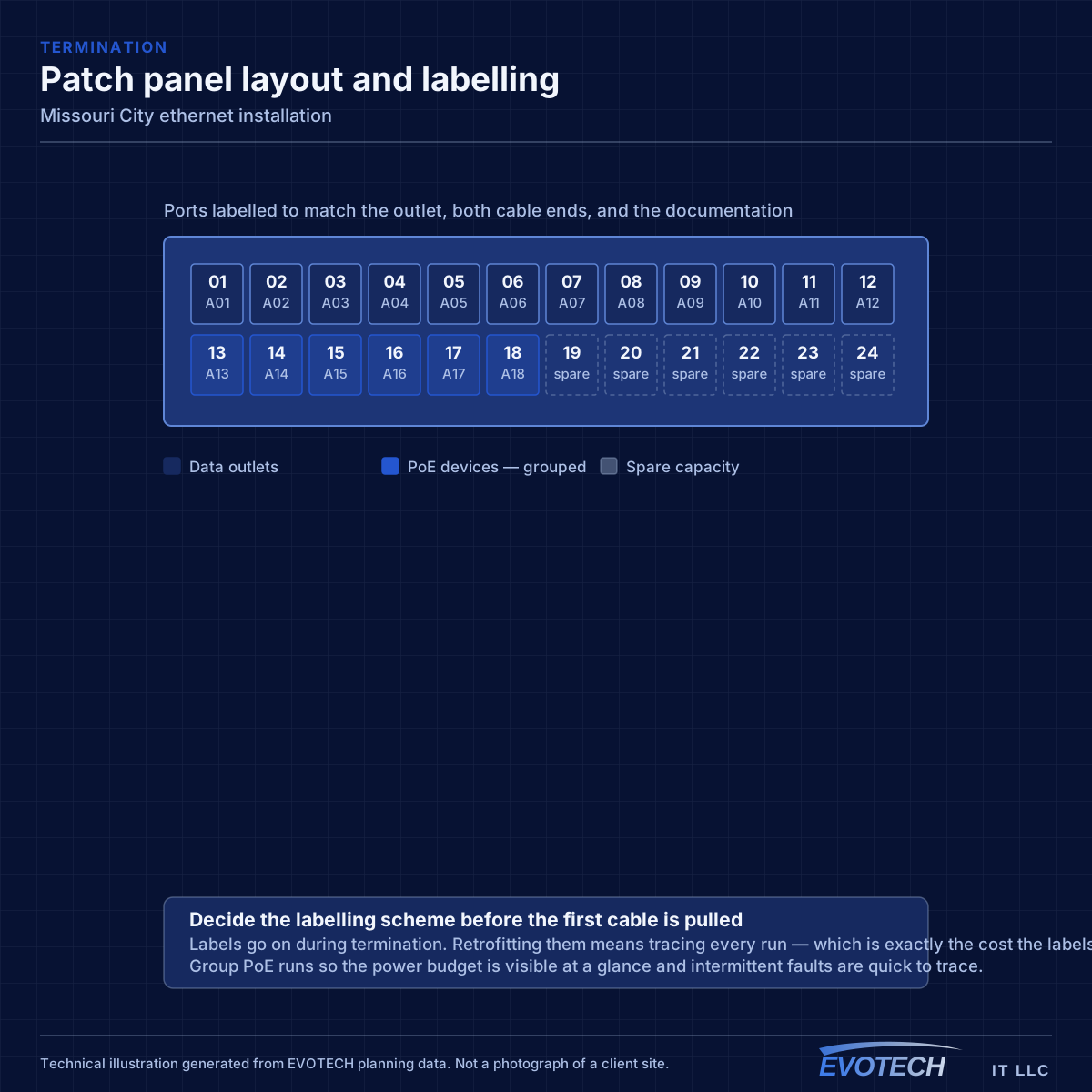
Getting ethernet installation done in Missouri City
Most retrofit runs in a single-storey home go up into the attic, across, and down an interior wall. That works when the destination wall is interior, has an accessible top plate, and has no blocking in the way. Exterior walls are harder: insulation, bracing, and veneer all interfere, and drilling a top plate above an exterior wall is not always accessible.
Residential work follows the regional pattern of early summer scheduling for attic access and careful occupied-home practice. Older homes sometimes need a surface raceway or a small access cut where no cavity path exists, and that is worth discussing before work starts rather than mid-run.
- Early summer scheduling for attic work
- Surface raceway or access cut discussed in advance where no cavity path exists
- Dust control and daily clear-down in occupied homes
- Single-visit scheduling for compact commercial scopes
- Exterior equipment rated for regional humidity and rainfall
Frequently asked questions
Does EVOTECH have an office in Missouri City?
No. This is a service-area page: EVOTECH serves Missouri City without claiming a physical office there. The wording stays as coverage, not a location claim.
Can Ethernet be added without cutting into walls?
Often yes, when the destination is an interior wall reachable from an attic or crawl space and there is no blocking in the cavity. When there is no viable cavity path, the choices are a small access cut that then gets patched, a surface raceway, or moving the device to a wall that can be reached. Which one makes sense is worth deciding before work starts rather than mid-pull.
Can Ethernet be added to an older home here?
Usually, though the route matters more than in newer construction. Interior destination walls reachable from an attic are straightforward; exterior walls with insulation and bracing are harder. Where no cavity path exists, the honest alternatives are a small access cut that gets patched, a surface raceway, or relocating the device — worth deciding before any cutting begins.