

Why this page exists
Cat6 cabling in League City is scoped around the same physical realities EVOTECH weighs everywhere — but read through League City's specific conditions: coastal proximity raising the weight on exterior sealing, rated housings, and surge protection. This page pairs what the service actually involves with what the League City market changes about it.
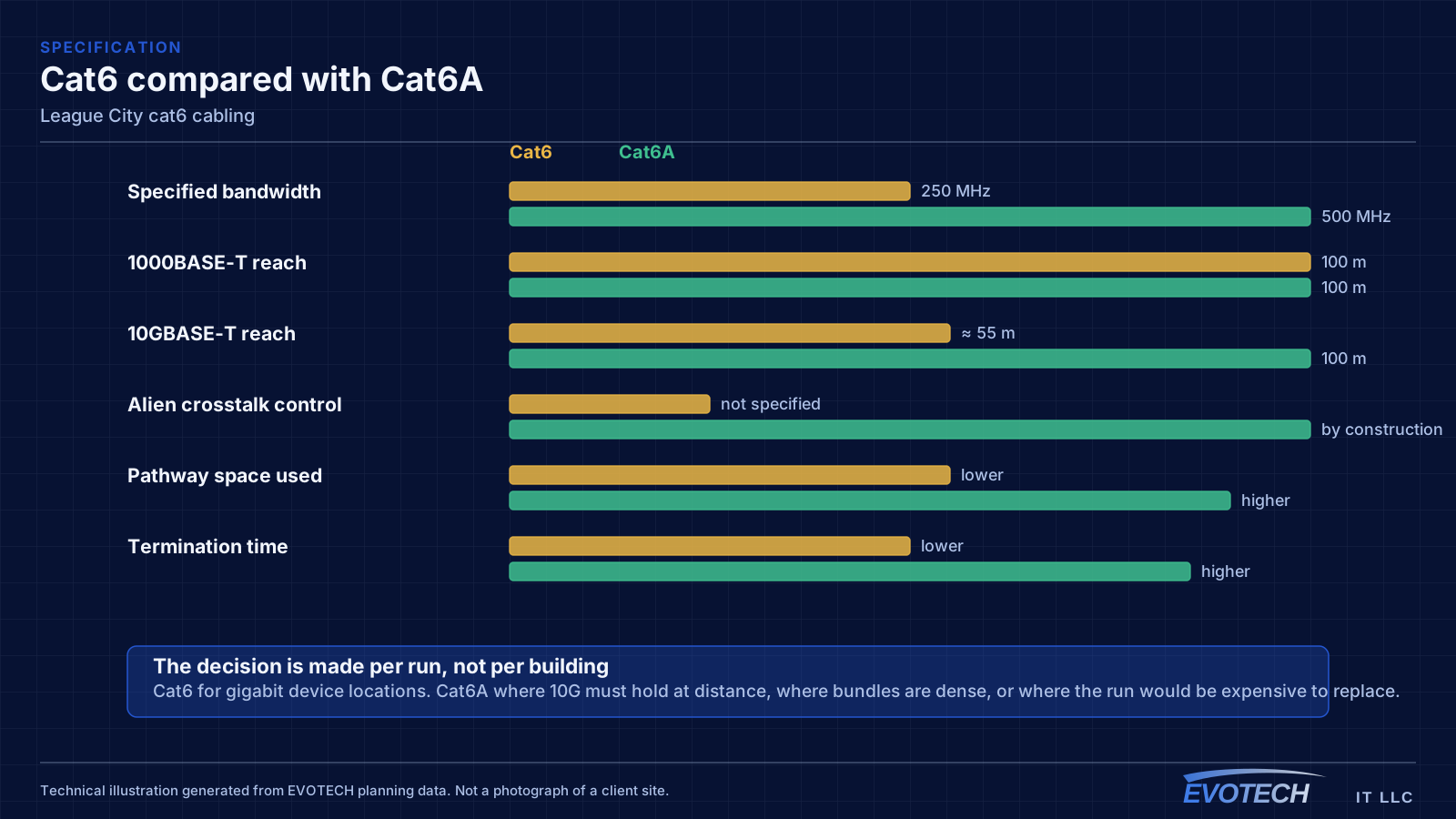
Cat6 carries gigabit Ethernet across the full 100-metre channel without drama, and that covers the overwhelming majority of what plugs into an office or home wall plate: computers, phones, printers, access points, cameras, and door controllers. Where it gets interesting is 10 gigabit. Cat6 can carry 10GBASE-T, but only to roughly 55 metres, and that figure assumes a favourable alien-crosstalk environment — cables not bundled tightly with many neighbours carrying the same signal.
What cat6 cabling usually involves
The failure mode with Cat6 is rarely the cable itself. It is the assumption that anything with eight conductors performs the same. Bulk cable sold as Cat6 varies in construction, and a run that skips the certification test may sit just inside or just outside the limits without anyone knowing until a device starts renegotiating its link speed.
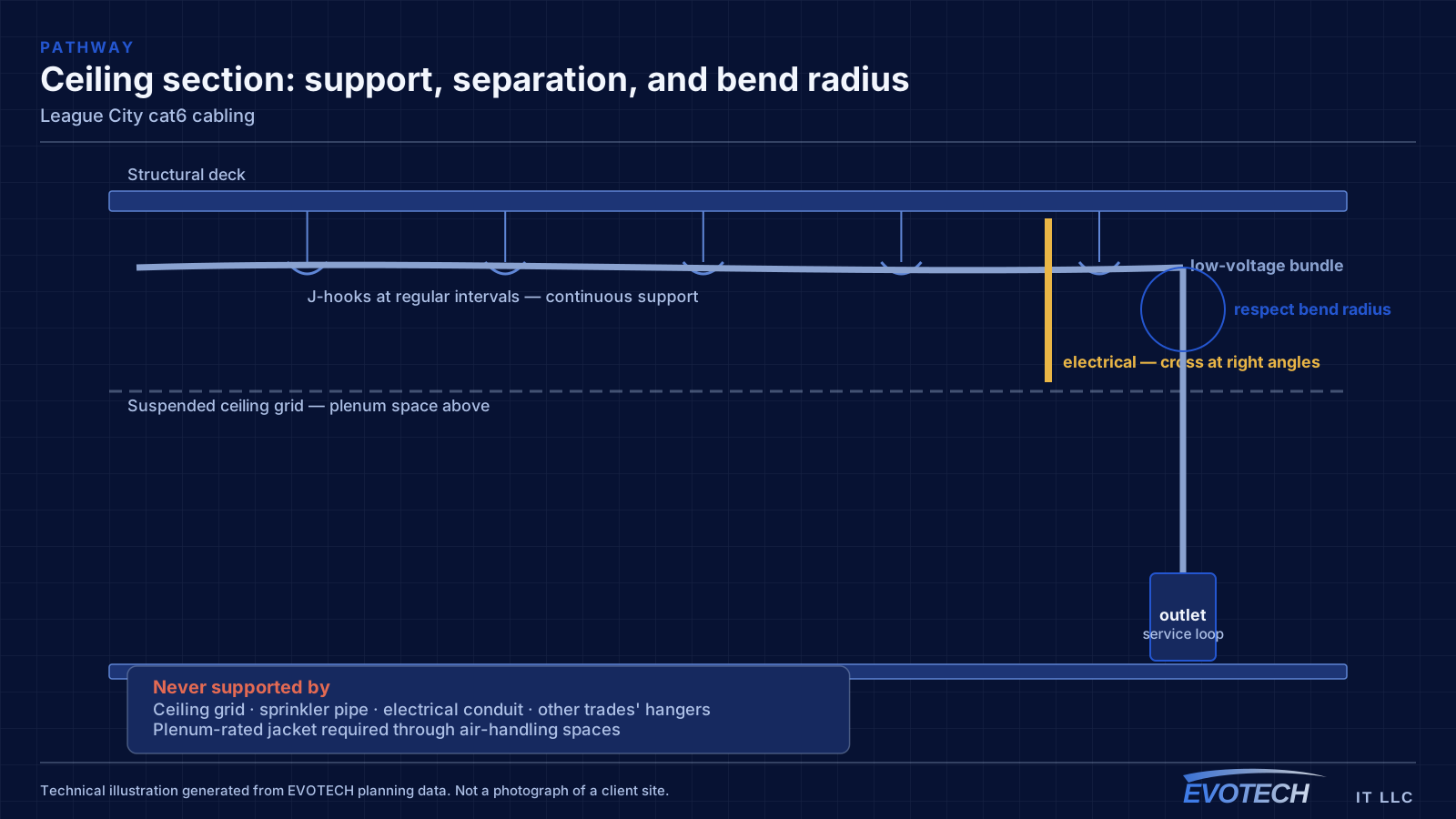
The second problem is bundling. Alien crosstalk — interference between adjacent cables rather than between pairs inside one cable — is the specific mechanism that constrains Cat6 at 10G. A run that would be fine alone can degrade when it is cinched into a bundle of forty identical cables sharing a tray.
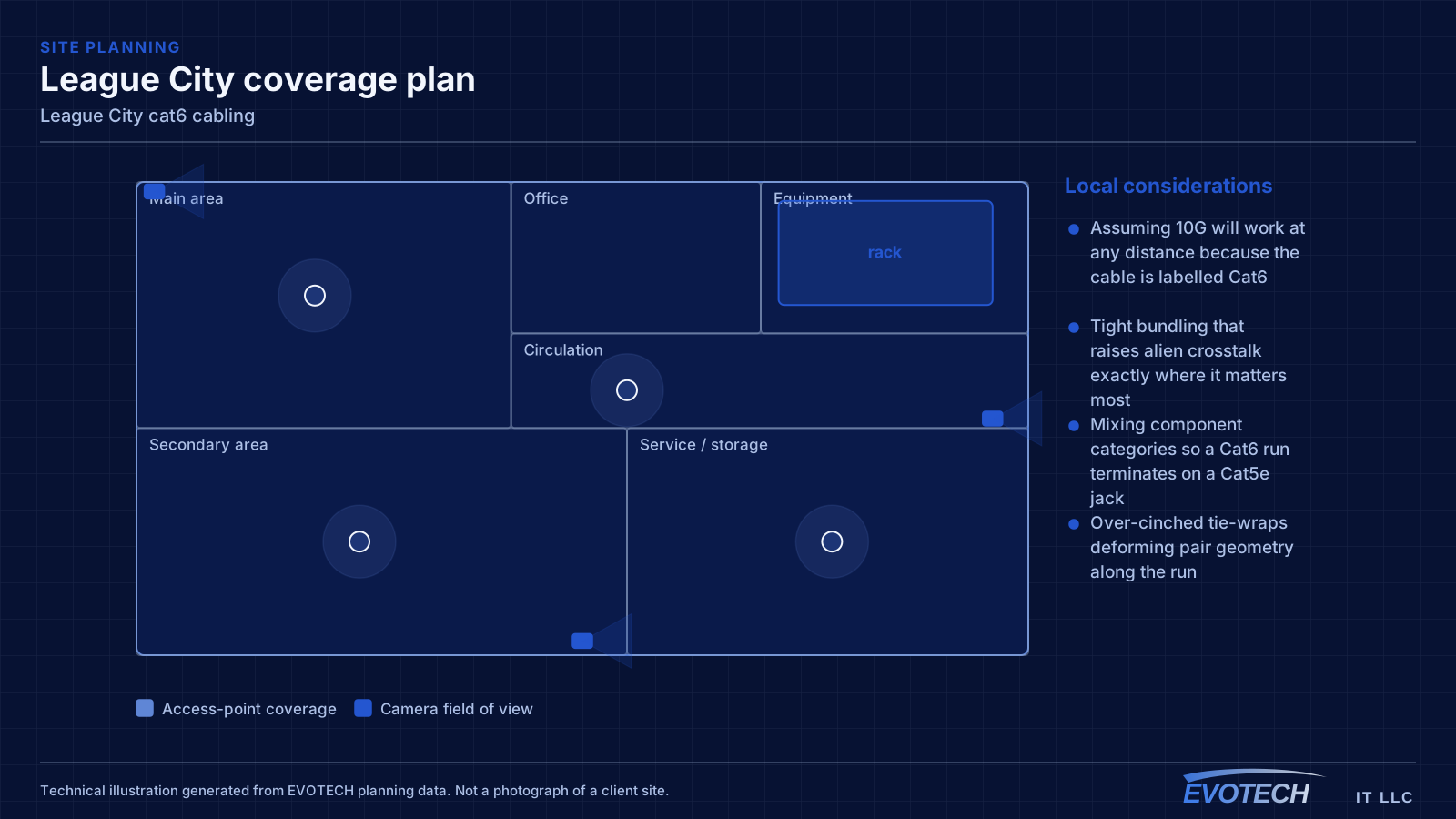
- Assuming 10G will work at any distance because the cable is labelled Cat6
- Tight bundling that raises alien crosstalk exactly where it matters most
- Mixing component categories so a Cat6 run terminates on a Cat5e jack
- Over-cinched tie-wraps deforming pair geometry along the run
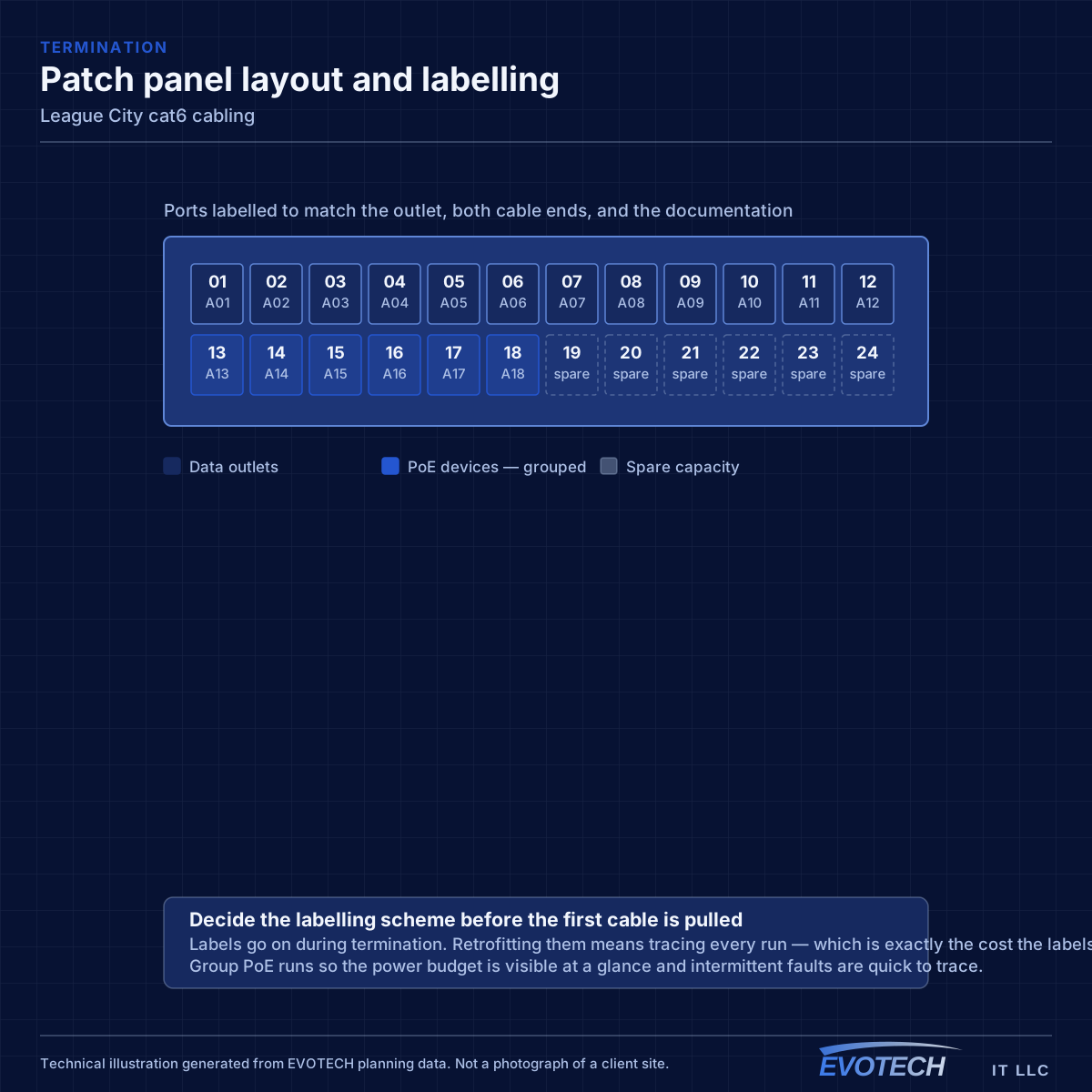
- No certification record, so marginal links are invisible until something misbehaves
League City property conditions that change the plan
Residential is predominantly newer suburban construction with good attic access, and multi-storey or wide plans that need more than one access point. The coastal setting raises the stakes on exterior equipment and on resilience.
Commercial medical and retail buildouts bring controlled areas, segmentation, and camera coverage, with the same humidity and storm considerations outdoors.
Homes get an access point per floor and outdoor coverage with rated equipment. Where uptime matters, network equipment and recorders go on a UPS, and critical systems get failover. Exterior work is sealed for the coastal environment.
- Newer suburban slab-foundation homes
- Multi-room and multi-storey plans needing several access points
- Growing medical and retail commercial space
- Coastal exposure raising exterior durability needs
- Storm-season resilience as a design factor
- An access point per floor plus rated outdoor coverage
- UPS on network equipment and recorders where uptime matters
- Failover for critical systems where warranted
- Rated housings, sealed penetrations, and surge protection
- Segmentation and camera boundaries in commercial suites
Getting cat6 cabling done in League City
Cat6 is specified to 250 MHz. That bandwidth comfortably supports 1000BASE-T over a 100-metre channel. 10GBASE-T needs roughly 500 MHz of usable bandwidth, which is why the supported distance drops. The published guidance places Cat6 10G support at around 55 metres, and reduces it further in dense bundles where alien crosstalk is high.
Exterior sealing and surge protection carry extra weight nearer the coast; residential follows summer attic scheduling and occupied-home practice.
- Rated exterior housings and drip loops at every penetration
- Surge protection on exterior and between-building runs
- Residential attic work scheduled early in summer
- UPS runtime confirmed for critical systems
- Commercial work scheduled around operating hours
Frequently asked questions
Does EVOTECH have an office in League City?
No. This is a service-area page: EVOTECH serves League City without claiming a physical office there. The wording stays as coverage, not a location claim.
Is Cat6 enough, or should everything be Cat6A?
For most device locations Cat6 is enough, because most devices need gigabit and will for a long time. Cat6A earns its place on runs that must carry 10G at distance, runs sitting in dense bundles, and uplinks between equipment positions. Specifying Cat6A for the whole building is rarely wrong technically, but it costs pathway space and termination time that a mixed design keeps.
Does EVOTECH have an office in League City?
No. This site does not claim a physical office in League City or anywhere else. League City is described as a service-area market — coverage, not a location claim.