
Why this page exists
Fiber-optic cabling in Houston is scoped around the same physical realities EVOTECH weighs everywhere — but read through Houston's specific conditions: building stock spanning multiple construction eras within short distances, producing very different ceiling and pathway conditions. This page pairs what the service actually involves with what the Houston market changes about it.
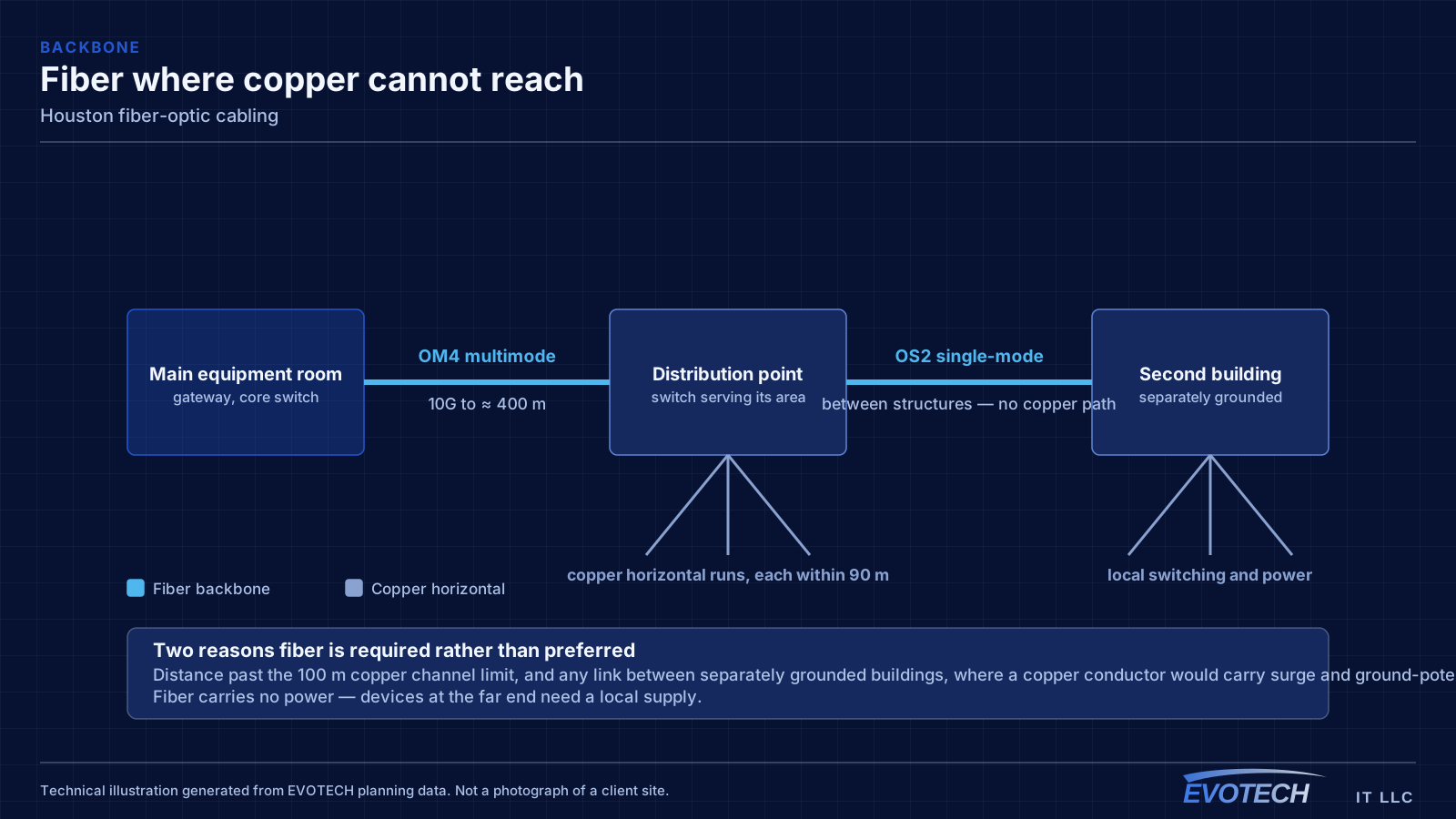
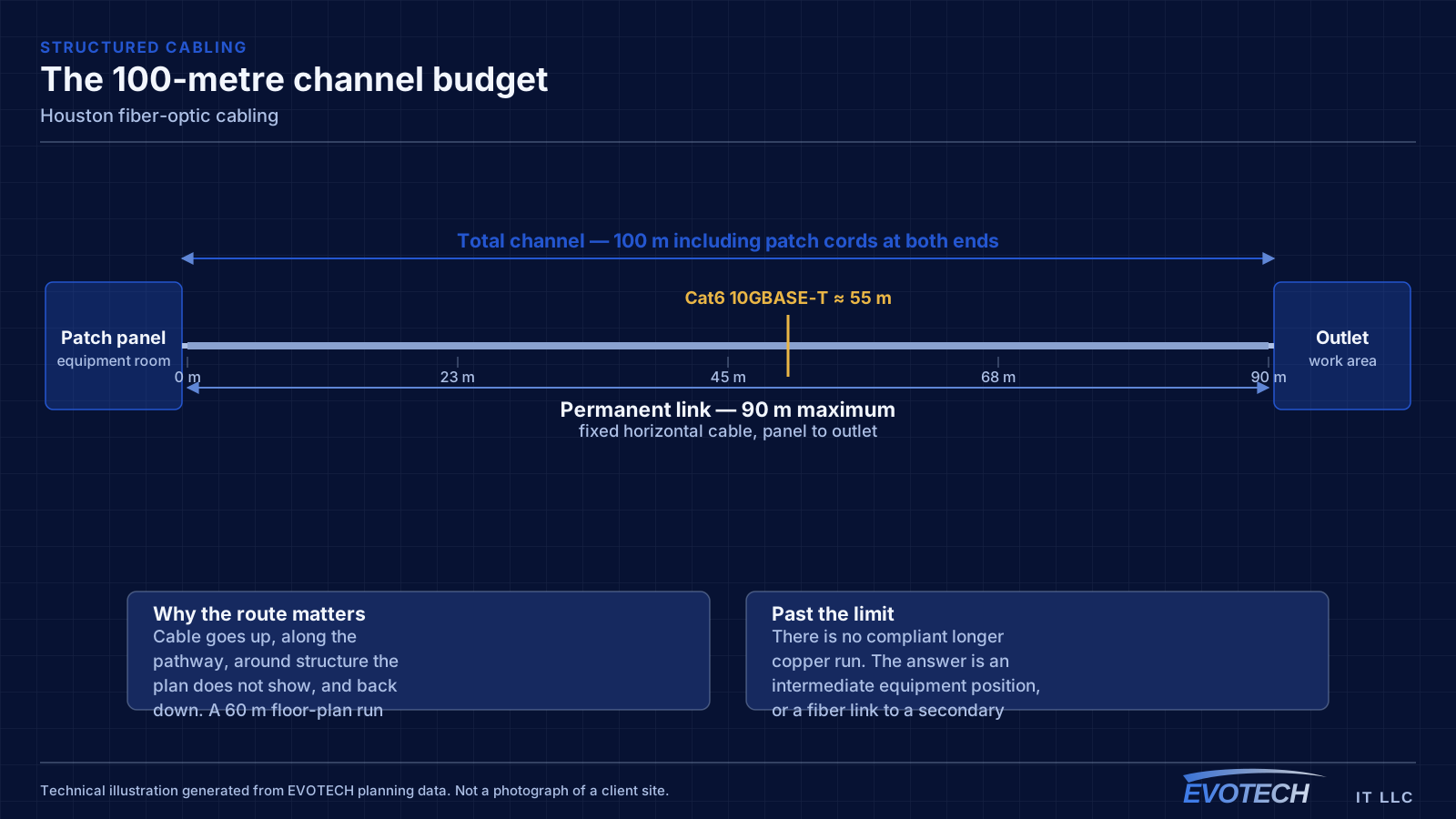
Fiber gets specified for reasons copper cannot address. The first is distance — multimode carries 10 gigabit a few hundred metres and single-mode carries it far further, while copper stops at 100 metres. The second is electrical isolation: a link between two separate buildings should not be a copper conductor, because the two structures can sit at different ground potentials and a lightning event has to go somewhere.
What fiber-optic cabling usually involves
Fiber problems are almost always contamination or handling. A connector end face with a single particle of dust on it can add loss well beyond the link budget, and the particle is invisible without a scope. Inspect-before-connect exists because the failure is so common and so easy to prevent.
The other failures are mechanical: a bend tighter than the cable's minimum radius causing macrobending loss, a pull that exceeded the cable's tension rating and stressed the fibers, and a mismatch between fiber types where a multimode patch cord ends up on a single-mode link.
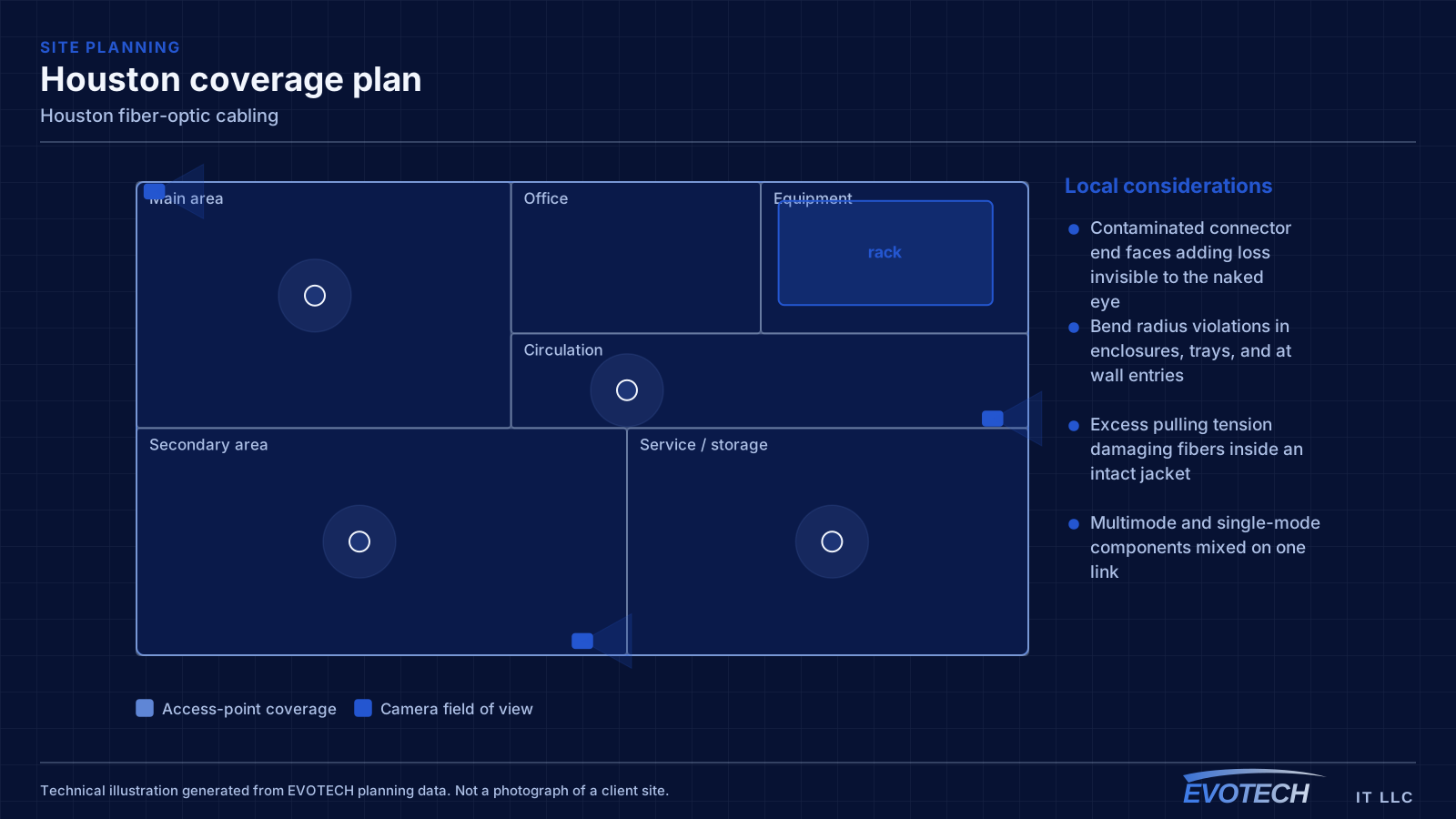
- Contaminated connector end faces adding loss invisible to the naked eye
- Bend radius violations in enclosures, trays, and at wall entries
- Excess pulling tension damaging fibers inside an intact jacket
- Multimode and single-mode components mixed on one link
- Unprotected splice trays with no strain relief or slack storage
Houston property conditions that change the plan
Commercial stock in Houston divides roughly into three pathway situations. Older buildings frequently have hard-lid ceilings, limited or fully occupied existing pathway, and equipment rooms that were sized for a phone system. Warehouse and industrial conversions usually have open structure overhead, which makes pathway easy but leaves cable exposed and requires proper support and containment. Newer suburban commercial is generally the most straightforward — suspended grid, accessible plenum, and existing tray in many cases.
Residential stock is similarly varied but with a consistent structural theme: slab-on-grade construction is the norm, which removes the underfloor routing option almost entirely. Retrofit runs go up into the attic and down interior walls, and the practical question becomes whether the destination wall is interior and whether its top plate is reachable.
Because the building drives everything, the useful early questions are all physical. What is the ceiling? Is there existing pathway and is it full? Where does the service enter, and where can the equipment actually live? Is the space occupied, and if so what hours are available?
- Older commercial: hard-lid ceilings, congested or absent pathway, undersized equipment rooms
- Conversions: open structure, easy routing, but exposed cable needing proper support
- Newer commercial: suspended grid and often existing tray
- Residential: slab foundations, attic routing, interior-wall drops
- Multi-tenant buildings: base-building rules on riser and core access vary considerably
- Ceiling construction, and how much of it is genuinely accessible
- Existing pathway, its condition, and its remaining capacity
- Equipment room location, power, and ventilation
- Occupancy and available working hours
- Base-building rules where the space is leased
- Whether the work is a fit-out, a retrofit, or a remediation of existing installation
Getting fiber-optic cabling done in Houston
Multimode fiber — OM3 and OM4 in current installations — is the usual choice for in-building backbones. OM3 supports 10 gigabit to roughly 300 metres and OM4 to roughly 400 metres, which covers almost any single building. Single-mode fiber carries far greater distances and is the correct choice for building-to-building links and anything with a long horizon.
Two environmental factors show up consistently. Summer attic temperatures make residential retrofit work a morning activity for much of the year, which affects scheduling more than it affects scope. And Gulf Coast humidity with heavy rainfall events means exterior equipment — cameras, entry stations, outdoor access points — needs appropriate sealing, drip loops, and housings rated for driven rain rather than for nominal weather resistance.
- Residential attic work scheduled early during summer months
- Exterior penetrations sealed with proper drip loops
- Housings and enclosures rated for driven rain, not nominal weather resistance
- Equipment positions chosen with ambient temperature in mind, especially near unconditioned space
- Surge protection considered on exterior and between-building runs
Popular services nearby
Frequently searched near this area — the pages people look for most.
Frequently asked questions
Does EVOTECH have an office in Houston?
No. This is a service-area page: EVOTECH serves Houston without claiming a physical office there. The wording stays as coverage, not a location claim.
When is fiber necessary rather than optional?
Two situations make it necessary rather than a preference. First, distance: past the 100-metre copper channel limit there is no compliant copper answer. Second, links between separate buildings, where a copper conductor creates a path for surge and ground-potential differences. Inside those two cases fiber is not an upgrade — it is the correct method.
Does EVOTECH have an office in Houston?
This site does not publish a business address, in Houston or anywhere else, because one has not been confirmed for publication. Houston is described here as the primary market served — that is a coverage statement, not an office claim, and the distinction is deliberate.