
Why this page exists
Wi-Fi installation in Fulshear is scoped around the same physical realities EVOTECH weighs everywhere — but read through Fulshear's specific conditions: predominantly recent residential construction, so prewire timing rather than retrofit access is the usual constraint. This page pairs what the service actually involves with what the Fulshear market changes about it.
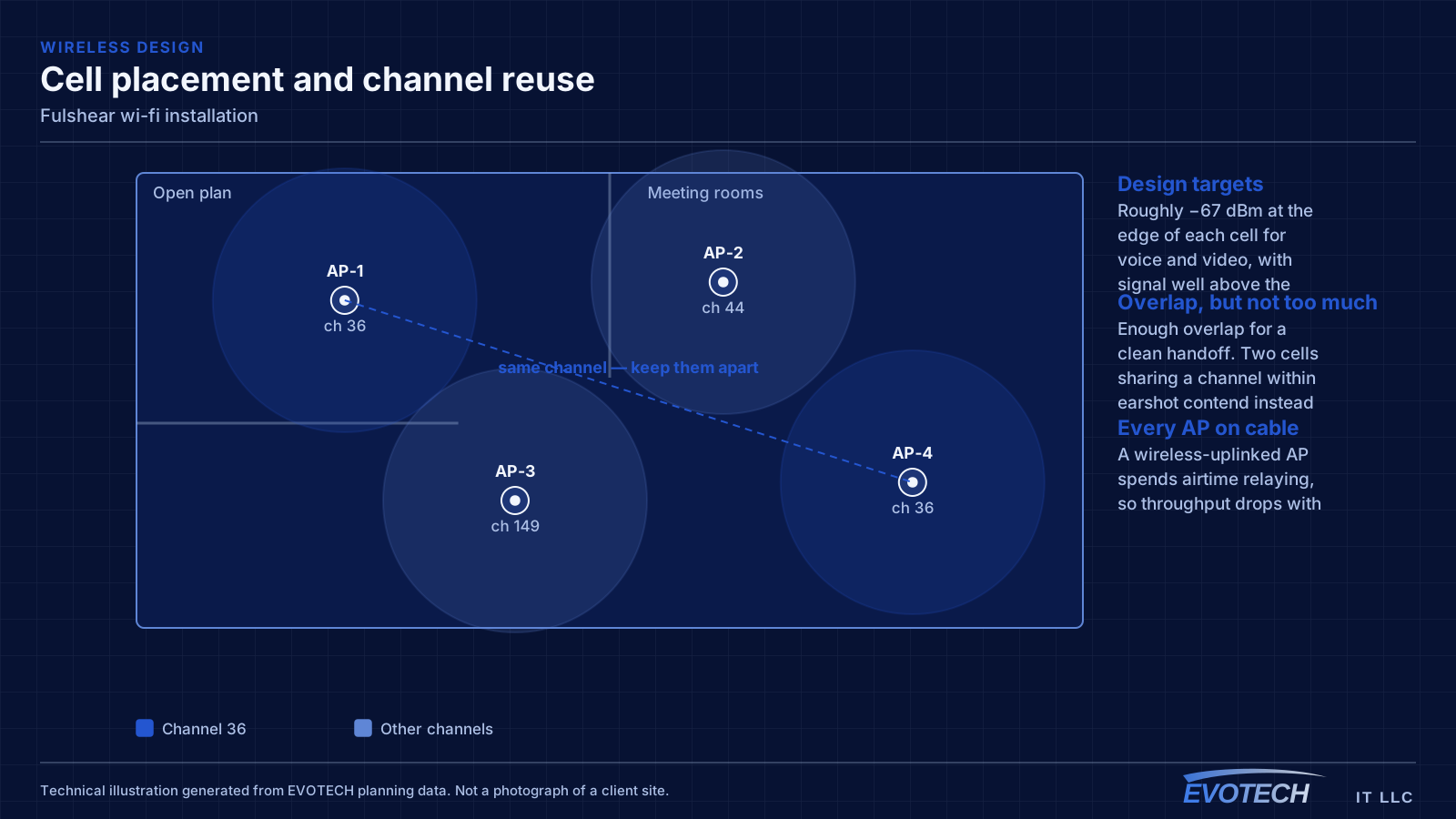
Good Wi-Fi comes from deciding where signal needs to be strong, then placing access points so that each area gets a solid signal from one AP without excessive overlap from others. The target most designs work to is around -67 dBm at the edge of each coverage area for voice and video, with signal comfortably above the local noise floor. Placement follows from that number and from the walls between the AP and the users.
What wi-fi installation usually involves
The most common complaint is a call dropping when someone walks from one room to another. That is a roaming problem, and it usually traces back to coverage design: either the cells overlap too little, so the client hangs onto a dying signal, or they overlap too much on the same channel, so everything is contending.
The second recurring problem is that the wireless network is blamed for a wired or internet issue. A device showing full signal bars and still performing badly is pointing at something past the access point — an oversubscribed uplink, a saturated internet circuit, or a switch port negotiating incorrectly.
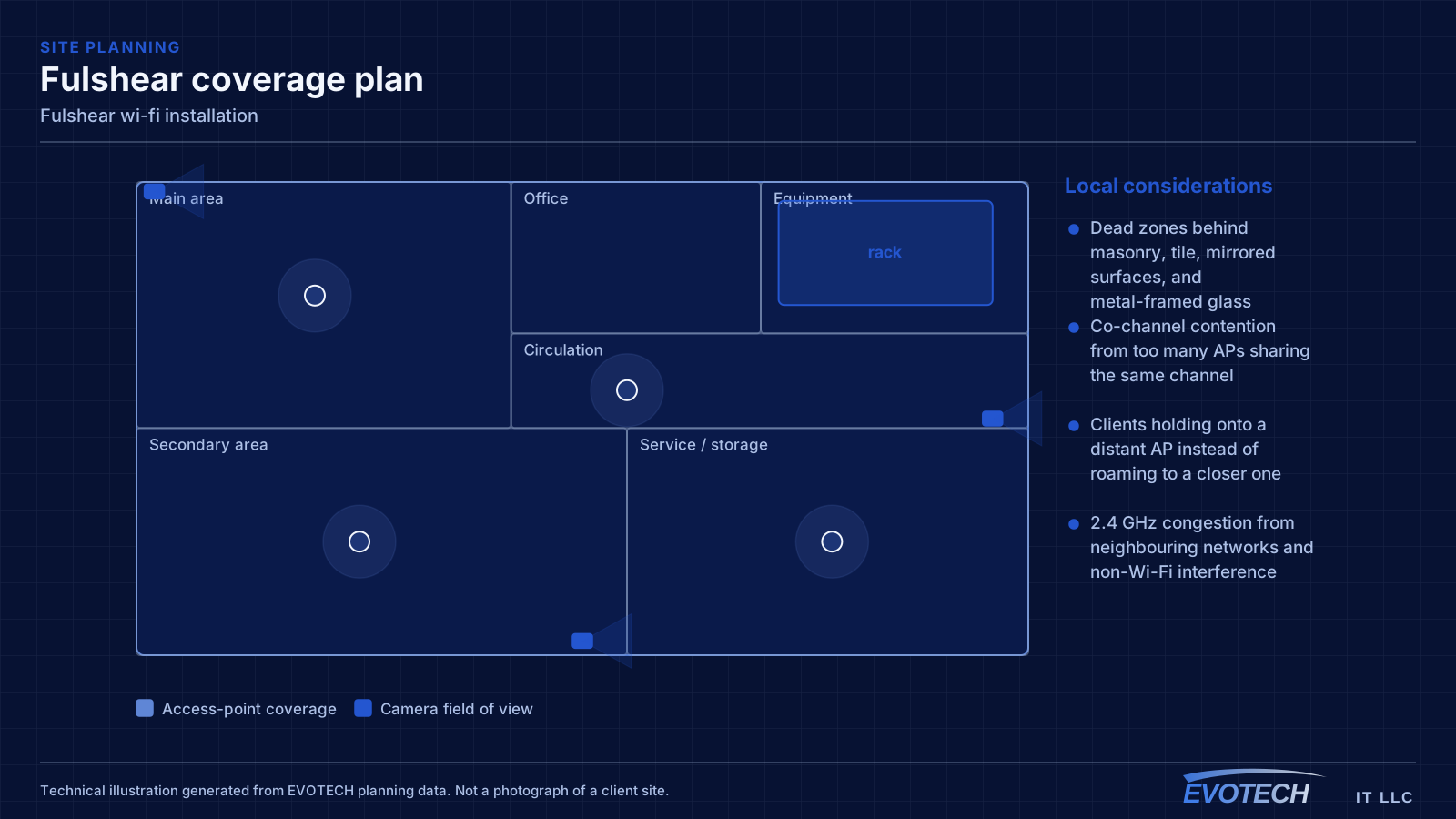
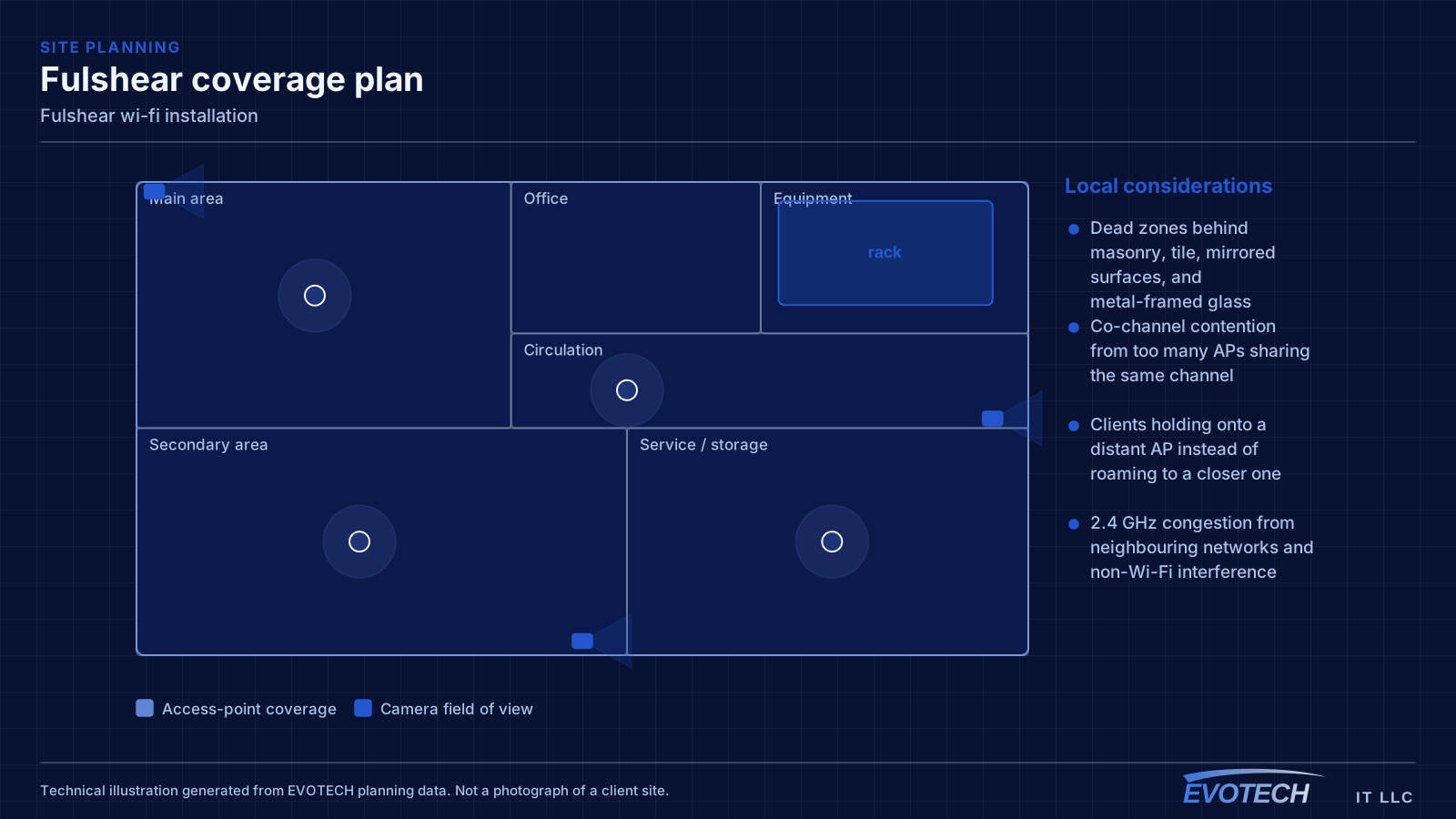
- Dead zones behind masonry, tile, mirrored surfaces, and metal-framed glass
- Co-channel contention from too many APs sharing the same channel
- Clients holding onto a distant AP instead of roaming to a closer one
- 2.4 GHz congestion from neighbouring networks and non-Wi-Fi interference
- Access points fed by repeaters instead of cable, halving effective throughput
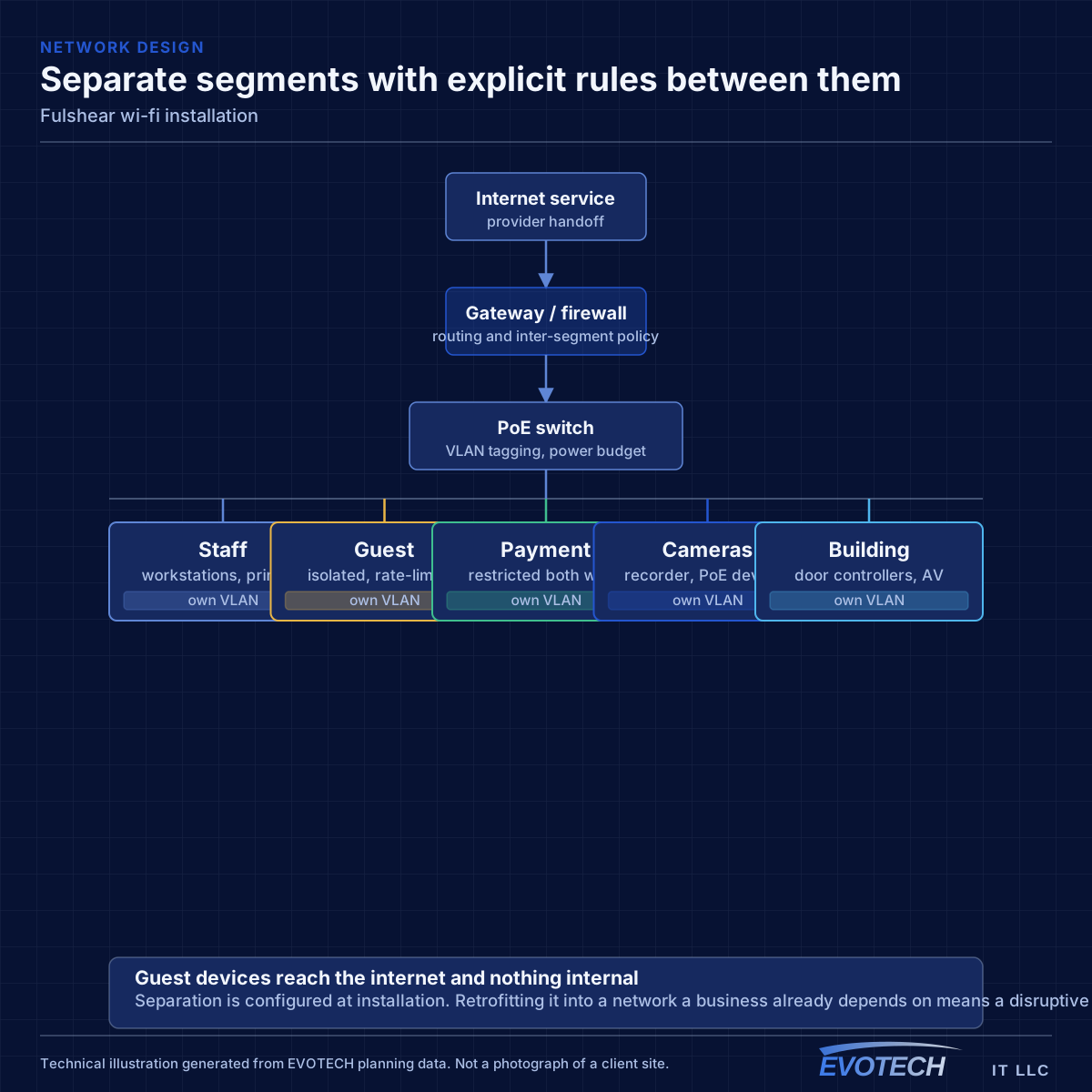
- Guest and business traffic sharing one network with no separation
Fulshear property conditions that change the plan
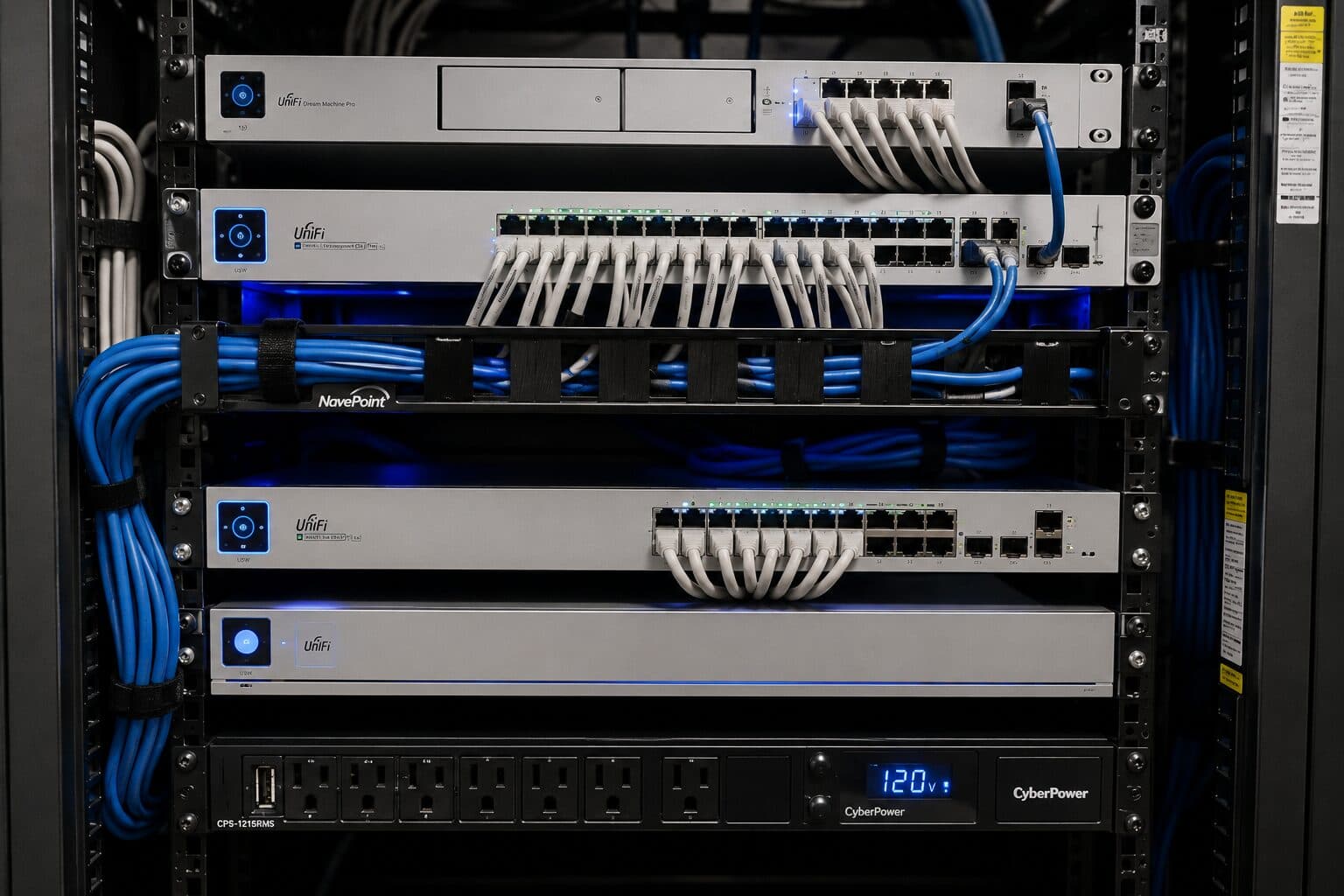
A builder media enclosure is designed to terminate cable, not to house an active network. They are frequently shallow, unventilated, and located in a garage or utility area. Putting a switch, a router, and a small recorder into one produces a hot box that shortens everything inside it.
The practical answers are either a larger ventilated enclosure or splitting the arrangement — leaving the builder panel as a termination point and siting active equipment somewhere conditioned with power and access. Either decision is much easier made during construction than after.
The list that repays itself: ceiling positions for access points on each floor, two runs at each likely equipment position, a doorbell run, camera runs to the entry and driveway approaches, runs to television positions, and an equipment location with power, ventilation, and enough depth for real equipment.
- Builder enclosures sized for termination, not for active equipment
- Ventilation frequently absent, and heat the main cause of shortened equipment life
- Garage and utility positions common and often unconditioned
- Larger ventilated enclosure or a split arrangement as the usual fix
- Ceiling access-point positions rarely included by builders
- Central ceiling positions for access points on each floor
- Two runs at each equipment and television position
- Doorbell and entry camera runs
- Driveway and approach camera positions
- Conduit to detached structures before hardscape
- Equipment location with power, ventilation, and depth
Getting wi-fi installation done in Fulshear
Wireless capacity comes from having multiple non-overlapping channels in use across a space. In North America, 2.4 GHz offers three non-overlapping 20 MHz channels, which is why it congests so quickly — in a dense building the neighbours are using them too. The 5 GHz band offers far more channels, including DFS channels that require radar detection and which many designs skip unnecessarily. The 6 GHz band, where equipment and regulations permit, adds substantially more spectrum with the caveat that only newer client devices can use it.
For homes under construction, the rough-in window governs everything and it is set by trades upstream. For completed homes, attic access is generally good and the constraint is summer heat, so work is scheduled early in the day during the warmer months.
- Rough-in window controlling new-construction scheduling
- Good attic access in completed homes, constrained by summer heat
- Dust control and daily clear-down in occupied homes
- Drywall access, patching, and paint agreed before any cutting
- Detached-structure routes planned before landscaping
Frequently asked questions
Does EVOTECH have an office in Fulshear?
No. This is a service-area page: EVOTECH serves Fulshear without claiming a physical office there. The wording stays as coverage, not a location claim.
Why does a call drop when walking between rooms?
That is a roaming symptom. Either the coverage areas do not overlap enough, so the device holds a fading signal past the point of usefulness, or they overlap heavily on the same channel, so the handoff happens into a congested cell. Both are fixed by adjusting placement, power, and the channel plan rather than by adding another access point at the same settings.
What should be prewired in a new home even if it is not needed yet?
Ceiling positions for access points on each floor, a doorbell run, camera runs to the entry and driveway approaches, and television positions. Each costs very little while the walls are open, and each is disproportionately awkward to retrofit — particularly the exterior camera positions, which end up behind finished soffit.