

Why this page exists
Fireplace TV mounting in Fulshear is scoped around the same physical realities EVOTECH weighs everywhere — but read through Fulshear's specific conditions: predominantly recent residential construction, so prewire timing rather than retrofit access is the usual constraint. This page pairs what the service actually involves with what the Fulshear market changes about it.
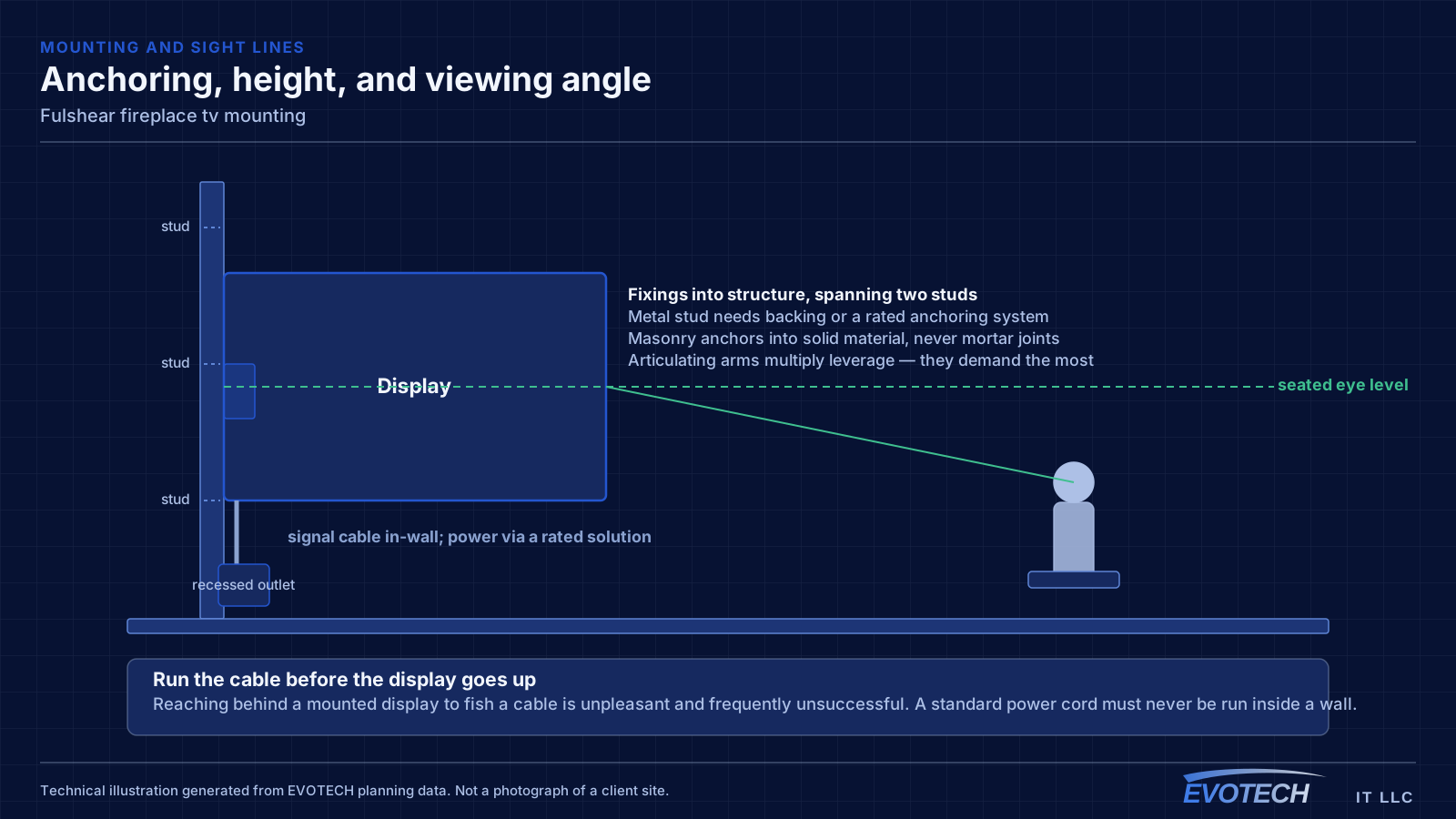
Mounting above a fireplace puts the screen higher than comfortable seated viewing and, depending on the fireplace, into rising heat. The height problem is the one people feel first: a TV centred over a mantel usually forces everyone to look up for the whole show. A tilting mount helps a little; a pull-down mount that brings the screen down and forward to near eye level when in use solves it properly, then returns it above the mantel when idle.
What fireplace tv mounting usually involves
The height compromise is the near-universal complaint: mounted above the mantel, the screen sits well above seated eye level, and a whole evening spent looking up is genuinely uncomfortable. Tilting the panel reduces glare and the angle a little but does not bring the screen down.
Heat is the less obvious but more serious issue. Some fireplaces push enough heat up the wall to sit electronics in a warm zone, which shortens their life or worse. And the surround is frequently masonry or stone, which needs different anchoring from drywall — anchors into solid material, not mortar joints.
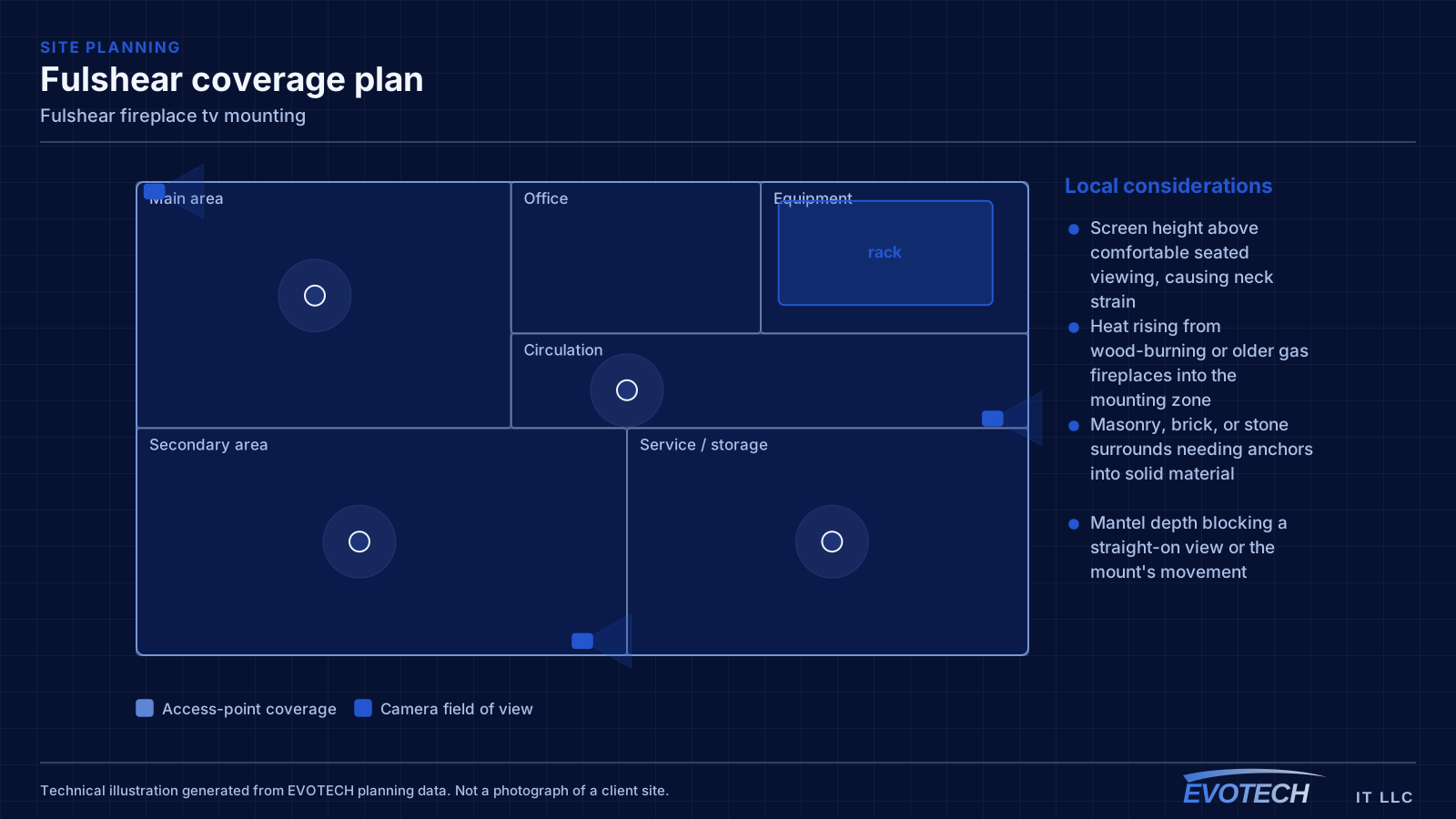
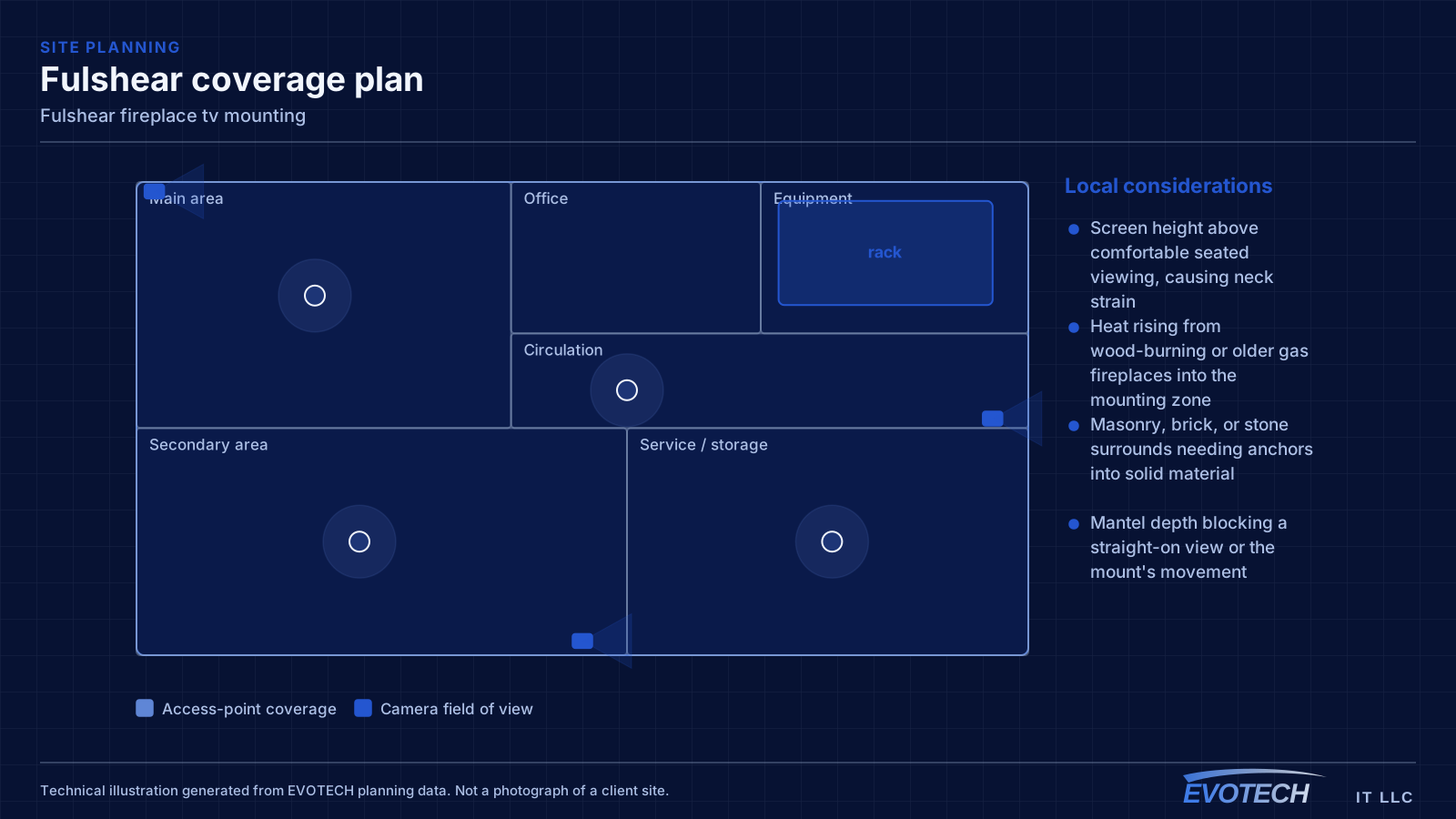
- Screen height above comfortable seated viewing, causing neck strain
- Heat rising from wood-burning or older gas fireplaces into the mounting zone
- Masonry, brick, or stone surrounds needing anchors into solid material
- Mantel depth blocking a straight-on view or the mount's movement
- In-wall cable routing complicated by the fireplace structure
- A tilt-only mount presented as a fix for the height problem
Fulshear property conditions that change the plan
A builder media enclosure is designed to terminate cable, not to house an active network. They are frequently shallow, unventilated, and located in a garage or utility area. Putting a switch, a router, and a small recorder into one produces a hot box that shortens everything inside it.
The practical answers are either a larger ventilated enclosure or splitting the arrangement — leaving the builder panel as a termination point and siting active equipment somewhere conditioned with power and access. Either decision is much easier made during construction than after.
The list that repays itself: ceiling positions for access points on each floor, two runs at each likely equipment position, a doorbell run, camera runs to the entry and driveway approaches, runs to television positions, and an equipment location with power, ventilation, and enough depth for real equipment.
- Builder enclosures sized for termination, not for active equipment
- Ventilation frequently absent, and heat the main cause of shortened equipment life
- Garage and utility positions common and often unconditioned
- Larger ventilated enclosure or a split arrangement as the usual fix
- Ceiling access-point positions rarely included by builders
- Central ceiling positions for access points on each floor
- Two runs at each equipment and television position
- Doorbell and entry camera runs
- Driveway and approach camera positions
- Conduit to detached structures before hardscape
- Equipment location with power, ventilation, and depth
Getting fireplace tv mounting done in Fulshear
Height is solved by the mount type. A fixed or tilting mount leaves the screen high; a pull-down mount lowers the panel down and out over the mantel to near seated eye level when in use, which is the only arrangement that genuinely resolves the neck angle. Mantel depth matters here — the mount has to clear it through its full range of motion.
For homes under construction, the rough-in window governs everything and it is set by trades upstream. For completed homes, attic access is generally good and the constraint is summer heat, so work is scheduled early in the day during the warmer months.
- Rough-in window controlling new-construction scheduling
- Good attic access in completed homes, constrained by summer heat
- Dust control and daily clear-down in occupied homes
- Drywall access, patching, and paint agreed before any cutting
- Detached-structure routes planned before landscaping
Frequently asked questions
Does EVOTECH have an office in Fulshear?
No. This is a service-area page: EVOTECH serves Fulshear without claiming a physical office there. The wording stays as coverage, not a location claim.
Is mounting a TV above the fireplace a bad idea?
It is a compromise, and worth naming as one. The screen usually ends up above comfortable seated eye level, and heat can be a concern on some fireplaces. A pull-down mount resolves the height by bringing the screen down to eye level in use, and a heat assessment settles the safety question. Sometimes the honest answer is a different wall, but with the right mount and a suitable fireplace it works well.
What should be prewired in a new home even if it is not needed yet?
Ceiling positions for access points on each floor, a doorbell run, camera runs to the entry and driveway approaches, and television positions. Each costs very little while the walls are open, and each is disproportionately awkward to retrofit — particularly the exterior camera positions, which end up behind finished soffit.