
Why this page exists
PoE camera installation in Baytown is scoped around the same physical realities EVOTECH weighs everywhere — but read through Baytown's specific conditions: an industrial and refining base with rugged operational environments. This page pairs what the service actually involves with what the Baytown market changes about it.
A PoE camera takes its power from the same Ethernet cable that carries its video, which removes the need for a local outlet at every mounting position. That is the entire practical appeal: one run per camera, no electrician at each soffit, and centralised power that can sit behind a UPS so the cameras stay up during a short outage.
What poe camera installation usually involves
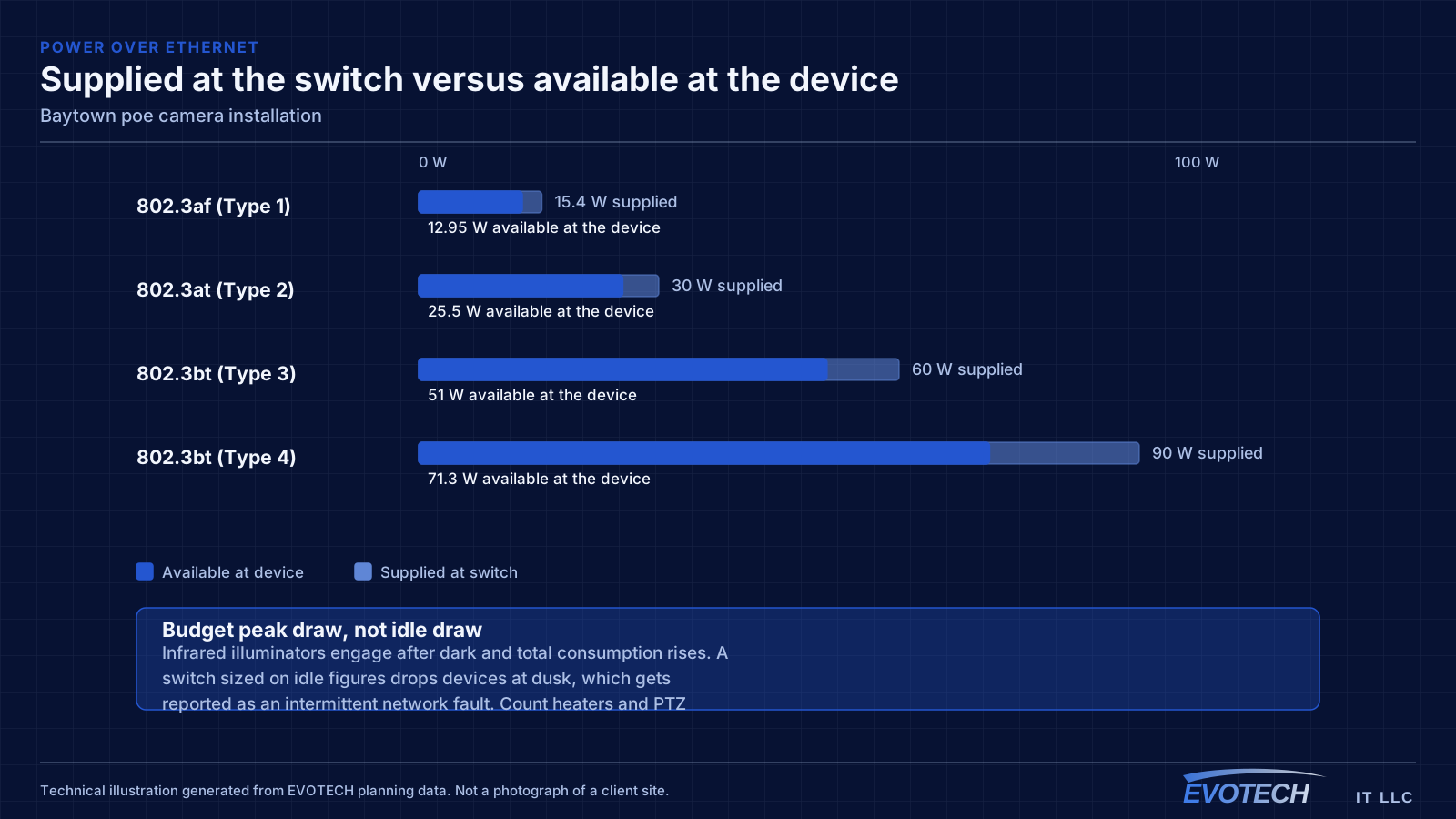
The characteristic PoE problem is a camera that reboots under specific conditions — usually at night when its infrared illuminator switches on and its draw rises. If the switch is near its budget, the additional load pushes it over and devices drop. Because it happens after dark, it often gets reported as an intermittent network fault.
The second problem is distance. PoE inherits the same 100-metre channel limit as any Ethernet run, and voltage drop over long runs on thin conductors reduces the power actually reaching the camera. A run that works at 60 metres may be marginal at 95 with a high-draw device on the end.
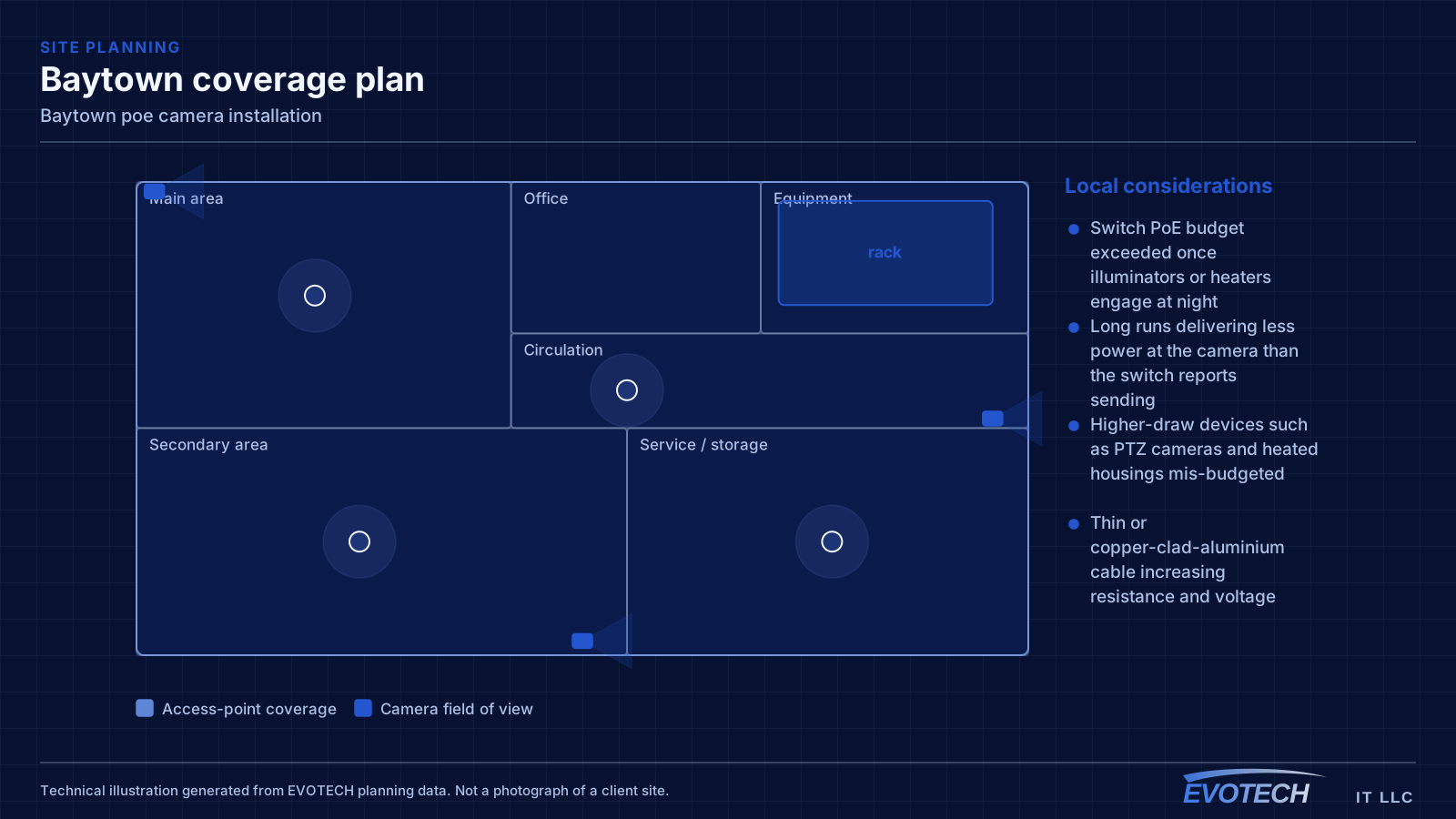
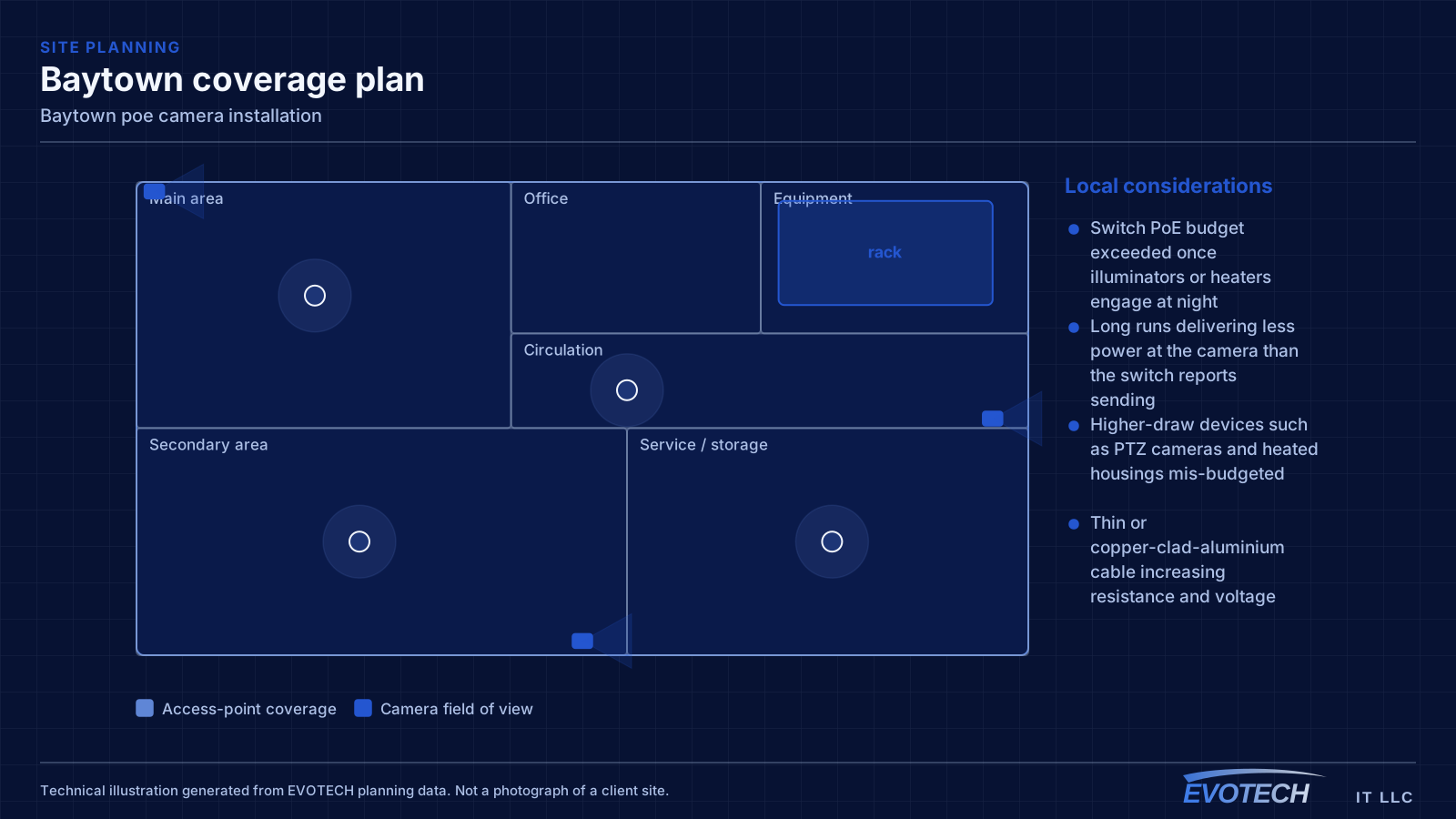
- Switch PoE budget exceeded once illuminators or heaters engage at night
- Long runs delivering less power at the camera than the switch reports sending
- Higher-draw devices such as PTZ cameras and heated housings mis-budgeted
- Thin or copper-clad-aluminium cable increasing resistance and voltage drop
- Dense PoE bundles heating and raising insertion loss
- No UPS on the switch, so cameras drop with any brief power interruption
Baytown property conditions that change the plan
Older functional commercial and industrial buildings — metal structure, hard ceilings, operational conditions — sit alongside newer retail with accessible grid. Equipment in operational or unconditioned areas needs protection from dust, heat, and vibration.
The coastal-industrial setting makes exterior durability a priority, and inherited network rooms frequently need remediation before expansion.
Projects often start by documenting and cleaning up inherited network rooms, then site equipment away from operational heat and dust. Exterior work is sealed and surge-protected for the coastal-industrial environment.
- Older functional industrial and commercial buildings
- Newer retail with accessible grid
- Operational environments with dust, heat, and vibration
- Inherited network rooms needing remediation
- Coastal exposure raising exterior durability needs
- Document and remediate inherited network rooms first
- Equipment sited away from operational heat and dust
- Rated housings, sealed penetrations, and surge protection
- Genuine retrofit for older residential without existing cable
- Aisle coverage validated with stock in industrial spaces

Getting poe camera installation done in Baytown
The standards define escalating power classes. Type 1 (802.3af) supplies up to about 15.4 W at the switch with roughly 12.95 W available at the device. Type 2 (802.3at) raises that to about 30 W supplied and 25.5 W available. Type 3 and Type 4 under 802.3bt reach roughly 60 W and 90 W supplied, with about 51 W and 71 W available respectively. The gap between supplied and available is the loss in the cable, and it grows with length and with thinner conductors.
Work in operational areas is scheduled around activity, and exterior equipment needs housings and surge protection rated for a humid, coastal-industrial setting.
- Work scheduled around operational activity
- Rated exterior housings and surge protection
- Containment and dust control in occupied areas
- Residential attic work scheduled early in summer
- Lift access coordinated where high-level work is needed
Frequently asked questions
Does EVOTECH have an office in Baytown?
No. This is a service-area page: EVOTECH serves Baytown without claiming a physical office there. The wording stays as coverage, not a location claim.
Why do cameras reboot at night but work fine during the day?
Almost always PoE budget. Infrared illuminators engage after dark and the total draw rises, pushing the switch past its budget. It presents as intermittent camera dropouts and gets misdiagnosed as a network fault. The fix is a switch with sufficient budget and headroom, calculated from peak draw rather than idle.
Does EVOTECH have an office in Baytown?
No. This site does not claim a physical office in Baytown or anywhere else. Baytown is described as a service-area market — coverage, not a location claim.