Commercial IT solutions for warehouses, in Cypress
Commercial IT solutions for warehouses in Cypress is a three-part question: what commercial it solutions involves, what warehouses need from it, and what Cypress changes about the install. Large newer residential floor plans that exceed single-position wireless coverage.
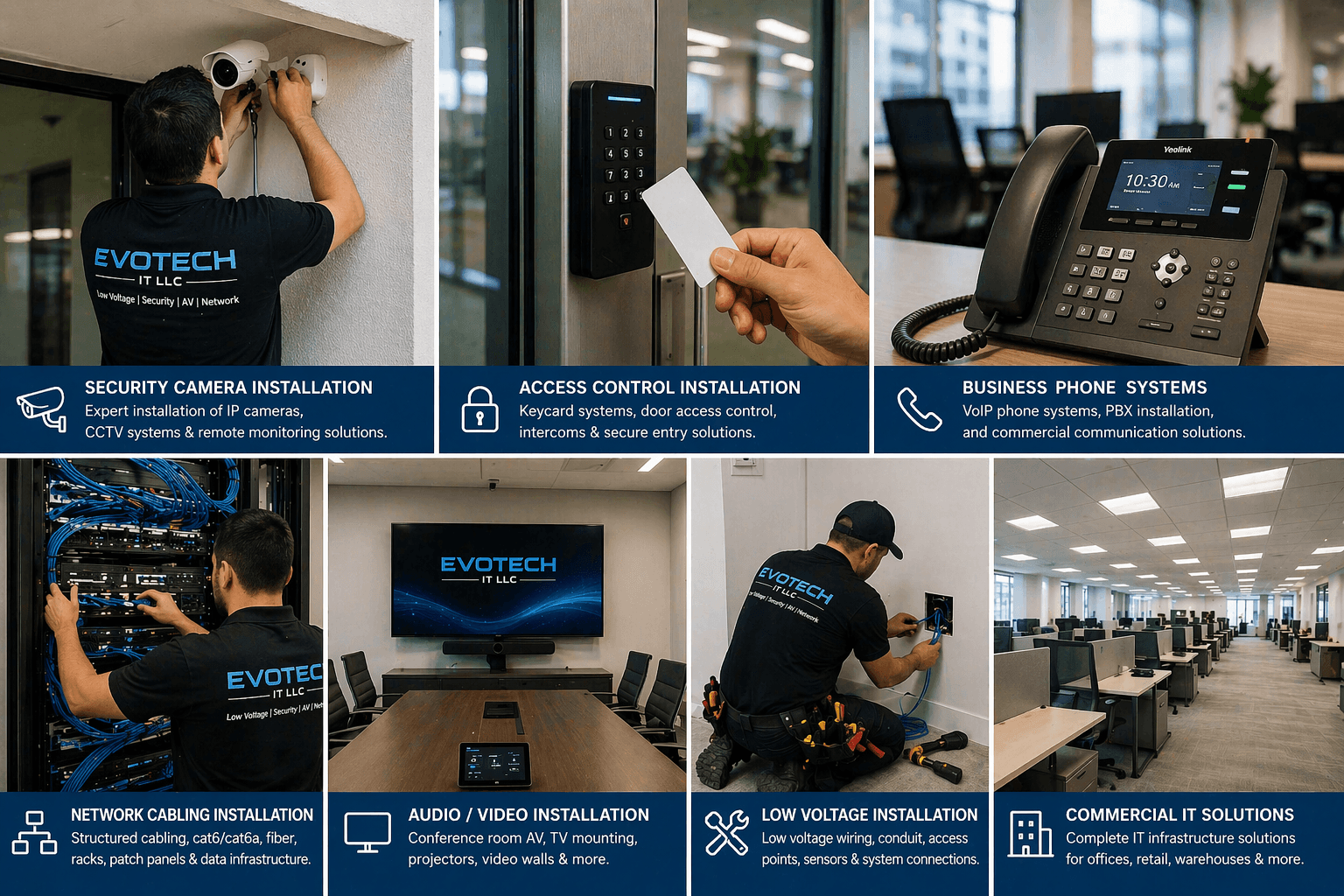
The value is in the coordination. Systems bought piecemeal end up on one flat network with no segmentation, with cabling that suits none of them well, and with nobody able to say why something does not work because each vendor points at the others. A coordinated design puts them on shared, properly segmented infrastructure and gives the business one number to call.
The building changes its own radio environment
A warehouse surveyed empty and a warehouse full of stock are different radio environments. Metal racking reflects, palletised inventory absorbs, and coverage that measured well across an open floor can disappear once the aisles fill. Any design based on an empty-building survey should be treated as provisional.
The second defining feature is distance. Warehouse footprints regularly exceed what a single equipment room can serve within the 100-metre copper limit, which means either intermediate equipment positions connected by fiber or a deliberately distributed design.
- Racking and stock materially change coverage after the survey
- Distances frequently exceed the 100 m copper channel limit
- High ceilings complicate mounting, access, and coverage geometry
- Dock doors, yard, and office areas each have distinct requirements
Where commercial it solutions goes wrong — and how it's avoided
Commercial technology fails on coordination far more than on components.
- Buying each system separately and inheriting a flat, fragile network
- Cabling for one system at a time rather than a shared backbone
- Sizing infrastructure to today and rebuilding at the next hire
- No accountable party, leaving the business to integrate its own vendors
- Relocating without a coordinated cutover and losing days
- Building each site differently, so support never gets consistent
Cypress: what the location changes
The starting point for any Cypress job is one local fact. Large newer residential floor plans that exceed single-position wireless coverage. That single condition shapes where cable can run, where equipment can sit, and how coverage is laid out — more than any spec sheet does. Two more conditions weigh on it. Community and worship facilities with large main spaces and high ceilings requiring distributed coverage. Retail centres with substantial footprints and mixed ceiling construction between units. Together they make the route specific to this pocket, which is why a short walkthrough or a few clear photos settle the scope faster than a floor plan can.
- Large newer residential floor plans that exceed single-position wireless coverage
- Community and worship facilities with large main spaces and high ceilings requiring distributed coverage
- Retail centres with substantial footprints and mixed ceiling construction between units
- Renovation and remodel work common, with pathway discovery a genuine part of the project rather than a formality
- Slab foundations with attic access as the standard residential retrofit route
Getting it done in Cypress
A coordinated system is verified as a whole, not one component at a time.
Where a building exceeds copper reach from a single position, the usual answer is one or more intermediate distribution points fed by fiber, each serving its area with copper within the limit. This is standard structured-cabling practice and it is far more reliable than attempting to stretch copper or bridge wirelessly across the building.
Getting Cypress work done means planning around the site as it actually is. Renovation and remodel work common, with pathway discovery a genuine part of the project rather than a formality. Slab foundations with attic access as the standard residential retrofit route. Both matter as much as the design to how and when the work happens. The scope is drawn from the real property, the coverage is stated as a service area rather than an office, and unverifiable specifics about Cypress are kept off the page on purpose.
Frequently asked questions
Is commercial it solutions for warehouses different in Cypress?
The sector needs stay the same, but the install changes with the place. In Cypress, the conditions above — not the warehouses label — decide routes, mounting, and equipment placement, which is why this page pairs all three.
How is this different from just hiring separate installers?
Coordination and accountability. Separate installers each optimise their own system, which is how a business ends up with everything on one flat network, cabling that suits nobody, and no one able to say why something does not work. A coordinated design puts every system on shared, segmented infrastructure and gives you one party accountable for the whole thing working — which is usually cheaper over the life of the fit-out, not just simpler.