Commercial IT solutions for warehouses, in Humble
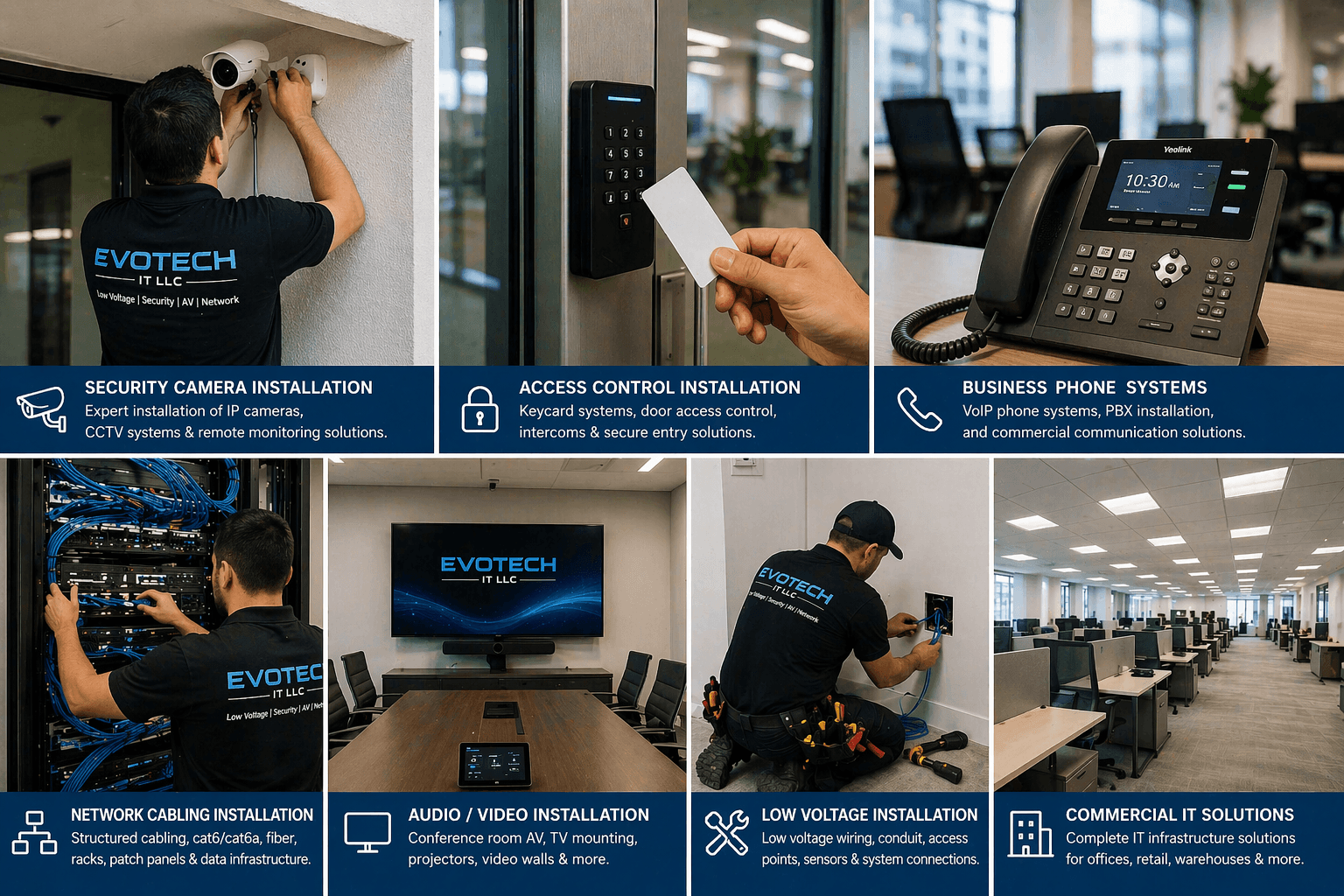
Commercial IT solutions for warehouses in Humble is a three-part question: what commercial it solutions involves, what warehouses need from it, and what Humble changes about the install. A retail and commercial hub with a broad mix of building ages.
The value is in the coordination. Systems bought piecemeal end up on one flat network with no segmentation, with cabling that suits none of them well, and with nobody able to say why something does not work because each vendor points at the others. A coordinated design puts them on shared, properly segmented infrastructure and gives the business one number to call.
Docks, yard, and inventory movement
Warehouse camera coverage concentrates where goods and vehicles move: dock doors, receiving and shipping areas, yard gates, and the boundary between operational and office space. These views answer the questions warehouse footage is actually asked — what arrived, what left, and when.
Dock doors present a specific lighting challenge. A camera facing an open dock door in daylight is looking at a bright rectangle with a dark interior, which is the worst case for dynamic range. Positioning so the camera views along the dock rather than straight into the opening, or accepting a camera specifically chosen for high contrast, addresses it.
Yard and perimeter coverage runs into distance and power. Positions beyond copper reach need fiber and local power, or a designed wireless link — and either way, the power question has to be answered before the camera is specified.
- Dock doors, receiving, and shipping framed for vehicle and goods movement
- Camera positions that avoid shooting straight into a bright dock opening
- Yard gates and perimeter, with the power and distance question resolved first
- Boundary between operational and office areas
- Retention long enough to cover inventory reconciliation cycles
What drives the cost of commercial it solutions here
Breadth, site count, and continuity requirements drive the cost more than any single system.
- Number of systems and the integration between them
- Site size and count
- Continuity provision: UPS, failover, and equipment-room build
- Growth headroom designed in
- Migration of existing systems versus new build
- Whether ongoing management is included
Humble: what the location changes
What separates a Humble scope from the rest of the city is concrete and local. A retail and commercial hub with a broad mix of building ages. Warehousing and distribution requiring aisle coverage and longer runs. Older commercial stock needing pathway remediation and rack cleanup. That short list is what actually drives the design in this pocket, and it is why photographs or a brief site visit beat a floor plan — the plan follows the building's real constraints, not the neighborhood name on the map.
- A retail and commercial hub with a broad mix of building ages
- Warehousing and distribution requiring aisle coverage and longer runs
- Older commercial stock needing pathway remediation and rack cleanup
- Retail point-of-sale environments requiring network segmentation
- Slab-foundation residential across established and newer neighbourhoods
Getting it done in Humble
A coordinated system is verified as a whole, not one component at a time.
A warehouse surveyed empty and a warehouse full of stock are different radio environments. Metal racking reflects, palletised inventory absorbs, and coverage that measured well across an open floor can disappear once the aisles fill. Any design based on an empty-building survey should be treated as provisional.
Getting Humble work done means planning around the site as it actually is. Retail point-of-sale environments requiring network segmentation. Slab-foundation residential across established and newer neighbourhoods. Both matter as much as the design to how and when the work happens. The scope is drawn from the real property, the coverage is stated as a service area rather than an office, and unverifiable specifics about Humble are kept off the page on purpose.
Frequently asked questions
Is commercial it solutions for warehouses different in Humble?
The sector needs stay the same, but the install changes with the place. In Humble, the conditions above — not the warehouses label — decide routes, mounting, and equipment placement, which is why this page pairs all three.
How is this different from just hiring separate installers?
Coordination and accountability. Separate installers each optimise their own system, which is how a business ends up with everything on one flat network, cabling that suits nobody, and no one able to say why something does not work. A coordinated design puts every system on shared, segmented infrastructure and gives you one party accountable for the whole thing working — which is usually cheaper over the life of the fit-out, not just simpler.