Low-voltage installation for schools and educational facilities, in Humble
Low-voltage installation for schools and educational facilities in Humble is a three-part question: what low-voltage installation involves, what schools and educational facilities need from it, and what Humble changes about the install. A retail and commercial hub with a broad mix of building ages.
The scheduling reality is that low voltage sits between the electrical rough-in and drywall, in a window that is often short and frequently compressed when earlier trades run late. Being ready to work in that window — with device locations agreed and the pathway plan settled — is most of what makes new-construction low voltage go smoothly.
Per-classroom capacity and controlled entry
Two priorities dominate: enough wireless capacity in each classroom to serve a full class simultaneously, and controlled entry at the points where people come into the campus.
Both benefit from being designed at a campus level rather than building by building, because the addressing, segmentation, and management overhead of a piecemeal approach grows quickly.
- Access-point capacity planned per classroom, not per building area
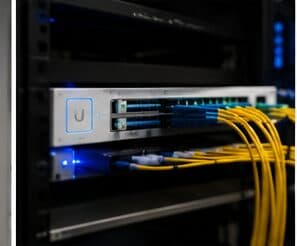
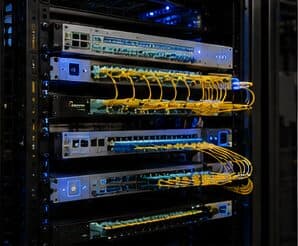
- Fiber backbone between buildings and to distribution points
- Controlled entry at main and secondary access points
- Separate segments for student, staff, administrative, and building systems
- Coverage extended to gymnasiums, libraries, and outdoor gathering areas
What changes low-voltage installation from job to job
Low-voltage scope depends heavily on how many systems are in play and how coordinated the schedule is.
- Which systems are included and whether they share pathways
- Building size, floor count, and pathway complexity
- New construction versus occupied retrofit
- Ceiling type and how much of the pathway is accessible
- Number and type of rated penetrations
- Equipment room provision and whether it exists yet
- Schedule reliability and whether the rough-in window is likely to compress
- Gap between rough-in and finish, which affects protection and re-identification
Humble: what the location changes
The starting point for any Humble job is one local fact. A retail and commercial hub with a broad mix of building ages. That single condition shapes where cable can run, where equipment can sit, and how coverage is laid out — more than any spec sheet does. Two more conditions weigh on it. Warehousing and distribution requiring aisle coverage and longer runs. Older commercial stock needing pathway remediation and rack cleanup. Together they make the route specific to this pocket, which is why a short walkthrough or a few clear photos settle the scope faster than a floor plan can.
- A retail and commercial hub with a broad mix of building ages
- Warehousing and distribution requiring aisle coverage and longer runs
- Older commercial stock needing pathway remediation and rack cleanup
- Retail point-of-sale environments requiring network segmentation
- Slab-foundation residential across established and newer neighbourhoods
Getting it done in Humble
Each system is commissioned on its own terms, but the low-voltage handover is the point where they are verified together.
Camera coverage on a school campus concentrates on entrances, circulation between buildings, parking and drop-off areas, and the perimeter. Corridors are common; classrooms are not, and that boundary is agreed at design.
Getting Humble work done means planning around the site as it actually is. Retail point-of-sale environments requiring network segmentation. Slab-foundation residential across established and newer neighbourhoods. Both matter as much as the design to how and when the work happens. The scope is drawn from the real property, the coverage is stated as a service area rather than an office, and unverifiable specifics about Humble are kept off the page on purpose.
Frequently asked questions
Is low-voltage installation for schools and educational facilities different in Humble?
The sector needs stay the same, but the install changes with the place. In Humble, the conditions above — not the schools and educational facilities label — decide routes, mounting, and equipment placement, which is why this page pairs all three.
When should low-voltage work happen in a construction schedule?
Rough-in sits after electrical and framing and before insulation and drywall. Finish work — terminations, device mounting, and commissioning — happens after paint and ceilings. The risk is that upstream delays compress the rough-in window, so having device locations and pathway plans settled in advance is what keeps that window usable.