Commercial IT solutions for retail stores, in Humble
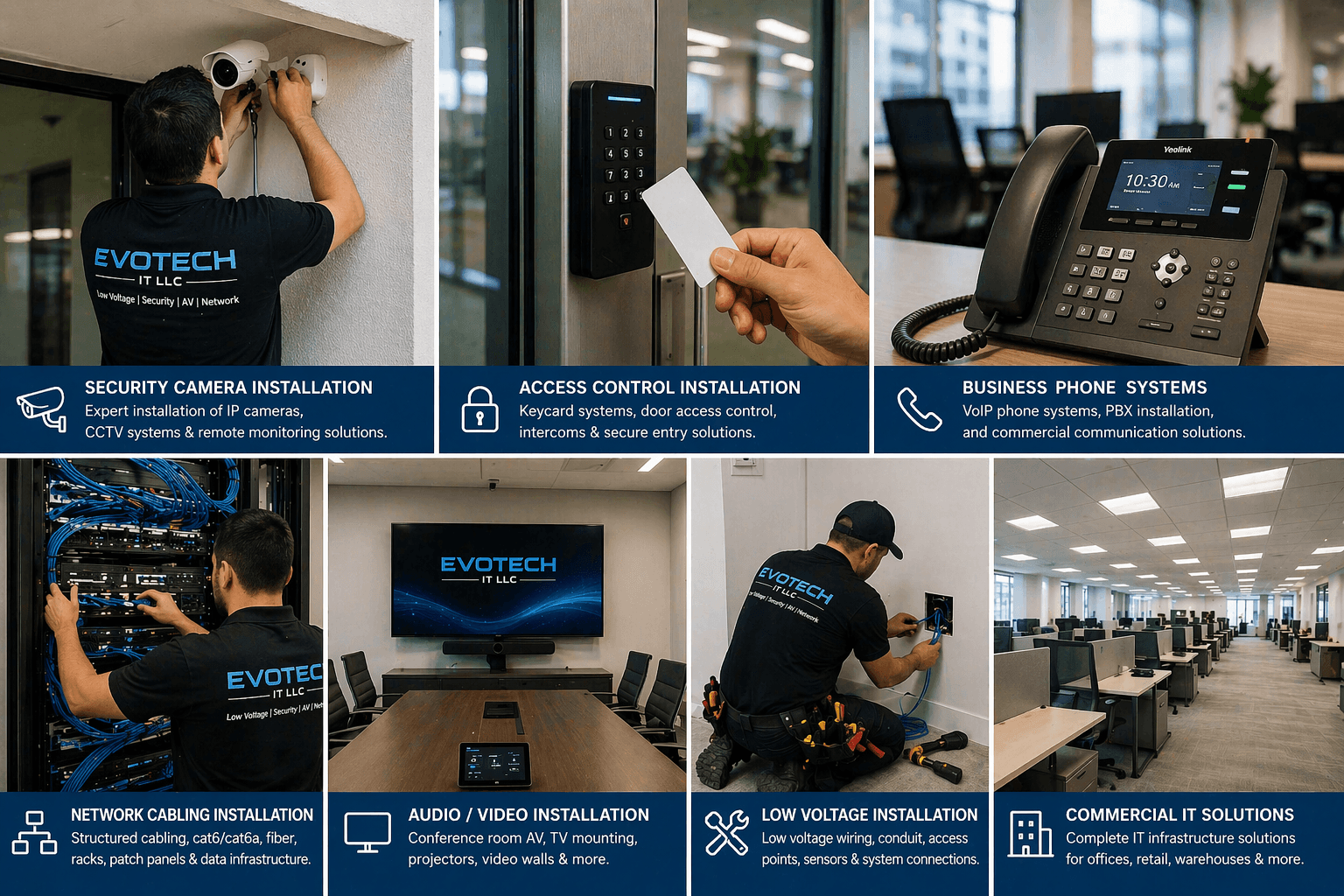
Commercial IT solutions for retail stores in Humble is a three-part question: what commercial it solutions involves, what retail stores need from it, and what Humble changes about the install. A retail and commercial hub with a broad mix of building ages.
The value is in the coordination. Systems bought piecemeal end up on one flat network with no segmentation, with cabling that suits none of them well, and with nobody able to say why something does not work because each vendor points at the others. A coordinated design puts them on shared, properly segmented infrastructure and gives the business one number to call.
The floor plan is not permanent
Retail interiors get reset. Fixtures move, register positions shift for seasonal layouts, and a stockroom gets reorganised around whatever the current inventory demands. A network installed as if the layout were fixed becomes an obstacle within a couple of resets.
That argues for a specific design posture: more outlets than currently needed at likely fixture positions, ceiling access points placed to cover zones rather than aimed at current register locations, and a rack with spare capacity because the device count only ever goes up.
- Fixture and register positions change with seasonal resets
- Stockroom and receiving areas need connectivity that survives reorganisation
- Customer-facing technology increases the device count over time
- Coverage has to work with shelving in place, not in an empty store
Where commercial it solutions goes wrong — and how it's avoided
Commercial technology fails on coordination far more than on components.
- Buying each system separately and inheriting a flat, fragile network
- Cabling for one system at a time rather than a shared backbone
- Sizing infrastructure to today and rebuilding at the next hire
- No accountable party, leaving the business to integrate its own vendors
- Relocating without a coordinated cutover and losing days
- Building each site differently, so support never gets consistent
Humble: what the location changes
The starting point for any Humble job is one local fact. A retail and commercial hub with a broad mix of building ages. That single condition shapes where cable can run, where equipment can sit, and how coverage is laid out — more than any spec sheet does. Two more conditions weigh on it. Warehousing and distribution requiring aisle coverage and longer runs. Older commercial stock needing pathway remediation and rack cleanup. Together they make the route specific to this pocket, which is why a short walkthrough or a few clear photos settle the scope faster than a floor plan can.
- A retail and commercial hub with a broad mix of building ages
- Warehousing and distribution requiring aisle coverage and longer runs
- Older commercial stock needing pathway remediation and rack cleanup
- Retail point-of-sale environments requiring network segmentation
- Slab-foundation residential across established and newer neighbourhoods
Getting it done in Humble
A coordinated system is verified as a whole, not one component at a time.
Payment systems sit on their own segment for the same reasons they do in food service. What differs in retail is the number of mobile devices: handheld scanners, mobile checkout tablets, and inventory devices that move continuously across the floor and depend on clean roaming between access points.
Execution in Humble is planned around real conditions, not a template. Retail point-of-sale environments requiring network segmentation. Slab-foundation residential across established and newer neighbourhoods. These decide the sequence, the access, and the method as much as the design does. EVOTECH describes Humble as coverage rather than a place it occupies, and omits any area detail it cannot confirm — building and site conditions only, no invented landmarks or promised arrival times.
Popular services nearby
Frequently searched near this area — the pages people look for most.
Frequently asked questions
Is commercial it solutions for retail stores different in Humble?
The sector needs stay the same, but the install changes with the place. In Humble, the conditions above — not the retail stores label — decide routes, mounting, and equipment placement, which is why this page pairs all three.
How is this different from just hiring separate installers?
Coordination and accountability. Separate installers each optimise their own system, which is how a business ends up with everything on one flat network, cabling that suits nobody, and no one able to say why something does not work. A coordinated design puts every system on shared, segmented infrastructure and gives you one party accountable for the whole thing working — which is usually cheaper over the life of the fit-out, not just simpler.