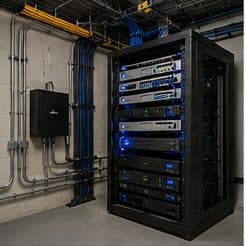
Access-control installation for new construction, in Pearland
Access-control installation for new construction in Pearland is a three-part question: what access-control installation involves, what new construction need from it, and what Pearland changes about the install. Newer residential subdivisions with wide floor plans and builder-installed structured cable of variable quality.
The part that demands the most care is not the software. It is the door. A controlled door has to release for anyone leaving, under all conditions including power loss and fire alarm, and it has to do so in the manner the building's life-safety requirements dictate. Getting that wrong is a serious matter, and it is why door hardware selection is a design decision rather than a purchasing one.
Working inside somebody else's schedule
Low voltage is scheduled against a construction programme it does not control. Delays upstream compress the window; a compressed window means either additional mobilisations or work done under pressure. Being ready in advance — decisions made, materials on site, pathway plan settled — is the main defence.
The gap between rough-in and finish is its own risk. Cable sitting in walls for months needs protecting and identifying clearly, or the finish crew spends the first day working out which coil goes where. Documenting as-built positions before the walls close is what makes the return visit efficient.
- Readiness before the window opens, since it will not extend
- Additional mobilisations where the schedule fragments
- Cable protected and clearly identified during the gap
- As-built documentation completed before walls close
- Coordination with electrical, mechanical, and fire-protection trades on pathway
What drives the cost of access-control installation here
Door hardware and its condition drive access-control cost more than the electronics.
- Door count and hardware condition
- Lock type and whether frames need modification
- Closer repair or replacement
- Controller capacity and panel location
- Cable runs from controller to each opening
- Credential technology and quantity issued
- Fire-alarm interface coordination
- Camera or visitor-management integration
Pearland: what the location changes
What separates a Pearland scope from the rest of the city is concrete and local. Newer residential subdivisions with wide floor plans and builder-installed structured cable of variable quality. Expanding medical office space with controlled-area access requirements and clinical scheduling constraints. Food-service commercial space with kitchen environments and narrow after-hours working windows. That short list is what actually drives the design in this pocket, and it is why photographs or a brief site visit beat a floor plan — the plan follows the building's real constraints, not the neighborhood name on the map.
- Newer residential subdivisions with wide floor plans and builder-installed structured cable of variable quality
- Expanding medical office space with controlled-area access requirements and clinical scheduling constraints
- Food-service commercial space with kitchen environments and narrow after-hours working windows
- Slab-on-grade residential foundations making attic routing the standard retrofit path
- Newer commercial construction generally offering suspended-grid ceilings and usable pathway
Getting it done in Pearland
Access-control commissioning is about failure modes, not just successful entry.
Three things matter more than everything else combined: agreeing device locations before rough-in, claiming pathway before the other trades fill the ceiling, and running more capacity than the current plan requires.
Getting Pearland work done means planning around the site as it actually is. Slab-on-grade residential foundations making attic routing the standard retrofit path. Newer commercial construction generally offering suspended-grid ceilings and usable pathway. Both matter as much as the design to how and when the work happens. The scope is drawn from the real property, the coverage is stated as a service area rather than an office, and unverifiable specifics about Pearland are kept off the page on purpose.
Frequently asked questions
Is access-control installation for new construction different in Pearland?
The sector needs stay the same, but the install changes with the place. In Pearland, the conditions above — not the new construction label — decide routes, mounting, and equipment placement, which is why this page pairs all three.
What is the difference between fail-safe and fail-secure?
It describes what happens when power is lost. Fail-safe hardware — typically a magnetic lock — releases and the door becomes passable. Fail-secure hardware — typically a standard electric strike — stays locked, though the door can still be opened from the inside by its mechanical hardware. Which is correct for a given opening depends on its role and on applicable life-safety requirements, so it is a design decision rather than a preference.