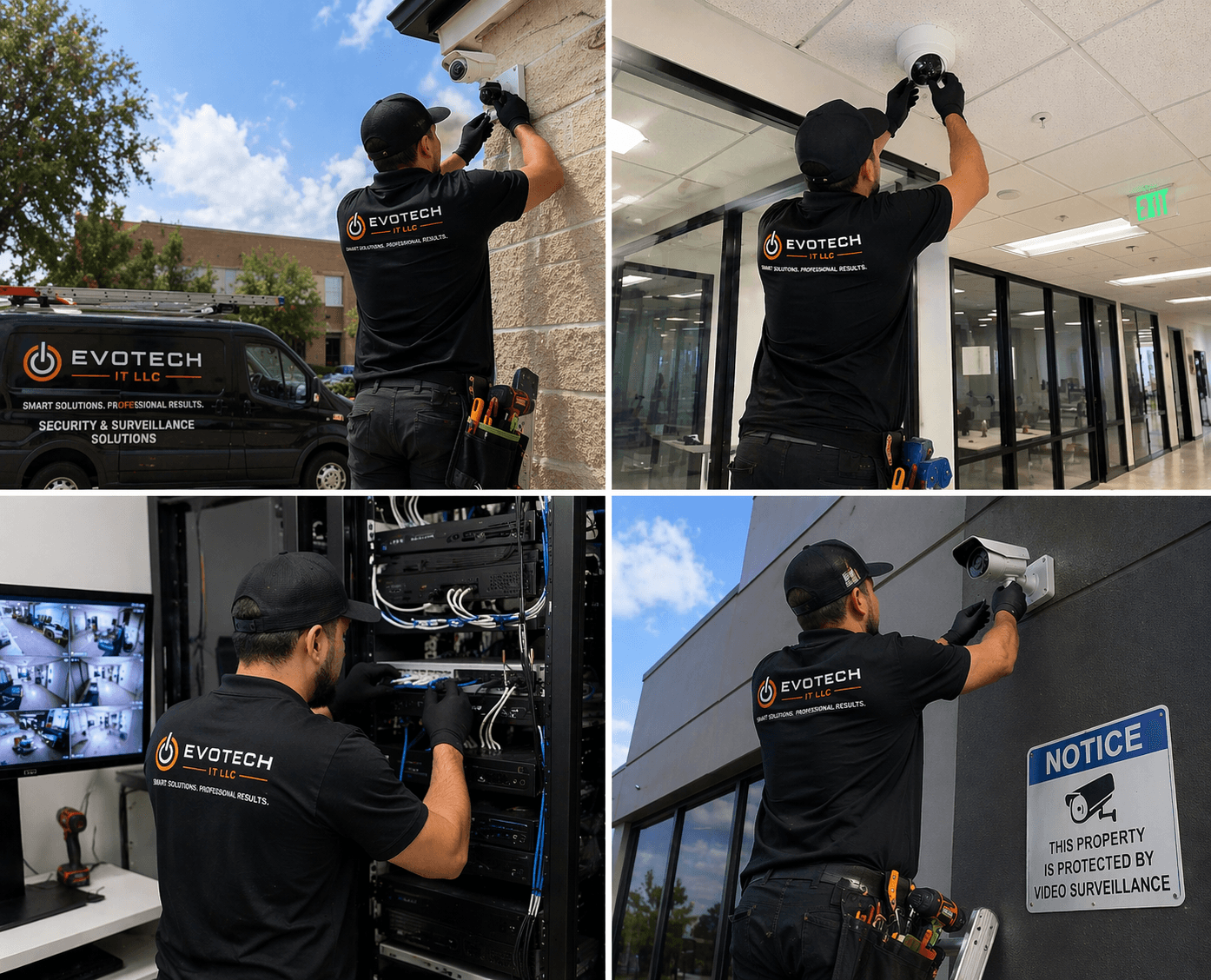
Gate & license-plate cameras for new construction, in Brookshire
Gate & license-plate cameras for new construction in Brookshire is a three-part question: what gate & license-plate cameras involves, what new construction need from it, and what Brookshire changes about the install. Large warehousing and distribution buildings along the I-10 corridor.
The other half of the job is getting to the gate. Entry points are often far from the building, so power and a reliable connection to a gate or driveway position have to be planned — frequently a fiber or intermediate-powered run rather than a stretched copper one — along with mounting that gives the right angle and distance for the plate.
Decide locations, claim pathways, leave capacity
Three things matter more than everything else combined: agreeing device locations before rough-in, claiming pathway before the other trades fill the ceiling, and running more capacity than the current plan requires.
The third is the one most often skipped and most often regretted. An extra run to a likely future access point, camera, or display position costs very little while the walls are open.
- Device locations agreed and marked before rough-in begins
- Pathway claimed early, since low voltage is usually last into the ceiling
- Spare runs to likely future positions while walls are open
- Equipment room sized for every system, with power and ventilation
- Rated penetrations sleeved and firestopped properly
What drives the cost of gate & license-plate cameras here
Distance to the gate and the number of cameras drive the cost.
- Distance and the resulting fiber or powered run
- Whether both overview and plate cameras are used
- Mounting positions and access
- Recording and storage for the objective
- Local power provision at the entry
- Number of entry and perimeter points
Brookshire: what the location changes
What separates a Brookshire scope from the rest of the city is concrete and local. Large warehousing and distribution buildings along the I-10 corridor. Metal construction that reflects wireless signal and complicates coverage. Building footprints frequently exceeding the 100 m copper channel limit. That short list is what actually drives the design in this pocket, and it is why photographs or a brief site visit beat a floor plan — the plan follows the building's real constraints, not the neighborhood name on the map.
- Large warehousing and distribution buildings along the I-10 corridor
- Metal construction that reflects wireless signal and complicates coverage
- Building footprints frequently exceeding the 100 m copper channel limit
- Unconditioned operational areas affecting equipment placement
- Long cable runs and yard/dock areas needing distinct approaches
Getting it done in Brookshire
Entry cameras are verified against their objectives, day and night.
Camera positions are among the cheapest things to prewire and among the most annoying to retrofit, because they are usually exterior, high, and behind finished soffit. Running cable to likely positions during rough-in preserves the option at almost no cost.
Execution in Brookshire is planned around real conditions, not a template. Unconditioned operational areas affecting equipment placement. Long cable runs and yard/dock areas needing distinct approaches. These decide the sequence, the access, and the method as much as the design does. EVOTECH describes Brookshire as coverage rather than a place it occupies, and omits any area detail it cannot confirm — building and site conditions only, no invented landmarks or promised arrival times.
Frequently asked questions
Is gate & license-plate cameras for new construction different in Brookshire?
The sector needs stay the same, but the install changes with the place. In Brookshire, the conditions above — not the new construction label — decide routes, mounting, and equipment placement, which is why this page pairs all three.
Can one camera watch the gate and read plates?
Rarely well. Reading a plate needs a fast shutter, a narrow view, a shallow angle, and controlled infrared — settings that make the plate legible also make the wider scene dark. A general overview camera cannot resolve a plate on a moving vehicle. The reliable approach is two cameras: one for the scene, one dedicated to plates.