Wi-Fi installation for multifamily properties, in Brookshire
Wi-Fi installation for multifamily properties in Brookshire is a three-part question: what wi-fi installation involves, what multifamily properties need from it, and what Brookshire changes about the install. Large warehousing and distribution buildings along the I-10 corridor.
Good Wi-Fi comes from deciding where signal needs to be strong, then placing access points so that each area gets a solid signal from one AP without excessive overlap from others. The target most designs work to is around -67 dBm at the edge of each coverage area for voice and video, with signal comfortably above the local noise floor. Placement follows from that number and from the walls between the AP and the users.
Two audiences, one building
A multifamily property runs two distinct technology environments. Residents have their own connectivity inside their units, generally provided by whatever service they select. The property operates everything else: common-area wireless, controlled entry, intercom, package rooms, amenity spaces, cameras, and the office network.
The property-operated side is what needs design. It has to work for a resident population that turns over continuously, be administrable by on-site staff who also turn over, and survive being used by everyone in the building without a support desk.
- Resident in-unit service separate from property-operated systems
- Continuous resident turnover requiring rapid credential issue and revocation
- On-site staff administering systems without specialist training
- Common areas, amenity spaces, and package rooms all needing coverage
What changes wi-fi installation from job to job
Access-point count is an output of the design, not an input. What drives it:
- Construction materials: drywall behaves very differently from masonry, tile, or metal stud with foil-backed board
- Ceiling height, which changes both coverage radius and mounting method
- Device density per area and what those devices do
- Whether coverage is needed outdoors, in stairwells, or in parking areas
- Cable reachability to each candidate AP position
- Neighbouring networks competing for the same spectrum
- Whether the client population includes older devices limited to 2.4 GHz
Brookshire: what the location changes
In Brookshire, the plan is built outward from the conditions that are actually here. Large warehousing and distribution buildings along the I-10 corridor. Metal construction that reflects wireless signal and complicates coverage. Building footprints frequently exceeding the 100 m copper channel limit. Each one changes where cable can run, where equipment can sit, and how coverage is shaped, which is why a walkthrough settles a Brookshire scope faster than any generic estimate.
- Large warehousing and distribution buildings along the I-10 corridor
- Metal construction that reflects wireless signal and complicates coverage
- Building footprints frequently exceeding the 100 m copper channel limit
- Unconditioned operational areas affecting equipment placement
- Long cable runs and yard/dock areas needing distinct approaches
Getting it done in Brookshire
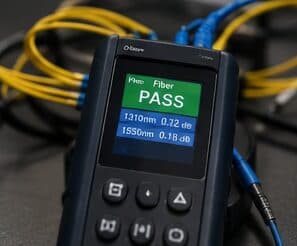
A wireless installation is validated by walking it. Signal level, signal-to-noise ratio, and the channel each AP settled on are measured at the places people actually work, not from the middle of the room.
The property network carries cameras, door controllers, intercom, the leasing office, and common-area wireless. These belong on separate segments from each other — common-area guest wireless in particular should reach the internet and nothing else, since it is used by residents, visitors, and anyone within range of an amenity space.
On site, the schedule and working method turn on conditions like these. Unconditioned operational areas affecting equipment placement. Long cable runs and yard/dock areas needing distinct approaches. Both shape how and when a crew can actually operate, which is why EVOTECH scopes each Brookshire job from the property itself rather than assuming one approach fits every address. Coverage is stated as a service area, never an office claim, and anything about Brookshire that cannot be verified is left out instead of invented.
Frequently asked questions
Is wi-fi installation for multifamily properties different in Brookshire?
The sector needs stay the same, but the install changes with the place. In Brookshire, the conditions above — not the multifamily properties label — decide routes, mounting, and equipment placement, which is why this page pairs all three.
Why does a call drop when walking between rooms?
That is a roaming symptom. Either the coverage areas do not overlap enough, so the device holds a fading signal past the point of usefulness, or they overlap heavily on the same channel, so the handoff happens into a congested cell. Both are fixed by adjusting placement, power, and the channel plan rather than by adding another access point at the same settings.