Whole-home & multi-zone audio for home offices, in Rosenberg
Whole-home & multi-zone audio for home offices in Rosenberg is a three-part question: what whole-home & multi-zone audio involves, what home offices need from it, and what Rosenberg changes about the install. Warehousing and light-industrial buildings along the highway corridor, with metal construction that reflects wireless signal and needs proper cable support.
The parts that decide whether it works are zone count, amplifier channels, and speaker placement. Each zone needs its own amplifier channel and its own volume control, in-ceiling or in-wall speakers need to be placed for even coverage rather than convenience, and the source and control layer has to be simple enough that the household actually uses it.
The house is competing with the work
A home office shares its connection with everything else in the house, and household demand is highest during exactly the hours that matter least to the household and most to the person working. Streaming, gaming, backups, and connected devices all contend for the same circuit and, if the office is on wireless, for the same airtime.
The second factor is position. Home offices frequently end up in a spare bedroom at the far corner of the house, which is often the worst wireless position in the building — furthest from the router, through the most walls.
- Household traffic peaking during working hours
- Office often located at the far edge of wireless coverage
- Video calls being the least tolerant workload in the house
- Work equipment sharing a flat network with household devices
Where whole-home & multi-zone audio goes wrong — and how it's avoided
Whole-home audio disappoints for distribution reasons, not speaker reasons.
- Using one stereo instead of independent zones
- Placing in-ceiling speakers where the ceiling was easy
- Overloading an amplifier channel on a long run
- Leaving control complex enough that only one zone gets used
- Skipping prewire and forcing a difficult retrofit
- Ignoring impedance matching across zones
Rosenberg: what the location changes
What separates a Rosenberg scope from the rest of the city is concrete and local. Warehousing and light-industrial buildings along the highway corridor, with metal construction that reflects wireless signal and needs proper cable support. An older rail-town commercial core with masonry buildings and limited existing pathway. Newer suburban subdivisions on slab foundations following the regional attic-routing pattern. That short list is what actually drives the design in this pocket, and it is why photographs or a brief site visit beat a floor plan — the plan follows the building's real constraints, not the neighborhood name on the map.
- Warehousing and light-industrial buildings along the highway corridor, with metal construction that reflects wireless signal and needs proper cable support
- An older rail-town commercial core with masonry buildings and limited existing pathway
- Newer suburban subdivisions on slab foundations following the regional attic-routing pattern
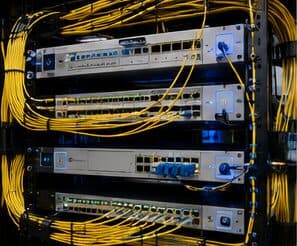
- Dust exposure in industrial and distribution environments, affecting rack and equipment placement
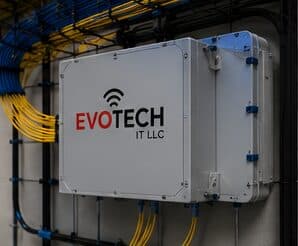
- Gulf Coast humidity and driven-rain events requiring rated exterior housings and sealed penetrations
Getting it done in Rosenberg
A multi-zone system is commissioned by walking the zones, not by confirming the amplifier powers on.
A wired connection to the desk eliminates the variables that cause most home-office call problems: signal strength, interference from neighbouring networks, and contention with household devices for airtime. In slab-foundation construction the run typically goes up into the attic and down an interior wall, which is why the destination wall matters more than the distance.
Getting Rosenberg work done means planning around the site as it actually is. Dust exposure in industrial and distribution environments, affecting rack and equipment placement. Gulf Coast humidity and driven-rain events requiring rated exterior housings and sealed penetrations. Both matter as much as the design to how and when the work happens. The scope is drawn from the real property, the coverage is stated as a service area rather than an office, and unverifiable specifics about Rosenberg are kept off the page on purpose.
Frequently asked questions
Is whole-home & multi-zone audio for home offices different in Rosenberg?
The sector needs stay the same, but the install changes with the place. In Rosenberg, the conditions above — not the home offices label — decide routes, mounting, and equipment placement, which is why this page pairs all three.
How is whole-home audio different from a home theater?
A home theater is one room done in surround for watching. Whole-home audio is music distributed across many rooms with independent control — the kitchen, the patio, the office each on their own. Different goal, different design: theater is about one room's immersion, distributed audio is about zones and control.