Why this page exists
Home theater installation for home offices is shaped by how the space is used, not just by the service itself. Home offices bring their own operating constraints, and this page pairs what home theater installation actually involves with what that environment changes about it.
Good surround sound comes from placing speakers correctly relative to where people sit, not from buying larger ones. A surround layout — front left, centre, and right across the screen; surrounds to the sides and slightly behind; a subwoofer positioned for even bass; and height or ceiling speakers for object-based formats — only works when each speaker sits where the format expects it relative to the primary seat. A theater with excellent equipment in the wrong positions sounds worse than modest equipment placed well.
The house is competing with the work
A home office shares its connection with everything else in the house, and household demand is highest during exactly the hours that matter least to the household and most to the person working. Streaming, gaming, backups, and connected devices all contend for the same circuit and, if the office is on wireless, for the same airtime.
The second factor is position. Home offices frequently end up in a spare bedroom at the far corner of the house, which is often the worst wireless position in the building — furthest from the router, through the most walls.
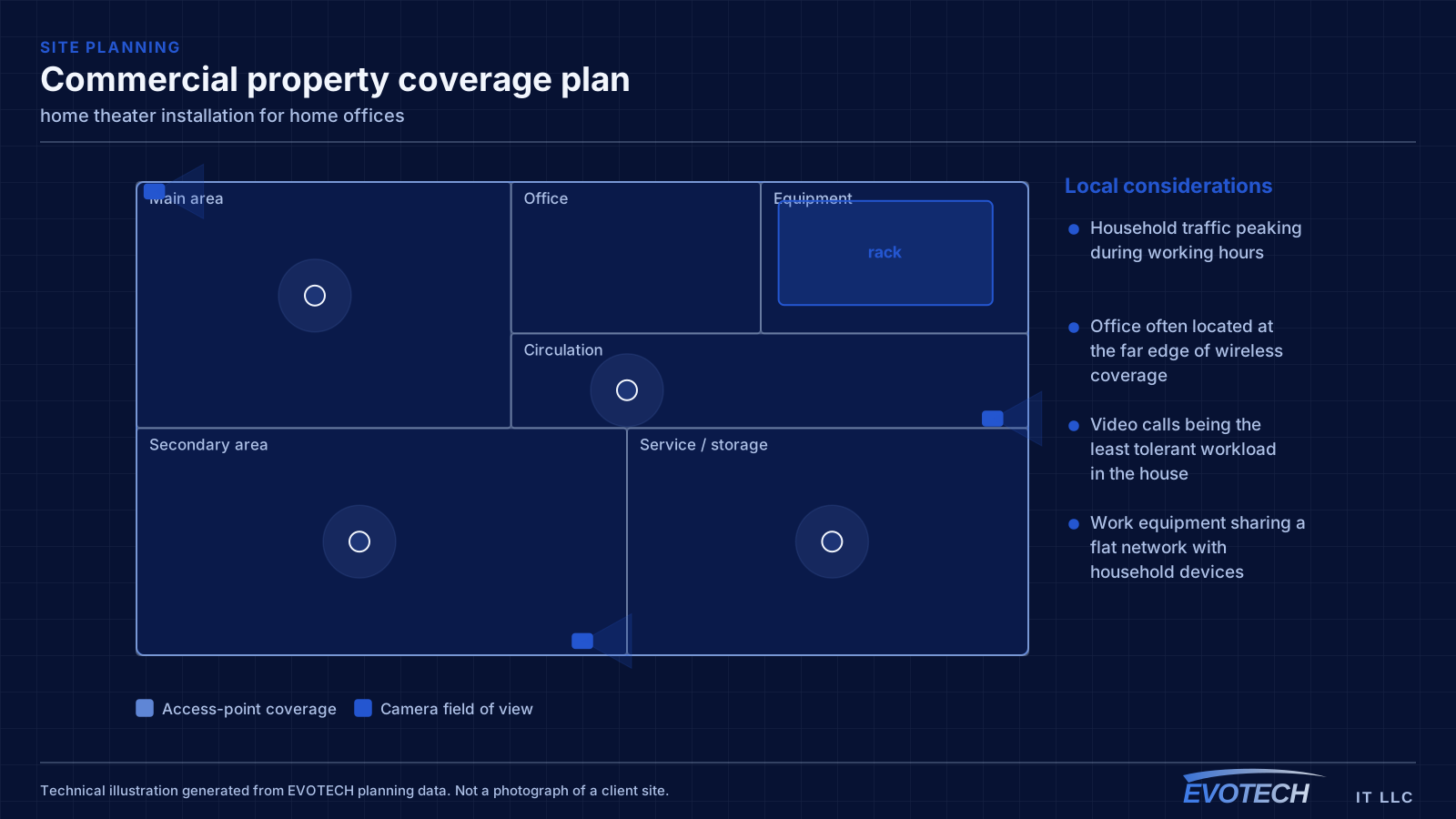
- Household traffic peaking during working hours
- Office often located at the far edge of wireless coverage
- Video calls being the least tolerant workload in the house
- Work equipment sharing a flat network with household devices
What home theater installation usually involves
The recurring complaint is dialogue that is hard to follow while effects are too loud — a balance and placement issue, usually a centre channel that is poorly positioned or a room that smears speech through reflection. The second is bass that is boomy in one seat and thin in another, which is subwoofer placement interacting with the room's dimensions rather than a fault in the subwoofer.
The third is operational: a system that needs three remotes and knowledge of which input to select is a system the household stops using at full capability. Consolidated, simple control is what keeps a theater in daily use.
- Dialogue lost under effects from centre-channel placement or room reflections
- Bass uneven between seats due to subwoofer and room interaction
- Surround speakers placed for convenience rather than for the format
- Height and ceiling speakers omitted or mislocated for object-based audio
- Cable runs to speaker and equipment positions left until after finishes
- Control complex enough that the system is used below its capability
The single cable that fixes most of it
A wired connection to the desk eliminates the variables that cause most home-office call problems: signal strength, interference from neighbouring networks, and contention with household devices for airtime. In slab-foundation construction the run typically goes up into the attic and down an interior wall, which is why the destination wall matters more than the distance.
Where the office must stay wireless, the fix is placement rather than power. An access point in the hallway near the office, mounted on the ceiling and connected by cable, serves the room far better than a more powerful router at the other end of the house. Turning up transmit power on a distant router mostly raises interference.
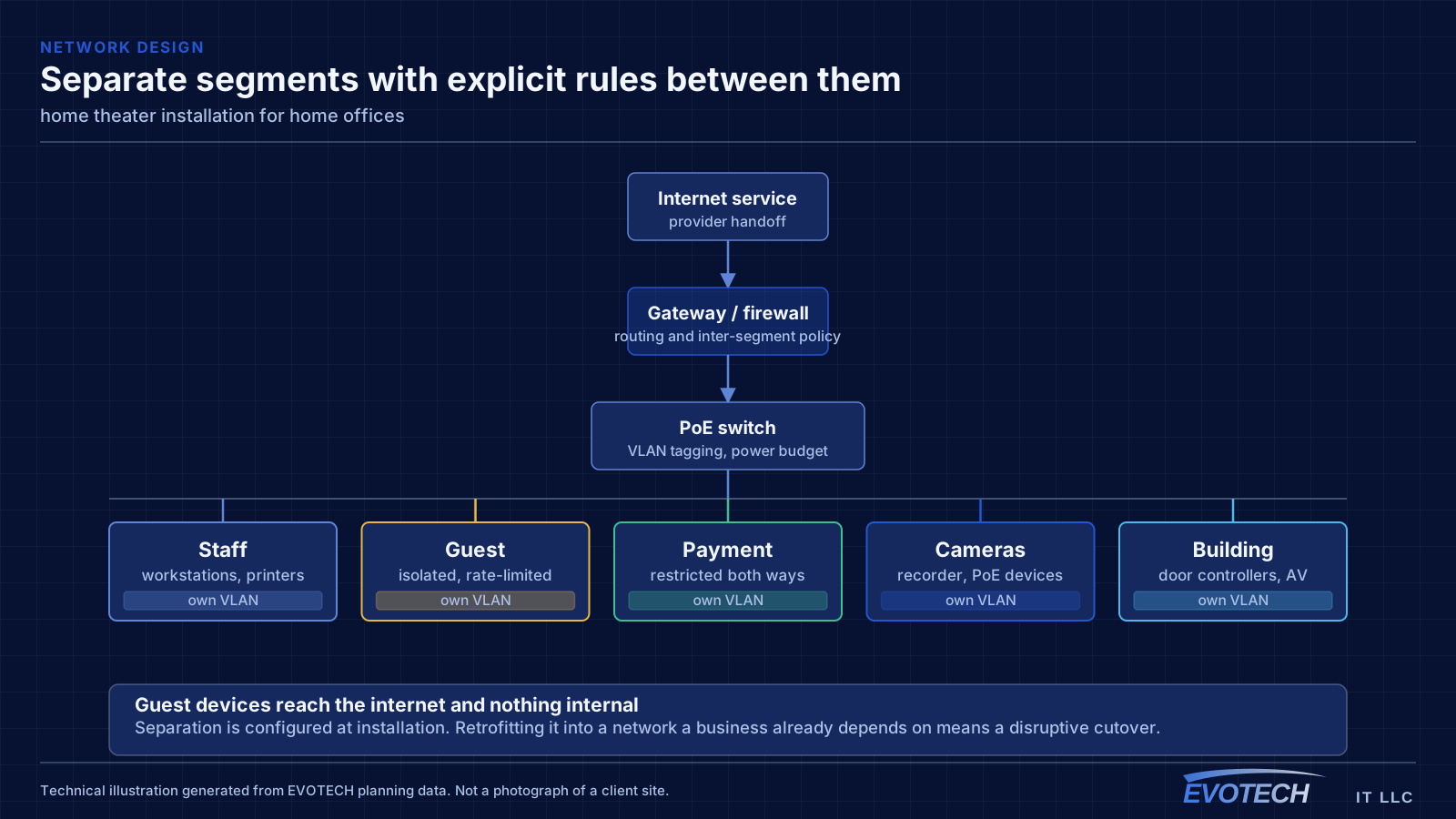
Separation is worth doing even at home. A separate network for work equipment, distinct from household devices and from guests, limits what a compromised household device can reach. This is straightforward on most current equipment and costs nothing but configuration.
- Wired run to the desk as the highest-value single change
- Access point placed near the office rather than more power from a distant router
- Attic-to-interior-wall routing in slab-foundation homes
- Separate network segment for work equipment
- Stationary household devices wired to free up airtime
Speaker layout, subwoofer placement, and room acoustics
The front three speakers anchor the soundstage: left and right at the edges of the screen, centre directly at or just below it, all aimed toward the seating at roughly ear height. Surrounds go to the sides and slightly behind the main seats. Height or in-ceiling speakers, for object-based formats, sit above and around the seating per the format's layout. The single most important reference point is the primary seat — everything is placed relative to it.
- Front left/centre/right anchored to the screen at ear height
- Surrounds to the sides and slightly behind the main seating
- Height or in-ceiling speakers placed per the object-audio format
- Subwoofer position found by measurement, not defaulted to a corner
- Reflection control and soft surfaces for dialogue intelligibility
- Everything placed relative to the primary seat
Popular services nearby
Frequently searched near this area — the pages people look for most.
Frequently asked questions
What changes about home theater installation in home offices?
The operating environment does. Home offices bring specific constraints — how the space is used, when work can happen, and what has to keep running — and those shape the home theater installation plan as much as the service's own technical requirements.
Why is dialogue hard to hear but explosions too loud?
Usually the centre channel and the room. Dialogue lives in the centre speaker, and if it is poorly placed or the room smears it through reflection, speech gets buried while wide effects stay loud. Correcting centre placement, setting levels relative to the seat, and adding some absorption fixes far more of this than adjusting the volume ever will.
Why do work calls degrade in the afternoon?
Usually contention. Household demand rises when people are home, and if the office is on wireless it competes both for the internet circuit and for airtime on the same radio channel. A wired connection to the desk removes the airtime half of that immediately, which is why it is the first thing worth doing.