
Why this page exists
Commercial IT solutions in Sugar Creek / Old Sugar Land (77478) answers a specific long-tail search: people in Sugar Creek and old Sugar Land looking for exactly this work, in this pocket of Sugar Land. It reads through the conditions that actually define Sugar Creek and old Sugar Land rather than treating the whole Sugar Land market as one thing. 77478 is older Sugar Land — Sugar Creek's 1970s-1980s golf-course homes plus the original town core and nearby commercial.
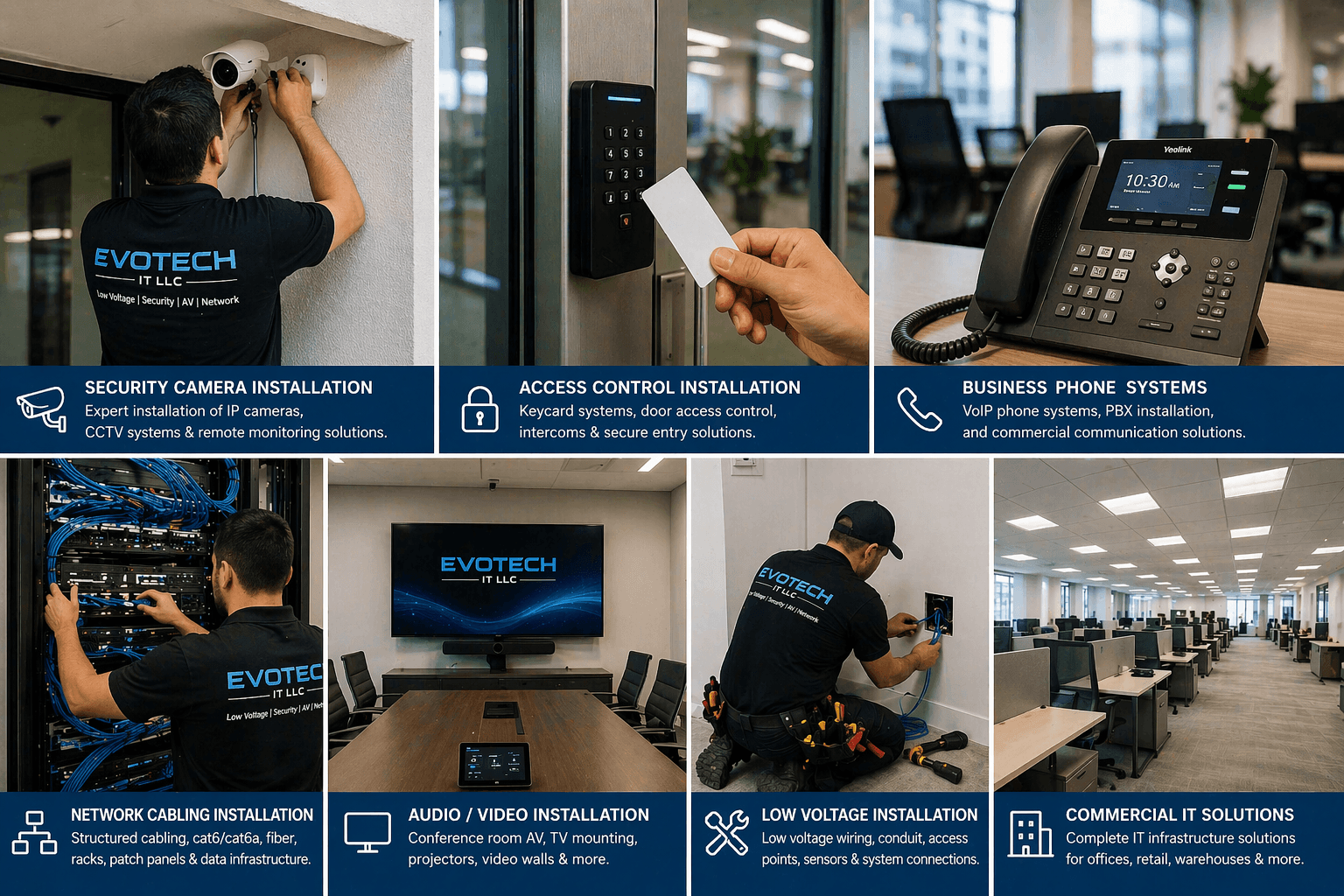
The value is in the coordination. Systems bought piecemeal end up on one flat network with no segmentation, with cabling that suits none of them well, and with nobody able to say why something does not work because each vendor points at the others. A coordinated design puts them on shared, properly segmented infrastructure and gives the business one number to call.
What changes commercial it solutions from job to job
Scope is driven by the number of systems, the site count, and the continuity requirements.
- Which systems are in scope and how they integrate
- Site size, count, and whether it is a fit-out or a relocation
- Uptime and business-continuity requirements
- Growth headroom designed into the infrastructure
- Existing systems to migrate versus new installation
- Ongoing support and management expectations
What Sugar Creek and old Sugar Land changes about the job
What separates a Sugar Creek and old Sugar Land scope from the rest of the city is concrete and local. 77478 is older Sugar Land — Sugar Creek's 1970s-1980s golf-course homes plus the original town core and nearby commercial. This era predates structured wiring, so retrofits work through mature attics and existing chases. Golf-course frontage creates long rear sightlines for camera planning. That short list is what actually drives the design in this pocket, and it is why photographs or a brief site visit beat a floor plan — the plan follows the building's real constraints, not the neighborhood name on the map.
- 77478 is older Sugar Land — Sugar Creek's 1970s-1980s golf-course homes plus the original town core and nearby commercial
- This era predates structured wiring, so retrofits work through mature attics and existing chases
- Golf-course frontage creates long rear sightlines for camera planning
- Established commercial and office frontage brings small-business network and camera work into the ZIP
- Mature trees favor wired backbones over line-of-sight wireless
How the work actually runs in Sugar Creek and old Sugar Land
A coordinated system is verified as a whole, not one component at a time.
Getting Sugar Creek and old Sugar Land work done means planning around the site as it actually is. Established commercial and office frontage brings small-business network and camera work into the ZIP. Mature trees favor wired backbones over line-of-sight wireless. Both matter as much as the design to how and when the work happens. The scope is drawn from the real property, the coverage is stated as a service area rather than an office, and unverifiable specifics about Sugar Creek and old Sugar Land are kept off the page on purpose.
Who this suits in Sugar Creek and old Sugar Land
In Sugar Creek and old Sugar Land (77478), commercial it solutions tends to be the right call for the owners and managers described below — the neighborhood's mix of residential and light-commercial properties fit this work well.
This is the umbrella service for businesses treating their technology as infrastructure rather than a series of purchases.
- New office, retail, or warehouse fit-outs needing the whole stack at once
- Relocations moving and re-establishing systems with minimal downtime
- Growing businesses that outgrew equipment bought piecemeal
- Multi-site operations wanting consistent infrastructure across locations
- Owners who want one accountable party rather than several vendors
Frequently asked questions
Do you cover Sugar Creek and old Sugar Land (77478)?
Yes. EVOTECH serves Sugar Creek and old Sugar Land in 77478 as part of the Sugar Land service area. This is coverage, not an office claim — the page describes the neighborhood's conditions, not a location we occupy.
How is this different from just hiring separate installers?
Coordination and accountability. Separate installers each optimise their own system, which is how a business ends up with everything on one flat network, cabling that suits nobody, and no one able to say why something does not work. A coordinated design puts every system on shared, segmented infrastructure and gives you one party accountable for the whole thing working — which is usually cheaper over the life of the fit-out, not just simpler.