
Why this page exists
Smart home & smart locks in Missouri City is scoped around the same physical realities EVOTECH weighs everywhere — but read through Missouri City's specific conditions: housing stock spanning both established and recent construction, producing materially different retrofit conditions between neighbourhoods. This page pairs what the service actually involves with what the Missouri City market changes about it.
Smart-home devices are easy to buy and easy to end up with a drawer of apps that half-work. Getting a home that actually behaves means three decisions up front: which ecosystem everything lives in — a voice platform, a phone platform, or a manufacturer's own app — so devices cooperate instead of each needing their own login; whether devices talk over Wi-Fi or through a hub using a low-power protocol; and which functions must keep working when the internet drops. A smart lock that only unlocks from the cloud is a problem the first time the connection goes down.
What smart home & smart locks usually involves
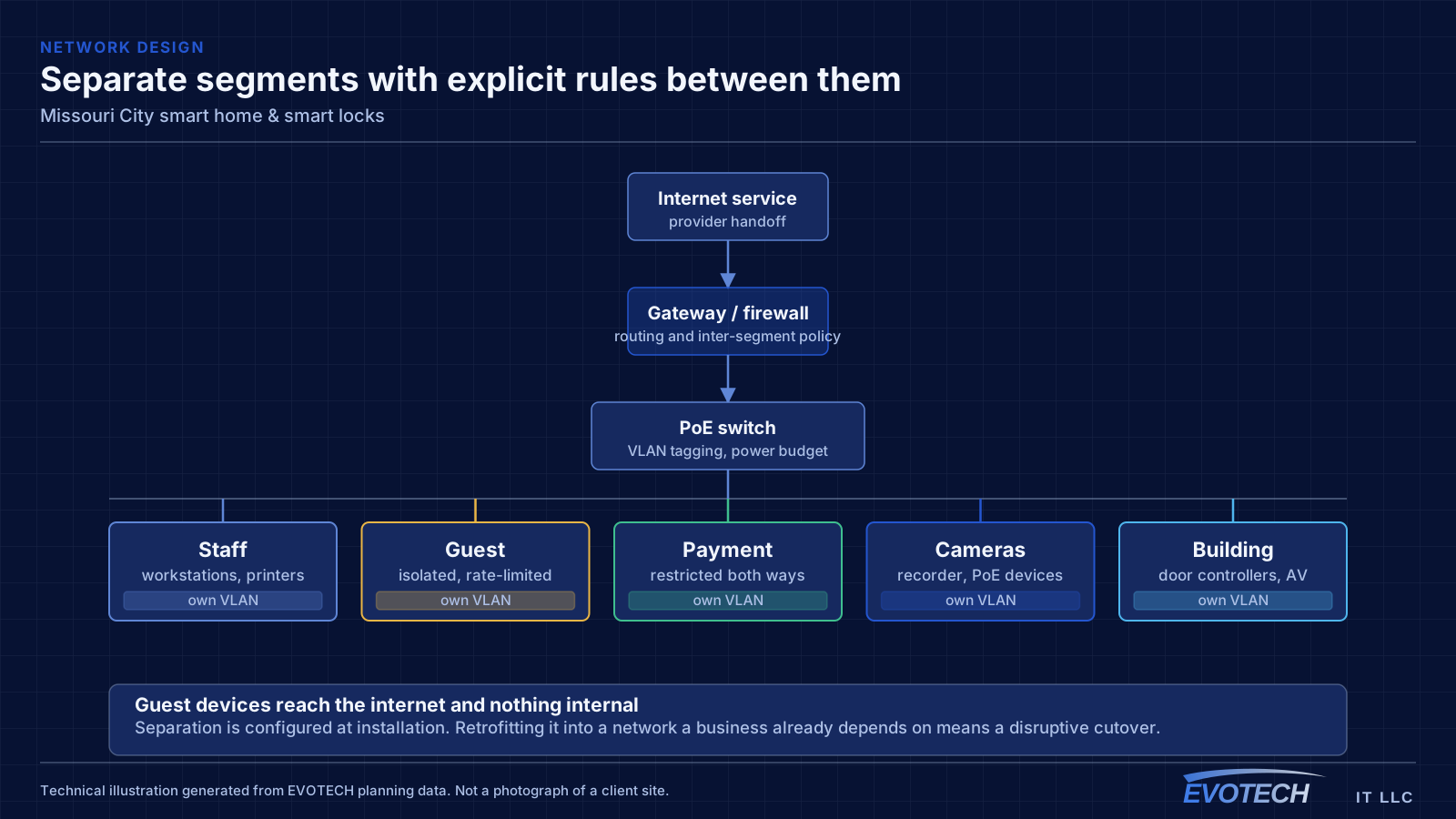
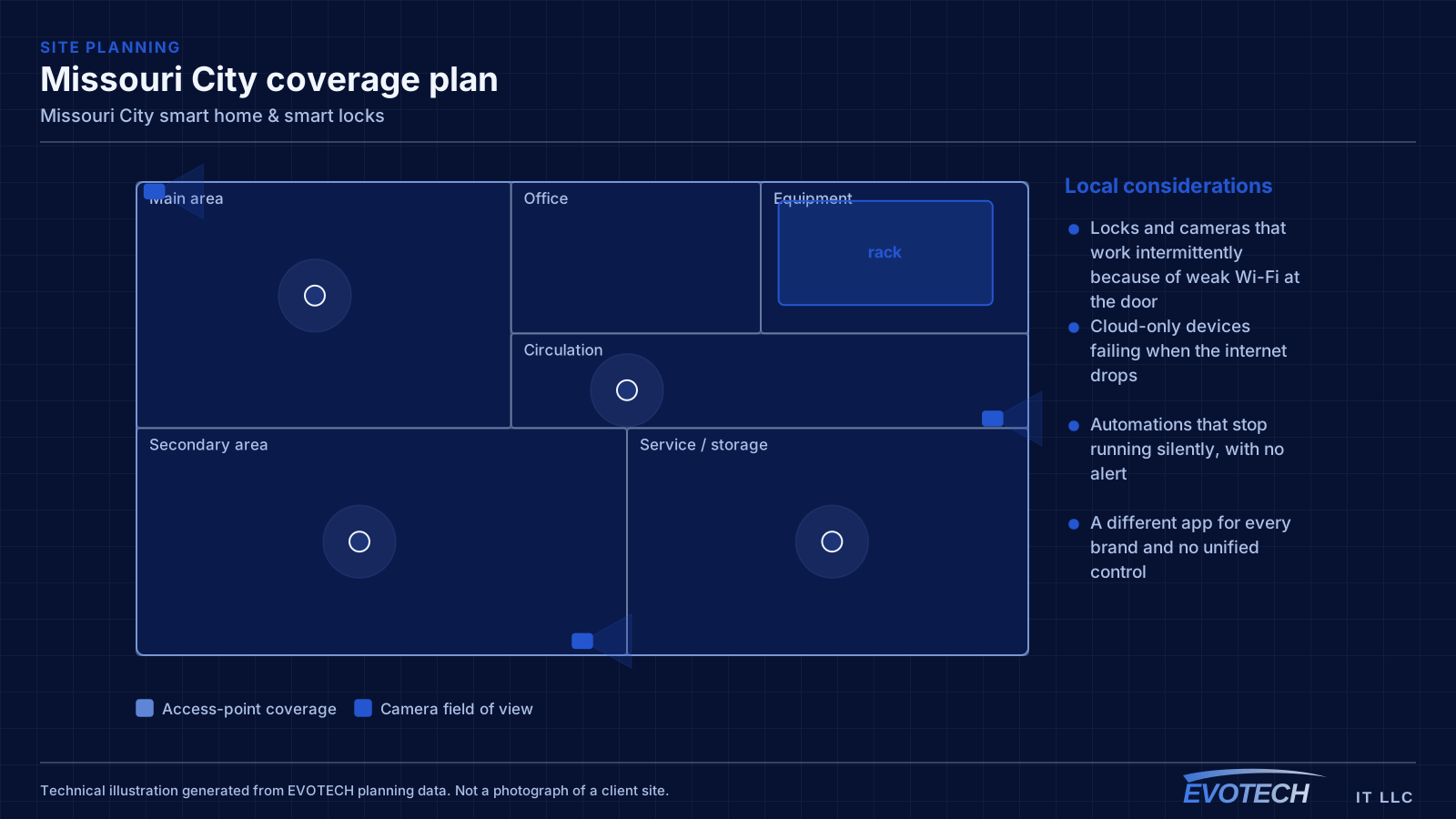
The characteristic smart-home problem is a device that works most of the time — which, for a lock or a camera, is not good enough. The usual causes are weak wireless at the device's location, a cloud dependency that fails when the connection blips, and automations that quietly stop firing without telling anyone.
The second is ecosystem sprawl: five brands, five apps, and no way to make a routine span them. Deciding on one platform, and choosing devices that speak to it, turns a pile of gadgets into a system.
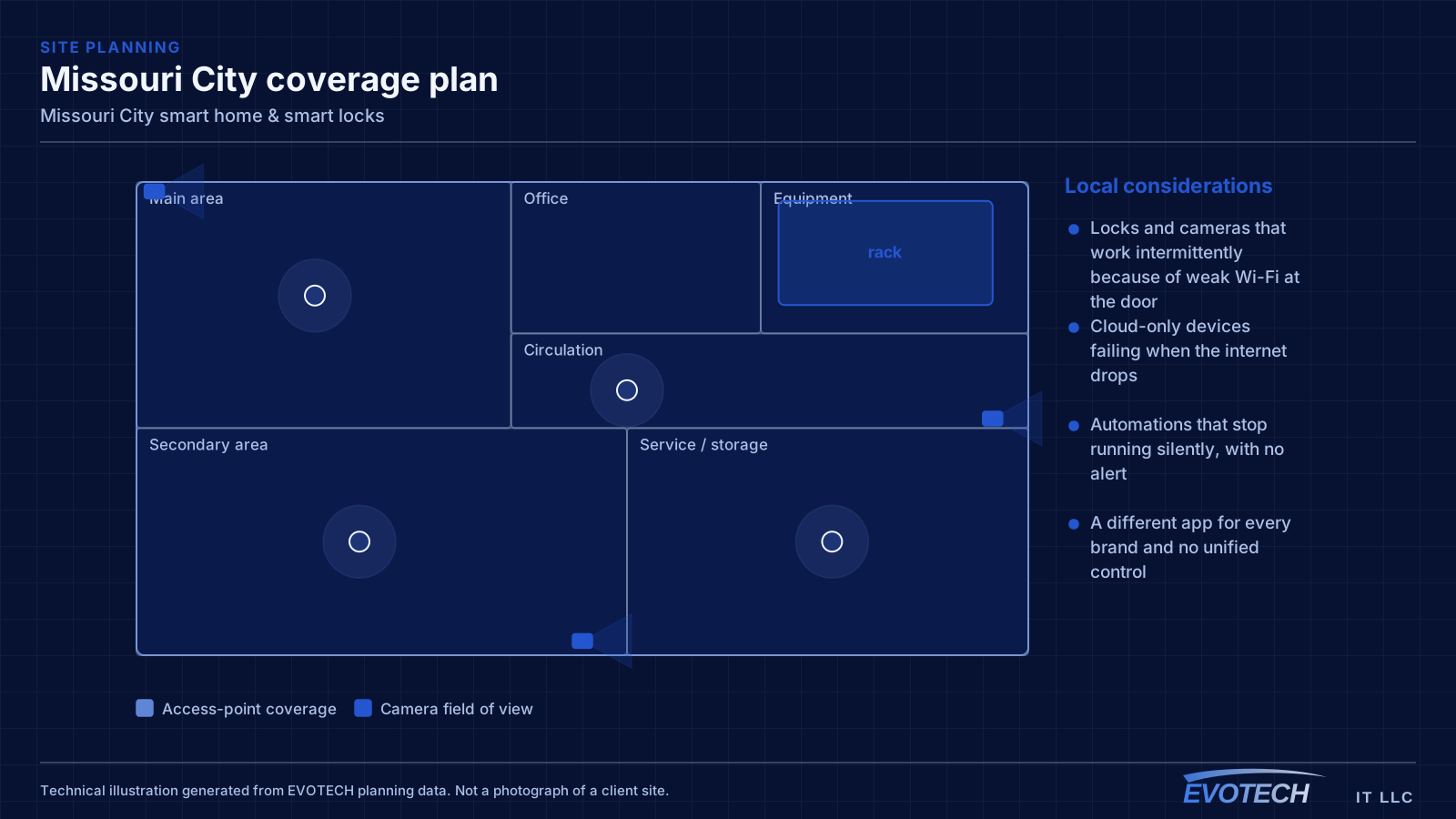
- Locks and cameras that work intermittently because of weak Wi-Fi at the door
- Cloud-only devices failing when the internet drops
- Automations that stop running silently, with no alert
- A different app for every brand and no unified control
- Smart locks fitted to doors that are misaligned or swollen, so they jam
- Dead batteries with no monitoring, locking people out
Missouri City property conditions that change the plan
In older homes, the assumption should be that nothing usable exists. Attic access may be more restricted, wall construction differs, and any existing low-voltage cable is likely to predate anything worth reusing. These projects are genuine retrofits and scope accordingly.
In newer areas the pattern matches the rest of the suburbs — a builder panel, terminated runs to wall outlets, and a coverage problem caused by floor-plan width and a perimeter equipment position.
Because conditions vary so much by property age, the walkthrough carries more weight here than in a uniform subdivision. Attic accessibility, wall construction, and whether any existing cable is worth testing are the three questions that set the scope.
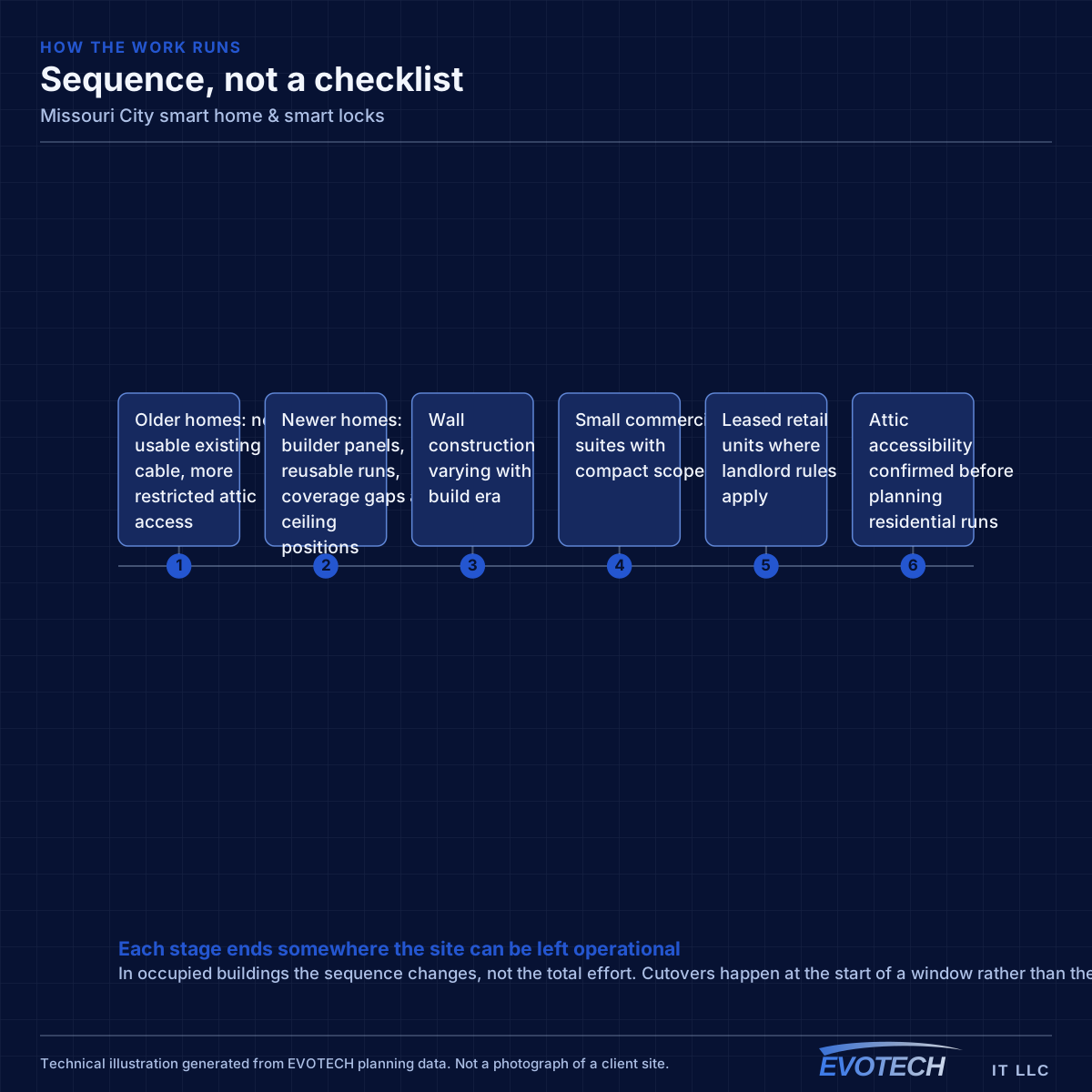
- Older homes: no usable existing cable, more restricted attic access
- Newer homes: builder panels, reusable runs, coverage gaps at ceiling positions
- Wall construction varying with build era
- Small commercial suites with compact scope
- Leased retail units where landlord rules apply
- Attic accessibility confirmed before planning residential runs
- Existing cable tested rather than assumed usable
- Wall construction checked for blocking and insulation
- Ceiling construction confirmed in commercial suites
- Landlord permissions established for leased units
Getting smart home & smart locks done in Missouri City
The ecosystem decision is the one that shapes everything else. Committing to a single platform — whichever suits the household's phones and habits — lets devices share routines and one control surface, at the cost of favouring devices that support it. A hub adds a second layer: many reliable smart-home devices use a low-power mesh protocol rather than Wi-Fi, which keeps them off the main network and off the router's client count, and a modern hub bridges those to the chosen platform. Newer interoperability standards are narrowing the gap between ecosystems, but device support still has to be checked rather than assumed.
Residential work follows the regional pattern of early summer scheduling for attic access and careful occupied-home practice. Older homes sometimes need a surface raceway or a small access cut where no cavity path exists, and that is worth discussing before work starts rather than mid-run.
- Early summer scheduling for attic work
- Surface raceway or access cut discussed in advance where no cavity path exists
- Dust control and daily clear-down in occupied homes
- Single-visit scheduling for compact commercial scopes
- Exterior equipment rated for regional humidity and rainfall
Frequently asked questions
Does EVOTECH have an office in Missouri City?
No. This is a service-area page: EVOTECH serves Missouri City without claiming a physical office there. The wording stays as coverage, not a location claim.
Which smart-home ecosystem should we use?
Usually the one that matches the phones and habits in the house, because that is the control surface everyone already reaches for. Committing to one platform lets devices share routines instead of each needing its own app — the tradeoff is favouring devices that support it. Newer interoperability standards are narrowing the differences, but it is still worth checking that the specific devices you want work with the platform you choose.
Can Ethernet be added to an older home here?
Usually, though the route matters more than in newer construction. Interior destination walls reachable from an attic are straightforward; exterior walls with insulation and bracing are harder. Where no cavity path exists, the honest alternatives are a small access cut that gets patched, a surface raceway, or relocating the device — worth deciding before any cutting begins.