

Why this page exists
Network-rack installation in Missouri City is scoped around the same physical realities EVOTECH weighs everywhere — but read through Missouri City's specific conditions: housing stock spanning both established and recent construction, producing materially different retrofit conditions between neighbourhoods. This page pairs what the service actually involves with what the Missouri City market changes about it.
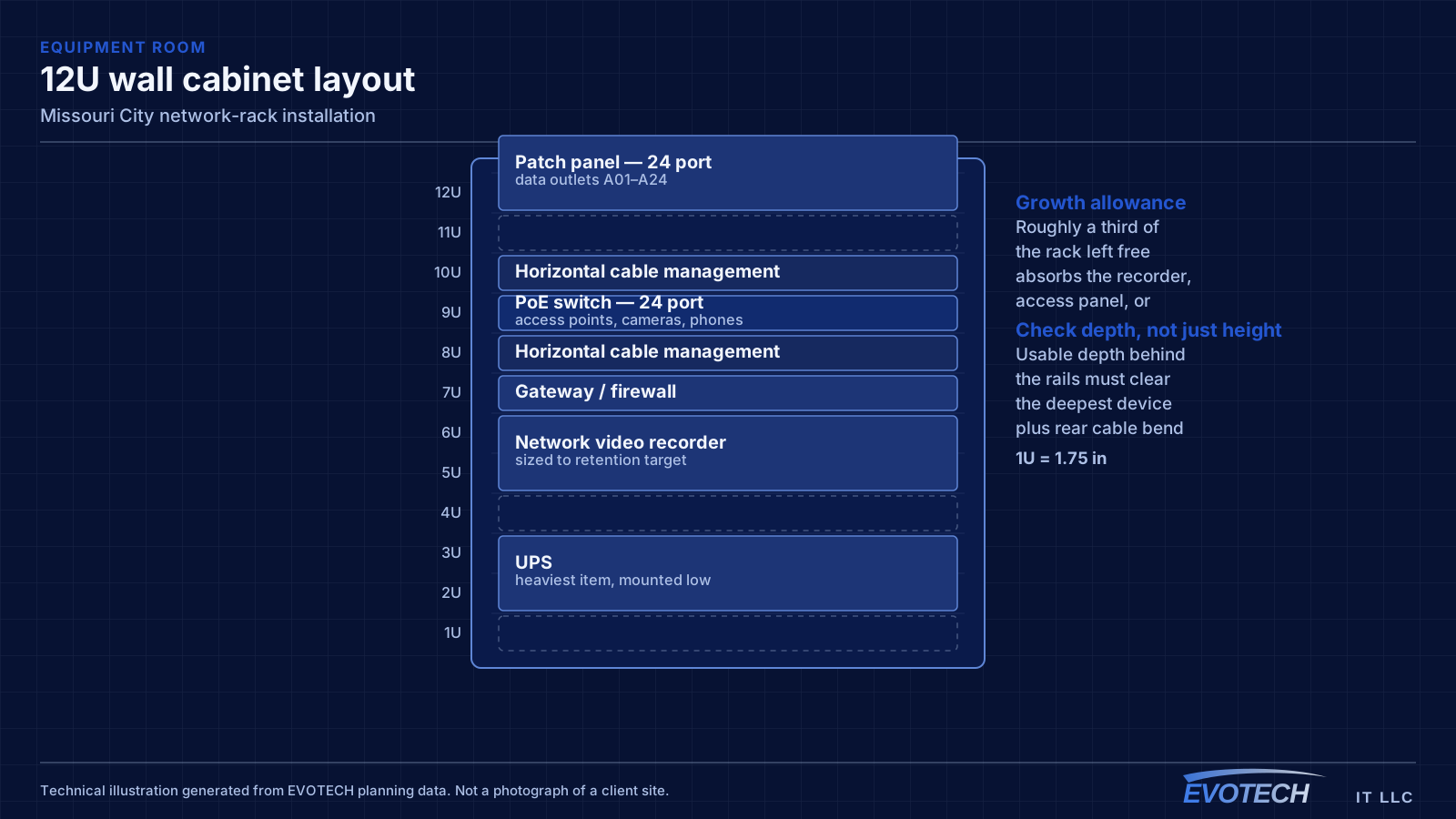
Rack sizing is measured in rack units — each U is 1.75 inches of vertical mounting space. Counting the equipment gives a starting number, but the useful sizing rule is to add space for cable management between device groups and leave roughly a third of the rack empty for whatever arrives later. A rack packed to capacity on day one is a rack that gets a switch balanced on top of it within a year.
What network-rack installation usually involves
Heat is the problem that shortens equipment life quietly. A sealed cabinet in a closet with no ventilation concentrates the heat of a switch, a recorder, and a UPS in a small volume, and the equipment inside runs hot for years before something fails. Enclosed cabinets need either passive ventilation with a genuine airflow path or active fans, and the closet itself needs somewhere for that heat to go.
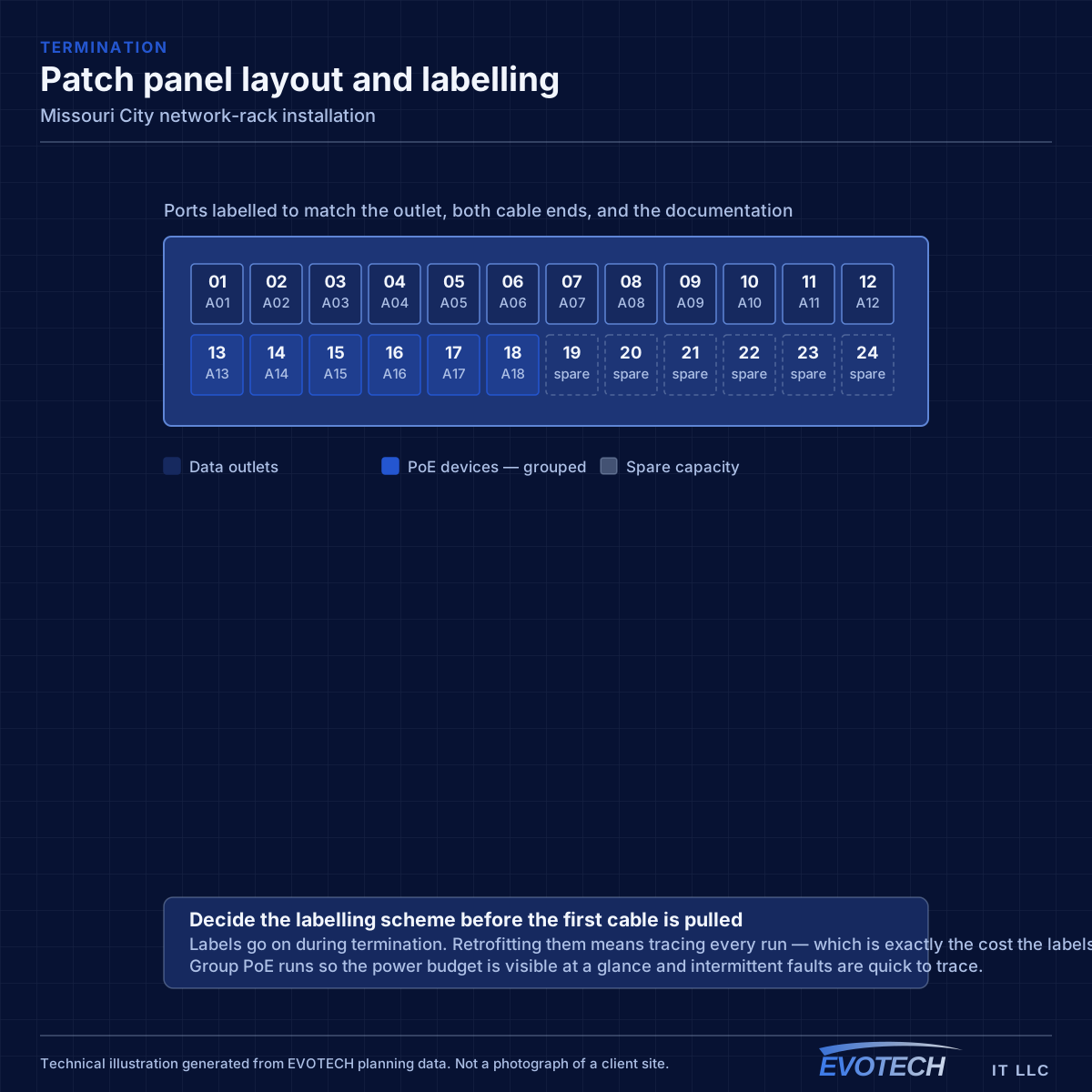
The second problem is serviceability. Racks built without horizontal management, without slack, and without labels make every subsequent change slow and risky. Pulling one patch cord out of a woven mass to trace it is how adjacent connections get knocked loose.
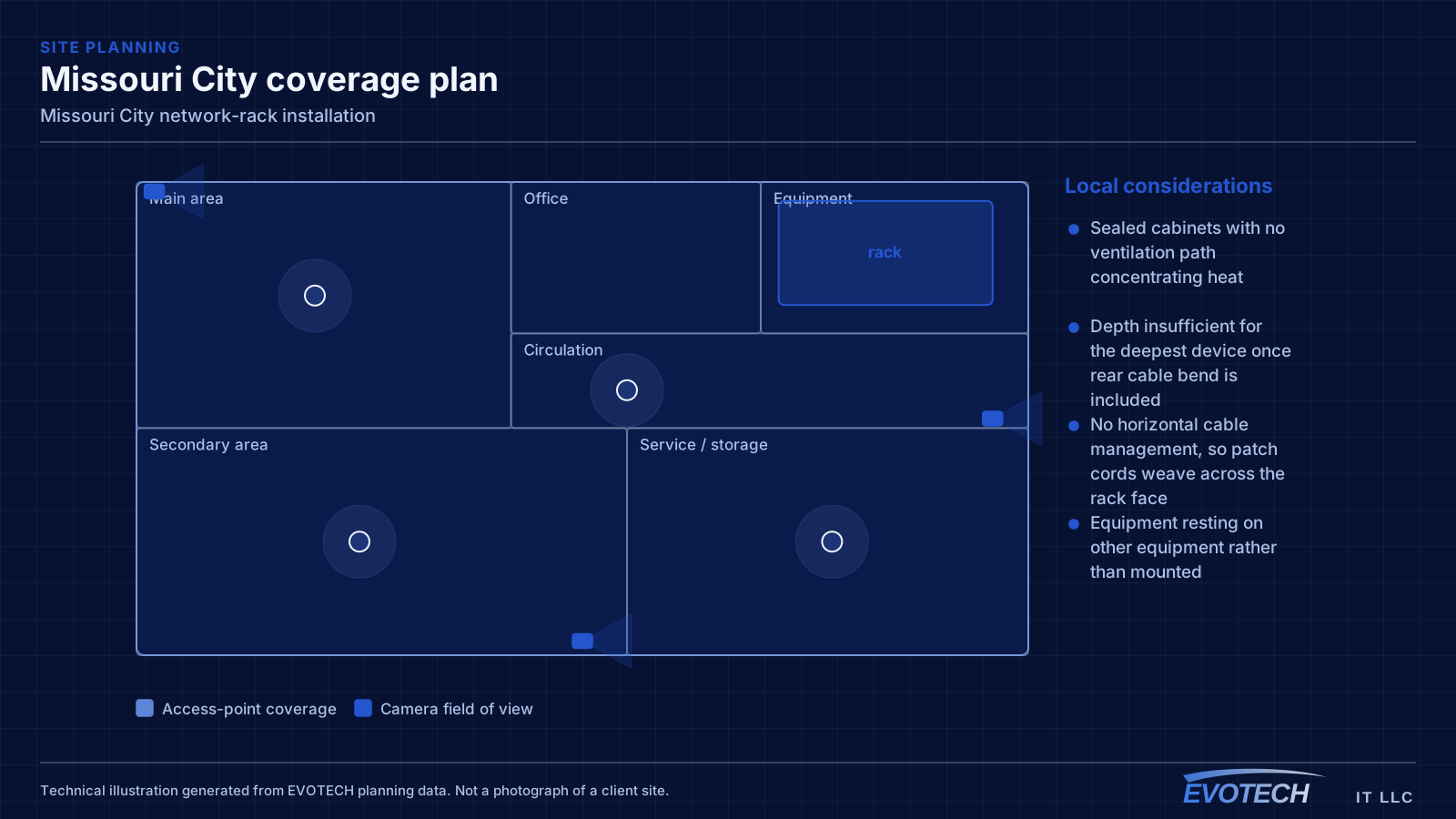
- Sealed cabinets with no ventilation path concentrating heat
- Depth insufficient for the deepest device once rear cable bend is included
- No horizontal cable management, so patch cords weave across the rack face
- Equipment resting on other equipment rather than mounted
- No spare U space, so additions get stacked on top
- Power strips daisy-chained instead of a properly mounted PDU
- No labels, so tracing a connection requires pulling on cables
Missouri City property conditions that change the plan
In older homes, the assumption should be that nothing usable exists. Attic access may be more restricted, wall construction differs, and any existing low-voltage cable is likely to predate anything worth reusing. These projects are genuine retrofits and scope accordingly.
In newer areas the pattern matches the rest of the suburbs — a builder panel, terminated runs to wall outlets, and a coverage problem caused by floor-plan width and a perimeter equipment position.
Because conditions vary so much by property age, the walkthrough carries more weight here than in a uniform subdivision. Attic accessibility, wall construction, and whether any existing cable is worth testing are the three questions that set the scope.
- Older homes: no usable existing cable, more restricted attic access
- Newer homes: builder panels, reusable runs, coverage gaps at ceiling positions
- Wall construction varying with build era
- Small commercial suites with compact scope
- Leased retail units where landlord rules apply
- Attic accessibility confirmed before planning residential runs
- Existing cable tested rather than assumed usable
- Wall construction checked for blocking and insulation
- Ceiling construction confirmed in commercial suites
- Landlord permissions established for leased units
Getting network-rack installation done in Missouri City
Start from a device list with each item's U height and depth, add a U of management between logical groups, add the patch panels, and then add roughly a third again for growth. A 12U wall cabinet that appears generous for today's four devices often turns out to be the right size once panels, management, and a UPS are counted properly.
Residential work follows the regional pattern of early summer scheduling for attic access and careful occupied-home practice. Older homes sometimes need a surface raceway or a small access cut where no cavity path exists, and that is worth discussing before work starts rather than mid-run.
- Early summer scheduling for attic work
- Surface raceway or access cut discussed in advance where no cavity path exists
- Dust control and daily clear-down in occupied homes
- Single-visit scheduling for compact commercial scopes
- Exterior equipment rated for regional humidity and rainfall
Popular services nearby
Frequently searched near this area — the pages people look for most.
Frequently asked questions
Does EVOTECH have an office in Missouri City?
No. This is a service-area page: EVOTECH serves Missouri City without claiming a physical office there. The wording stays as coverage, not a location claim.
What size rack is needed?
Add the U heights of every intended device, add a U of management between logical groups, add the patch panels, then add roughly a third for growth. The result is usually a size or two larger than the first instinct, and the extra space costs far less than the disruption of replacing an undersized cabinet later.
Can Ethernet be added to an older home here?
Usually, though the route matters more than in newer construction. Interior destination walls reachable from an attic are straightforward; exterior walls with insulation and bracing are harder. Where no cavity path exists, the honest alternatives are a small access cut that gets patched, a surface raceway, or relocating the device — worth deciding before any cutting begins.