
Why this page exists
Data-jack installation in Cypress is scoped around the same physical realities EVOTECH weighs everywhere — but read through Cypress's specific conditions: large newer residential floor plans that exceed single-position wireless coverage. This page pairs what the service actually involves with what the Cypress market changes about it.
A data jack is the terminated outlet at the end of a horizontal run. It looks trivial, and it is the single most common place for a link to lose performance, because it is where the pairs get untwisted, where a punch-down can be shallow, and where the wrong component category quietly caps the channel.
What data-jack installation usually involves
The dominant failure is untwist. Twisted-pair cable rejects noise because of the twist rate, and every centimetre of pair untwisted at the punch-down is a small crosstalk penalty. Combined across four pairs and two ends, sloppy terminations can move a link from comfortable margin to marginal.
The second failure is component mismatch. A jack rated one category below the cable caps the entire channel at the lower rating, and nothing about the installation looks wrong. The third is mechanical: a plate mounted without a low-voltage bracket, so the cable takes strain every time something is plugged in.
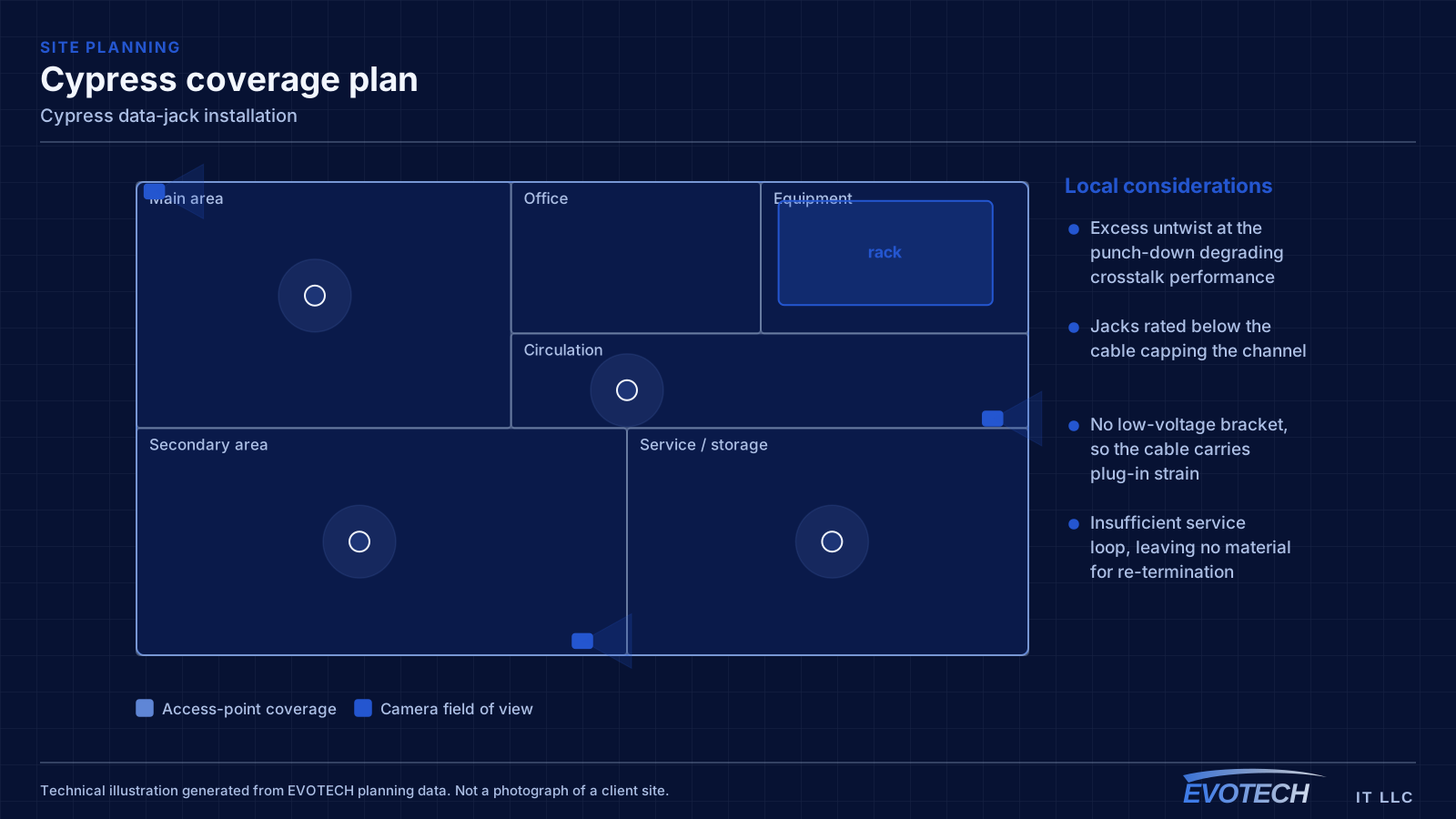
- Excess untwist at the punch-down degrading crosstalk performance
- Jacks rated below the cable capping the channel
- No low-voltage bracket, so the cable carries plug-in strain
- Insufficient service loop, leaving no material for re-termination
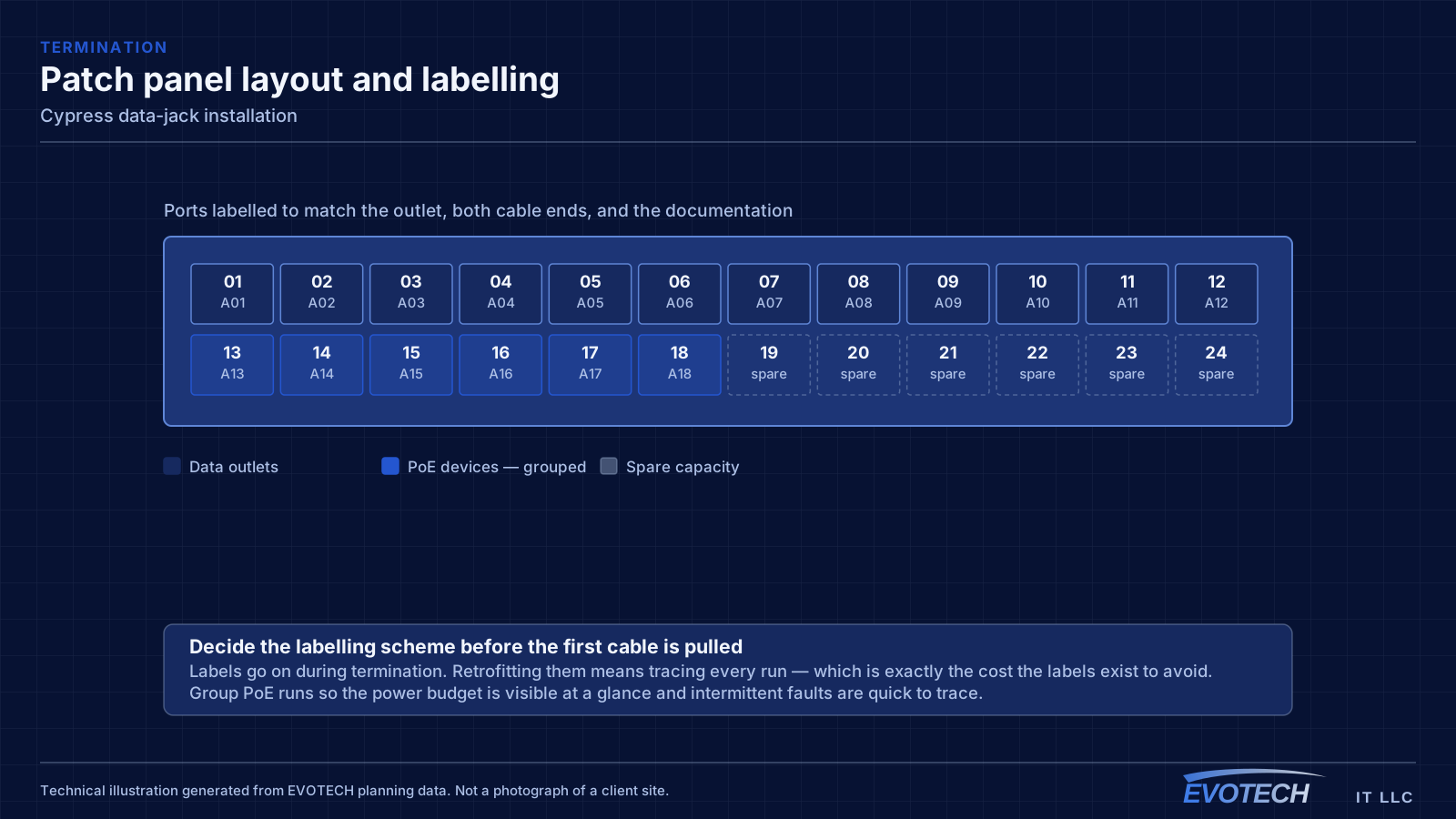
- Inconsistent wiring scheme between ends causing split pairs
Cypress property conditions that change the plan
Residential construction here follows the wider suburban pattern — slab foundations, accessible attics, wide floor plans — with the coverage consequences that implies. The reliable arrangement remains multiple wired ceiling positions rather than one powerful device.
Community and worship facilities are a distinct category. Large main spaces with high ceilings need coverage planned for the volume rather than the floor area, and the mounting positions are frequently high enough to require lift access. These buildings also tend to have been extended over time, so pathway varies between sections.
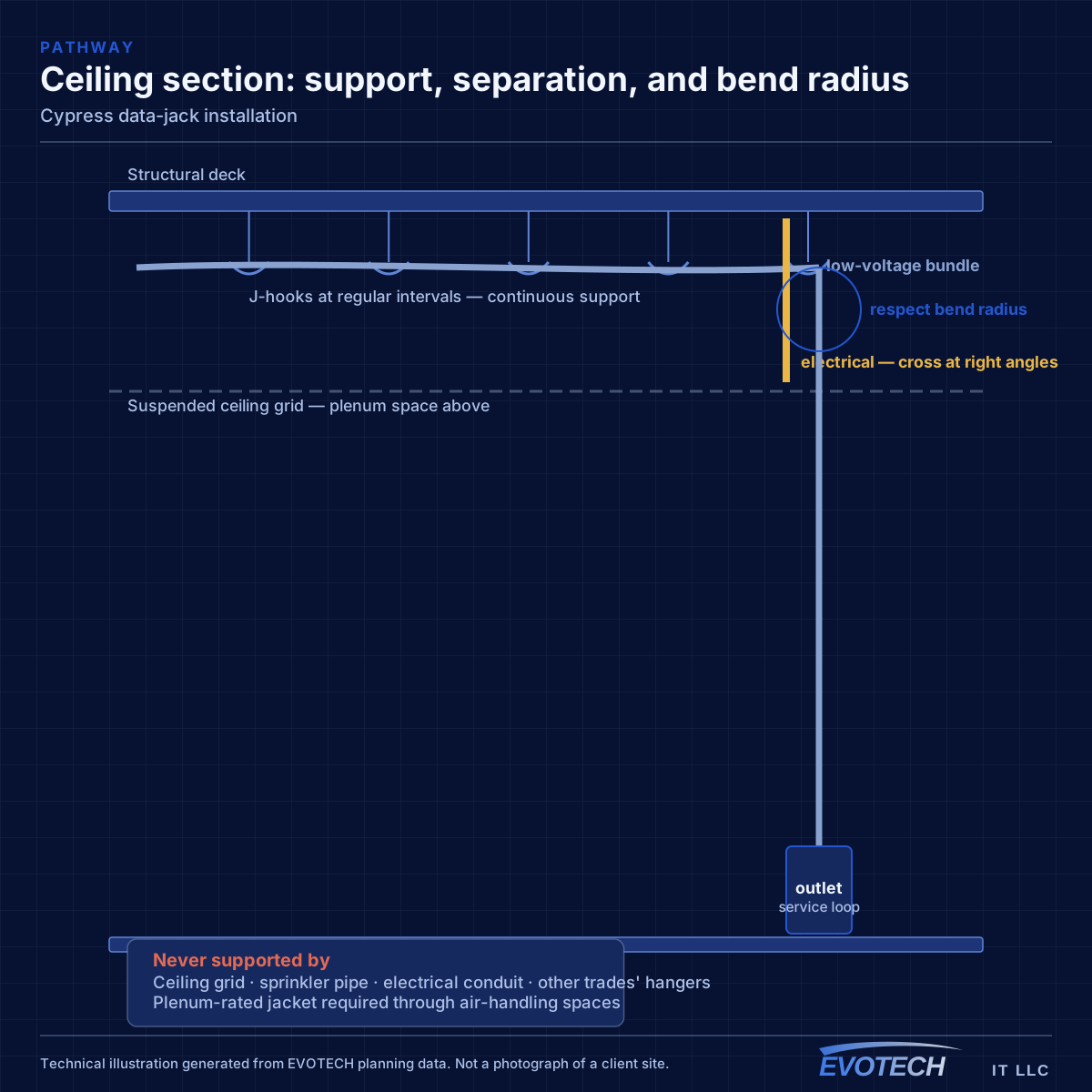
Renovation work carries genuine uncertainty about what is behind the walls and above the ceilings. The practical approach is to treat pathway discovery as a scoped activity rather than an assumption — confirm what exists before committing to a design that depends on it.
- Wide residential floor plans needing multiple wired access-point positions
- Large main spaces in community facilities requiring distributed coverage
- High mounting positions needing lift access
- Buildings extended over time with inconsistent pathway between sections
- Retail units with varying ceiling construction unit to unit
- Pathway discovery treated as scoped work in renovation projects
- Coverage design validated by walking the space after installation
- Lift access planned where mounting positions are high
- Existing installation assessed rather than assumed usable
- Phased approaches where buildings are being renovated in sections
Getting data-jack installation done in Cypress
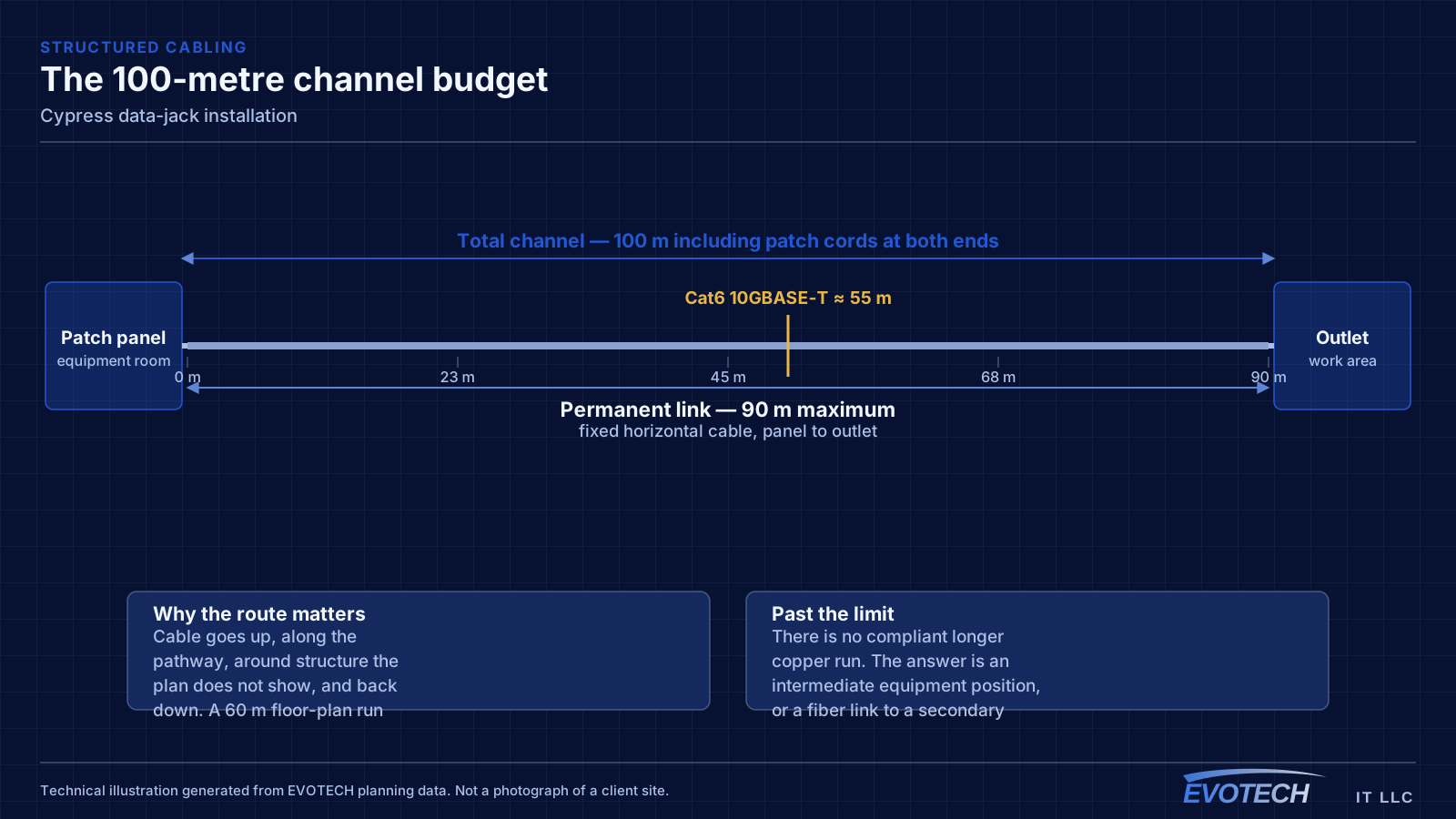
A certification test measures the complete path: patch cord, patch panel, horizontal cable, and outlet. Insertion loss and crosstalk contributions from the connectors are a meaningful share of the total budget, particularly at the higher frequencies where Cat6 and Cat6A links have the least margin. A well-made termination preserves margin; a poor one consumes it.
Community facilities have use patterns that constrain scheduling in ways commercial buildings do not — evenings and weekends are frequently the busiest times, so weekday daytime work is often the available window. That is the opposite of most commercial installations and worth planning around.
- Weekday daytime windows for community and worship facilities
- Lift access requiring clear floor space coordinated with use
- Residential attic work scheduled early in summer months
- Dust control and daily clear-down in occupied properties
- Phasing where budgets or use patterns require it
Frequently asked questions
Does EVOTECH have an office in Cypress?
No. This is a service-area page: EVOTECH serves Cypress without claiming a physical office there. The wording stays as coverage, not a location claim.
Why did a link start failing after a jack was replaced?
Usually untwist or category mismatch. If more pair was untwisted at the punch-down than the standard allows, crosstalk performance drops, and a link that previously passed with small margin can fail. If the replacement jack is a lower category than the cable, the whole channel is capped at the lower rating. Both show up immediately in a certification test.
How is coverage planned for a large open main space?
By volume and by seating rather than by floor area. High ceilings change the geometry — an access point at roof height covers differently than one at a lower mounting position — and the reliable approach is to design for the areas where people actually are, then validate by walking the space with the room set up as it normally is.