Cat6A cabling for warehouses, in Tomball
Cat6A cabling for warehouses in Tomball is a three-part question: what cat6a cabling involves, what warehouses need from it, and what Tomball changes about the install. A historic small-town core with masonry buildings and limited pathway.
Cat6A is specified to 500 MHz and supports 10GBASE-T across a full 100-metre channel. It achieves that mainly by controlling alien crosstalk — the interference between adjacent cables that constrains Cat6 at 10G — through larger construction, tighter pair geometry, and in shielded variants a foil layer.
Topology, mounting height, and roaming for handhelds
Where a building exceeds copper reach from a single position, the usual answer is one or more intermediate distribution points fed by fiber, each serving its area with copper within the limit. This is standard structured-cabling practice and it is far more reliable than attempting to stretch copper or bridge wirelessly across the building.
Access-point mounting height is a genuine design decision in high-ceiling spaces, not a default. Mounting at the roof deck maximises line of sight but puts the access point far from the devices and often above the racking, where the signal has to travel down through stock. Mounting lower — at or just above racking height, aimed along the aisles — frequently produces better coverage where the scanners actually are.
Roaming matters because the primary clients are mobile. A forklift-mounted or handheld scanner moving down an aisle needs clean handoffs between cells. That is a function of overlap and channel planning, and it is best validated by walking the aisles with the racking loaded.
- Fiber to intermediate distribution points where distance exceeds copper limits
- Mounting height chosen deliberately rather than defaulting to the roof deck
- Coverage designed along aisles, with directional antennas where useful
- Roaming validated by walking loaded aisles, not an empty floor
- Office, operations, and building-system traffic segmented
What drives the cost of cat6a cabling here
Cat6A raises cost in three places at once — material, pathway, and labour — which is why selective specification usually beats blanket specification.
- Cable and component cost per run
- Pathway modifications where fill limits are exceeded
- Termination time, especially for shielded constructions
- Rack space and cable management to dress larger cable cleanly
- Test time at the higher frequency range
Tomball: what the location changes
In Tomball, the plan is built outward from the conditions that are actually here. A historic small-town core with masonry buildings and limited pathway. Growing retail and medical buildouts with suspended-grid ceilings and tenant-improvement conditions. Larger properties and outbuildings toward the northern edge, bringing longer runs. Each one changes where cable can run, where equipment can sit, and how coverage is shaped, which is why a walkthrough settles a Tomball scope faster than any generic estimate.
- A historic small-town core with masonry buildings and limited pathway
- Growing retail and medical buildouts with suspended-grid ceilings and tenant-improvement conditions
- Larger properties and outbuildings toward the northern edge, bringing longer runs
- Slab-foundation residential across established and newer subdivisions
- Gulf Coast humidity requiring rated exterior housings and sealed penetrations
Getting it done in Tomball
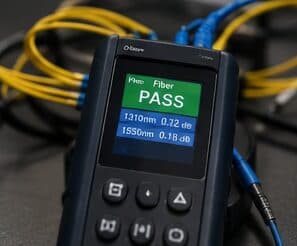
Certification to Cat6A runs the same parameter set as Cat6 but across the full 500 MHz range, where margins are naturally tighter. Passing at 250 MHz says nothing about behaviour at 500 MHz, so the test configuration has to match the intended rating.
High-level work needs lift access, and lift access needs floor space clear of racking, stock, and traffic. Coordinating that with warehouse operations is usually the single biggest scheduling constraint, and it is why warehouse installs often happen during shutdowns or quieter shifts.
On site, the schedule and working method turn on conditions like these. Slab-foundation residential across established and newer subdivisions. Gulf Coast humidity requiring rated exterior housings and sealed penetrations. Both shape how and when a crew can actually operate, which is why EVOTECH scopes each Tomball job from the property itself rather than assuming one approach fits every address. Coverage is stated as a service area, never an office claim, and anything about Tomball that cannot be verified is left out instead of invented.
Frequently asked questions
Is cat6a cabling for warehouses different in Tomball?
The sector needs stay the same, but the install changes with the place. In Tomball, the conditions above — not the warehouses label — decide routes, mounting, and equipment placement, which is why this page pairs all three.
Is Cat6A worth it if nothing today runs 10 gigabit?
Sometimes. The argument for it is that reopening a ceiling is far more expensive than the cable premium, so runs that are hard to reach and likely to matter later are good candidates. The argument against blanket use is pathway fill and labour. A common middle path is Cat6A on uplinks, dense areas, and inaccessible runs, with Cat6 elsewhere.