NVR installation for warehouses, in Missouri City
NVR installation for warehouses in Missouri City is a three-part question: what nvr installation involves, what warehouses need from it, and what Missouri City changes about the install. Housing stock spanning both established and recent construction, producing materially different retrofit conditions between neighbourhoods.
The most common disappointment is discovering that a system advertised as recording for a month is actually holding eight days, because the calculation assumed motion-only recording and the cameras are recording continuously, or assumed a compression efficiency the scene does not achieve. Doing the arithmetic before purchase, with the intended settings, avoids that.
Topology, mounting height, and roaming for handhelds
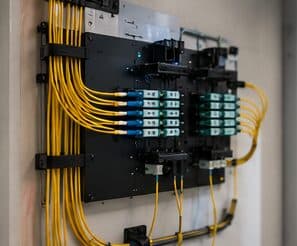
Where a building exceeds copper reach from a single position, the usual answer is one or more intermediate distribution points fed by fiber, each serving its area with copper within the limit. This is standard structured-cabling practice and it is far more reliable than attempting to stretch copper or bridge wirelessly across the building.
Access-point mounting height is a genuine design decision in high-ceiling spaces, not a default. Mounting at the roof deck maximises line of sight but puts the access point far from the devices and often above the racking, where the signal has to travel down through stock. Mounting lower — at or just above racking height, aimed along the aisles — frequently produces better coverage where the scanners actually are.
Roaming matters because the primary clients are mobile. A forklift-mounted or handheld scanner moving down an aisle needs clean handoffs between cells. That is a function of overlap and channel planning, and it is best validated by walking the aisles with the racking loaded.
- Fiber to intermediate distribution points where distance exceeds copper limits
- Mounting height chosen deliberately rather than defaulting to the roof deck
- Coverage designed along aisles, with directional antennas where useful
- Roaming validated by walking loaded aisles, not an empty floor
- Office, operations, and building-system traffic segmented
What changes nvr installation from job to job
Retention target and scene activity are the two dominant inputs.
- Camera count, resolution, and frame rate
- Retention target in days
- Recording mode and schedule
- Scene complexity, which drives real compression efficiency
- Drive capacity, count, and whether redundancy is required
- Recorder location, ventilation, and physical security
- Remote-access requirements and number of users
Missouri City: what the location changes
What separates a Missouri City scope from the rest of the city is concrete and local. Housing stock spanning both established and recent construction, producing materially different retrofit conditions between neighbourhoods. Older homes without structured cabling and with less accessible attic space than newer subdivisions. Newer subdivision homes following the regional pattern of builder panels and good attic access. That short list is what actually drives the design in this pocket, and it is why photographs or a brief site visit beat a floor plan — the plan follows the building's real constraints, not the neighborhood name on the map.
- Housing stock spanning both established and recent construction, producing materially different retrofit conditions between neighbourhoods
- Older homes without structured cabling and with less accessible attic space than newer subdivisions
- Newer subdivision homes following the regional pattern of builder panels and good attic access
- Small office and retail suites where ceiling construction and lease terms are the main variables
- Slab-on-grade construction throughout, keeping attic routing as the primary retrofit path
Getting it done in Missouri City
Verification means letting the system run and measuring, because the calculation is a projection until real footage lands on the disk.
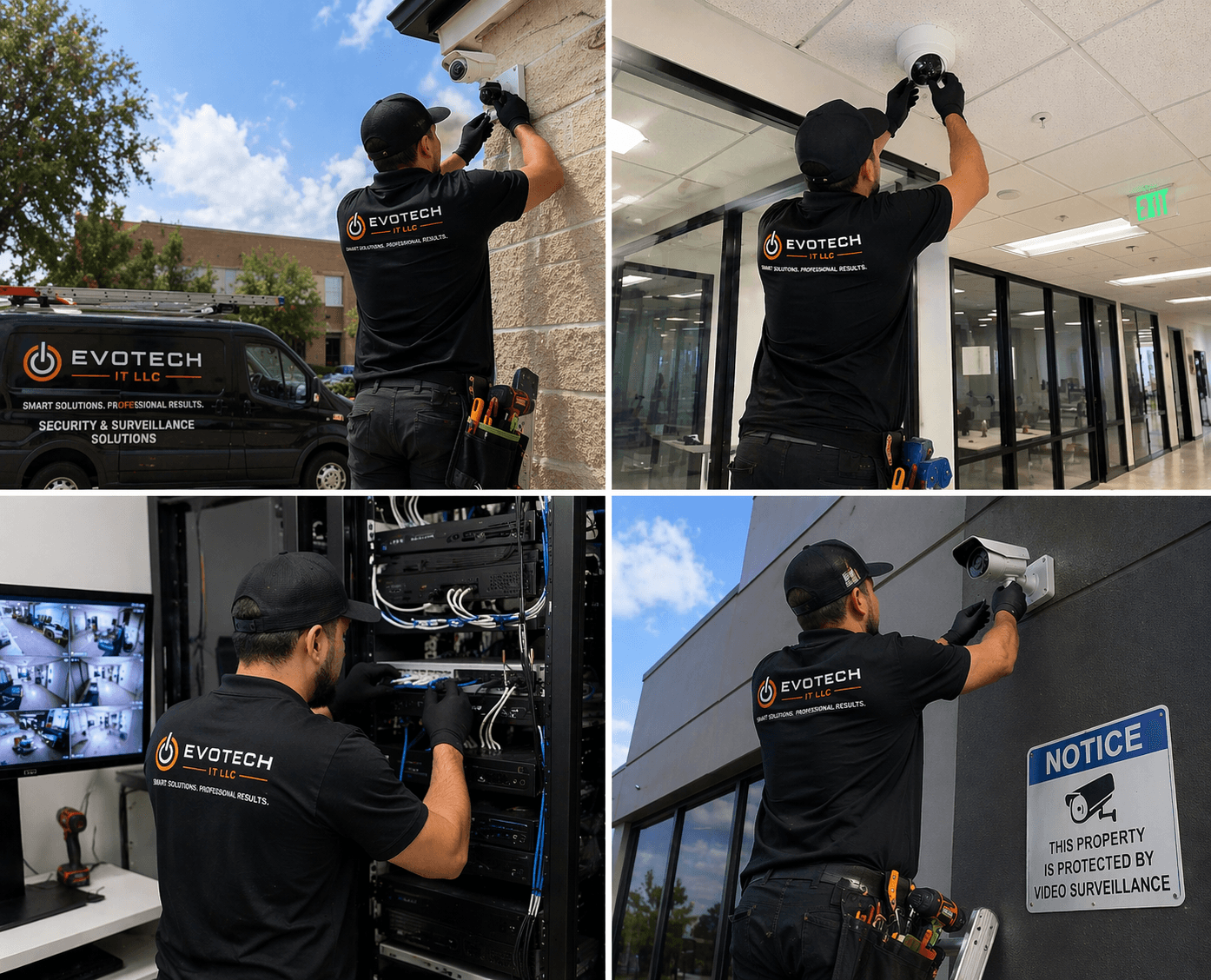
High-level work needs lift access, and lift access needs floor space clear of racking, stock, and traffic. Coordinating that with warehouse operations is usually the single biggest scheduling constraint, and it is why warehouse installs often happen during shutdowns or quieter shifts.
Getting Missouri City work done means planning around the site as it actually is. Small office and retail suites where ceiling construction and lease terms are the main variables. Slab-on-grade construction throughout, keeping attic routing as the primary retrofit path. Both matter as much as the design to how and when the work happens. The scope is drawn from the real property, the coverage is stated as a service area rather than an office, and unverifiable specifics about Missouri City are kept off the page on purpose.
Frequently asked questions
Is nvr installation for warehouses different in Missouri City?
The sector needs stay the same, but the install changes with the place. In Missouri City, the conditions above — not the warehouses label — decide routes, mounting, and equipment placement, which is why this page pairs all three.
How much storage is needed for 30 days of footage?
It is a calculation, not a fixed number: per-camera bitrate multiplied by hours recorded per day multiplied by thirty, summed across cameras. Resolution, frame rate, recording mode, and how busy each scene is all move the result substantially. Two eight-camera systems can differ by a factor of three for the same retention target.